
 Worksheets
European Eras Test
Total questions: 29
Worksheet time: 15mins
Name
Class
Date
1.

Period between 450 AD and 1450 AD. Comprised of the fall of the Roman Empire, the Rise of the Ottoman and Holy Roman Empire. A time period of Kings and Monarchs ruling large portions of European territories.
a)
Englightenment
b)
Dark Ages
c)
Renaissance
d)
Medieval Ages
2.
The first part of the Middle Ages from around 500-1000 A.D. The crusades and the black death, the 100 years war were major historical events defining this era.
a)
Englightenment
b)
Dark Ages
c)
Renaissance
d)
Medieval Ages
3.
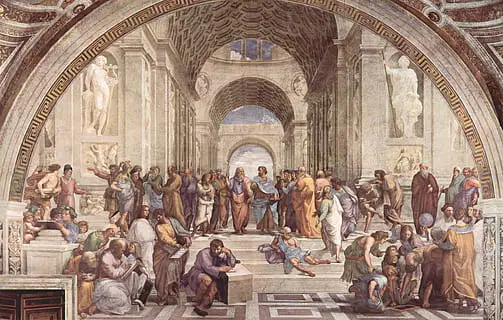
"Rebirth"; a movement that centered on the revival of interest in the classical learning of Greece and Rome. Art shifts and focuses more on human aspects and less on divine or spiritual aspects of life. Characterized by the rapid spread of people, goods and ideas.
a)
Englightenment
b)
Dark Ages
c)
Renaissance
d)
Medieval Ages
4.
A movement in the 18th century that advocated the use of reason to explain life and our existance. Gave birth to the concept of seperation of powers in government. Influenced French and American Revolutionaries
a)
Englightenment
b)
Dark Ages
c)
Renaissance
d)
Medieval Ages
5.
A major change in European thought, starting in the mid-1500s, in which the study of the natural world began to be characterized by careful observation and the questioning of accepted beliefs.
a)
The Scientific Revolution
b)
The Industrial Revolution
c)
The 100 Years War
d)
The French Revolution
6.

A series of holy wars from 1096-1270 AD undertaken by European Christians to free the Holy Land from Muslim rule.
a)
The Crusades
b)
The American Revolution
c)
The 100 Years War
d)
The French Revolution
7.

England vs. France; France won; Joan of Arc unified France and won it for them. France gains more territory and influence in Europe
a)
The Crusades
b)
The American Revolution
c)
The 100 Years War
d)
The French Revolution
8.
This killed between one-third and two-thirds of the European population in less than five years. The epidemic spanned from China to England to North Africa, transmitted along the Silk Road and other trade routes.
a)
The Black Death
b)
The Bubonic Plague
c)
All the above
9.
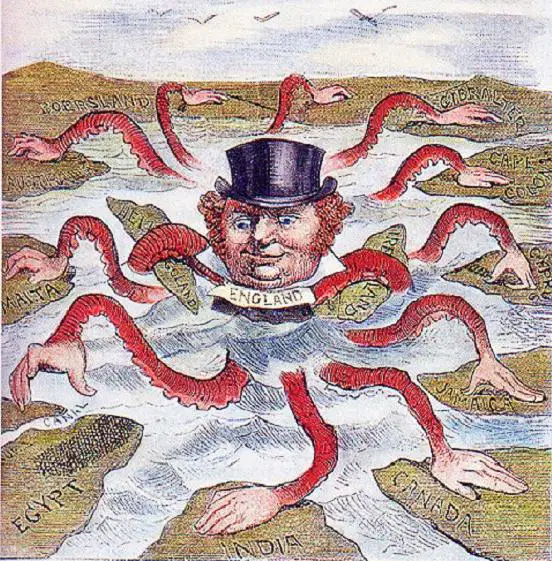
A policy of extending a country's power and influence through diplomacy or military force to control territory in another country. Usually to harvest or control resources
a)
Industrialism
b)
Imperialism
c)
Militarism
d)
Nationalism
10.
A strong feeling of pride in and devotion to one's country
a)
Industrialism
b)
Imperialism
c)
Militarism
d)
Nationalism
11.
The development of industries for the machine production of goods.
a)
Industrialism
b)
Imperialism
c)
Militarism
d)
Nationalism
12.
A policy of glorifying military power and keeping a standing army always prepared for war
a)
Industrialism
b)
Imperialism
c)
Militarism
d)
Nationalism
13.
A political system in which nobles are granted the use of lands that legally belong to their king, in exchange for their loyalty, military service, and protection of the people who live on the land.
a)
Feudalism
b)
Militarism
c)
Imperialism
d)
Nationalism
14.
Movement of people from rural areas to cities. Creation of tenaments and overpopulated living spaces.
a)
Urbanization
b)
Industrialization
c)
Ruralization
d)
Imperialization
15.
Click all that apply: What were the five main causes of WWI?
a)
Assasination of Franz Ferdinand
b)
Nationalism
c)
Alliances
d)
Militarism
e)
Imperialism
16.
Click all that apply: Allied Power Countries (Five)
a)
America
b)
Britian
c)
France
d)
Italy
e)
Russia
17.
Click all that apply: Allied Power Countries (Three)
a)
Germany
b)
Austria-Hungary
c)
The Ottoman Empire
d)
America
e)
Britian
18.
What year did WWI start?
a)
1918
b)
1917
c)
1914
d)
1910
19.
What year did America enter WWI
a)
1918
b)
1917
c)
1914
d)
1910
20.
What year did WWI end?
a)
1918
b)
1917
c)
1914
d)
1910
21.
Ended WWI but arguably started WWII.
a)
Battle of Somme
b)
The sinking of the U.S.S Lusitana
c)
Treaty Of Versailles
d)
Battle of Verdun
22.
A military alliance between Great Britain, France, and Russia in the years preceding World War I.
a)
Triple Entente
b)
The Triple Alliance
c)
The Triple Allied Powers
d)
The Triple Central Powers
23.
A military alliance between Germany, Austria-Hungary, Italy.
a)
Triple Entente
b)
The Triple Alliance
c)
The Triple Allied Powers
d)
The Triple Central Powers
24.
What was the primary purpose of the Treaty of Versailles, signed in 1919?
a)
To establish a new government in Germany
b)
To create a new country in Europe
c)
To promote trade between countries
d)
To end World War I and outline the terms for peace
25.
Which of the following was a major consequence of the Treaty of Versailles for Germany?
a)
Germany was allowed to keep its colonies
b)
Germany was required to pay reparations and accept blame for the war
c)
Germany was given more land than it had before
d)
Germany joined the League of Nations immediately
26.
A structure used for melting iron to mold and shape steel for building purposes
a)
Spinning Jenny
b)
Steam Engine
c)
Power Loom
d)
Blast Furnace
27.
A machine that turns the energy released by burning coal and oil to generate power.
a)
Spinning Jenny
b)
Steam Engine
c)
Power Loom
d)
Blast Furnace
28.
It speeded up the production of textiles (cloth products)
a)
Spinning Jenny
b)
Steam Engine
c)
Power Loom
d)
Blast Furnace
29.
A machine that could spin several threads at once
a)
Spinning Jenny
b)
Steam Engine
c)
Power Loom
d)
Blast Furnace
100 %

