wayground logo

Free Printable Worksheets

Font size

S
M
L
XL
Worksheets

Unit 10 Section 1 (Blood)

Total questions: 45

Worksheet time: 24mins
Name
Class
Date
1.
Red Blood Cells
a)
help fight disease
b)
Carry oxygen throughout your body
c)
help clot wounds
d)
liquid part of the blood
2.
White Blood Cells
a)
also known as Rh factors
b)
cell markers that determine blood type
c)
carry oxygen, carbon dioxide, nutrients
d)
help fight disease
3.
Platelets
a)
respond to antigens and try to destroy them
b)
carries nutrients and blood cells throughout the body
c)
move blood carrying waste material back to the heart and lungs so the process can begin again.
d)
cell fragments that play an important part in forming blood clots
4.
Plasma
a)
carries nutrients and blood cells throughout the body
b)
clumping of red blood cells
c)
organs that support and protect the body, stores minerals, allows movement, and make blood cells
d)
thick vessels that move blood carrying oxygen away from the heart and to the body
5.
Arteries
a)
thick vessels that move blood carrying oxygen away from the heart and to the body
b)
clumping of red blood cells
c)
Connect blood vessels and have extremely thin walls that allow gases and nutrients to pass through.d
d)
a group of tissues that work together to do a certain job
6.
Veins
a)
move blood carrying waste material back to the heart and lungs so the process can begin again.
b)
move blood carrying oxygen to the heart
c)
help to clump of red blood cells
d)
connect arteries and capillaries
7.
Capillaries
a)
Oxygen carrying pigment in red blood cells
b)
Connect arteries and veins. Have thin walls that allow gases to pass through
c)
a group of organs that work together to do a certain job
d)
carry oxygen throughout your body
8.
Organs
a)
are thick vessels that move blood carrying oxygen away from the heart
b)
stop bleeding by sticking together and forming clots
c)
are a group of tissues that work together to do a certain job
d)
are oxygen carrying pigments in red blood cells
9.
Tissue
a)
Carry nutrients and oxygen throughout your body
b)
a group of organs that work together to do a certain job
c)
a group of cells that work together to do a certain job
d)
connect arteries and veins. ____________ have extremely thin walls that allow gases and nutrients to pass through
10.
Organ system
a)
A group of cells that work together
b)
a group of organs that work together to do a certain job
c)
move blood carrying waste material back to the heart and lungs
d)
oxygen carrying pigment in red blood cells
11.
Bones
a)
Carry oxygen throughout your body
b)
organs that support and protect the body, stores minerals, allows movement, and make blood cells
c)
Oxygen carrying pigment in red blood cells
d)
move blood carrying waste material back to the heart and lungs so the process can begin again.
12.
Hemoglobin
a)
help fight disease
b)
clumping of red blood cells
c)
is a universal donor
d)
Oxygen carrying pigment in red blood cells
13.
Type O blood has
a)
no antigens, A and B antibodies
b)
no antibodies, A and B antigens
c)
no bone marrow
d)
O antigens, O antibodies
14.
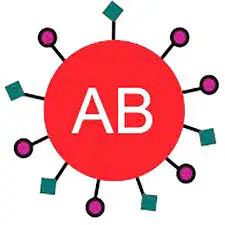
Type AB
a)
has A and B antigens, no antibodies
b)
is the universal donor
c)
has no antigens, A and B antibodies
d)
has A and B antigens, A and B antibodies
15.
Agglutination
a)
plasma clumps
b)
the combining of two types of blood
c)
connecting arteries and veins
d)
clumping of red blood cells
16.
Someone who is has type B blood can ACCEPT blood from
a)
type B only
b)
types B and O
c)
AB, B and O
d)
AB, B, A, O
17.
O is the universal donor because
a)
there are only Rh antigens on the cell
b)
there are no antigens on the cell
c)
there are no AB antigens on the cell
d)
all the antigens are on the cell
18.
A person with type A blood can DONATE to
a)
Types A and B
b)
Types A and AB
c)
A only
d)
A and O
19.
What is necessary for the transport of oxygen by a red blood cell?
a)
mitochondria
b)
platelets
c)
hemoglobin
d)
agglutination
20.
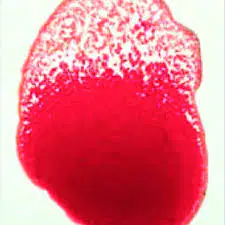
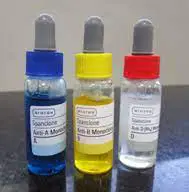
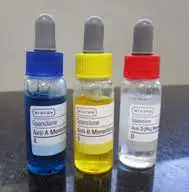
What would happen if you added an Anti-A serum to type A blood?
a)
It would agglutinate
b)
It would not agglutinate
21.
What would happen if you added an Anti-A serum to type B blood?
a)
It would agglutinate
b)
It would not agglutinate
22.
What would happen if you added Anti B serum to type AB blood?
a)
It would agglutinate
b)
It would not agglutinate
23.
What would happen if you added Anti B serum to type O blood?
a)
It would agglutinate
b)
It would not agglutinate
24.
When you cut yourself, threadlike fibers called ___________ form a sticky net to seal the wound.
a)
fibrin
b)
fiber
c)
filaments
d)
platelets
25.
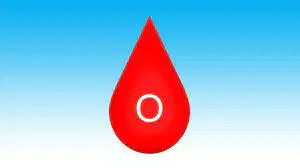
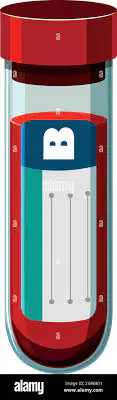
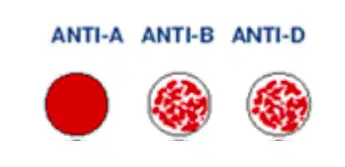
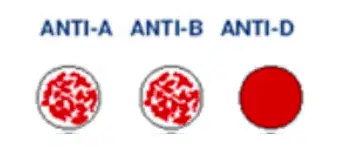
What type of blood is shown here?
a)
A+
b)
B+
c)
A-
d)
B-
26.
What blood type is shown here?
a)
AB-
b)
O-
c)
O+
d)
AB+
27.
what is blood made out of
a)
blood
b)
cats
c)
plasma, platelets, white blood cells and red blood cells
d)
metle, plasma, platelets, red blood cells
28.
Liquid part of blood
a)
Antigens
b)
Platelets
c)
Plasma
d)
Hemoglobin
29.
The body's disease fighters found in the blood.
a)
AB+
b)
Red Blood Cells
c)
Platelets
d)
White Blood Cells
30.
Cell fragments that play an important part in forming blood clots.
a)
Antigens (Marker Molecules)
b)
Blood types
c)
Platelets
d)
O-
31.
A+ A- B+ B- AB+ AB- O+ O-
a)
Platelets
b)
Blood Transfusion
c)
AB+
d)
Blood types
32.
These are on your red blood cells and they determine your blood type and the type of blood that you can safely receive in transfusions.
a)
blood
b)
Blood Transfusion
c)
Antigens (Marker Molecules)
d)
Plasma
33.
A procedure in which blood is pumped into a person that needs more blood because of an injury or illness.
a)
O-
b)
Blood Transfusion
c)
Blood types
d)
Platelets
34.
Universal Blood Donor
a)
RBC
b)
O-
c)
Marker Molecules
d)
Plasma
35.
Universal Blood Recipient
a)
AB+
b)
Platelets
c)
Blood types
d)
WBC
36.

The following are all components of blood. Match the component to its description

a)

White blood cells

1.

Cells of the immune system

b)

Red blood cells

2.

Transport oxygen from the alveoli to the body cells

c)

platelets

3.

cellular fragments that help with blood clotting

d)

Plasma

4.

Most of the blood volume, contains dissolved substances

37.

​ (a)   is the liquid part of blood.

Choose from the below words
Plasma
Red blood cells
White blood cells
Platelets
38.

What determines the blood type?

a)

Presence or absence of hemoglobin on the surface of the RBC.

b)

Presence or absence of antibodies on the surface of the RBC.

c)

Presence or absence of antigens on the surface of the RBC.

d)

Presence or absence of hemoglobin on the surface of the WBC.

39.

What is the blood type?

a)

O+

b)

B+

c)

AB-

d)

AB+

40.

What is this blood type?

a)

A+

b)

AB+

c)

AB-

d)

A-

41.

Using the diagram to determine the blood type

a)

Type A

b)

Type B

c)

Type AB

d)

Type Z - for Zebra this blood is from a zoo

42.

How many different types of blood are there?

a)

3

b)

4

c)

5

d)

6

43.

Which blood type is considered the universal recipient?

a)

B-

b)

A+

c)

AB+

d)

O-

44.

What component of blood is primarily responsible for clotting?

a)

Red Blood Cells

b)

White Blood Cells

c)

Platelets

d)

Plasma

45.

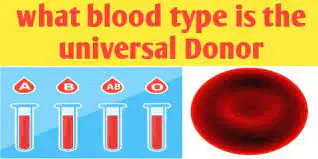
Which blood type can donate to all other blood types?

a)

B+

b)

AB+

c)

O-

d)

A+