
 Worksheets
Components Used in Electrical Installations part 2
Total questions: 40
Worksheet time: 20mins
Which of the following is a common component used in electrical installations?
Resistor
Capacitor
Transformer
All of the above
In electrical installations, a ______ is used to step up or step down voltage levels.
Resistor
Capacitor
Transformer
What is the correct order of electrical components from the incoming supply to the appliances?
Incoming supply, Meter, Suppliers fuse, Consumer unit, Appliances/circuits
Incoming supply, Suppliers fuse, Meter, Consumer unit, Appliances/circuits
Incoming supply, Consumer unit, Suppliers fuse, Meter, Appliances/circuits
Incoming supply, Appliances/circuits, Suppliers fuse, Meter, Consumer unit
Fill in the blank: The component that follows the 'Meter' in the electrical supply chain is the ________.
Incoming supply
Suppliers fuse
Consumer unit
Appliances/circuits
Which of the following is a good conductor of electricity?
Rubber
Copper
Plastic
Glass
Fill in the blank: ______, plastic, and glass are good insulators.
Copper
Silver
Rubber
Aluminum
What is the use of a 1.5mm twin and earth cable?
Ring main
Lighting
Smaller electric shower
Larger electric showers
Fill in the blank: The central core is earth, which needs sleeving for protection, in ______ and yellow.
Blue
Brown
Green
Red
Which cable size is used for lights?
0.5mm
0.75mm
1.0mm
1.5mm
The correct selection of flex is important to prevent ______.
Overheating
Short circuit
Power loss
Voltage drop
What is the primary use of armoured cables?
For plumbing
On incoming mains
For decoration
As a musical instrument.
The metal armour in armoured cables offers _______ mechanical protection.
minimal
additional
no
basic
Fill in the blank: A 6.0mm cross-section in a twin and earth cable is used for a ______ and requires a fuse of 30-32 amps.
Lighting
Sockets
Shower
Cooker
What can be a consequence of using an incorrect, undersized cable for a circuit or appliance?
Improved efficiency
Overheating
Reduced voltage
Increased safety
Using an incorrect, undersized cable for a circuit can lead to ______.
Increased lifespan
Overheating
Better performance
Lower costs
What can happen if an incorrect, undersized cable is used for a circuit?
The cable can go brown
The cable can become brittle and damage the insulation
The cable can overheat and burn
All of the above.
If an incorrect, undersized cable is used, the cable can go ______ and damage the insulation.
blue
brittle
flexible
soft
What type of appliances use heat resistant flex?
Cooling appliances
Heat producing appliances
Lighting appliances
Sound producing appliances
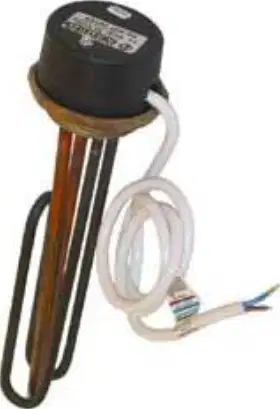
An immersion heater is usually rated at ____ so the cable used would be 1.5mm butyl heat resistant flex.
1.0-1.5kW
2.5-3.0kW
3.5-4.0kW
4.5-5.0kW
What is the usual power rating of an immersion heater?
2kW
3kW
5kW
7.2kW
An immersion heater should not be connected to the ______ circuit.
A) ring
B) radial
C) lighting
D) power
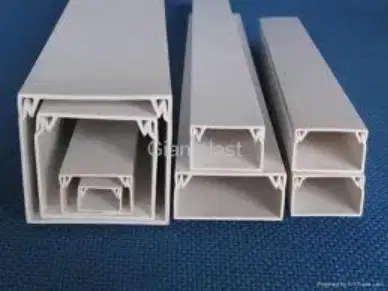
What is the main purpose of electrical trunking?
To support heavy machinery
To protect and organize electrical cables
To generate electricity
To cool down electrical systems.
Trunking in electrical components is used to ______ the customer from the flexes.
support
protect
expose
connect
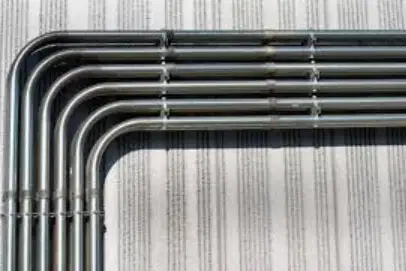
What is one of the main purposes of a conduit?
To conduct electricity
To protect the flex from damage
To provide lighting
To generate power.
Conduits can be surface mounted or ______ into a wall.
drilled
chased
glued
nailed
What is the unit for electromotive force (emf)?
Ampere
Ohm
Volt
Watt
The ampere is the unit of ______, and can be defined as the unit of quantity or volume passing down a conductor.
Voltage
Current
Resistance
Power
What is the unit of resistance, which opposes the flow of current?
Volt
Ampere
Ohm
Coulomb
What is the unit of power for an appliance?
Joules
Watts
Kilowatt-hour
Amperes
Fill in the blank: Joules is the unit of ________.
A) electrical power
B) electrical energy
C) electrical current
D) electrical resistance
What is the relationship between watts, amps, and volts?
Watts = Amps x Volts
Watts = Volts / Amps
Watts = Amps + Volts
Watts = Amps - Volts
Fill in the blank: Watts is calculated by multiplying Amps and ____.
A) Ohms
B) Volts
C) Joules
D) Coulombs
If an appliance needs 3kW in a domestic property, what is the fuse size?
10 amp
12.5 amp
15 amp
20 amp
In a domestic property, an appliance has a fuse size of 3amp. What is the maximum power rating of the appliance?
500w
720w or 0.72kW
1000w
1500w
An appliance has a 5amp fuse and needs 1.2kW of power. What is the voltage required? Fill in the blank: ______v.
120v
240v
360v
480v
What does Ohm's Law relate?
A) Voltage, Current, and Power
B) Voltage, Current, and Resistance
C) Voltage, Resistance, and Power
D) Current, Resistance, and Power.
Fill in the blank: In Ohm's Law, Voltage (V) is equal to Current (I) multiplied by ______.
Power (P)
Resistance (R)
Energy (E)
Capacitance (C)
What would be the resistance of a domestic appliance if the fuse size was 3 amp?
60 ohms
70 ohms
80 ohms
90 ohms
What is the fuse size for a domestic appliance which has 1,200 ohms resistance?
0.1 amp
0.2 amp
0.3 amp
0.4 amp
If an appliance has a fuse rated at 13 amp, and the resistance is 32 ohms, what would the voltage be?
400v
405v
410v
415v

