
Font size
 Worksheets
Unit 5_MCQ Revision Test
Total questions: 86
Worksheet time: 1hrs 11mins
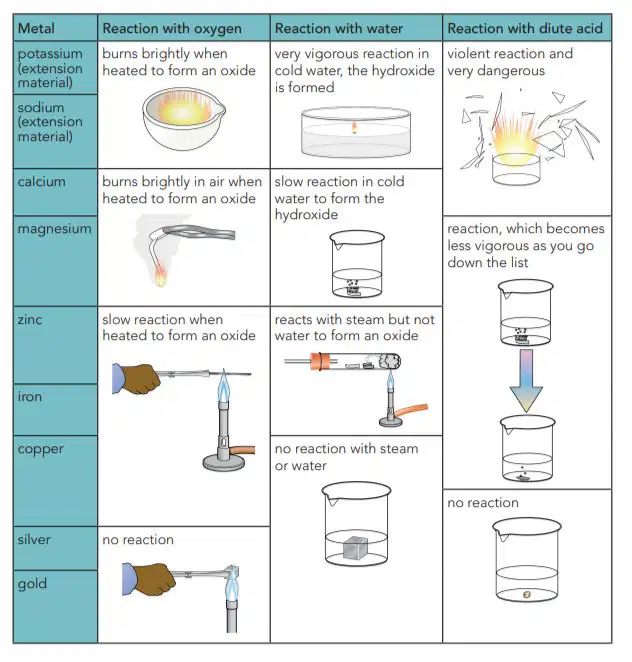
What does the reactivity series show?
The density of metals
The melting points of metals
The relative reactivity of metals with oxygen, water, and acids
The boiling points of metals
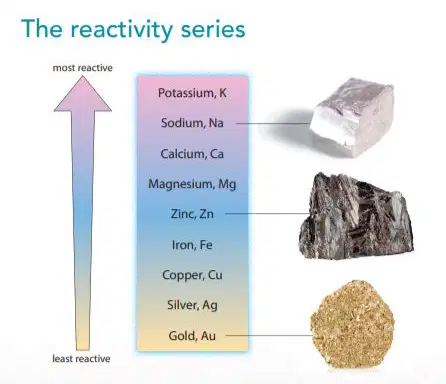
Which of the following metals is the most reactive?
Iron (Fe)
Gold (Au)
Potassium (K)
Zinc (Zn)
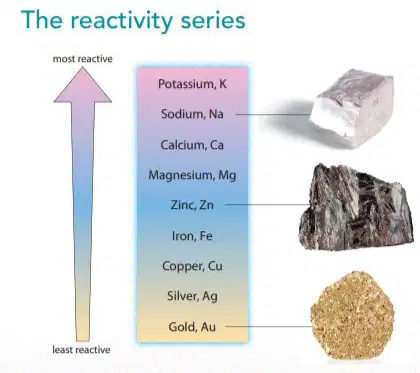
Which of the following metals is the least reactive?
Magnesium (Mg)
Zinc (Zn)
Copper (Cu)
Gold (Au)
Why are highly reactive metals like potassium and sodium stored in oil?
To keep them shiny
To prevent them from reacting with air and water
To make them dissolve easily
To increase their reactivity
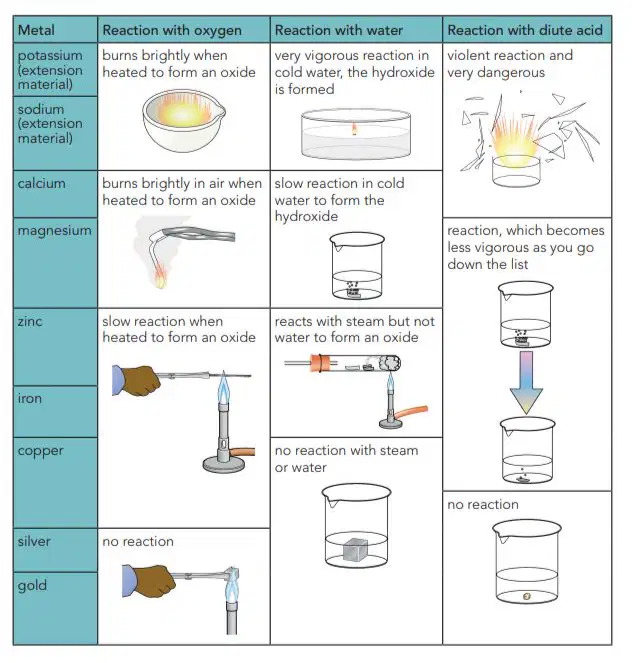
Which statement best describes the reactivity series of metals?
A list of metals arranged according to their ability to conduct electricity
A list of metals arranged in order of their reactivity with oxygen, water, and acids
A list of metals arranged based on their density
A list of metals arranged by their melting points
Which of the following metals would displace zinc from zinc sulfate solution?
Iron (Fe)
Copper (Cu)
Magnesium (Mg)
Silver (Ag)
What will happen if a piece of zinc is placed in a solution of copper sulfate?
No reaction will occur
Zinc will replace copper, forming zinc sulfate and copper metal
Copper will replace zinc, forming copper sulfate and zinc metal
Zinc and copper will combine to form an alloy
Which metal would not react in a solution of iron sulfate?
Magnesium (Mg)
Zinc (Zn)
Copper (Cu)
Potassium (K)
Which of the following metals would react with hydrochloric acid to produce hydrogen gas?
Gold (Au)
Silver (Ag)
Zinc (Zn)
Copper (Cu)
If a piece of silver is placed in a solution of copper sulfate, what will happen?
Silver will replace copper
Copper will replace silver
No reaction will occur because silver is less reactive than copper
Silver will dissolve and form a new solution
Which of the following correctly describes why displacement reactions occur?
A less reactive metal replaces a more reactive metal from its salt solution
A more reactive metal replaces a less reactive metal from its salt solution
Two metals combine to form an alloy
The metal dissolves in water to form a solution
Why is iron used to coat steel bridges rather than copper?
Iron is more reactive than copper and forms a protective oxide layer
Copper is too reactive and would corrode faster than iron
Copper is cheaper than iron
Which of the following best explains why gold is used in jewelry?
Gold is highly reactive and bonds well with the skin
Gold is very malleable and can form different shapes
Gold is unreactive and does not corrode easily
Gold reacts with oxygen to form a strong protective layer
Which of the following metals is often used in sacrificial protection to prevent iron from rusting?
Copper (Cu)
Silver (Ag)
Zinc (Zn)
Gold (Au)
Why do metals higher in the reactivity series corrode faster?
They form stronger metallic bonds
They react more easily with oxygen and water
They are denser and dissolve in water
They do not react with acids
Which safety precaution should always be followed when conducting displacement reactions?
Use gloves and safety goggles to protect from reactive chemicals
Always add water to acid to dilute it
Use an open flame to speed up the reaction
Handle all metals with bare hands to feel the reaction temperature
What should you do if an unknown metal reacts violently with dilute acid?
Assume it is a less reactive metal
Stop the reaction immediately and inform the teacher
Add more acid to see a larger reaction
Place it in water to see if it reacts more
Which of the following is the best method to identify an unknown metal using displacement reactions?
Measuring its density
Placing it in a solution of another metal’s salt and observing whether a reaction occurs
Heating it and recording its color change
A sample of an unknown metal is placed in a solution of iron sulfate. No reaction occurs. What does this tell you about the metal?
The metal is more reactive than iron
The metal is less reactive than iron
The metal has the same reactivity as iron
The metal is a non-metal
If a metal can displace zinc from zinc sulfate solution, what can we conclude?
The metal is more reactive than zinc
The metal is less reactive than zinc
The metal is the same as zinc
The metal is a non-metal
What would happen if a piece of aluminum is placed into a solution of copper sulfate?
No reaction will occur
Aluminum will replace copper, forming aluminum sulfate and copper metal
Copper will replace aluminum, forming aluminum sulfate and copper metal
Aluminum and copper will form an alloy
Which of the following metals would be the best candidate to identify an unknown metal using a displacement reaction?
Silver
Gold
Zinc
Copper
Which of the following best describes the thermite reaction?
A reaction where carbon displaces iron from its oxide
A reaction where aluminum displaces iron from iron oxide, releasing a large amount of heat
A reaction where iron is converted into its oxide using oxygen
A reaction where zinc is extracted from zinc sulfate
What is the main use of the thermite reaction?
To extract gold from ore
To weld railway tracks together in situ
To produce aluminum oxide for industrial use
To prevent rusting of iron
Why is aluminum used in the thermite reaction instead of magnesium?
Aluminum is more reactive than magnesium
Aluminum provides a controlled exothermic reaction that reaches high enough temperatures
Magnesium does not react with iron oxide
Magnesium is too expensive
What is the word equation for the thermite reaction?
Iron oxide + carbon → iron + carbon dioxide
Iron oxide + aluminum → aluminum oxide + iron
Iron + oxygen → iron oxide
Aluminum oxide + iron → aluminum + iron oxide
Why does the thermite reaction require an initial ignition source to start?
The reaction does not produce enough heat on its own
Aluminum needs to be melted before reacting
It requires an exothermic reaction to provide enough energy for aluminum to displace iron
The reaction occurs too quickly otherwise
Which of the following metals can be extracted from its ore using carbon?
Sodium
Magnesium
Iron
Potassium
What is the word equation for the extraction of iron using carbon in a blast furnace?
Iron + oxygen → iron oxide
Iron oxide + carbon → iron + carbon dioxide
Iron oxide + aluminum → aluminum oxide + iron
Iron + carbon → iron carbide
Why is carbon used to extract iron from its ore?
Carbon is more reactive than iron and can displace it from its oxide
Carbon is the only element that reacts with iron oxide
Carbon is used to make iron rust before extraction
Carbon increases the density of iron
Why is high temperature needed in a blast furnace for extracting iron?
To make iron oxide dissolve in water
To speed up the reaction between iron oxide and carbon
To turn carbon into a gas
To produce electricity
Which of the following metals cannot be extracted using carbon?
Zinc
Iron
Lead
Magnesium
Which of the following best defines a salt in chemistry?
A metal in its pure form
A compound formed when an acid reacts with a base, metal, or metal oxide
A substance used only for flavoring food
A liquid solution containing dissolved acids
Which of the following is an example of a salt?
Zinc chloride
Hydrochloric acid
Hydrogen gas
Oxygen
Which of the following statements about salts is correct?
All salts are soluble in water
Salts are only used in food
Salts are formed when acids react with metals, metal oxides, or carbonates
Salts cannot be made in the laboratory
Which salt is commonly used to flavor food?
Copper sulfate
Ammonium nitrate
Sodium chloride
Aluminum sulfate
What is magnesium carbonate used for?
Preserving food
Keeping hands dry in gymnastics
Making fertilizers
Coating seeds to prevent fungi
Which salt is used to help dyes stick to fabrics?
Calcium carbonate
Aluminum sulfate
Silver nitrate
Sodium chloride
What is the main use of ammonium nitrate?
Cleaning metals
Coating food
Used as a fertilizer for crops
Making glass
Which of the following salts is used to stop fungi from growing on soya seeds?
Copper sulfate
Potassium nitrate
Sodium chloride
Magnesium sulfate
What is the general equation for making salts using a metal and an acid?
Metal + Acid → Salt + Hydrogen
Metal + Water → Salt + Oxygen
Metal + Acid → Salt + Water
Metal + Oxygen → Salt + Hydrogen
Which of the following metals can be used to make a salt by reacting with an acid?
Gold
Silver
Zinc
Platinum
What happens when zinc reacts with hydrochloric acid?
Zinc sulfate and hydrogen gas are formed
Zinc chloride and hydrogen gas are formed
Zinc nitrate and water are formed
Zinc carbonate and hydrogen gas are formed
Which gas is produced when a metal reacts with an acid to form a salt?
Oxygen
Hydrogen
Nitrogen
Carbon dioxide
Why are some metals, such as copper and silver, not used directly with acids to make salts?
They are too reactive
They do not react with acids to displace hydrogen
They dissolve too quickly
They explode when mixed with acids
What is the general equation for making salts using a metal oxide and an acid?
Metal Oxide + Acid → Salt + Water
Metal Oxide + Acid → Salt + Hydrogen
Metal Oxide + Acid → Salt + Oxygen
Metal Oxide + Acid → Salt + Carbon Dioxide
What is the word equation for making copper sulfate from copper oxide and sulfuric acid?
Copper + Sulfuric Acid → Copper Sulfate + Hydrogen
Copper Oxide + Sulfuric Acid → Copper Sulfate + Water
Copper + Sulfuric Acid → Copper Oxide + Water
Copper Oxide + Sulfuric Acid → Copper Nitrate + Water
What is the general equation for a neutralisation reaction?
Acid + Metal → Salt + Hydrogen
Acid + Alkali → Salt + Water
Acid + Carbonate → Salt + Water + Carbon Dioxide
Metal Oxide + Acid → Salt + Hydrogen
Which of the following reactions is an example of neutralisation?
Sodium hydroxide + Hydrochloric acid → Sodium chloride + Water
Copper oxide + Sulfuric acid → Copper sulfate + Water
Calcium carbonate + Sulfuric acid → Calcium sulfate + Water + Carbon dioxide
Zinc + Hydrochloric acid → Zinc chloride + Hydrogen
Which salt is formed when nitric acid reacts with potassium hydroxide?
Potassium sulfate
Potassium chloride
Potassium nitrate
Potassium carbonate
What are the products of a reaction between hydrochloric acid and sodium hydroxide?
Sodium chloride and water
Sodium sulfate and hydrogen
Sodium carbonate and carbon dioxide
Sodium nitrate and oxygen
Which safety precaution should be followed when handling acids in a neutralisation experiment?
Always add water to the acid to dilute it
Wear safety goggles and gloves to protect from spills
Use an open flame to speed up the reaction
Measure the acid with bare hands
Why is it important to conduct a risk assessment before carrying out a neutralisation experiment?
To determine the cost of the experiment
To ensure all possible hazards are identified and managed
To check if the experiment will work correctly
To make the reaction faster
Which of the following is a potential hazard when working with strong acids?
Acids can evaporate quickly, causing dizziness
Acids can cause burns if they come into contact with skin
Acids explode when mixed with metals
Acids stop reacting when exposed to air
What should you do if acid spills on your skin during an experiment?
Ignore it and continue the experiment
Wipe it off with a paper towel
Immediately rinse the affected area with plenty of water
Neutralise it with a base before washing
What is the correct word equation for the reaction between sulfuric acid and calcium carbonate?
Sulfuric acid + Calcium → Calcium sulfate + Hydrogen
Sulfuric acid + Calcium carbonate → Calcium sulfate + Water + Carbon dioxide
Sulfuric acid + Calcium hydroxide → Calcium sulfate + Hydrogen
Sulfuric acid + Calcium chloride → Calcium carbonate + Water
Which of the following is the correct symbol equation for the reaction between hydrochloric acid and calcium carbonate?
HCl + Ca → CaCl₂ + H₂
HCl + CaCO₃ → CaCl₂ + H₂O + CO₂
H₂SO₄ + CaCO₃ → CaSO₄ + H₂O
NaOH + HCl → NaCl + H₂O
What is the product when copper oxide reacts with sulfuric acid?
Copper chloride
Copper sulfate
Copper hydroxide
Copper carbonate
What is the correct symbol equation for the reaction between sodium hydroxide and hydrochloric acid?
NaOH + HCl → NaCl + H₂O
NaOH + HCl → NaOHCl
Na + HCl → NaCl + H₂O
NaOH + H₂SO₄ → Na₂SO₄ + H₂O
Which gas is always produced when a carbonate reacts with an acid?
Oxygen
Carbon dioxide
Hydrogen
Nitrogen
Why does limestone (calcium carbonate) erode when exposed to acid rain?
Because acids react with calcium carbonate, producing soluble salts, water, and carbon dioxide
Because limestone absorbs acid, making it heavier
Because acids strengthen the structure of limestone
Because acid neutralises the limestone, making it stronger
What is malachite, and why does it appear blue-green in color?
It is a type of rock that contains sodium chloride
It is a mineral that contains copper carbonate
It is a metal that reacts with acid to form water
It is a form of iron sulfate that rusts in water
What is the correct word equation for the reaction between magnesium and hydrochloric acid?
Magnesium + Oxygen → Magnesium Oxide
Magnesium + Hydrochloric Acid → Magnesium Chloride + Hydrogen
Magnesium + Water → Magnesium Hydroxide + Hydrogen
Magnesium + Carbon Dioxide → Magnesium Carbonate
What is the correct symbol equation for the reaction between magnesium and hydrochloric acid?
Mg + H₂O → Mg(OH)₂ + H₂
Mg + HCl → MgCl₂ + H₂
Mg + O₂ → MgO
Mg + CO₂ → MgCO₃
Which of the following correctly represents the reaction between magnesium and hydrochloric acid?
Mg + HCl → MgCl + H₂
Mg + HCl → MgCl + H₂
Mg + 2HCl → MgCl₂ + H₂
Mg + CO₂ → MgCO₃
Which of the following correctly represents the reaction between calcium carbonate and hydrochloric acid?
CaCO₃ + HCl → CaCl₂ + H₂O + CO₂
CaCO₃ + 2HCl → CaCl₂ + H₂O + CO₂
Ca + HCl → CaCl₂ + H₂
Ca + O₂ → CaO
What does the law of conservation of mass state?
The total mass of the reactants is greater than the mass of the products
Mass is created during a chemical reaction
The total mass of reactants is equal to the total mass of products
Mass is lost as heat in a chemical reaction
Why did Arun’s experiment show a decrease in mass when reacting calcium carbonate with hydrochloric acid in an open flask?
The products lost atoms during the reaction
Carbon dioxide gas escaped into the air, making it seem like mass was lost
The reaction was incomplete
Hydrochloric acid dissolved completely
Which of the following would ensure that the mass appears to remain constant during a reaction?
Performing the reaction in an open beaker
Using a gas syringe to collect any gases produced
Heating the reactants to increase the reaction rate
Stirring the reactants continuously
In which case does the mass of a substance appear to increase after a reaction?
Magnesium reacts with hydrochloric acid
Magnesium reacts with oxygen to form magnesium oxide
Zinc reacts with sulfuric acid
Sodium reacts with water
What does the law of conservation of energy state?
Energy can be created or destroyed in a chemical reaction
Energy cannot be created or destroyed, only transferred
Energy is only lost as heat in reactions
Energy can only exist as heat or light
Which of the following best describes an exothermic reaction?
A reaction that absorbs heat energy from the surroundings
A reaction that releases heat, light, or sound energy into the surroundings
A reaction that keeps energy stored inside the reactants
A reaction that cools down its surroundings permanently
Which reaction is an example of an exothermic process?
Dissolving salt in water
Burning magnesium in oxygen
Boiling water
Melting ice
Which of the following best describes an endothermic reaction?
A reaction that absorbs energy from the surroundings
A reaction that produces a flame and releases energy
A reaction that stays at the same temperature throughout
A reaction that breaks down bonds in the products
Which of these is an example of an endothermic reaction?
Burning a candle
Melting ice
Condensing steam into water
Freezing water
What safety precaution should be taken when working with acids in a chemical reaction?
Wear gloves and goggles to prevent splashes from contacting skin or eyes
Work in a dark room to observe the reaction better
Add water to the acid quickly to dilute it
Always hold the acid container close to your face to smell the reaction
Why should a chemical reaction involving gas production be carried out in a fume cupboard?
To prevent dangerous gases from being inhaled
To speed up the reaction
To cool down the reactants
To ensure a closed system
What is the safest way to heat a substance in a crucible?
Hold the crucible over a flame using metal tongs
Use a Bunsen burner with a tripod and heat-resistant mat
Place the crucible on a wooden surface before heating
Hold the crucible with your hands and heat it gently
Organize these options into the right categories when metal reacts with varying acids.
Naming of Salts.
citrates
nitrate
sulfate
chloride
Complete the equation for metal and acid:
zinc + (a) --> (b) + (c)
Complete the equation for metal oxide and acid:
copper oxide + (a) --> (b) + (c)
Complete the equation for metal carbonates and acids:
calcium carbonate + sulfuric acid --> (a) + (b) + (c)
Complete the equation for neutralization:
(a) + hydrochloric acid --> (b) + (c)
Complete the word equation:
______ + _______ = magnesium oxide
Hint: _____ + ______
(a)
Complete the word equation:
______ + _______ --> zinc chloride + hydrogen
Hint: _____ + ______
(a)
Complete the word equation:
______ + sulfuric acid --> calcium sulfate + ______ + ________
Hint: _________ --> _________ + _________
(a)

