
 Worksheets
BIO_1112_Ch18_Diversity_of_Invertebrates
Total questions: 69
Worksheet time: 35mins
Which of these belongs to superphylum Lophotrochozoa?
Mollusca
Chordata
Nematoda
Arthropoda
Tapeworms and liver flukes are _______.
coelomate
pseudocoelomate
acoelomate
multicoelomate
Arthropods are in the clade _______.
Ecdysozoa
Eumetazoa
Bilateria
All of these!
Which of these is NOT true of sponges?
They belong to phylum Porifera.
They lack true tissues.
They are diploblastic.
They are asymmetrical.
Which embryonic tissue layer is NOT found in all eumetazoans?
Ectoderm
Mesoderm
Endoderm
Which of these phyla shows radial symmetry?
Porifera
Mollusca
Platyhelminthes
Cnidaria
Which of these phyla has an open circulatory system?
Mollusca
Platyhelminthes
Arthropoda
Annelida
Which of these phyla does NOT show segmentation?
Annelida
Mollusca
Arthropoda
Chordata
Identify the phylum with the following characteristics:
1. Organisms are strictly aquatic
2. Organisms have radial symmetry
3. There are two body plans: polyp and medusa
(a)


Clams, Oysters and Mussels are all:
Cnidarian
Porifera
Bivalve
How are birds and reptiles alike or the same?
Both have feathers
Both have beaks
Both have scales
Both lay eggs

Earthworms
segmented worm
Roundworm
Flatworn
tapeworm

Have stinging cells to paralyze
their prey.
Porifera
Molluska
Cnidarian
Arthropods

Sand dollars and star fish exhibit _______ symmetry.
bilateral
radial
lateral

Which animal is an invertebrate?


Organisms in the Kingdom Animalia are...
eukaryotic
multicellular
motile
heterotrophs
All of the above


This Bobbit worm has a segmented body. What Phylum of Marine Worm would that be?
Platyhelminthes
Annelida
Tube Worm
Nematoda
A tapeworm, which is dorsoventrally flattened, is a member of which phylum?
a. Cnidaria
b. Nematoda
c. Playthelminthes
d. Porifera
The middle layer, jelly like substance, in the sponges an cnidarians is called the ________________.
a. endodermis
b. epidermis
c. gastrodermis
d. mesoglea
Cnidaria means
Pore bearing
round worms
stinging cells
flatworms
Nematoda means
Pore bearing
round worms
stinging cells
flatworms
Determine which Cnidarian body form characteristic is represented with tentacles down
Polyp
Medusa
Determine which Cnidarian body form characteristic is represented with tentacles up
Polyp
Medusa
Are Mollusca a true coelom?
yes
no
Which class does not have open circulatory system?
Bivalvia
Cephalopoda
Gastropoda
Polyplacophora
What is a radula used for?
cutting and chewing food
to move
for protection
to see
What has the foot and radula turned into in the class Cephalopoda
hairs
nails
toes and fingers
arms and tentacles
What does Cephalopoda mean?
"2-shells"
"head-foot"
"stomach-foot"
"hatchet-foot"
"Soft body"
Which group of cephalopods has ability to flatten body to fit in small spaces and tubes, and also can change its skin to blend with surroundings?
When they need to escape a predator or a dangerous situation, cephalopods move by
The protective membrane that surrounds the visceral mass on all mollusks is called the...

Identify the class.
Bivalvia
Gastropoda
Cephalopoda
Pelecypoda
Used by the seastar for movement, feeding, and oxygen.
Tube Feet
Stone Canal
Ampulla
N/A
Skin Gills
Phylum Echinodermata is based on a _________ part body plan/symmetry
2
10
5
N/A


Instead of a brain, sea stars have a _______________.
Radial canal
Nerve ring
Heart
Straw
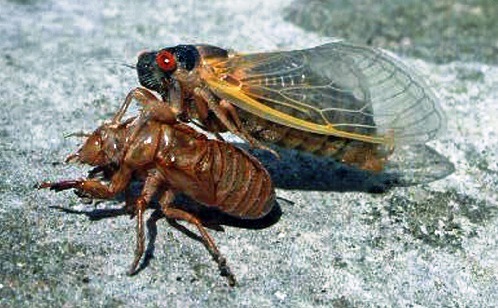
This term means arthropods lose their exoskeleton to grow larger
molt
melt
break
slide
Which word is associated with the spider brain?
cloaca
spiracle
pericardial sac
ganglion
cecum


How many stages are in an incomplete life cycle?
1
2
3
4
Which subphylum do spiders and scorpions belong to?
Chelicerates
Crustaceans
Uniramia

What class of arthropod does this organism belong to?
Class Insecta
Class Arachnida
Class Bug
Class Crustacea
what is the complete life cycle of metamorphosis?
larvae, egg, pupa
egg, pupa, larva, adult
pupa, larva, egg, adult
Egg, larva, pupa, adult
What is the difference between complete metamorphosis and incomplete metamorphosis
complete metamorphosis start with eggs while incomplete metamorphosis start with larvae
complete metamorphosis have 3 stages while incomplete metamorphosis have 4 stages
complete metamorphosis produce adult while incomplete metamorphosis produce juvenile
complete metamorphosis involve larvae and pupa while incomplete metamorphosis involve nymph
Insect wings are modified limbs.
True
False

An arthropod is highly vulnerable to predators after it has just molted.
True
False
Which of the following is NOT a function of the exoskeleton.
Protection
Prevents water loss
Attachment of muscles
Flexibility of movement
How do Ecdysozoans grow?
incrementally, like laying down bands of shell
molting an exoskeleton
spontaneous generation
cloning
Millipedes
are active hunters
have two pairs of legs per body segment
have one pair of legs per body segment
are carnivores
Wings are located on which body segment in insects?
thorax
head
cephalothorax
abdomen
A cephalothorax is a shared characteristic between which two groups?
crustaceans and myriapods
crustaceans and insects
chelicerates and myriapods
crustaceans and chelicerates
Roundworms
have an elastic cuticle
breathe via simple diffusion
have a pseudocoelom
all of these
Centipedes
are detritivores
have two pairs of legs per body segment
have one pair of legs per body segment
have one pair of legs per body segment AND are carnivores

Identify phylum and type:
Arthropoda; millipede
Annelida; centipede
Arthropoda; centipede
Arthropoda; insect

What type of symmetry does this animal exhibit?
Radial symmetry
Bilateral symmetry
No symmetry
Spiral symmetry
All of the following animals are triptoblastic, except:
Nematoda
Chordata
Cnidaria
Annelida

