
 Worksheets
GRADE 4- 4TH QUARTER
Total questions: 135
Worksheet time: 3hrs 37mins
A train travels 25 km in 2 hrs. What is the speed of the train in km/h?
(a)
A car travels 30 km/h for 3 hours. Calculate the distance travelled by the car.
(a)
A boat travels at 24 km/h for 40 minutes. Calculate the distance travelled by the boat.
(a)
A speed boat travels 100 km at a speed of 20 km/h. How much time did it take?
(a)
A bicycle rider travels 100 km in 4 hours. What is the cyclist's average speed in km/h?
(a)
Which of the following is a unit of speed? (You may choose more than 1 anwser)
km/h
hour
kilometre
m/s
minutes

What is the formula to determine speed?
Time / Distance
Distance / Time
Time x Distance
Time + Distance
How do you measure the speed of an object?
Speed = Distance x time
Speed = distance ÷ time
Speed = distance - time
It describes how fast an object moves.
MOtion
Speed
Position
An object moving at the same speed and direction will continue moving at the same speed and direction unless acted upon by another force.
Change in motion
Change in direction
Change in shape
Change in emotion
Object that are at rest will remain at rest unless acted upon by a force.
Change in position
Change in direction
Change in motion
Change in shape
If two forces from opposite direction are applied on an object and the object is malleable, it will change its shape.
Change in color
Change in motion
Change in direction
Change in shape
If the force applied is of the opposite direction and is more than enough to stop it you called it ____.
Return
Stop
Direction
Shape
If the force applied is opposite the direction of the moving object and is just enough to stop it you called it _____.
direction
return
stop
color

What changes does the ball have?
Change in color
Change in motion
Change in direction
Change in shape

What changes does the picture show?
change in shape and direction
change in motion and direction
change in color and direction
change in motion and position

What changes described the balloon ?
change in motion and color
changes in direction and shape
change in motion and shape
changes in shape and color

What changes describes the video?
change in motion and direction
change in shape and direction
change in direction and color
change in motion and color
4. Forces can change the speed, direction or shape of an object
True
False
No Answer
Hitting a moving tennis ball with a tennis racket changes its ________ and ________.
shape; direction
speed; shape
direction; speed
shape; speed
In a football game, the goalkeeper stops a moving ball to prevent it from entering the goal. What is the motion of the object?
Make a stationary object move
Make a moving object stop
Make a moving object move slower
Change the direction of a moving object
which of the following is not an effect of force:
to move a body from rest
to change the color of an object
to change the shape of a body
to stop a moving body

in the given figure force is
stopping a moving object
changing the direction of motion
changing the shape
none of the above

What effect will the force done by the red player?
The ball will stop moving.
The ball will slow down.
The ball will permenantly change shape.
The ball will change the direction of its movement

What is the effect of force shown here?
change in shape
change in direction
change in speed
force can stop an object

Which statement is true
Force cannot move an object from its rest
Force helps the object change its speed
Force does not let the object move from place to another
Force does not help us do work

At the start of a football game, a footballer kicks a ball placed in the middle of the field to move the ball.
What is the effect of force on the object?
Change the direction of a moving object
Make a moving object stop
Make a moving object move slower
Make a stationary object move
a push or a pull that causes an object to move, stop, or change direction
balanced forces
direction
force
motion

What should Kiara do if she want to kick the ball to the goal?
Kick the ball to the goal keeper
Kick the ball with less force
Kick the ball with more force
Kick the ball to her friend
Which of the following statements are correct? A magnet _____________.
can attract wood
can attract or repel other magnet
rest freely in North-South direction
can attract leaves
A magnet is placed near a group of steel and plastic paper clips. The magnet will_________.
attract both steel and plastic paper clips
attract only the plastic paper clips
attract only the steel paper clips
repel the plastic paper clips

Kaloy brings a bar magnet near metal balls and observed that the balls stick to the magnet. What could be the metal balls made of ?
The metal balls are made of steel
The metal balls are made of platinum
The metal balls are made of aluminum

What is the use of magnet in the picture?
lift heavy objects
store information
show direction
hold objects

How is magnet used in the picture?
hold objects
show direction
produces movements
lift heavy objects
Which is an example of non-magnetic object.
leather jacket
metal fork
door knob
Which is an example of non-magnetic object.
metal whistle
nail
glass
1 peso coin
What do you call the group of objects that are not attracted to magnets?
Opaque objects
Non-magnetic objects
Magnetic objects
Translucent objects
Which is an example of magnetic object?
plastic chair
wooden spoon
eraser
steel knife
What do you call the group of objects that are attracted to magnets?
Non-Magnetic Objects
Metallic Objects
Transparent Objects
Magnetic Objects
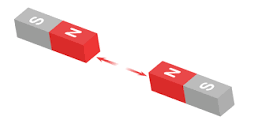
What will happen when two unlike poles of magnets put together?
They attract each other
They repel each other
What will happen when two like poles of magnets put together?
The attract each other
They repel each other

In which part of a magnet is the magnetic force strongest?
In the Center
At the Poles
In the middle
At the North Pole only
What are the 2 parts of a magnet?
North Pole and South Pole
North Pole and West Pole
South and East Pole
South and South Pole

Where is the strongest pull on a magnet?
poles
sides

What are the two poles on a magnet?
north and south
east and west

What is it called when magnets push apart?
repel
attract

What is it called when magnets pull on other magnets?
attract
repel
Which poles attract?
opposite
same
Which poles repel?
same
opposite
Which poles attract?
north to south
north to north
Which poles repel?
north to north
north to south

What is the pull of a magnet called?
magnetic force
gravity
Does a magnet have to touch a paper clip to exert a force?
no
yes
Light travels in straight lines until reflected or refracted by another object.
True
False
Light is REFRACTED when it bounces off objects such as mirrors or other shiny surfaces.
True
False
A refracted image is a distorted or changed image from the original.
True
False
Light is ABSORBED when it strikes a surface; darker colors absorb more light.
True
False
Light energy that bends when it passes through a medium.
Light Refraction
Light Reflection
Light Absorption
Light Bulb
Light is ______ off shiny surfaces.
Refracted
Reflected
Absorbed
light bulb
An object that reflects light:
wall
door
mirror
chair
To soak up.
refraction
reflection
absorption
light bulb
A kind of energy that lets the eyes see around us.
sound energy
electrical energy
mechanical energy
light energy
A curved piece of clear plastic or glass that bends light rays.
lens
popscicle
salt
pepper
Ava is shining a flashlight at a mirror. Which of these happens when the light strikes the mirror?
It bounces back from the mirror.
It goes through the mirror.
It spreads out on the mirror.
It goes around the mirror.
Jonah turns on a flashlight, and light comes out. How will the light move when it comes out of the flashlight?
In a zigzag
In a circle
In a straight line
Back and Forth


This is an example of ____________.
Refraction
Absorption
Reflection
Scattering
................... is how loud or soft a sound is.
Speed
Wave
Volume


Which pair of terms best describes volume of sound?
high and low
loud and soft
loud and high
soft and low
How is a higher pitch produced on a guitar?
by plucking the strings harder
by tightening the strings
by loosening the strings
by stopping the strings from vibrating
Out of a car, jet, bicycle, and motorcycle, which form of transportation would produce a soft sound and why?
the jet because it flies high in the sky
the car because people ride inside of it
the bicycle because it does not have an engine
the motorcycle because it is small

Who would hear the song at the lowest volume?
child 1
child 2
child 3
child 4
Light Energy


Sounds are ...
a type of force
a type of electricity
a type of magnet
vibrations that travel through the air and can be heard by a person's ear.
Sounds travels through the air in ...
lumps
waves
strings
groups


What form of heat transfer makes the lava lamp work?
Convection
Conduction
Radiation
Which form of heat causes sunburn?
Convection
Conduction
Radiation

Which form of heat transfer makes the ice melt?
Convection
Conduction
Radiation

Which form of heat transfer is moving the hot air balloon?
Convection
Conduction
Radiation

