wayground logo

Free Printable Worksheets

Font size

S
M
L
XL
Worksheets

4/10- Test Review

Total questions: 45

Worksheet time: 37mins

Name
Class
Date
1.
Photodiodes are semiconductor devices that transform light into an electrical current. Photodiodes are used in many electronics, including remote controls and compact disc players. This technology depends on which specific characteristic of light?
a)
Light waves can interact to create waves of greater or lesser amplitude.
b)
Light waves scatter when they reflect off a rough, uneven surface.
c)
Light can cause some materials to emit electrons when it strikes them.
d)
Light travels faster through a vacuum than it does through a medium.
2.
What types of waves are used in ultrasounds?
a)
Sound
b)
Light
c)
Water
d)
Microwave
e)
Radio
3.
Which of the following is NOT a drawback of using digital signals to send information
a)
Expensive to store information
b)
Low accuracy of signal
c)
Small signal size
d)
Less noise/ interference
4.
You want to send an email- you have a choice of sending the email using digital or analog transmission methods. Which method will guarantee a higher degree of accuracy transmission
a)
Digital
b)
Analog
c)
Both methods have the same accuracy
5.
Binary code is an example of...
a)
Digital data transmission
b)
Analaog data transmission
c)
Binary can be used in either format
6.
A digital camera takes pictures by capturing information about the intensity and color of light for every tiny section of the image and then doing which of the following?
a)
Converting the information to numeric data
b)
Sending the information to a satellite
c)
Creating an exact duplicate of the image
d)
Storing the light in specialized cells
7.
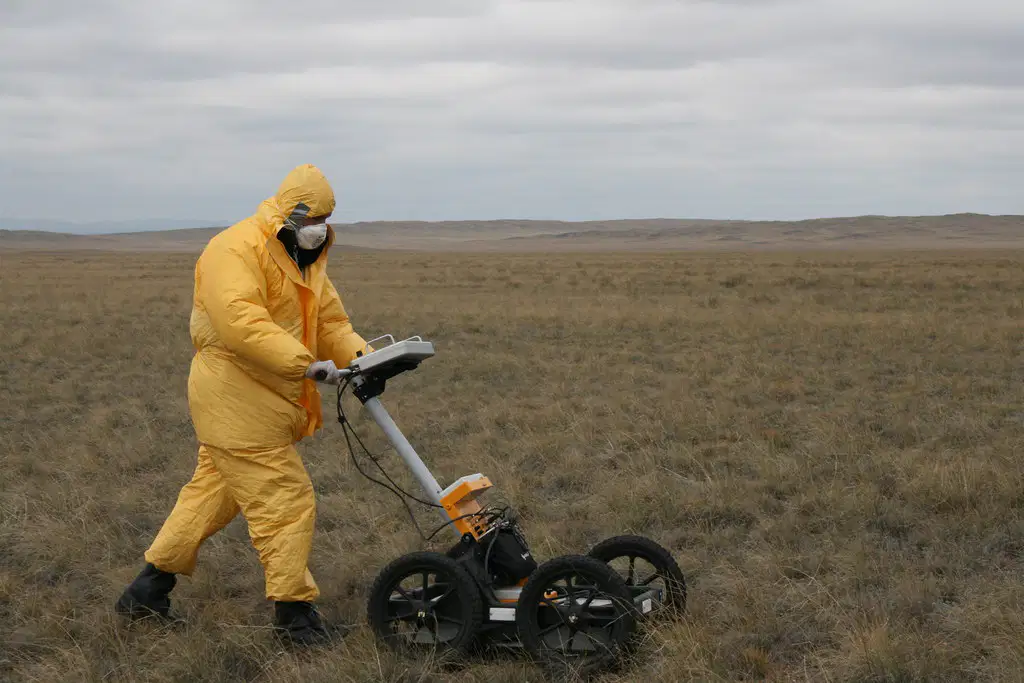
Ground penetrating radar uses radio waves to create images of various rock formations, including fossil fuels, deep underground. Radio waves are better than other electromagnetic waves for this purpose because longer wavelengths–
a)
carry greater amounts of energy.
b)
have the highest frequency.
c)
travel further into a solid medium.
d)
can be generated by nam-made devices.
8.
Which of the following is best suited for viewing cracked ribs?
a)
Ultrasound
b)
MRI
c)
X-Ray
d)
CAT scan
9.
Television broadcasts may be transmitted by-
a)
UV waves
b)
infrared waves
c)
microwaves
d)
radiowaves
e)
all of the above
10.

Which of the following devices primarily uses analog signals?

a)

Laptop

b)

Smartphone

c)

Vinyl Record Player

d)

Digital Clock

11.

Which of the following technologies relies on the principle of the photoelectric effect?

a)

AM radio

b)

Fiber optic cables

c)

Bluetooth devices

d)

Solar panels

12.

Which of the following devices is most likely to use analog signals for its operation?

a)

AM Radio

b)

Smartwatch

c)

Digital Camera

d)

Tablet

13.

What is a common advantage of using fiber optic cables for data transmission?

a)

Ability to transmit analog signals

b)

Low cost of installation

c)

Limited bandwidth

d)

High resistance to electromagnetic interference

14.

Which of the following technologies primarily relies on the use of microwaves?

a)

AM/FM radios

b)

Bluetooth devices

c)

Wi-Fi routers

d)

Infrared remote controls

15.

What is a common disadvantage of using analog signals for data transmission?

a)

High energy consumption

b)

Complex circuitry

c)

Limited bandwidth

d)

High noise interference

16.
Issac Newton believed that light travels as a __________________, Christiaan Huygens believed light travels a __________________
a)
particle, wave
b)
wave, particle
c)
wave, wave
d)
particle, particle
17.
What color of visible light has the highest frequency?
a)
violet
b)
red
c)
orange
d)
yellow
e)
green
18.
Reflection provide evidence that light acts as a...
a)
particle
b)
wave
c)
both a particle and a wave
19.
The photoelectric effect provides evidence that light acts as a...
a)
particle
b)
wave
c)
both a particle and a wave
20.
If you shine light on a metal plate during the photoelectric effect, and increase the brightness of the light (not the wavelength) what would you expect to happen?
a)
More electrons will be ejected from the metal, but the electrons will have the same energy
b)
The same amount of electrons will be ejected from the metal, but they will have more energy
c)
Nothing will happen, you need to increase wavelength
d)
Less electrons will be ejected, and the electrons will have more energy
21.
Light waves are oscillations in...
a)
electric and magnetic fields
b)
electric fields
c)
magnetic fields
d)
neither electric or magnetic fields
22.
What form of electromagnetic radiation has the longest wavelength?
a)
radio waves
b)
microwaves
c)
visible light
d)
ultraviolet
e)
gamma waves
23.
What is a blackbody object according to classical physics?
a)
An object that absorbs all energy and emits it as radiation.
b)
An object that reflects all energy and emits it as radiation.
c)
An object that absorbs some energy and reflects the rest.
d)
An object that emits energy without absorbing any.
24.
What is the ultraviolet catastrophe?
a)
The inability of blackbody objects to emit any light.
b)
The constant intensity of emitted light regardless of temperature.
c)
The increase in intensity of emitted light as objects are heated.
d)
The decrease in intensity of emitted light to zero as objects are heated.
25.
When a light ray moves from water into air, its speed will
a)
increase
b)
decrease
c)
stay the same
d)
it depends on the frequency and wavelength of the light
26.
Microwaves has a longer wavelength than visible light. What type of electromagnetic radiation the higher frequency?
a)
Microwaves
b)
Visible light
c)
They have the same frequency
27.
Refraction occurs when a wave changes its ___________ as it passes through a different medium
a)
speed
b)
color
c)
frequency
d)
intensity
e)
amplitude
28.
Which of the following would result in constructive interference if they were to collide?
a)
A crest and a trough
b)
A compression and a rarefraction
c)
Two crests
d)
A crest and a rarefraction
29.
Light waves travel the fastest in_________
a)
gas
b)
liquids
c)
water
d)
empty space (a vaccum)
e)
solids
30.
There is evidence to support that light behaves as a particle and evidence to support that light behaves as a wave. Which of the following behaviors of light only supports the claim that light behaves as a wave?
a)
Reflection
b)
Refraction
c)
Photelectric effect
d)
Diffraction
31.
The photoelectric effect is a phenomenon in which light, when it strikes a metal, produces photoelectrons. The photoelectric effect provides evidence to support which of the following claims?
a)
Electromagnetic radiation behaves like a particle.
b)
Metals produce electrons when exposed to light.
c)
Electrons can be converted into photons.
d)
Light has more energy than an electric circuit.
e)
Option 5
32.
Which of the following provides the best evidence that waves can pass each other and remain unaffected?
a)
A pebble dropped into a still pond will create evenly spaced ripples that radiate outward.
b)
The speed of sound increases in proportion to the medium through which it travels.
c)
Light scatters in multiple directions when it strikes a rough, uneven surface.
d)
Radio broadcasts at many frequencies can be sent and received at the same time.
33.
This image is a demonstration of...
a)
Blackbody radiation
b)
Photoelectric effect
c)
Diffraction
d)
Reflection
e)
Refraction
34.

Which of the following is a property of black body radiation?

a)

It depends on the material of the body

b)

It depends on the temperature of the body

c)

It depends on the shape of the body

d)

It depends on the colour of the body

35.

Which electromagnetic radiation has the longest wavelength?

a)

infrared

b)

gamma

c)

radio

d)

ultraviolet

36.

Shorter wave lengths can carry more energy. Which of these probably carries the MOST energy:

a)

Infrared light

b)

Visible light

c)

X-rays

d)

UV light

37.

Which type of electromagnetic radiation is used in night vision goggles?

a)

infrared

b)

ultraviolet

c)

microwave

d)

gamma

38.

Which phenomenon demonstrates that light can behave as a wave?

a)

Pair production

b)

Compton scattering

c)

Diffraction

d)

Photoelectric effect

39.

Electromagnetic waves can behave as particles that are called ______.

a)

photons

b)

protons

c)

electrons

d)

neutrons

40.

Electromagnetic waves exhibit properties of waves and particles.

a)

True

b)

False

41.
Which of the following is true about waves?
a)
When wavelength increases frequency increases
b)
When wavelength decreases, frequency increases
c)
When wavelength decreases, frequency decreases
42.

Which of the following phenomena demonstrates that light can behave as both a wave and a particle?

a)

Refraction

b)

Reflection

c)

Photoelectric effect

d)

Diffraction

43.

Which of the following electromagnetic waves has the shortest wavelength?

a)

Radio waves

b)

Microwaves

c)

Ultraviolet

d)

Gamma rays

44.

Which of the following colors of visible light has the lowest energy?

a)

Red

b)

Violet

c)

Green

d)

Blue

45.

What is the primary reason digital signals are preferred over analog signals for data transmission?

a)

More expensive

b)

Higher noise interference

c)

Lower accuracy

d)

Easier to store and process