
 Worksheets
G11 Q3 FINAL EXAM REVISION
Total questions: 137
Worksheet time: 3hrs 32mins

How many covalent bonds does carbon need to form in order to have a full octet? [C=6]
What is a double bond?
a bond between two atoms
one pair of electrons shared between two atoms
two pairs of electrons shared between two atoms
three pairs of electrons shared between two atoms
NH3 has how many lone pairs? [N=7 ,H=1]
0
1
2
3
How many valence electrons does nitrogen have? [N=7]
What is it called if there are three-pairs of electrons being shared?
Triple bond
Trigonal bond
Tri-bond
Three bonds
Which of these would be covalently bonded?
Sodium, Na and potassium, K
Magnesium, Mg and oxygen, O
Fluorine, F and chlorine, Cl
Helium, He and argon, Ar

Which of the following is the correct Lewis dot structure for the molecule fluorine (F2)? [F=9]
Which is the correct molecular structure for carbon dioxide? [C=6 ,O=8]


Which of the following is the correct Lewis structure for the compound PBr3? [P=15 ,Br=35]

What is the correct structure for BF3? [B=5 ,F=9]
Option A.
Option B.
Option C.
Option D.

Complete the sentence: In covalent bonds, electrons are _______________________
Lost
Gained
Halved
Shared
Hydrogen needs _____ electrons in its valence shell to be stable. [H=1]
The electrons on the outermost energy level of the atom are called:
extra electrons
valence electrons
ions
elements
As bond length increase the strength...
increases
decreases
no change
The reaction in which the energy released.
endothermic
exothermic
none of these
The number of covalent bonds form in group 17
One
Two
Three
Number of covalent bonds can form in group 16
three
two
four
Name the bond in which the orbitals overlap head to head
Ionic bond
sigma bond
pi bond


How many sigma bonds are in the following molecule?
0
1
2
3
5

How many pi bonds are in the following compound?
0
1
2
3
5

achieved octet
incomplete octet
expended octet
odd number electrons

achieved octet
incomplete octet
expended octet
odd number electrons

achieved octet
incomplete octet
expended octet
odd number electrons

achieved octet
incomplete octet
expended octet
odd number of electrons

achieved octet
incomplete octet
expended octet
odd number electrons

achieved octet
incomplete octet
expended octet
odd number of electrons

achieved octet
incomplete octet
expended octet
odd number electrons
Select the 3 exceptions to octet rule.
Expanded octet
Even number electron
Incomplete octet
Odd number electron
Which of the following has the chemical formula of
carbon tetraflouride?
CF
CF2
CF3
CF4
What is the formula of tetraphosphorous heptaflouride?
PF7
P2F6
P4F5
P4F7
What is the chemical name for the compound with the formula Na2S?
sodium fluoride
magnesium sulfide
lithium oxide
sodium sulfide
P4Cl5
Which of these compounds is not an acid?
HCl
NaOH
HNO3
H2SO4
Oxyacids will contain __________. Check all that apply.
chlorine
an oxoanion
just hydrogen and a non-metal
the O-2 ion
the H+ ion
What prefix is used to name binary acids?
per-
hydro-
hypo-
bi-
The suffix -ite in the name of a polyatomic ion becomes ______ in the acid name.
-ous
-ate
-ide
-ic
The suffix -ic in the name of an oxyacid, implies that the polyatomic ion in the acid has a ________ suffix.
-ous
-ate
-ide
-ite
What is the formula for hydrobromic acid?
HBrO
HBrO2
HBrO3
HBr
Which of the following are binary acids? Check all that apply.
HCl
HNO3
H2S
KCl
H2CO3
Is H2S an oxyacid or Binary acid?
Oxyacid
Binary Acid
Select all of the oxyacids from the list below.
H2CO3
HCl
HCN
HNO3
HNO2 (nitrite ion)
hydronitrogen
hydrogen nitrogen oxygen
nitrous acid
nitric acid
H2SO3 (sulfite ion)
sulfuric acid
hydrosulfuric acid
sulfurous acid
persulfuric acid
Chlorous acid (chlorite ion)
HClO3
HClO2
HClO
HCl
Oxyacids contain hydrogen, oxygen, and one other element?
True
False
Name this acid: H2SO4 (sulfate ion)
hydrogen sulfate
hydrosulfuric acid
sulfuric acid
sulfurous acid
hydrosulfurous acid
Name the acid: H3PO4 (phosphate ion)
hydrophosphoric acid
phosphorous acid
phosphoric acid
phosphoric hydroxide
HIO3 (iodate ion)
Iodic acid
hydrogen iodine oxygen acid
hydrogen iodide acid
Of the oxyanions ClO4-, ClO3-, ClO2-, and ClO-, which is the perchlorate ion?
ClO4-
ClO3-
ClO2-
ClO-

What bond is formed between a metal and a nonmetal?
Covalent bond
Ionic bond
Hydrogen bond
Metallic bond
In a(n) ________ electrons are transferred from one atom to another
ionic compound
covalent compound
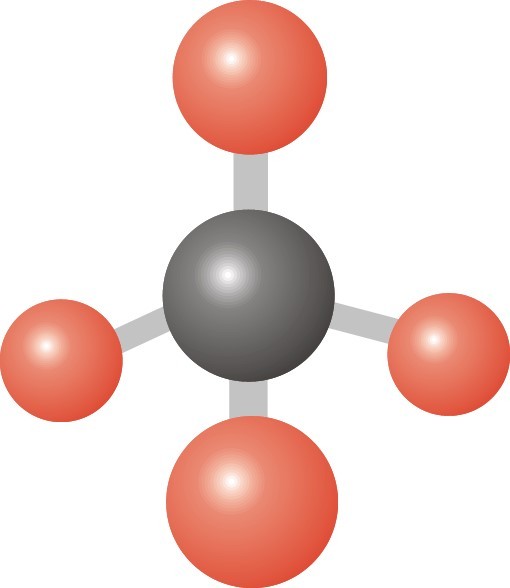
What would be the bond angle between atoms in this molecule?
180
120
90
109.5

What would be the bond angle between atoms in this molecule?
109.5
120
180
90
What shape would a molecule have if it has 2 bonded pairs and 1 lone pair around its central atom? (It may help if you sketch this out)
Linear
Trigonal planar
Tetrahedral
Bent

What is the name of this molecule's shape?
Bent
Linear
Tetrahedral
Trigonal pyramidal

What 3-D shape would this molecule have: H2S ?
bent
tetrahedral
linear
trigonal pyramidal

What is the name of this molecular shape?
trigonal pyramid
tetrahedral
bent
trigonal planar

What 3-D shape would this molecule have?
Trigonal planar
Pyramidal
Tetrahedral
Bent
What 3-D shape would this molecule have?
tetrahedral
trigonal planar
trigonal pyramid
bent

What would be the bond angle between atoms in this molecule?
90
120
180
109.5
Which Lewis Dot Model drawing correctly shows an O2 molecule?


What shape is a hydrogen sulfide molecule (H2S)?
linear
tetrahedral
bent
trigonal pyramid
A hybrid occurs when two things are combined and the result has characteristics of both is called
Molecular geometry
Molecular shapes
Hybridization
None of the above

Two carbon atoms form a linear shaped ethene, C2H4, molecule when bonded with four other hydrogen atoms. Prior to bonding, the carbon atom
does not hybridise
undergoes sp hybridisation
undergoes sp2 hybridisation
undergoes sp3 hybridisation
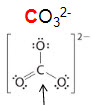
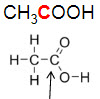
What is the hybridization of the carbon atom indicated by the arrow?
sp hybridization
sp2 hybridization
sp3 hybridization
sp3d hybridization
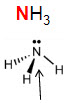
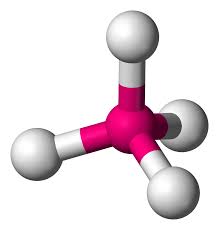
What is the hybridization of this molecule shown above
sp
sp2
sp3
sp4
Which of the following images represents a Trigonal Planar molecular geometry?


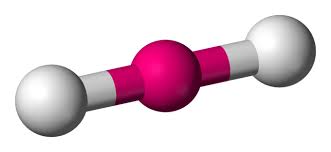
What is the hybridization of a linear molecule?
sp
sp2
sp3
sp3d
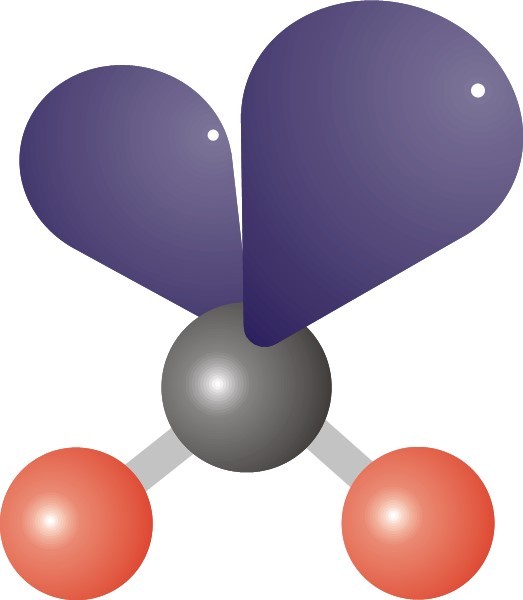
What molecular geometry would PH3 have?
Trigonal Pyramidal
Trigonal Bipyramidal
Bent
Linear
What is the molecular geometry/shape of HCN?
linear
trigonal planar
bent
tetrahedral

What is the molecular geometry/shape of a molecule with 3 shared pairs and 0 unshared pairs?
Linear
Trigonal Planar
Trigonal Pyramidal
Tetrahedral
What is the molecular geometry/shape of a molecule with 4 shared pairs and 0 unshared pairs?
Linear
Bent
Trigonal Pyramidal
Tetrahedral
What is the molecular geometry/shape of a molecule with 2 shared pairs and 2 unshared pairs?
Linear
Bent
Trigonal Pyramidal
Tetrahedral
Which of these is the shape of CO2?


Which of these is the shape of NH3?
Which of these is the shape of BF3?
Polar and nonpolar are two types of the ... bond
Ionic
Covalent
A polar bond happens between ...
metal/ non metal
Two non metals of the same strength
Two non metals, one is stronger than the other
Two metals
... bond happens when electrons are shared EVENLY between the two bonded atoms.
Covalent polar
Covalent nonpolar
Ionic
Metallic
The bond between two chlorine atoms in Cl2 molecule is ...
Ionic
Covalent polar
Covalent pure
metallic

Chloroform (CHCl3) is a .... molecule.
polar
nonpolar
ionic

NH3 is a ... molecule
Polar
Nonpolar

CCl4 is a ... molecule.
polar
nonpolar
ionic

What is the AXE # of this molecule ?
AX3E3
AX3E
AXE3
AX3E2

What is the AXE # of the molecule shown?
AX2E3
AXE3
AX4E
AX3E2

What is the AXE # of this molecule?
AE4
AX4
AX3E
AX3
According to VSEPR theory, atoms and unshared pairs orient themselves so that
they are all in the same plane.
they are at 90 degree angles.
they are as close to each other as possible.
they are as far apart as possible.
What is the significance of the VSEPR theory in chemistry?
It helps predict the 3D arrangement of atoms in a molecule.
It determines the boiling point of substances.
It explains the color of chemical compounds.
It identifies the types of chemical bonds present.
What is the bond angle in a tetrahedral molecular geometry?
90 degrees
109.5 degrees
120 degrees
180 degrees

What type of bond is depicted in the image?
Covalent
Polar Covalent
Ionic

Measure of the tendency of an atom to attract a bonding pair of electrons is known as...
electronegativity
bond polarity
angular momentum
valence electrons
Partial charges are present in which type of bond?
Ionic
Nonpolar Covalent
Polar Covalent
Both Polar Covalent and Ionic
The polarity of a bond is determined by...
The sum of the electronegativities of the two atoms
The difference in the electronegativities of the two atoms
The charges of the atoms
None of the Above
In a polar covalent bond, which atom will have a partial positive charge? (choose 2 correct answers)
The atom that attracts fewer electrons
The atom with the greater electronegitivity
The atom that attracts more electrons
The atom with the lower electronegativity

The difference in electronegativity affects the type of bond will be formed. What type of bond would be formed with a difference of 2.0?
Covalent
Polar Covalent
Ionic
The difference in electronegativity affects the type of bond will be formed. What type of bond would be formed with a difference of 0.3?
Covalent
Polar Covalent
Ionic
Hydrogen bonding occurs when a hydrogen atom bonded to N, O, or F is attracted to another molecule's N, O or F atom. Which of the following can participate in hydrogen bonding?
CBr4
NO2
H2S
NH3
Dipole-dipole attractions occur between polar molecules. Which of these molecules is polar?
H2
HCl
Cl2
Br2
Which of these molecules can participate in dipole-dipole attractions? Select all that apply.
Br2
CF4
I2
PCl3
CO
Which of the following is NOT a kind of intermolecular force?
hydrogen bonding
covalent bond
dispersion forces
dipole-dipole attraction
Rank these in order of strength:
covalent bond
dispersion forces
hydrogen bond
dipole-dipole attraction
dipole-dipole>covalent bond>hydrogen bond>dispersion
dispersion>dipole-diple>hydrogen bond>covalent bond
covalent bond>hydrogen bond>dipole-dipole>dispersion
hydrogen bond>dipole-dipole>dispersion>covalent bond
What must the difference in electronegativity between two atoms be in order for the bond between them to be nonpolar covalent?
less than 0.4
greater than 1.7
between 0.4 and 1.7
exactly 0

