
NEW
Font size
 Worksheets
Weather
Total questions: 45
Worksheet time: 50mins
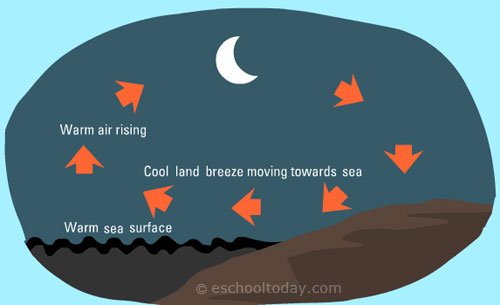
What is a land breeze?
A wind that blows from the sea to the land at night.
A wind that blows from the land to the sea at night.
A wind that blows from the sea to the land during the day.
A wind that blows from the land to the sea during the day.
What is a sea breeze?
A wind that blows from the land to the sea at night.
A wind that blows from the sea to the land at night.
A wind that blows from the sea to the land during the day.
A wind that blows from the land to the sea during the day.
What causes a land breeze?
The land cooling down faster than the sea at night.
The sea cooling down faster than the land at night.
The land heating up faster than the sea during the day.
The sea heating up faster than the land during the day.
How do land breezes affect local weather?
They make the nights warmer on the coast.
They make the nights cooler on the coast.
They make the days warmer on the coast.
They make the days cooler on the coast.
Which statement correctly defines wind?
The movement of air from areas of low pressure to areas of high pressure
The movement of air to a colder area in the atmosphere.
The movement of air from areas of high pressure to areas of low pressure.
The movement of air pushed around and bouncing off Earth's surface.
The Coriolis effect causes ___________.
the Earth to rotate on its axis
earthquakes
global winds to move in a curved path instead of a straight line
the Earth to revolve around the sun


Polar Cell
Hadley Cell
Ferrel Cell
Which conditions are most likely to develop over a land area next to an ocean during a hot, summer afternoon?
The air pressure over the land is lower than the air pressure over the ocean, and a breeze blows from the ocean.
The air pressure over the land is higher than the air pressure over the ocean, and a breeze blows from the ocean.
The air temperature over the land is lower than the air pressure over the ocean, and a breeze blows from the land.
The air temperature over the land is higher than the air pressure over the ocean, and a breeze blows from the land.
During the warmest part of a June day, breezes from the ocean toward the shore at the beach. Which statement best explains why this happens?
Winds usually blow from hot to cold areas.
Winds never blow from the shore to the ocean.
Air pressure over the ocean is higher than air pressure over the land.
Air pressure over the land is higher than air pressure over the ocean.
A cool breeze is blowing toward the land from the ocean on a warm, cloudless summer day. This condition is most likely caused by
the air temperature being higher over than the land than over the ocean
a high-pressure system over the land
a hurricane approaching from the ocean
a cold front that is slowly approaching the land from the ocean

In the diagram, arrows represent air movement near a ocean coastline on a Summer afternoon.
Compared to the air over the ocean, the air over the land has a
lower temperature and lower barometric pressure
lower temperature and higher barometric pressure
higher temperature and lower barometric pressure
higher temperature and higher barometric pressure
Why are most beaches often considerably cooler than nearby inland locations on hot summer afternoons?
A land breeze develops due to the lower specific heat of water and the higher specific heat of land.
A sea breeze develops due to the higher specific heat of water and the lower specific heat of land.
The beaches are closer to the equator than the inland locations are.
The beaches are farther from the equator than the inland locations are.
Adjacent land and ocean surfaces have the same temperature at sunrise on a clear, calm, summer day. Then the land and water were heated by the Sun for several hours. Which cross section shows the most likely direction of surface winds that will develop at this ocean shore?


Winds always blow from areas of _________ pressure to areas of _________ pressure.
high, high
low, low
low, high
high, low
Which heats up and cools more quickly?
Land
Water (Oceans)
They heat and cool equally
The Coriolis Effect is caused by what?
The wind blowing
Earth's gravity pulling things down
The rotation of the Earth
The pull of the Moon

Which areas typically have high pressure?
A and E
C
B and D
A, C, and E
Which areas typically have low pressure?
A and E
C
B and D
A, C, and E

If A is a low pressure band and B is a high pressure band, which direction does a global wind want to flow between these two areas?
North to south
South to north
East to west
West to east
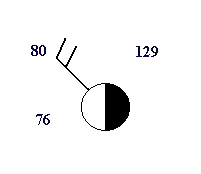
What is the temperature for the following station model?
4 ºF
76 ºF
80 ºF
129 ºF
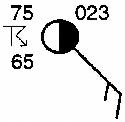
What is the dewpoint for the following station model?
10 ºF
23 ºF
65 ºF
75 ºF
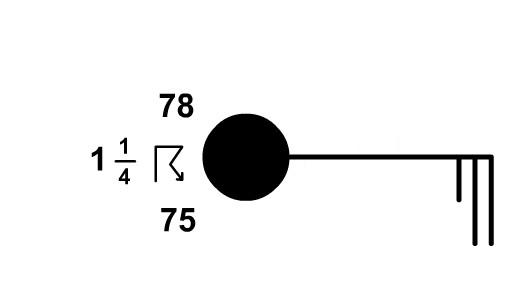
What is the present weather for the following station model?
rain
thunderstorms
drizzle
fog
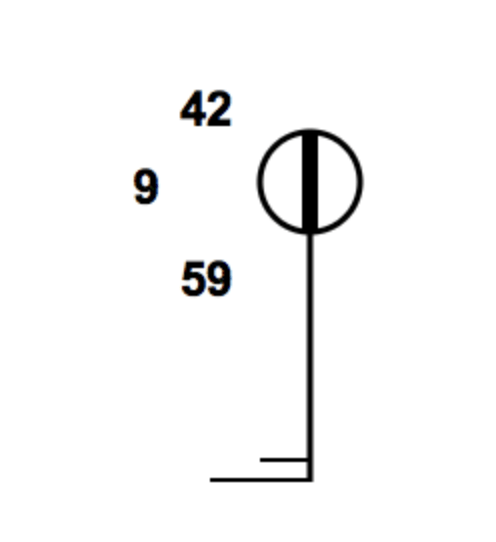
What is the visibility for the following station model?
1/2 mi
9 mi
42 mi
59 mi
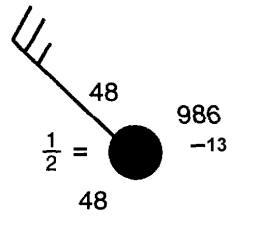
What is the wind direction for the following station model?
north
east
northwest
northeast
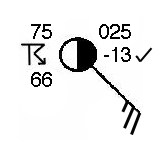
What is the wind speed for the following station model?
10 knots
15 knots
20 knots
25 knots
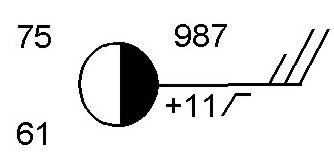
What is the barometric pressure for the following station model?
987 mb
998.7 mb
1098.7 mb
1098 mb
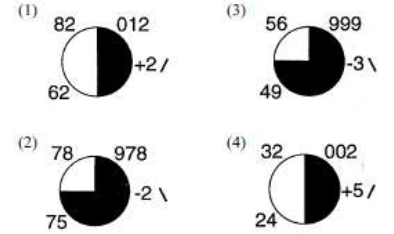
Which weather station shows the highest relative humidity?
1
2
3
4

Which city has the greatest temperature?
Niagara Falls
Rochester
Syracuse
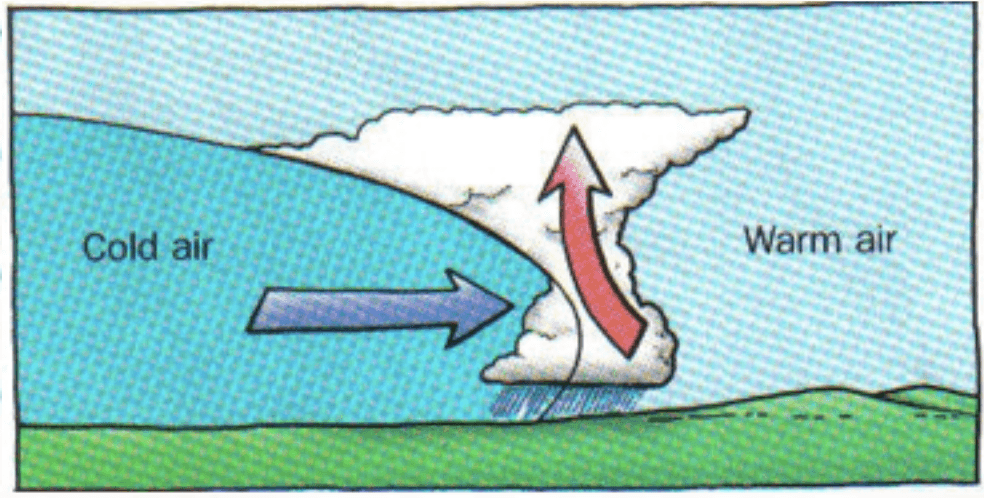
Name that front.
Cold Front
Warm Front
Stationary Front
Occluded Front

Brings some clouds and gentle rains.
Cold Front
Warm Front
Stationary Front
Occluded Front

Cold dense air slides underneath warm air. The warm air is forced up, cools, and condenses.
Cold Front
Warm Front
Stationary Front
Occluded Front

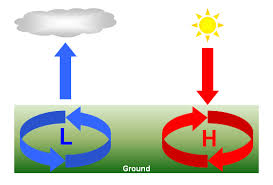
What kind of weather happens along a Warm Front?
Thunderstroms
Light Rain
Nothing
Wind

