
 Worksheets
Spring Break PS Review
Total questions: 150
Worksheet time: 4hrs 40mins
What is convection?
The transfer of heat through direct contact
The transfer of heat through electromagnetic waves
The transfer of heat through the movement of fluids
The transfer of heat through solid materials
Which of the following is an example of convection in liquids?
Boiling water in a pot
Heating a metal rod
Sunlight warming the ground
A microwave heating food
How does convection occur in gases?
Through the vibration of molecules
Through the movement of air currents
Through the absorption of light
Through the conduction of heat
Which mechanism of heat transfer involves the movement of fluids?
Conduction
Radiation
Convection
Insulation
What role does convection play in ocean currents?
It causes the water to freeze
It helps distribute heat throughout the ocean
It prevents the mixing of water layers
It causes the ocean to evaporate
Which of the following is an example of convection in gases?
A hot air balloon rising
A metal spoon heating up in a pot
A light bulb emitting light
A rock warming in the sun
How does convection contribute to weather patterns?
By reflecting sunlight back into space
By causing the Earth to rotate
By distributing heat and moisture in the atmosphere
By absorbing carbon dioxide
What happens to the density of a fluid as it is heated and rises?
The density increases
The density decreases
The density remains the same
The density fluctuates randomly
How does convection affect the climate in coastal regions?
It causes extreme temperature fluctuations
It moderates temperatures by distributing heat
It prevents rainfall
It increases the salinity of the ocean
What is the primary cause of convection currents in the atmosphere?
Differences in air pressure
Differences in air temperature
Differences in air composition
Differences in air humidity
In which layer of the Earth's atmosphere does convection primarily occur?
Stratosphere
Mesosphere
Troposphere
Thermosphere
What is the effect of convection on the temperature of a room when a heater is used?
It causes the temperature to decrease
It causes the temperature to remain constant
It causes the temperature to increase evenly
It causes the temperature to fluctuate
What happens to air as it rises in the atmosphere due to convection?
It cools and expands
It warms and contracts
It remains at the same temperature
It becomes denser
Why are elements considered unique in the periodic table?
Because each element has a unique atomic number
Because elements have similar properties
Because elements can be found in different states
Because elements can form compounds
What makes isotopes of an element unique?
They have different numbers of protons
They have different atomic numbers
They have different numbers of neutrons
They have different chemical properties
How does the electron configuration contribute to the uniqueness of an element?
It changes the element's state of matter
It affects the element's color
It determines the element's atomic mass
It defines the element's chemical properties
What is the primary factor that determines the chemical properties of an element?
The number of protons
The number of neutrons
The atomic mass
The number of electrons
What is the primary reason water has a high specific heat capacity?
Hydrogen bonding between water molecules
Its molecular weight
Its density
Its ability to dissolve substances
Why does ice float on water?
Ice has a higher temperature than water
Ice is denser than water
Ice has a lower density than water
Ice is heavier than water
What property of water allows it to dissolve many substances?
Its viscosity
Its low freezing point
Its polarity
Its high boiling point
Which of the following is an example of COHESION?
water sticking to water
water sticking to glass
oil sticking to plastic
hydrogen sticking to oxygen
Which of the following is the CORRECT list of water's properties?
Read Carefully!
adhesion, cohesion, high specific heat, universal solvent
adhesion, cohesion, low specific heat, universal solvent
adhesion, no cohesion, low specific heat, universal solute
no adhesion, cohesion, high specific heat, universal solute
Water sticks well to many materials. What term relates to this property of water?
cohesion
adhesion
density
surface tension
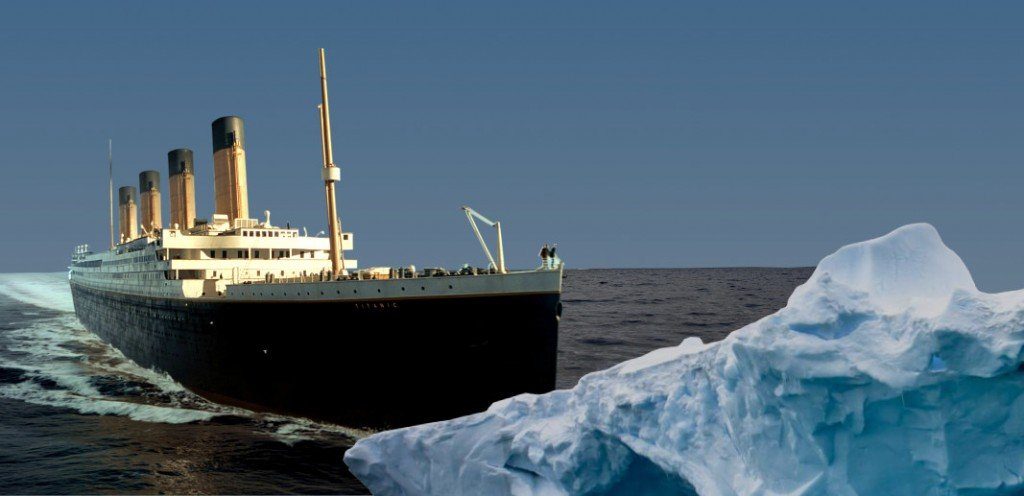
Why does ice float?
water expands when it freezes, making ice less dense than water
water compacts when it freezes, making ice more dense than water
hydrogen bonds in water push the ice to the surface
ice is afraid of water, and avoids it
Water has good __________ which can be seen when insects and leaves are able to sit on top of water.
synergistic effects
balance
surface tension
photosynthesis
Which property of water will cause water to bead up on glass?
Adhesion
Cohesion
Ability to dissolve substances
High specific heat

There are partial charges within a water molecule which cause water to have special properties. This makes water a ________ molecule.
Polar
Nonpolar
Hydrophobic
Ionic

Which box has a higher density?
Box A
Box B
cannot be determined
they are the same

How is viscosity & density affected when a fluid is heated?
viscosity increases & density increases
viscosity decreases & density decreases
viscosity decreases & density increases
temperature has no affect on viscosity or density
The ___________ of a fluid refers to its “thickness,” or its resistance to flow.
temperature
colour
taste
viscosity
1. Daily choices that humans make affect the environment. Sometimes, our lifestyles can harm
the environment. For example, fossil fuel power plants generate waste in the form of air
emissions, thermal releases and climatic impacts. Which of the following statements would be
most helpful in protecting the environment from fossil fuel power plants?
Using solar power to generate electricity.
Buying fewer mass produced products.
Buying paper products made from harvested trees.
Using natural gas as a fuel source instead of petroleum
Offshore drilling is a common practice for obtaining oil for human use. Oil can be used for
transportation fuels, production of plastic, and making electricity.Which of the following
statements best describes an environmental concern with using offshore drilling to obtain oil?
Offshore drilling requires a large amount of energy input to obtain a small amount of oil.
Offshore drilling produces oil that cannot be used directly, therefore requiring further
expensive processing.
Offshore drilling is not cost effective because it requires specialized equipment to drill the
oil.
Offshore drilling can lead to a contamination of marine ecosystems that threaten the
organisms living there.
Coal mining is the process of extracting coal from the ground. Coal is valued for its energy
content and since the 1880s has been widely used to generate electricity. Steel and cement
industries use coal as a fuel for extraction of iron from iron ore and for cement production.
Predict a negative effect that could occur over the next 50 years if coal mining increased.
Coal mining could produce acid rain causing burns to human skin.
Coal mining creates nuclear energy that causes immediate death
Coal mining can reduce the natural environment in the surrounding land.
Coal from mining can wash into bodies of water and cause an overgrowth of algae.
Scientists are currently researching new ways to obtain energy from our natural, renewable
resources. Which statement gives the best explanation of the benefits of renewable resources.
Renewable resources are nonrenewable and expensive to produce.
Renewable resources are versatile and emit various amounts of pollution.
Renewable resources generates energy that produces no greenhouse gases.
Renewable resources are natural, but cause destruction of land surrounding production.
Oil is one of the most common non-renewable resources on Earth. Human consumption of oil
is happening at a rate that may cause concern. Which of the following would be evidence that
humans have reached peak oil consumption?
There is a decreased demand for oil globally.
Oil is easily accessible in many locations on Earth.
Oil requires greater lengths and expenses to obtain.
The cost of oil has dropped in many developed countries.

The chart below shows energy consumption sources in the United States.
Which conclusion can be made regarding both the distribution of energy consumption in the
United States and the impact this energy consumption has on the environment?
The majority of energy consumed in the United States is produced using renewable
resources, which has a positive impact on the environment.
The majority of energy consumed in the United States is produced using renewable
resources, which has a negative impact on the environment.
The majority of energy consumed in the United States is produced using nonrenewable
resources, which has a positive impact on the environment.
The majority of energy consumed in the United States is produced using nonrenewable
resources, which has a negative impact on the environment.
Deforestation is the clearance, or removal of a forest from land which is then converted to a
non-forest use. Deforestation can involve the conversion of forest land to farms, ranches, or
urban use. The most concentrated deforestation occurs in tropical rainforests. Deforestation of
areas considered to be rich sources of genetic material could limit future agricultural and
medical advances for future generations. How could deforestation limit agricultural and medical
advances?
It can maintain the ecosystem equilibrium.
It can deplete the ecosystem’s ozone layer.
It can decrease the ecosystem’s biodiversity.
It can increase the ecosystem’s carrying capacity.
When scientists and interested citizen groups attempt to improve the quality of life for Earth’s
population there are some factors that need to be considered. To make a well rounded
decision it is important to look at environmental and economic concerns. What is general
consideration that can be made when making policy decisions?
To require that all natural areas surrounding Florida peninsula become marine
sanctuaries.
To remove regulations and monitoring efforts when they conflict with the development of
new residences.
To enact and enforce laws regarding the environment but without compromising the
needs of future generations.
To resettle areas where toxic dumps were found after natural bioremediation has removed
all dangers to humans.

Increased use of fossil fuels as an energy source has increased the amount of carbon dioxide
emissions into the atmosphere. The graph below shows the levels of carbon dioxide emissions
among renewable and nonrenewable resources.
How does the monitoring of carbon dioxide emissions with atmospheric levels of carbon
dioxide affect our decisions on both renewable and non-renewable energy sources?
Renewable and non-renewable resources both result in similar amounts of carbon dioxide
emissions, so this data does not affect our choice of renewable and non-renewable
energy resources.
Renewable resources generally result in lower carbon dioxide emissions, therefore our
goal should be to increase our use of renewable resources in order to slow our increase in
levels of atmospheric carbon dioxide.
Non-renewable resources generally result in lower carbon dioxide emissions, therefore
our goal should be to increase our use of non-renewable resources in order to slow our
increase in levels of atmospheric carbon dioxide.
Renewable resources generally result in lower carbon dioxide emissions, but they are
much more expensive when compared with non-renewable energy resources. Our goal
should be to increase our use of non-renewable resources in order to save on the costs of
using renewable resources.
Renewable energies generate from natural sources that can be replaced over a relatively short time scale. The following are examples of renewable energy resources except: Examples of renewable energies include solar, wind, hydro, geothermal and biomass.
solar
fossil fuels
wind
biomass
A tuning fork starts to vibrate when a certain note is played on the piano, This is an example of _______.
resonance
refraction
diffraction
reflection
What occurs when vibrations traveling through an object match the object's natural frequency?
reflection
diffraction
resonance
refraction
True or False: Sound needs a medium.
True
False
Natural frequency is best described as
the frequency at which an object naturally vibrates at when it is disturbed
a vibration that can be heard in the wild
the radio frequency that astronauts naturally use when travelling into space
the material used to make a swing
Sound is produced by -----
Heat energy
Low temperatures
Vibrations
Friction
True or False: Sound waves are faster than light.
False
True
What is a PUSH or PULL of an object?
Motion
Force
Friction
Gravity
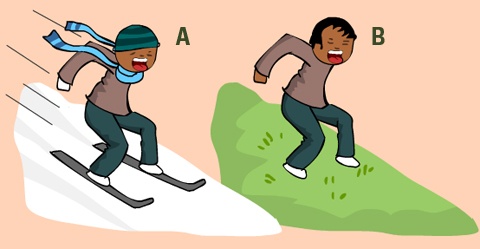
Why is it harder for the boy in Image B to get down the hill?
Motion
Friction
Work
Displacement
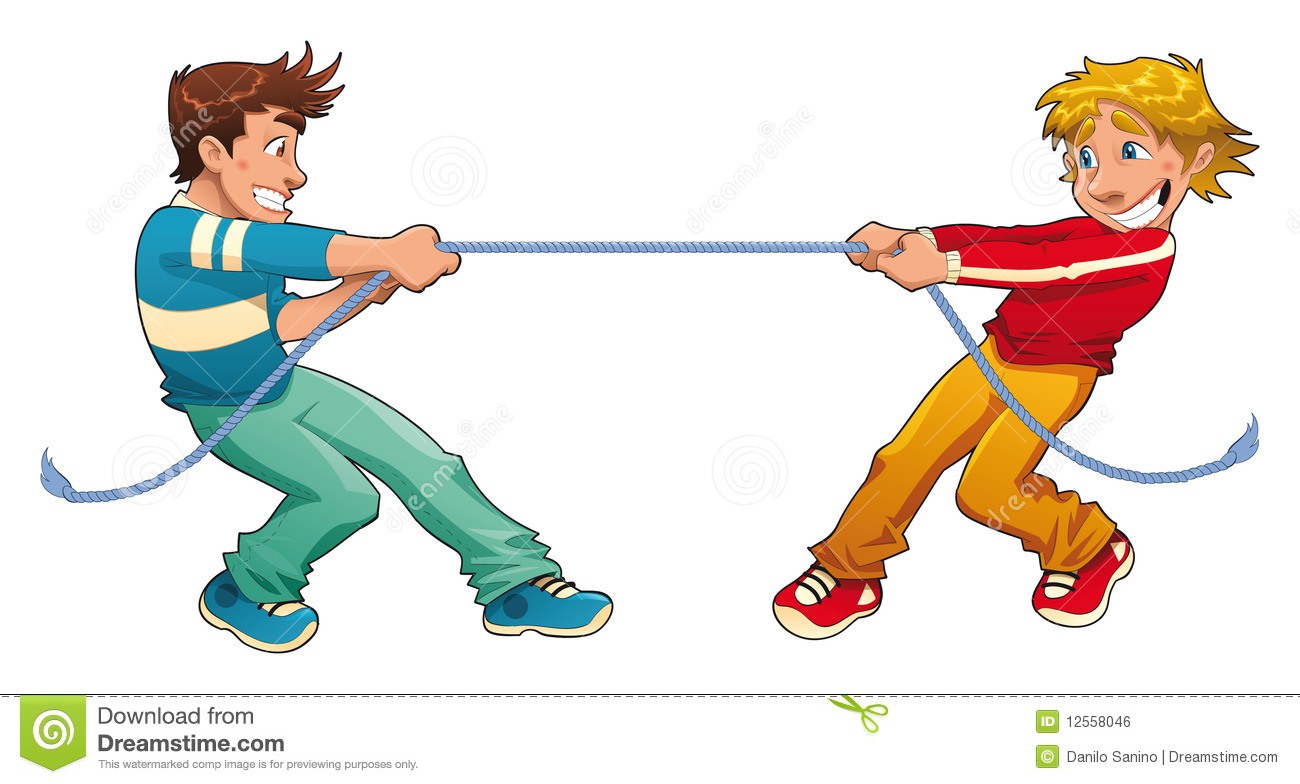
If these boys are pulling with the same amount of force. What will happen?
The boy in blue will win.
They will not move at all.
The boy in red will win.
Both will fall down.

It takes more force to accelerate the iron man on the left than the iron man on the right because the iron man on the left has more mass. This best describes
Newton's first law, the law of inertia
Newton's second law, the law of acceleration
Newton's third law, the law of action reaction
The law of universal gravitation

The formula ? = mass x acceleration or ? = m x a is used to find
Force
Velocity
Momentum
Gravity
1st
Law of Motion
2nd
Law of Motion
3rd
Law of Motion


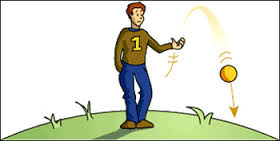

A squirrel sits on the ground and eats a donut. We know the forces on him must be balanced because...
Forces are always balanced
the squirrel is not accelerating
squirrels are projectiles
he's eating a donut

Newton's third law states that any action will have an _______ and ______ reaction
Equal and similar
Equal and opposite
Equal and different
Greater and opposite

This equation goes with which law?
Newton's first law of motion
Newton's second law of motion
Newton's third law of motion

You push against a wall and the wall is pushing back on you.
Newton's 1st Law
Newton's 2nd Law
Newton's 3rd Law


A runner races in the 100 meter dash. It takes her 10 seconds to finish. What is her average speed?
10 m/s
1000 m/s
100 seconds
10 seconds


The clown walked 27 feet in 9 seconds. what was his speed?
18 feet/sec
243 feet/sec
36 feet/sec
3 feet/sec

Describe the motion in the graph:
Constant Speed (positive slope)
Stopped (at rest)
Acceleration (increasing speed)
Return Home (negative slope)

Describe the motion in the graph:
Constant Speed (positive slope)
Stopped (at rest)
Acceleration (increasing speed)
Return Home (negative slope)

Describe the motion in the graph:
Constant Speed (positive slope)
Stopped (at rest)
Acceleration (increasing speed)
Deceleration (negative slope)

At 60 seconds, how far had this object traveled?
0 m
10 m
20 m
40 m
Which graph below shows 2 runners moving at the same speed?


In order to calculate speed, what two values do you need?
distance
direction
force
time

It took Sam 10 minutes to run 20 blocks. Calculate his speed.
30 min/block
10 min/block
2 blocks/min
0.5 blocks/min
What is hydro?
water
wind
nuclear
gas
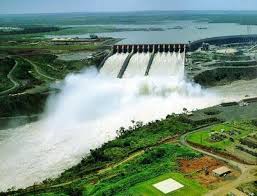
What are 2 cons (disadvantages) of using water power?
Dams are expensive to build
It creates a lot of electricity
It is renewable
numerous environmental consequences
What do you call the area where water is stored behind a dam?
reservoir
generator
refuge
turbine
What happens when water flows through a dam?
The water evaporates.
The water turns a turbine.
The water is pumped back up.
The water creates sparks making electricity.
What allows water to flow through a dam?
The water is pumped out.
The water constantly flows through without ever stopping.
The water is pushed out when a motor is turned on.
The water is released from a higher elevation to a lower elevation.
What is the job of a turbine?
When it spins, it makes sparks causing electricity.
It moves the energy from the flow of water to a generator.
It slows down the speed of the water to keep it at a steady pace.
It controls the water so it can be pumped back up the dam.
What does a generator do?
It spins when the water passes through it.
It moves the water from a higher elevation to a lower elevation.
It helps the movement of fish to pass safely through the dam.
It produces electricity.
An electric current flowing in one direction only is:
Alternate Current
Reverse Current
Direct Current
Indirect Current

Atoms are made up of what?
molecules
compounds
elements
subatomic particles

Which of the following are subatomic particles? (Check all that apply)
protons
neutrons
megatrons
electrons

Which subatomic particle has a negative charge?
proton
neutron
electron
cybertron

Which subatomic particle has no charge, also known as a neutral charge?
proton
neutron
electron
chakra

What is the center of an atom called?
The headquarters
The centrometer
The hypothesis
The nucleus

The nucleus of an atom contains which subatomic particles?
protons and electrons
protons and neutrons
electrons and neutrons
protons, electrons, and neutrons

Which subatomic particle does the RED(+) circle represent?
proton
neutron
electron
nucleus
Which subatomic particle does the YELLOW(-) circle represent?
proton
neutron
electron
nucleus
Which subatomic particle does the GREEN( ) circle represent?
proton
neutron
electron
nucleus
Which is a conductor and which is an insulator?
Which of the following IS NOT a behavior that light waves can undergo when they reach a boundary between two media?
stopping at the edge of the boundary
reflection off of the boundary
transmission into the boundary
refraction through the boundary
Reflection is to bouncing as refraction is to:
bending.
breaking.
dissipating.
halting.

This drawing illustrates the ________________________ of a light wave.
refraction
reflection
diffraction
dispersion
When a light ray strikes a smooth, flat surface, what is the relationship between the angle of incidence and the angle of reflection?
They are equal.
The angle of incidence is twice that of the angle of reflection.
The angle of reflection is twice that of the angle of incidence.
They combine to add up to 180o.

A concave mirror is shaped like the inner surface of a sphere. How do you think light rays will reflect off a concave mirror?
Reflected rays converge toward the center line of a concave mirror.
Reflected rays diverge away from the center line of a concave mirror.
Reflected rays reflect straight back at the angle that they came in.
Reflected rays are absorbed by a concave mirror.
The way that a surface reflects light depends on its texture. Rough surfaces such as cloth and wood tend to scatter light, reflecting it in many different directions. This type of reflection is called:
diffuse reflection.
specular reflection.
incident reflection.
distorted reflection.
The way that a surface reflects light depends on its texture. Smooth, shiny surfaces such as mirrors reflect light in a uniform (or close to uniform) direction. This type of reflection is called:
specular reflection.
metallic reflection.
crystal reflection.
sharpened reflection.

This type of telescope is referred to as a ________________ telescope.
reflecting
refracting
diffracting
diffusing
Objects that generate their own light are called:
luminous objects.
illuminated objects.
shiny objects.
reflective objects.
In order to view an object, you must sight along __________ at that object.
a line
a circle
an ellipse
a triangle
Light is known to behave in a very predictable manner. If a ray of light could be observed approaching and reflecting off of a flat mirror, then the behavior of the light as it reflects would follow a predictable law known as the law of reflection. Which diagram below illustrates the law of reflection?


A ray of light is incident towards a plane mirror at an angle of 30-degrees with the mirror surface. What will be the angle of reflection?
60o
30o
90o
45o
Light that is reflected or transmitted through certain media so that all vibrations are restricted to a single plane is called:
polarized light.
ambient light.
direct light.
indirect light.
When light rays strike a rough surface, they are:
scattered.
focused.
absorbed.
refracted.
What type of energy does a sound wave have?
Mechanical
Radiant
Electrical
Sound
Sound is produced by -----
Heat energy
Low temperatures
Vibrations
Friction
True or False: Sound needs a medium.
True
False
True or False: Sound waves are faster than light.
False
True

Areas of increased pressure on a sound wave are known as a ----
Rarefaction
Compression
Frequency
Amplitude

The distance from the beginning of one compression to the beginning of the next compression is called a -----
Rarefaction
Frequency
Wavelength
Compression

Spread out areas or areas of decreased pressure on a sound wave are known as a ---
Rarefaction
Amplitude
Compression
Hertz
The number of wavelengths that pass a fixed point each second is known as ----
Hertz
Amplitude
Frequency
The unit for measuring frequency is the ---
Joule
Hertz
Gram
Newton

The measure of the amount of energy in a wave is ----
Wavelength
Hertz
Frequency
Amplitude
The Tacoma Narrows Bridge, musical instruments, and crystal stemware are examples of -----
Frequency
Resonance
Interference
Speed
The speed of sound depends on these two things:
The type of medium and the temperature of the medium
Speed of the medium and temperature of the medium
Temperature of the medium and sound of the medium
None of the above
Sound waves travel the fastest through ---
Liquids
Gases
Solids

Sonar and echolocation use ----- to detect objects under water.
Refraction
Reflection
Energy cannot be created nor destroyed, only transferred from one form to another.
True
False
__________ energy is the energy of motion.
Potential
Kinetic
As the velocity of an object decreases, its KE will...
increase
decrease
stay the same
What two factors affect an object's kinetic energy?
area and volume
mass and weight
weight and height
mass and speed
Increasing an object's speed will increase its kinetic energy.
false
true

At which position is the potential energy the greatest?
1
4
5
6
At which these positions is the potential energy the least?
1
4
5
6
At which of these positions is the kinetic energy the greatest?
1
3
5
6
At which position is the kinetic energy the least?
1
3
5
6

If the coaster has a mass of 735 kg and a height of 95 meters, what is the potential energy at position 1?
7.74 J
34,912.5 J
69,825 J
684,285 J
Ignoring friction, if the PE = 684,285 J at position 1, what is the KE at position 5 (lowest pt)?
0 J
34,912.5 J
69,825 J
684,285 J

