wayground logo

Free Printable Worksheets

Font size

S
M
L
XL
Worksheets

Chemistry Bonding Unit

Total questions: 85

Worksheet time: 2hrs 56mins

Name
Class
Date
1.
According to the octet rule most elements need _______ valence electrons.
a)
2
b)
8
c)
6
d)
18
2.
Metals and nonmetals form which kind of bond?
a)
Polar covalent
b)
Ionic
c)
Non-polar covalent
d)
Metallic
3.
Covalent compounds
a)
Share electrons
b)
transfer electrons
c)
contain a sea of electrons
d)
conduct electricity
4.
What is a double bond?
a)
a bond between two atoms
b)
one pair of electrons shared between two atoms
c)
two pairs of electrons shared between two atoms
d)
James Bond's brother
5.
How are covalent bonds formed?
a)
Sharing of electrons
b)
Transfer of electrons
6.
How are ionic bonds formed?
a)
Transfer of electrons
b)
Sharing of electrons
7.

Hexaboron monosilicide

a)

B5S

b)

B6S

c)

B6Si

d)

Br6Si1

e)

Br6Si

8.

Chlorine dioxide

a)

Cl1O2

b)

CO2

c)

ClO2

d)

CrO2

9.

Iodine pentafluoride

a)

I1P6

b)

I1F5

c)

IF5

d)

IFl5

10.

Dinitrogen trioxide

a)

NO3

b)

N2O3

c)

N4O6

d)

2N3O

11.

Phosphorus triiodide

a)

KI3

b)

P1I3

c)

PhI3

d)

PI3

12.

CCl4

a)

Methane

b)

carbon tetrachloride

c)

carbon quadchloride

d)

monocarbon tetrachloride

13.

NF3

a)

mononitrogen trifluorine

b)

mononitrogen trifluoride

c)

nitrogen trifluoride

d)

ammonia

14.
A covalent bond is
a)
a bond that shares electrons metallicaly
b)
A bond that shares electrons with non metals
c)
Metalloids bonding
d)
metals and nonmetals bonding
15.
Which of the following is the correct Lewis dot structure for the molecule fluorine (F2)?
a)
A
b)
B
c)
C
d)
D
16.
How many valence electrons are in Phosphorus?
a)
15
b)
4
c)
5
d)
31
17.
How many electrons does each line indicate are shared?
a)
1
b)
2
c)
3
d)
4
18.
Which of the following is the correct Lewis structure for the compound PBr3?
a)
structure A
b)
structure B
c)
structure C
d)
structure D
19.
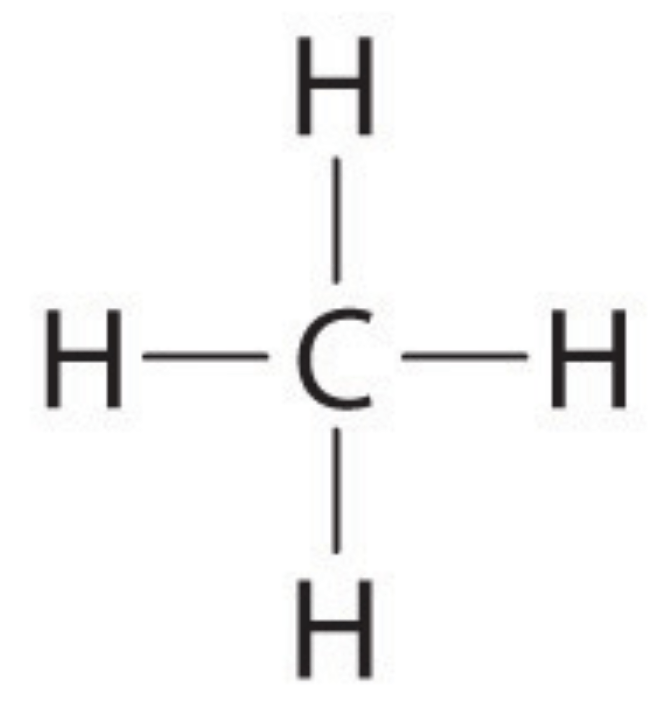
In the correct Lewis structure for CH4, how many unshared electron pairs surround the carbon?
a)
2
b)
8
c)
0
d)
4
20.
When writing Lewis Structures, only __________ electrons are used.
a)
Inner shell
b)
Core 
c)
Valence
d)
Stable
21.

What is the correct Lewis Dot Structure for ammonia NH3

a)
b)
c)
d)
22.

Which is the correct molecular structure for carbon dioxide?

a)
b)
c)
d)
23.

How many total valence electrons are participating in bonding in the molecule above?

a)

8

b)

4

c)

2

d)

3

24.

NH3 has how many lone pairs?

a)

0

b)

1

c)

2

d)

3

25.

In HCN (Carbon is usually the central atom) what kind of bond is between the C and N

a)

Single

b)

Double

c)

Triple

26.

Determine the molecular geometry of the given structure.

a)

Trigonal Pyramidal

b)

Trigonal Bipyramidal

c)

Trigonal Planar

d)

Tetrahedral

27.
Choose the correct shape for this molecule:
a)
linear
b)
Trigonal pyramidal
c)
Bent
d)
Tetrahedral
28.
*
a)
linear
b)
trigonal planar
c)
trigonal pyramid
d)
bent of angular
29.
*
a)
trigonal pyramid
b)
linear
c)
bent
d)
angular
30.
What is the shape of H2O?
a)
linear
b)
tetrahedral
c)
bent
d)
trigonal pyramidal
31.
Choose the correct shape for this molecule:
a)
Bent
b)
Linear
c)
Tetrahedral
d)
Trigonal pyramidal
32.

What geometry will this molecular structure have? PH3

a)

bent

b)

tetrahedral

c)

linear

d)

trigonal pyramidal

33.

What geometry will this molecular structure have? H2S

a)

bent

b)

tetrahedral

c)

linear

d)

trigonal pyramidal

34.
Choose the correct shape for this molecule:
a)
Trigonal planar
b)
Trigonal pyramidal
c)
Bent
d)
Tetrahedral
35.

Classify the following molecule.

a)

polar

b)

nonpolar

36.

Classify the following molecule as polar or nonpolar: HF (hydrogen fluoride)

a)

Polar

b)

Nonpolar

37.

Classify the following molecule as polar or nonpolar: F2

a)

Polar

b)

Nonpolar

38.

Classify the following molecule.

a)

polar

b)

nonpolar

39.

Classify the following molecule.

a)

polar

b)

nonpolar

40.

Is the following molecule polar or nonpolar?

a)

polar because there are different types of elements bonded to the central atom

b)

nonpolar because the central atom has no lone pairs of electrons

c)

polar because the central atom has a lone pair of electrons

d)

nonpolar because there are no lone pairs on the central atom and the atoms bonded to the central atom are all the same

41.

Why is the molecule polar?

a)

There is a lone pair of electrons on the central atom.

b)

There are different types of elements bonded to the central atom.

c)

There are no lone pairs of electrons on the central atom and all of the atoms bonded to the central atom are the same.

42.
H2O
a)
Polar 
b)
Nonpolar 
43.

A polar covalent bond

a)

Has equal attraction of the electron pair between the bonded atoms

b)

Has unequal attraction of the electron pair between the bonded atoms

44.

A molecule that has a partial positive end and a partial negative end because of unequal sharing of electrons is a _______________.

a)

nonpolar molecule

b)

polar molecule

c)

ionic compound

d)

metalic compound

45.

If sodium and oxygen formed a bond, it would be classified as --

a)

polar covalent

b)

nonpolar covalent

c)

ionic

d)

metallic

46.

__________ bonds involve an unequal sharing of electrons, while __________ bonds involve an equal sharing of electrons.

a)

Nonpolar, polar

b)

Polar, metallic

c)

Metallic, nonpolar

d)

Polar, nonpolar

47.

True or False: The smaller the difference in electronegativity, the more polar the bond

a)

True

b)

False

48.

Molecules:

a)

have covalent bonds and are always polar

b)

have covalent bonds and are always non-polar

c)

have covalent bonds and can be polar or non-polar

d)

have ionic bonds and are always polar

49.

Ionic bonds could be best described as:

a)

A bond formed when 2 atoms share electrons

b)

A firm handshake

c)

An electrostatic attraction between oppositely charged ions

d)

An electrostatic attraction between anions

50.

What set of elements is most likely to form a covalent compound?

a)

Na and O

b)

Na and K

c)

O and C

51.

Which set of elements is most likely to form an ionic compound?

a)

Na and O

b)

C and O

c)

Na and K

52.
What elements generally make an ionic bond?
a)
metal and nonmetal
b)
2 or more nonmetals
c)
metal
d)
none of the above
53.
Ionic Bonding involves...
a)
The transfer of protons
b)
The transfer of nuetrons 
c)
The transfer of electrons
d)
None Of the above
54.

Which of the following is true for BOTH ionic and covalent compounds?

a)

They bond to attain a noble gas configuration

b)

During bonding, atoms will increase in mass.

c)

They either transfer or share protons to get the atomic number of a noble gas.

d)

They always act like the noble gas that comes before them.

55.
What is the formula for calcium chloride
a)
CaCl
b)
CaCl2
c)
Ca2Cl
d)
CaCl3
56.
What is the chemical formula for Magnesium Iodide?
a)
MgI
b)
MnI
c)
MgI₂
d)
Mg₂I
57.
What is the measure of a tetrahedral bond angle?
a)
90 Degrees
b)
109.5 Degrees
c)
120 Degrees
d)
180 Degrees
58.
The bond angle for a trigonal planar molecule is 
a)
90 Degrees
b)
109.5 Degrees
c)
120 Degrees
d)
180 Degrees
59.
Calculate the Formal Charge for the Oxygen Labeled 1 
a)
-1
b)
+1
c)
0
d)
-2
60.
Calculate the Formal Charge for the Nitrogen
a)
-1
b)
+1
c)
0
d)
-2
61.

F2

a)

Polar 

b)

Nonpolar 

62.
What is the VSEPR theory used to predict?
a)
Bond Strength
b)
Polarity
c)
Molecular Shape
d)
Electronegativity
63.
What is the shape of H2O?
a)
linear
b)
tetrahedral
c)
bent
d)
trigonal pyramidal
64.
SiClhas what shape?
a)
square planar
b)
square pyramidal
c)
tetrahedral
d)
octahedral
65.

What is the molecular geometry of CO2?

a)

Bent

b)

Trigonal planar

c)

Trigonal pyramidal

d)

Linear

66.

4Si + S8 --> 2Si2S4


What type of reaction is this?

a)

Synthesis

b)

Decomposition

c)

Single displacement

d)

Double displacement

67.
Fe + H2SO4 --> Fe2(SO4)3 + H2
a)
Synthesis (combination)
b)
Decomposition
c)
Single replacement
d)
Combustion
68.
The reaction below is an example of?
AgNO3 + NaCl 
→ AgCl + NaNO3
a)
Single Replacement
b)
Double Replacement
c)
Decomposition
d)
Combustion
69.

2 H₂O₂ → 2 H₂O + O₂

a)

Double Replacement

b)

Single Replacement

c)

Synthesis

d)

Decomposition

e)

Neutralization

70.

C7H14 + O₂ → CO₂ + H₂O

a)

Decomposition

b)

Single Replacement

c)

Double Replacement

d)

Combustion

e)

Neutralization

71.

What are the correct formulas and coefficients for the products of the following CSR?

Mg + Al(OH)3

a)

No Reaction

b)

Al + Mg(OH)3

c)

Al + Mg(OH)2

d)

MgAl + (OH)3

72.
To predict if a single replacement reaction will take place you should use a(n)
a)
Activity series
b)
Solubility Chart
c)
Periodic Table
d)
Metal chart
73.

To predict if a double replacement reaction will take place you should use a(n)

a)

Activity series

b)

Solubility Chart

c)

Periodic Table

d)

Metal chart

74.
What is the name for the solid formed during a reaction?
a)
Precipitate
b)
Rocks
c)
Bubbles
d)
Aqueous 
75.

Based on the activity series, will this reaction occur?

Au (s) + KCl (l) →

(don't worry about balancing)

a)

AuCl + K

b)

Au2Cl + K2

c)

AuCl + K2

d)

No Reaction

76.

What will be the result of :

Zn + AuCl2 → ?

(don't worry about balancing)

a)

ZnCl2 +Au

b)

ClAu + Zn

c)

ZnAu + Cl2

d)

No reaction

77.

Which of the following is the products of the equation?

MgSO4 + NaCl → ?

(don't worry about balancing)

a)

MgCl2(s) + Na2SO4(aq)

b)

No Reaction

c)

MgCl2(aq) + Na2SO4(s)

d)

MgCl(aq) + NaSO4(s)

78.


Predict the products of the following equation.

PbCl2+ AgNO3 → ?

(don't worry about balancing)

a)

AgCl(s) + Pb(NO3)2(aq)

b)

AgCl(aq) + Pb(NO3)2(s)

c)

No Reaction

d)

AgCl(s) + PbNO3(aq)

79.
What is the right ratio of chemicals for the BCE (Balanced Chemical Equation)?__Na + __H2O --> __NaOH + __H2
a)
2,2 --> 2,1
b)
4,4 --> 4,1
c)
1,2 --> 2,4
d)
1,2 --> 2,1
80.
Fill in the blanks with coefficient:
PCl5+_ H2O→_ HCl+H3PO4
a)
4, 5
b)
1, 6
c)
3, 8
d)
2,2
81.
Balance this equation.
_Mg + _Cl--> _MgCl2
a)
1, 2,1
b)
already balanced
c)
2,1,1
d)
1,1,2
82.
Balance this equation:
P4+O2  -->  P2O3
a)
3 P4+ O--> 2 P2O3
b)
 P4+ O--> 2 P2O3
c)
 P4+ 3 O2 --> 2 P2O3
d)
 P4+ 2 O--> 3 P2O3
83.
Balance this equation.
_CF+ _Br-- _CBr+ _F2
a)
2,1,2,1
b)
1,2,2,1
c)
1,2,1,2
d)
2,2,2,2
84.
Balance this equation.
_CH4 + _O--> _CO+ _H2O
a)
1,2,1,1
b)
2,1,2,1
c)
1,2,1,2
d)
0,2,0,2
85.

___ Cr + ___O2 -----> ____ Cr2O3

a)

3, 2, 4

b)

2, 3, 4

c)

2,1, 5

d)

4, 3, 2