
 Worksheets
5th Grade Science Ultimate Review
Total questions: 81
Worksheet time: 5hrs 33mins
What causes the moon's phases
Where you are standing on Earth
the amount of sunlight reflected onto the moon from the sun
The tilt of Earth
how fast the moon is moving
The spinning of the earth on its axis that causes day and night is called
orbit.
axis.
rotation.
revolution.
The path of an object in space around another object is a(n)
orbit.
axis.
rotation.
tilt
It takes about _____ for the earth to complete one rotation.
28 days
24 hours
365 hours
365 days

April 29th
July 4th
May 4th
September 12th


Which moon phase is shown?
Waxing Crescent
Waning Gibbous
Full Moon
Waning Crescent
When the moon is waxing it is ____________________.
Growing or getting bigger
Shrinking or getting smaller
When the moon is waning it is __________________.
Growing, or getting bigger
Shrinking, or getting smaller
The cycle of the moon lasts about a _______.
day
year
week
month
The moon seems to change shape from day to day in a cycle that lasts about a month as it goes through _________.
revolutions
phases
rotations
eclipses
What is the source of the moon's light?
Earth
the sun
the moon
Mars


Which moon phase is shown?
First Quarter
Third or Last Quarter
Full Moon
Waning Crescent

Which moon phase is shown?
First Quarter
New Moon
Waning Crescent
Waxing Crescent

Which moon phase is shown?
Waxing Gibbous
Waxing Crescent
New Moon
Third or Last Quarter

Which moon phase is shown?
Waxing Crescent
Waning Crescent
Waning Gibbous
Waxing Gibbous

Which moon phase is shown?
Third or Last Quarter
First Quarter
New Moon
Waxing Crescent


This model is showing us a...
lunar eclipse
solar eclipse
phases of the moon
earth eclipse

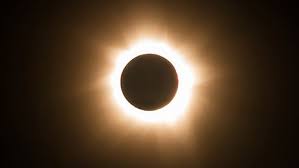
This image is showing us a.....
solar eclipse
lunar eclipse
phases of the moon
earth eclipse
Moon, Sun, Earth

Use the diagram to find where winter is on the northern and southern hemisphere?
CE
AG
EG
EC

What letters show you Summer for the northern and southern hemisphere?
AG
BH
CE
DF

What season is represented in the northern hemisphere?
Fall
Winter
Spring
Summer
Why does the earth experience day and night?
Earth is rotating around the sun.
Earth is rotating around the sun and moon.
Earth makes one full rotation on its axis every 24 hours.
Earth makes one full revolution around the sun in 365 days.

What season is represented in the southern hemisphere?
Summer
Winter
Fall
Spring

Which hemisphere will experience shorter days and longer nights?
Northern
Southern
What is the object that all planets in our solar system orbit?
The moon
The sun
The Milky Way
Mercury
Which planet is home to the tallest mountain , has the largest dust storms in the solar system and is also known as the 'Red Planet' because of the presence of iron oxide in it's rock.
Earth
Venus
Jupiter
Mars
Which of the following is ordered from largest to smallest?
Universe -> Galaxy -> Solar System -> Planet
Planet -> Galaxy -> Solar System -> Universe
Planet -> Solar System -> Galaxy -> Universe D.) Universe
Universe -> Solar System -> Galaxy -> Planet
Which planet is the largest planet in the solar system and is the fifth planet?
the sun
Uranus
Jupiter
Earth
The four inner planets are rocky and small. Which description best fits the next four outer planets?
They are also rocky and small.
They are very large and has no moons
They are small and made of ice.
They are very large, made of gases with no solid surface
What do Mercury, Venus, Earth, and Mars all have in common?
They are all very cold planets.
They are considered terrestrial planets, that is rocky or have metals with hard surface.
They are about the same size.
They are considered gas giants
What is the correct order of the planets in the Solar System, starting closest to the Sun?
Mars, Mercury, Earth, Venus, Jupiter, Saturn, Uranus, Neptune,
Mercury, Venus, Earth, Mars, Jupiter, Saturn, Uranus, Neptune
Mercury, Mars, Venus, Earth, Jupiter, Saturn, Uranus, Neptune,
Mercury, Venus, Earth, Mars, Jupiter, Neptune, Uranus, Saturn
What does a comet look like?


This is the only planet with liquid water on it (so far as we know)
Mercury
Earth
Mars
Pluto
How many planets are there?
7
9
8
3
How many groups are the planets broken into?
3
2
1
4
What are the 4 inner planets?
Mercury, Jupiter, Saturn, Pluto
Earth, Venus, Mars, Neptune
Mercury, Venus, Earth, Mars
Jupiter, Saturn, Neptune, Uranus
The inner planets share 2 qualities or characteristics
Humans can live on them, they all have water
They are rocky, and humans can find food on them
They are rocky and close to the Sun
They are close to the Sun, and humans can live on them
The first planet, closest to the Sun, and the smallest planet. Is extremely hot during the day and freezing cold at night.
Mercury
Jupiter
Venus
Uranus
How many planets are there?
7
9
8
3
How many groups are the planets broken into?
3
2
1
4
What are the 4 inner planets?
Mercury, Jupiter, Saturn, Pluto
Earth, Venus, Mars, Neptune
Mercury, Venus, Earth, Mars
Jupiter, Saturn, Neptune, Uranus
What are the 4 outer planets?
Mercury, Venus, Earth, Mars
Uranus, Mercury, Earth, Mars
Jupiter, Uranus, Saturn, Neptune
Jupiter, Saturn, Earth, Mars
The inner planets share 2 qualities or characteristics
Humans can live on them, they all have water
They are rocky, and humans can find food on them
They are rocky and close to the Sun
They are close to the Sun, and humans can live on them
The first planet, closest to the Sun, and the smallest planet. Is extremely hot during the day and freezing cold at night.
Mercury
Jupiter
Venus
Uranus
The second planet from the Sun, the atmosphere is made up of 96% carbon dioxide, extremely hot and the atmospheric pressure is bone crushing.
Earth
Venus
Mars
Saturn
The third planet from the Sun, has liquid water, and keeps a temperature that allows humans to live
Earth
Venus
Mercury
Mars
The fourth planet from the Sun, called the Red planet, and extensively explored and observed
Neptune
Venus
Jupiter
Mars
What are the 2 characteristics of the 4 outer planets.
They are rocky and small in size
Larger planets and made of gas
Closer to the Sun and made of gas
Farther from the Sun and made of gas
The fifth planet, the largest planet and has a large storm called the Giant Red Spot that is visible from Earth
Neptune
Uranus
Jupiter
Earth
The sixth planet, known for its rings made of ice particles, considered the lightest planet and is 95% than Earth
Jupiter
Saturn
Neptune
Uranus
The seventh planet, originally called Herschel, rotates on its side due to the angle of the axis.
Uranus
Jupiter
Neptune
Mercury
The eighth planet, a dark blue color, windiest planet, with a set of rings including a set of rings that are braided
Neptune
Uranus
Earth
Mars
Discovered in 1930, originally a planet and then switched to a dwarf planet in 2006.
Pluto
Neptune
Uranus
Jupiter

