
 Worksheets
Biochemistry: Proteins
Total questions: 165
Worksheet time: 1hrs 24mins
Which of the following groups are found in every standard amino acid?
Phosphate group and hydroxyl group
Amino group and phosphate group
Amino group and carboxyl group
Hydroxyl group and carboxyl group
What makes glycine unique among the 20 standard amino acids?
It has a ring structure
It lacks a chiral alpha carbon
It is positively charged at physiological pH
It is always phosphorylated in cells
Which amino acid contains a sulfhydryl group capable of forming disulfide bonds?
Tyrosine
Histidine
Serine
Cysteine
What type of bond forms between two amino acids in a protein?
Hydrogen bond
Peptide bond
Disulfide bond
Ionic bond
What is the net result of peptide bond formation between two amino acids?
Addition of a water molecule
A hydrolysis reaction
Elimination of a water molecule (condensation reaction)
Loss of a carbon atom
Which amino acid often introduces bends or kinks in polypeptides due to its rigid ring structure?
Glycine
Proline
Alanine
Serine
How many amino acids make up one full turn of an alpha helix?
3.0
3.8
3.6
4.2
Beta-pleated sheets are primarily stabilized by:
Hydrophobic interactions
Hydrogen bonds between backbone atoms
Ionic bonds between side chains
Peptide bonds
Which amino acid is most commonly found at the centre of collagen’s triple helix?
Proline
Glycine
Cysteine
Tyrosine
What technique did Frederick Sanger use to determine the first protein sequence?
Edman degradation
Mass spectrometry
Gel electrophoresis
NMR
What structure is formed by hydrogen bonding between atoms of the polypeptide backbone?
Secondary structure
Tertiary structure
Quaternary structure
Primary structure
What determines the primary structure of a protein?
Folding of the polypeptide chain
The DNA nucleotide sequence
The R groups of side chains
Post-translational modifications
Which level of protein structure involves interactions between separate polypeptide chains?
Tertiary
Quaternary
Primary
Secondary
What is the typical role of hydrophobic amino acids in protein folding?
They cluster together inside the protein core
They remain on the protein surface
They are phosphorylated
They form ionic bonds
Which experimental technique can resolve atomic structure through electron density maps?
X-ray crystallography
Western blotting
SDS-PAGE
Cryo-EM
What characteristic makes beta sheets particularly strong in fibrous proteins like silk?
Disulfide bonds
Side-chain packing
Extensive hydrogen bonding across sheets
Alpha-helical cores
What type of secondary structure is least favourable for proline residues?
Beta sheets
Alpha helices
Loops
Turns
What structural level is most directly responsible for a protein’s function?
Primary
Secondary
Tertiary
Quaternary
Which domain structure is commonly used to bind DNA or ligands?
Beta strand
Helix-turn-helix motif
Alpha sheet
Disulfide bridge
Which feature defines a protein domain?
Always composed of beta sheets
Always involved in enzymatic reactions
Structurally and functionally independent region
Present only in fibrous proteins
What tool is commonly used to align unknown protein sequences to known homologs?
Chimera
BLAST
Jmol
SDS-PAGE
What is the Ramachandran plot used to show?
DNA mutations
Sequence homology
Allowable dihedral angles in peptide backbones
Molecular weight distribution
Which amino acid is most restricted in its backbone angles?
Glycine
Proline
Serine
Leucine
Which amino acid is least restricted and found throughout the Ramachandran plot?
Glycine
Valine
Isoleucine
Tryptophan
What kind of protein structure is represented by hemoglobin’s tetrameric assembly?
Secondary
Tertiary
Quaternary
Primary
Which technique allows prediction of hydrophobic regions in proteins?
Edman degradation
X-ray crystallography
Hydropathy plots
SDS-PAGE
What is a prosthetic group in a protein?
A sequence of amino acids that determines function
A non-protein component permanently bound to the protein
A protein domain that binds DNA
A weakly bound ligand
What causes the sickle shape in sickle cell anemia?
A single amino acid substitution in hemoglobin
Collagen misfolding
Excessive proline content
Dehydration of red blood cells
Which structural feature of proteins is most conserved during evolution?
DNA sequence
RNA sequence
3D protein fold
Codon usage
Which amino acid often plays a role in enzymatic active sites due to pKa near physiological pH?
Proline
Histidine
Glycine
Valine
What is the main force driving the formation of tertiary protein structure?
Ionic bonds
Disulfide bridges
Hydrophobic interactions
Hydrogen bonding with water
Which tool is used to predict 3D structure from primary sequence using AI?
Chimera
AlphaFold
SDS-PAGE
Edman Tool
What property distinguishes fibrous proteins from globular ones?
Solubility in water
Elongated, structural roles
What is true about globular proteins?
Mostly structural
Compact, often enzymatic or regulatory
Always insoluble
Lack secondary structures
What is the CATH database used for?
Determining DNA sequences
Classifying protein domains by structure
Predicting glycosylation sites
Comparing metabolic rates
Which motif is commonly involved in DNA binding?
Greek key
OB-fold
Helix-turn-helix
Beta-barrel
What happens in a condensation reaction between two amino acids?
Addition of phosphate
Removal of water and formation of peptide bond
Addition of carbon
Removal of a hydrogen atom
Which experimental method is ideal for studying proteins in solution?
X-ray crystallography
NMR spectroscopy
SDS-PAGE
Gel filtration
What structural level describes spatial arrangement of multiple protein subunits?
Tertiary
Quaternary
Secondary
Domain
Which secondary structure contributes most to tensile strength in fibrous proteins?
Alpha-helix
Beta-pleated sheet
Disulfide bridge
Greek key motif
What is the significance of disulfide bonds?
They catalyse metabolic reactions
They stabilise protein folding, especially in extracellular proteins
They link sugars to proteins
They are only found in RNA
What is a ‘missense’ mutation?
A silent change in DNA
A codon change resulting in a different amino acid
A change that introduces a stop codon
Removal of an exon
What defines an ‘antiparallel’ beta sheet?
Amino acids with opposing charges
Adjacent strands run in opposite directions
Alternating alpha helices
Presence of disulfide bonds
How does collagen’s triple helix differ from an alpha helix?
It lacks hydrogen bonding
It contains only polar residues
It has a left-handed triple helix formed from three chains
It is globular and water-soluble
Which amino acid is typically absent from the interior of globular proteins?
Leucine
Aspartic acid
Isoleucine
Phenylalanine
What happens in X-ray crystallography?
NMR is used to detect bond rotation
Crystals diffract X-rays to produce electron density maps
Fluorescence is used to visualise proteins
Antibodies detect the protein
What property allows proteins to separate on SDS-PAGE?
Their charge
Their molecular weight
Their shape
Their isoelectric point
What is the role of the Protein Data Bank (PDB)?
Stores enzyme kinetics data
Archives DNA sequences
Houses experimentally determined protein structures
Calculates protein half-life
What defines a silent mutation?
Changes structure but not function
Alters DNA but not amino acid sequence
Adds a stop codon
Inactivates the gene
What causes antigenic drift in viral proteins?
DNA replication errors
Cell wall synthesis
Which amino acid is most likely to be involved in ionic interactions at physiological pH?
Valine
Glycine
Lysine
Alanine
What does a Ramachandran plot illustrate?
Allowed phi and psi angles in polypeptides
Protein half-lives
Amino acid frequencies
pKa values
Which term best describes the helix-turn-helix?
Supersecondary structure motif
Quaternary fold
Tertiary interaction
Globular domain
What characterizes a beta-alpha-beta motif?
A helix flanked by glycine residues
A central helix between two beta strands
A parallel sheet with alpha helix above
Loop-turn-loop topology
What stabilises beta sheets in protein structures?
Peptide bonds
Hydrogen bonds between backbone atoms
Disulfide bridges
DNA-protein crosslinks
What evolutionary process allows gene families to develop new functions?
Lateral transfer
Gene duplication and divergence
Genetic recombination
RNA editing
What does the term "motif" refer to in protein structure?
Disulfide-linked domains
Unstructured loops
Recurrent folding patterns
Active site residues
Which technique best visualises atomic positions in small proteins in solution?
Western blotting
Edman sequencing
NMR spectroscopy
Mass spectrometry
What makes histidine useful in enzyme active sites?
It can gain or lose a proton at physiological pH
It forms covalent bonds easily
It is extremely rigid
It is always charged
What's the function of BLAST in protein science?
Identifies hydropathy index
Compares protein sequences for similarity
Calculates molecular weight
Measures net charge
In what protein type would you expect a high percentage of proline?
Globular proteins
Collagen
Enzymes
Histones
Which group forms hydrogen bonds in polar uncharged amino acids?
Carbon rings
Side chains containing oxygen or nitrogen
Hydrocarbon tails
Sulfur groups only
Which interaction is least likely to stabilise protein tertiary structure?
Disulfide bonds
Phosphodiester bonds
Hydrophobic interactions
Hydrogen bonds
What is a coenzyme?
Protein structure that forms sheets
An enzyme regulator
A loosely bound organic cofactor
An unfolded domain
What distinguishes quaternary structure from tertiary?
Number of alpha helices
Involves interactions between polypeptide chains
Includes only disulfide bridges
Is determined solely by RNA
Which residue introduces flexibility into protein structure?
Proline
Glycine
Cysteine
Arginine
Which of the following proteins does NOT typically have quaternary structure?
Myoglobin
Collagen
What do Greek key motifs consist of?
Alternating helices
Four beta strands folded into a pattern
Random coil structures
Zinc-finger repeats
Which experimental technique requires protein crystallisation?
X-ray crystallography
SDS-PAGE
Cryo-EM
Northern blotting
What effect does the substitution of a hydrophobic residue with a polar one often have?
Increases solubility
Alters protein folding or function
Enhances stability
Prevents translation
What is the “central dogma” of biology?
DNA → carbohydrate → ATP
DNA → RNA → Protein
RNA → DNA → Protein
Protein → DNA → RNA
Which type of beta sheet is more stable?
Parallel
Antiparallel
Right-handed
Alpha-loop
Which structural level is directly affected by a mutation in the gene coding sequence?
Primary structure
Tertiary structure
Quaternary structure
Secondary motif
Why are Ramachandran plots important in structure validation?
They show which bond angles are sterically allowed
They predict disulfide bonds
They visualise hydrophobic domains
They measure isoelectric points
What is true about collagen?
It forms a tetrameric globular structure
It consists of three polypeptides in a triple helix
It’s soluble in cytoplasm
It lacks secondary structure
What is a characteristic of proteins with high structural conservation but low sequence similarity?
They often have similar functions despite differing amino acid sequences
They lack tertiary structure
They cannot be identified by BLAST
They do not fold into domains
Which of the following is NOT a type of protein post-translational modification?
Phosphorylation
Translation
Ubiquitination
Acetylation
What determines the 3D shape of a protein?
Length of the polypeptide
Amino acid sequence and side chain interactions
mRNA folding
Protein degradation
Why are hydrophobic residues usually buried inside the protein core?
They are too large to be on the surface
They are excluded from aqueous environments
They are acidic
They form hydrogen bonds
What term describes a segment of a protein that folds independently and performs a specific function?
Motif
Domain
Subunit
Codon
What is the purpose of SDS in SDS-PAGE?
To denature proteins and impart uniform negative charge
To stain proteins
To buffer the gel
To increase pH
What part of an amino acid determines its chemical characteristics?
Carboxyl group
R group (side chain)
Amino group
Peptide bond
Which of the following best defines antigenic drift?
Sudden genetic recombination in viruses
Transfer of DNA between species
Accumulation of amino acid changes in viral surface proteins
Viral particle degradation
Which amino acid is classified as non-polar and hydrophobic?
Aspartate
Glutamine
Leucine
Serine
What amino acid is often found in active sites and has an imidazole side chain?
Proline
Alanine
Histidine
Cysteine
What defines a synonymous mutation?
A frameshift
A nucleotide change that does not alter the amino acid
A mutation in the promoter region
A change that stops transcription
What makes proline unique among amino acids?
It's aromatic
It has a negative charge
It forms a ring with the backbone, restricting flexibility
It cannot form peptide bonds
What term describes proteins made of more than one polypeptide chain?
Homologs
Monomers
Multimeric proteins
Globulins
Which protein classification describes proteins like myoglobin and enzymes?
Fibrous
Globular
Disordered
Crystallised
In an alpha helix, which atoms form the hydrogen bond stabilizing the structure?
R groups
Backbone amide hydrogen and carbonyl oxygen
Side-chain carbon and nitrogen
Sulfur and phosphate
Which tool would you use to visualise protein 3D structures?
BLAST
PyMOL
SDS-PAGE
UniProt
What is a key feature of fibrous proteins like keratin or collagen?
Compact tertiary structures
Extended, rope-like structures
What is the first step in Edman degradation?
Protein hydrolysis
Cleaving the N-terminal amino acid
Labeling the C-terminal
Denaturation
Why is protein crystallisation a limitation for X-ray studies?
It requires radioactive isotopes
Not all proteins form crystals
It destroys protein function
It only works for enzymes
What happens when a charged amino acid is substituted for a hydrophobic one?
It forms a disulfide bond
It can disrupt protein structure and function
It increases crystallisation
It always improves binding
Which of these is NOT typically used for protein structure prediction?
AlphaFold
Southern blotting
Hydropathy plots
BLAST
What does UniProt provide?
Protein crystallisation kits
Functional and sequence information on proteins
DNA sequencing software
Ramachandran plots
Which term refers to genes in different species that evolved from a common ancestor?
Paralogs
Orthologs
Isomers
Isozymes
Which of the following is NOT a characteristic of cysteine?
Contains sulfur
Forms disulfide bridges
Has a methyl side chain
Participates in catalytic activity
What causes the flexibility of polypeptide turns and loops?
Disulfide bonds
High proline content
Glycine residues and lack of regular structure
Charged residues
Zwitterion form of amino acid is …………
Nonionic form
Dipolar form
Molecular form
Charged form
Globular proteins are …………
Insoluble in water
Extended along one axis
Spherical in shape
Thread like structures
Alpha keratin is not present in …………….
Hair
Nail
Horns
Bones
Amino acid behaves as
Proton donar
Proton acceptor
Ampholyte
Salt
Beta pleated sheet structure is a ……………. structure
(a)
Amino acids contain how many functional groups?
Draw the structure of alpha amino acids

Semipermeable membrane is used in
Which of the following is a transport protein
Casein
Hemoglobin
Collagen
Fibroin
Amino acid containing –SH group is
Serine
Cystein
Glycine
Methionine
All proteins contain the
Same 20 amino acids
Different amino acids
300 Amino acids occurring in nature
Only a few amino acids
The optically inactive amino acid is
Glycine
Serine
Threonine
Valine
Sulphur containing amino acid is
Methionine
Leucine
Valine
Asparagine
An example of sulphur containing amino acid is
2-Amino-3-mercaptopropanoic acid
2-Amino-3-methylbutanoic acid
2-Amino-3-hydroxypropanoic acid
Amino acetic acid
All the following are sulphur containing amino acids found in proteins except
Cysteine
Cystine
Methionine
Threonine
An aromatic amino acid is
Lysine
Tyrosine
Taurine
Arginine
Amino acid with side chain containing basic groups is
2-Amino 5-guanidovaleric acid
2-Pyrrolidine carboxylic acid
2-Amino 3-mercaptopropanoic acid
2-Amino propanoic acid
An essential amino acid in man is
Aspartate
Tyrosine
Methionine
Serine
Non essential amino acids
Are not components of tissue proteins
May be synthesized in the body from essential
amino acids
Have no role in the metabolism
May be synthesized in the body in diseased
states
Which one of the following is semiessential amino acid for humans?
Valine
Arginine
Lysine
Tyrosine
The amino acid with a nonpolar side chain is
Serine
Valine
Asparagine
Threonine
Biuret reaction is specific for
–CONH-linkages
–CSNH2 group
–(NH)NH2 group
All of these
Sakaguchi’s reaction is specific for
Tyrosine
Proline
Arginine
Cysteine
Million-Nasse’s reaction is specific for the amino acid:
Tryptophan
Tyrosine
Phenylalanine
Arginine
In proteins the α-helix and β-pleated sheet are examples of
Primary structure
Secondary structure
Tertiary structure
Quaternary structure
At the lowest energy level α-helix of polypeptide chain is stabilised
By hydrogen bonds formed between the H of
peptide N and the carbonyl O of the residue
Disulphide bonds
Non polar bonds
Ester bonds
The a-helix of proteins is
A pleated structure
Made periodic by disulphide bridges
A non-periodic structure
Stabilised by hydrogen bonds between NH
and CO groups of the main chain
Denaturation of proteins results in
Disruption of primary structure
Breakdown of peptide bonds
Destruction of hydrogen bonds
Irreversible changes in the molecule
Proteins contain
Only L- α- amino acids
Only D-amino acids
DL-Amino acids
Both (A) and (B)
At neutral pH, a mixture of amino acids in solution would be predominantly:
Dipolar ions
Nonpolar molecules
Positive and monovalent
Hydrophobic
The monomer making up a polypeptide chain.
glucose
amino acid
protein
DNA

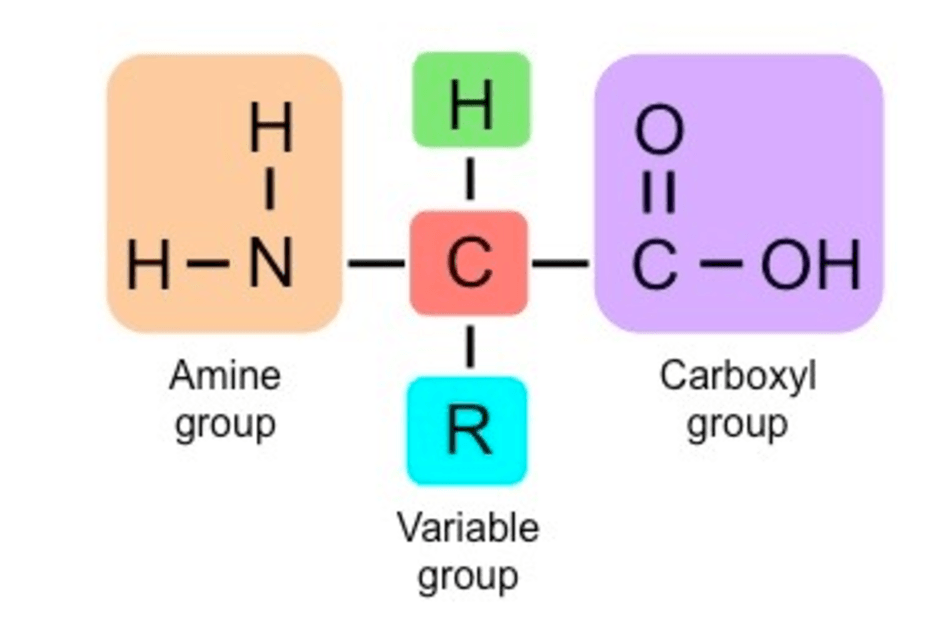
In this image what does R represent
an element
a carbon atom
a functional group
a carboxyl group

Which level of protein structure is shown here?
tertiary structure
secondary structure
quaternary structure
primary structure

How would you describe the bonds shown in this diagram?
strong covalent bonds
ionic bonds
non-polar interactions
hydrogen bonds

Which level of protein structure is shown here?
tertiary structure
secondary structure
quaternary structure
primary structure

How would you describe the bonds indicated in this diagram?
strong covalent bonds
ionic bonds
non-polar interactions
hydrogen bonds

Which levels of protein structure are shown here?
primary structure
tertiary structure
primary and secondary structure
quaternary structure
Which side groups can form hydrogen bonds?
-COOH
-CH
-HS
-CH3

Which statement is NOT true of this collagen molecule?
it is insoluble
it contains just a few types of amino acid
it is a globular protein
it is a strong molecule

Which statement is NOT true of this haemoglobin molecule?
it has tertiary structure
it is a fibrous protein
it is soluble
it has quaternary structure
Enzymes are proteins. Which phrase best describes the function of enzymes?
They take part in biochemical reactions
They make reactions happen in the body
They speed up biochemical reactions by lowering the activation energy
They are catalysts

Which phrase best explains the increase in rate between 10oC and 30oC?
Enzymes and substrates collide more often
The enzyme is working faster
The temperature is increasing
The rate of reaction is increasing

Which phrase best explains the low rate at 50oC?
The enzyme is not at its optimum temperature
The substrate has melted
The enzyme has denatured
The temperature is too high
All enzymes have an optimum temperature of 37oC.
True
False
All enzymes are most effective at pH 7
True
False
Which of the following are true of the secondary structure of proteins? Select all that apply!
One formation is the beta helix
One formation is the alpha helix
They are stabilized by hydrogen bonds
One formation is the beta-pleated sheet
They are stabilized by peptide bonds
Which of the following are a component of amino acids? Select all that apply!
Central calcium atom
Carboxyl group
Phosphate group
Amino group
Central carbon atom
What is the monomer of a protein?
Amino acid
Phospholipid
Nucleotide
Simple sugars

Describe the side-chain of this amino acid.
Non-polar and hydrophobic
Polar and uncharged
Polar and charged (basic)
Polar and charged (acidic)

Describe the side-chain of this amino acid.
Non-polar and hydrophobic
Polar and uncharged
Polar and charged (basic)
Polar and charged (acidic)
A ___________ is a covalent bond that forms between two ___________ amino acids.
Peptide ; cysteine
Hydrophobic effect ; nonpolar
Hydrophilic effect ; polar
Disulfide bridge; cysteine
Disulfide bridge ; serine
Proteins are formed via ________ reactions, in which water is a _______.
dehydration; reactant
dehydration; product
hydrolysis; reactant
hydrolysis; product
Which of the following are true of R-groups, or sidechains, on amino acids? Select all that apply.
They give amino acids their identity
They may be charged or uncharged
They may be hydrophobic or hydrophilic
They are identical across all amino acids
They form peptide bonds with other R-groups
Which interaction forms between nonpolar R-groups?
Hydrogen bonds
Peptide bonds
Disulfide bridges
Hydrophobic effects
Ionic bonds
To build a polypeptide, amino acids form __________ bonds, which are _________.
Hydrogen ; weak
Hydrogen ; strong
Peptide ; covalent
Peptide ; ionic
Ionic ; strong

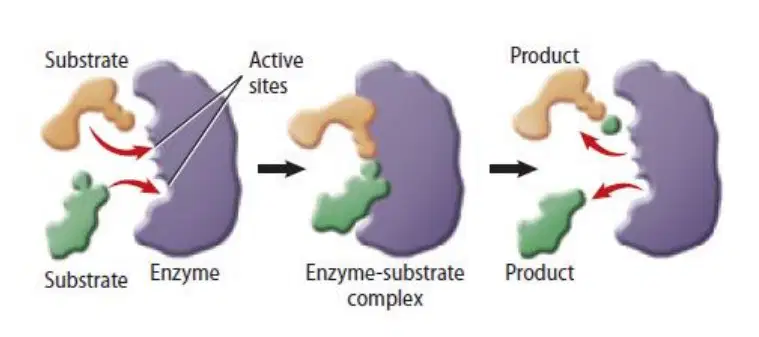
What happens in this process?
Speed up chemical reactions
Control cell growth
Involved in body structure.
The entire polypeptide forms a three-dimensional structure
Primary
Secondary
Tertiary
Quaternary
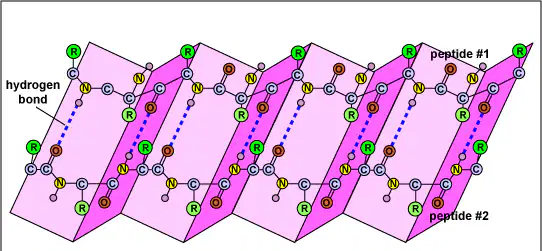
Any type of three-dimensional structure of proteins?
Primary
Secondary (pleat)
Secondary (Helix)
Quaternary
What is low in protein?
Egg
meat and fish
fruits and vegetables
seeds and nuts

