
 Worksheets
SPS7 EOC Review Energy & Heat Transfer 24-25
Total questions: 50
Worksheet time: 59mins
Which of the following could be used to convert light energy to electrical energy?
A windmill
A chemical storage battery
A solar cell
Rotating coils in a magnetic field
Which of the following scenarios contradicts the law of conservation of energy?
A ball dropped from the top of a building gains speed until it reaches the ground.
A block sliding freely on a flat icy surface gains speed until it collides with a wall.
A child on a swing moves fastest at the lowest point of the swing’s arc.
The height to which a ball rebounds decreases with each bounce.
Albert stirs a mug of hot chocolate with a metal spoon. The type of heat transfer responsible for the spoon getting hot is (a)
Which one of these energy sources is a nonrenewable source?
Solar
Water
Wind
Natural gas
The stored energy in a battery can BEST be described as
Thermal
Chemical
Nuclear
Kinetic
The heat that is now contained in the car, which was sitting in sunlight all day long, was transferred to the car primarily by (a) .
Which of the following most accurately defines chemical energy?
Energy stored as attraction between protons and electrons
Energy stored in bonds between atoms
Energy stored as accumulations or deficiencies of electrons
Energy stored in the nuclei of more than one atom
Tom is working on calorimetry experiments. What is Tom studying?
Light
Mass
Heat
Color
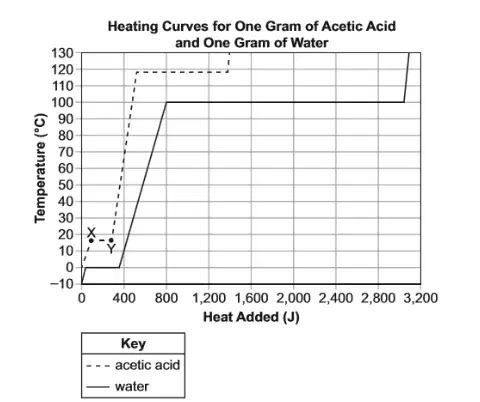
What is happening to the acetic acid between points X and Y on the graph?
Liquid acetic acid is becoming warmer as it absorbs heat energy from the surroundings.
Liquid acetic acid is being converted from a liquid to a gas by absorbing heat energy from the surroundings.
Solid acetic acid is becoming warmer as it absorbs heat energy from the surroundings.
Solid acetic acid is being converted from a solid to a liquid by absorbing heat energy from the surroundings.
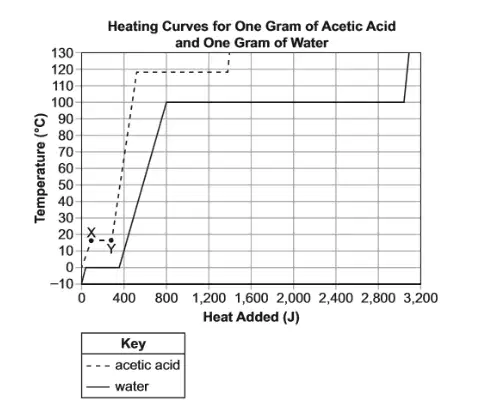
Which comparison can be made about a phase change common to acetic acid and water based on the graph?
More heat energy is required to melt a gram of acetic acid than to melt a gram of water.
More heat energy is required to vaporize a gram of water than to vaporize a gram of acetic acid.
Given the same rate of added heat, the temperature of a gram of water will increase at a faster rate than a gram of acetic acid.
Given the same rate of heat loss, the temperature of a gram of acetic acid vapor will decrease at a slower rate than a gram of water.
A softball is thrown and his hit high into the air. As it rises, the softball possesses
Only kinetic energy
Only potential energy
Both potential and kinetic energy
Potential, kinetic and electromagnetic energy

Based on the diagram, what evidence is there for the transformation of chemical energy into electrical energy, and which other energy transformations must occur for the call to be received by cell phone B?
Evidence: cell phones are powered by a battery that produces the electricity used to send or receive a call. Transformation 1: Sound energy is transformed into electrical energy by cell phone A. Transformation 2: Electrical energy is transformed into mechanical energy in the cell towers and base station.
Evidence: cell phones are powered by a battery that produces the electricity used to send or receive a call. Transformation 1: Sound energy is transformed into electromagnetic waves by cell phone A. Transformation 2: Electromagnetic waves are transformed back into sound energy by cell phone B.
Evidence: Base stations are powered by a battery that produces the electricity used to receive and forward a call. Transformation 1: Sound energy is transformed into electromagnetic waves by cell phone A. Transformation 2: Electrical energy is transformed into mechanical energy in the cell towers and base station.
Evidence: base stations are powered by a battery that produces the electricity used to receive and forward a call. Transformation 1: Sound energy is transformed into electromagnetic waves by cell phone A. Transformation 2: Electromagnetic waves are transformed back into sound energy by cell phone B.
A rock dropped from a cliff has greater kinetic energy just before it reaches the ground than it did at the top of the cliff. Which of the following explains this fact?
The rock’s mass decreases as it falls.
Falling has increased the rock’s total energy.
The rock’s potential gravitational energy has been converted into kinetic energy.
Chemical analysis will reveal that the rock’s chemical energy has been consumed.
The transfer of heat energy by heat traveling through a metal is known as
Conduction
Convection
Radiation
Reflection
Match the following methods of heat transfer with their correct medium.
Conduction
Heat travels through solids by
Convection
Heat travels through liquids by
Radiation
Heat travels through vacuum by
Reflection
Light bounces off surfaces by
Heat may be transferred through a vacuum by (a)
A toaster browns bread by converting
Electric energy to heat energy
Heat energy to electric energy
Mechanical energy to heat energy
Chemical energy to electric energy
Which is the best heat conductor?
Air
Iron
Wood
Glass
A person sitting in front of a fireplace feels what type of heat energy?
Convection
Conduction
Solar Energy
Radiation Energy
Thermal (heat) energy always flows from
Gas to a liquid
A liquid to a solid
A warmer region to a cooler region
A freezing material to a boiling material
In an air-conditioned house, double glass windows and fiberglass insulation both have a similar ability to transmit heat. These substances serve to
Prevent heat transfer due to their high thermal conductivity
Prevent heat transfer due to their low thermal conductivity
Allow heat transfer due to their high thermal conductivity
Allow heat transfer due to their low thermal conductivity
In which of the following situations does a stone have the greatest kinetic energy?
A stone at a cliff’s edge
A stone falling from a cliff
A stone lying at the bottom of a cliff
A person carrying a stone up a mountain
The sun’s heat reaches Earth by what means?
Convection
Conduction
Collision
Radiation
Every person uses energy stored in the fat cells of his or her body. This stored energy is in the form of
Heat energy
Nuclear Energy
Chemical energy
Mechanical Energy
A hang glider is able to sail through the air on warm winds which are heated by Earth's surface. This best illustrates one use of which principle of heat transfer?
Conduction
Convection
Radiation
Solar Transfer
If a particular substance is a good electrical insulator, then you can assume it probably
Has no isotopes
Does not lose electrons easily
Is a liquid at room temperature
Is a compound, rather than an element
In a laboratory, a sealed container with 100g of steam is cooled until all the steam becomes a liquid. The container is then cooled further until all the water becomes a solid. Which of the following remains constant during both of these changes?
The mass of the water
The pressure in the container
The total energy of the water
The position of the atoms in the container
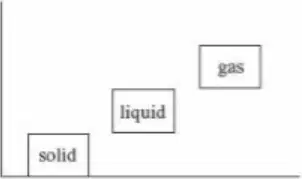
Which of the following choices is the best label for the y-axis?
Molecular density
Molecular motion
Neutron density
Neutron motion
In a copper wire, a temperature increase is the result of which of the following?
An increase in the size of the copper particles
A decrease in the mass of the copper particles
An increase in the motion of the copper particles
A decrease in the distance between the copper particles
A student in a laboratory transfers a beaker containing a hot solution from the lab table to a cool water bath. Which of the following parts of the system experiences an increase in heat energy?
Beaker
Lab table
Solution
Water bath
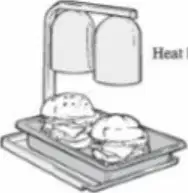
Which of the following objects transfers its energy primarily by radiation?
Heat lamp
Electric stovetop
Ceiling fan
Computer
The water contained in a geyser system gains energy from the underground material surrounding it. The water molecules gain kinetic energy and this results in an increase in the pressure of the water. Eventually, the geyser erupts and expels water into the air above ground. Which of the following types of energy is the source for the initial energy gain of the water?
Electrical
Magnetic
Mechanical
Thermal
Which is an example of energy from chemical bonds being formed or broken transformed into energy of motion?
Plugging in a toaster over to brown bread.
Turning on a battery-operated toy car
Pushing a button on the TV remote control
The wind turning the blades of a windmill
In a coal burning power plant, coal is burned to heat steam to turn a turbine. The turbine generates power that is sent to homes and businesses. Order the energy transformations of the power plant.
Chemical, mechanical, electrical
Electrical, chemical, mechanical
Mechanical, chemical, electrical
Mechanical, electrical, chemical
What do all the processes listed here have in common? Sawing a piece of wood Lighting a match Turning on a light bulb
All transform into a form of energy from chemical energy.
All transform into a form of energy from electrical energy.
All transform a form of energy into light energy.
All transform a form of energy into heat energy.
The image is a double –paned window. These types of windows are used in all new homes and consist of two sealed panes of glass with a vacuum between the glass. The particles on the outside of the window are moving faster than those on the inside. The double-paned window does a good job of insulating the inside of the house form these faster, hotter particles. Double-paned windows do an excellent job of PREVENTING heat transfer by means of
Conduction
Convection
Radiation
Transformation
In this type of heat transfer, no molecular motion is necessary. Heat can be transferred across large distances without any particles being present. This type of heat transfer is called (a)
Many restaurants and kitchens use iron skillets to cook bacon, eggs and biscuits for breakfast. A standard skillet has a mass of 850g. When cooking bacon for breakfast the skillet starts at a temperature of 25 degrees Celsius. At the end of cooking, the temperature of the skillet reaches 120 degrees Celsius. The specific heat of iron is 0.45 J/(g°C). Determine the heat energy gained by the iron skillet. Q=mcΔT
4.03 J
382.5 J
36,337.5 J
179,444.4 J
A pot with 2400g of water at a temperature of 25°C is heated on a stove until the water boils (100°C). The specific heat of water is 4.18 J/g°C. Determine the heat energy needed to heat the water in the pot to boiling. Q=mcΔT
133.76 J
43,062.2 J
752,400 J
1,003,200 J
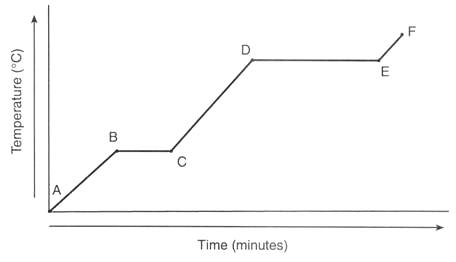
Points A, B, and C lie along a line of equal pressure, 760 mm of mercury, atmospheric pressure. The energy required to move from A to B to C
Increases at all points
Decreases at all points
Increases, decreases at B, then increases again.
Decreases, increases at B, then decreases again.
Which of these processes occurs along the BC line in the diagram?
Boiling
Condensing
Melting
Vaporizing
Solid magnesium has a specific heat of 1.01 J/g°C. How much heat is given off by a 20g sample of magnesium when it cools from 70.0°C to 50.0°C?
202 J
404 J
808 J
1010 J
What is the primary form of energy stored in a compressed spring?
Chemical energy
Gravitational potential energy
Thermal energy
Elastic potential energy
Which of the following statements best describes the energy transformation in a hydroelectric power plant?
Chemical energy is converted into thermal energy.
Thermal energy is converted into chemical energy.
Mechanical energy is converted into electrical energy.
Electrical energy is converted into mechanical energy.

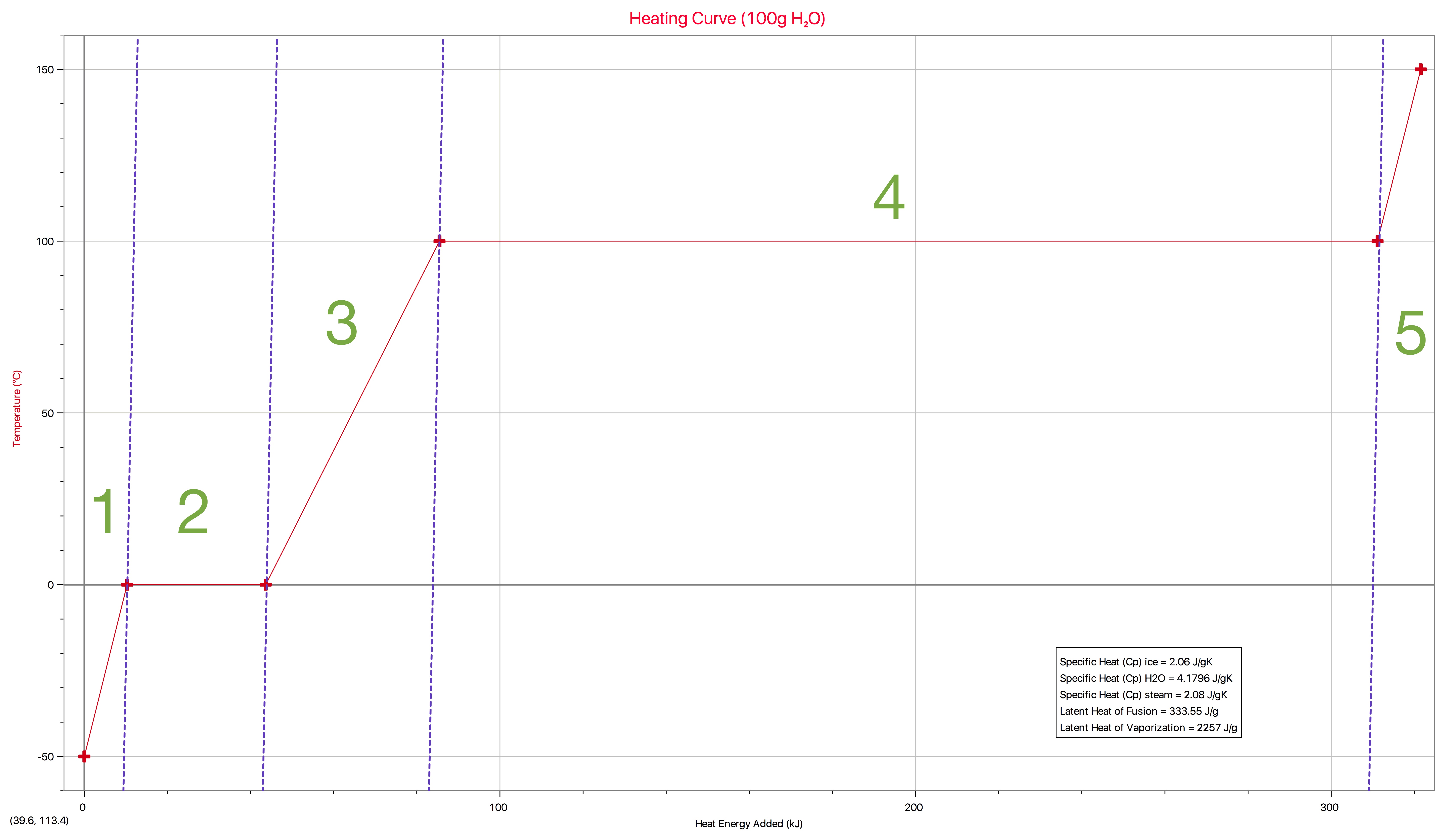
In which regions of the graph would heat be absorbed by the system?
Region 1
Region 2
Region 3
Region 4
Region 5

NaCl crystals were heated starting at an initial temperature of 0°C. The heating curve is shown in the picture. What is the melting point of this sodium chloride?
0°C
801°C
1000°C
1465°C
Plasma occurs in electrical sparks. These sparks contain
free protons.
free molecules.
ions and electrons.
neutrons and protons.
A substance heats and cools quickly. What do you know about this substance?
It has a low specific heat capacity.
It has a high specific heat capacity.
It is undergoing a phase change.
It is most likely water.

