
Font size
 Worksheets
Unit 25: Cold War Quiz 1
Total questions: 99
Worksheet time: 1hrs 5mins
What does the term 'Cold War' refer to?
Which two superpowers were involved in the Cold War?
US and Germany
US and USSR
USSR and China
US and Japan
The Cold War is generally considered to have run from the end of World War Two until the collapse of the USSR in _____
1991
1985
1979
2000
America and its allies were called the ______ Bloc or First World Countries, and the Soviet Union and its allies were called the ______ Bloc or Second World Countries.
Western; Eastern
Eastern; Western
Northern; Southern
Capitalist; Communist
The two Superpowers directly fought a war against each other during the Cold War period.
True
False
What are 'hot' wars, as mentioned in the passage?
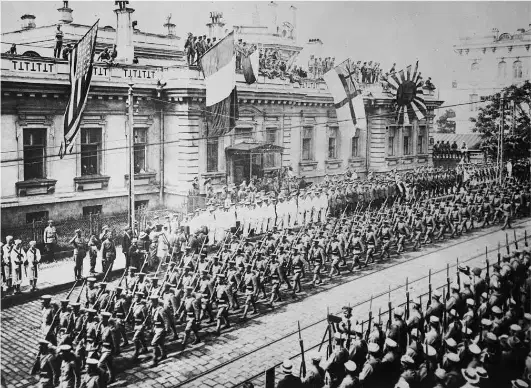
What was their goal?
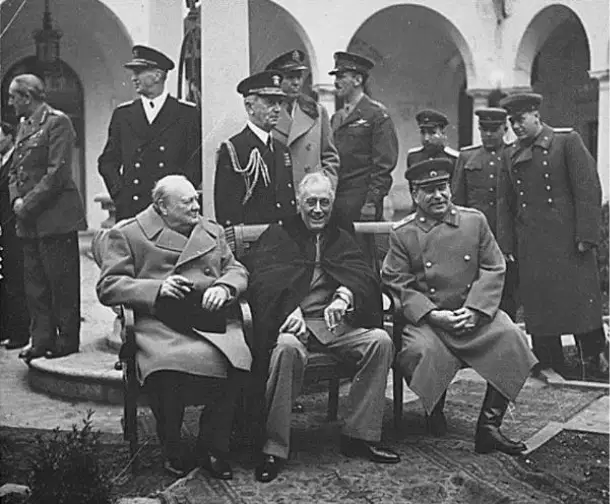
At the Yalta Conference of February 1945, which three leaders met in Russia to discuss the post-war world?
Roosevelt, Churchill, and Stalin
Roosevelt, Hitler, and Mussolini
Churchill, Stalin, and Truman
Roosevelt, Churchill, and De Gaulle
Where did the Yalta Conference of February 1945 take place?
Russia
France
United States
Germany
At the time of the Yalta Conference, Germany was on the brink of defeat.
True
False
What did Stalin agree to do in Eastern Europe as a result of the Yalta Conference?
Withdraw all Soviet troops
Hold free elections
Divide Germany permanently
Surrender to the Allies
The allies agreed to temporarily divide Germany and its capital Berlin into zones of occupation.
True
False
Stalin pledged to join the war against Japan ______ months after Germany’s surrender.
three
six
one
five
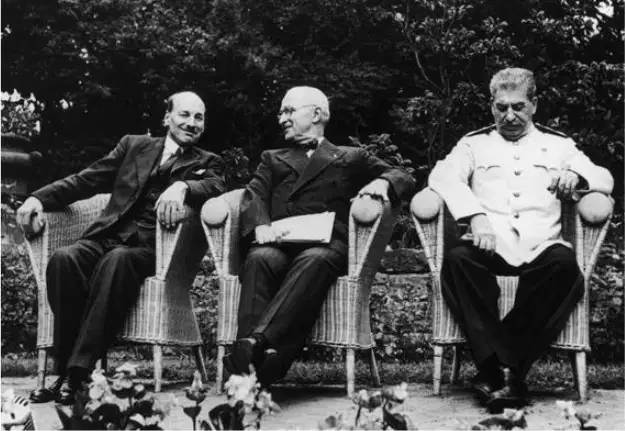
At the Potsdam Conference of July 1945, which leaders met to reinforce the plan to divide Germany?
A) Churchill, Roosevelt, Stalin
B) Stalin, Truman, Clement Atlee
C) Hitler, Mussolini, Franco
D) Truman, Eisenhower, Stalin
At the Potsdam Conference of July 1945, Stalin, Truman, and the new British Prime Minister Clement Atlee met, reinforcing the plan to divide Germany, but adding Stalin’s right to collect war reparations from its German zone. True or False: Stalin agreed to commit to free elections in all of Eastern Europe.
True
False
The only country in Eastern Europe where Stalin allowed free elections was _______.
Poland
Hungary
Romania
Bulgaria
What did Truman see as a sign that the US-Soviet alliance was crumbling?
Winston Churchill gave his Iron Curtain speech in March 1946 at Westminster College in Fulton, Missouri. What was the main warning in his speech?
The spread of democracy in Europe
The spread of communism by the USSR into Western Europe and Asia
The rise of fascism in Europe
The economic crisis in the US
Winston Churchill gave his Iron Curtain speech in March 1946 at Westminster College in Fulton, Missouri. Fill in the blank: According to Churchill, an _______ had descended across Europe, to the east of which the Soviets were in control and installing communist governments.
Iron Curtain
Berlin Wall
Cold Front
Steel Barrier
Winston Churchill gave his Iron Curtain speech in March 1946 at Westminster College in Fulton, Missouri. Churchill believed that the US and other democratic countries were obligated to prevent the spread of communism.
True
False
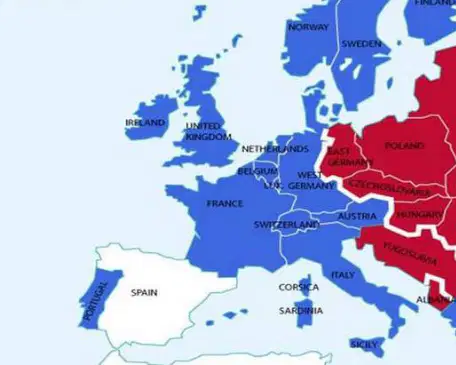
Refer to the map showing the Western Bloc and the Iron Curtain. Which color represents the countries under Soviet control?
Blue
Red
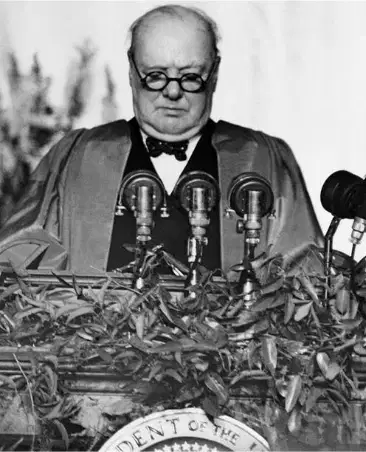
Who gave the famous Iron Curtain speech in 1946, warning about the spread of communism in Europe?
Winston Churchill
Franklin D. Roosevelt
Joseph Stalin
Harry S. Truman
According to the passage, in which month and year was the Truman Doctrine established?
(a)
Who did the $400 million assistance fund aim to help according to the Truman Doctrine?
France and Germany
Turkey and Greece
Italy and Spain
China and Japan
The Truman Doctrine was established to help countries resist communism.
True
False
Fill in the blank: President Truman insisted that if the US retreated to _______ again, world peace and the welfare of the US would be in danger.
isolationism
imperialism
communism
neutrality
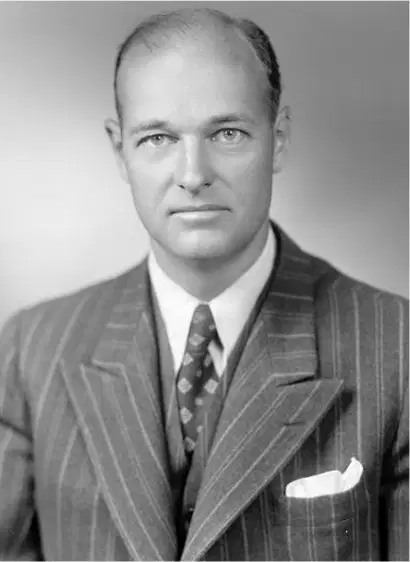
Who first explained the policy of Containment?
George F. Kennan
Harry S. Truman
Winston Churchill
John Foster Dulles
In what year was the policy of Containment first explained?
1947
1945
1950
1953
According to Kennan, Stalin would risk war with the US to expand communism.
True
False
The main idea behind the US policy of Containment was:
To promote democracy worldwide.
To contain communism by firmly blocking its path and preventing its expansion.
To expand US territory.
To support all revolutionary movements.
According to the passage, who signed the National Security Act?
A) President Roosevelt
B) President Truman
C) President Eisenhower
D) President Kennedy
In which month and year was the National Security Act signed?
July of 1947
June of 1948
August of 1945
September of 1950
Which of the following was NOT created or reorganized by the National Security Act?
Department of Defense
National Security Council
Federal Bureau of Investigation
Central Intelligence Agency (CIA)
The National Security Act created an independent branch for the Air Force.
True
False
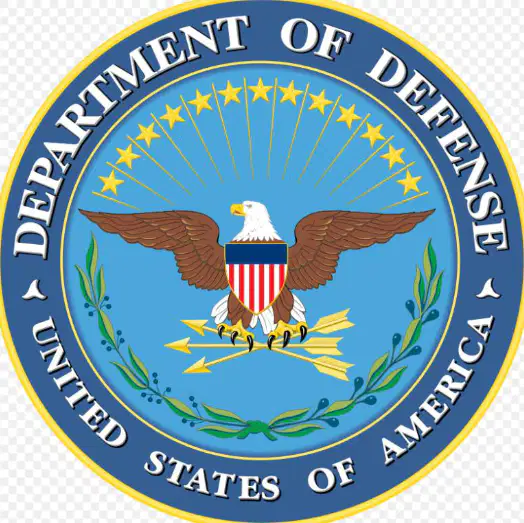
Refer to the seal shown in the image. Which department's seal is this, as mentioned in the passage?
According to the passage, how much economic assistance did the Marshall Plan send to Western European countries?
$1 billion
$5 billion
$13 billion
$20 billion
Between which years did the Marshall Plan provide assistance to Western European countries?
1948 and 1952
1939 and 1945
1955 and 1960
1941 and 1946
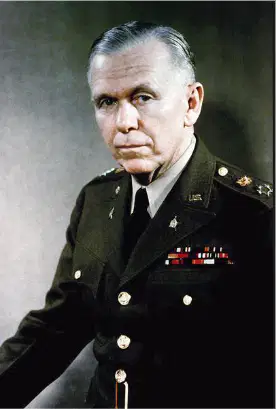
Who warned that without healthy economies, countries would remain unstable and prone to communist take-over?
Harry S. Truman
George C. Marshall
Joseph Stalin
Winston Churchill
The assistance from the Marshall Plan went out in the form of food, fuel, medical supplies, and _______.
money
weapons
jewelry
furniture
The US offered Marshall Plan assistance to Eastern European countries, but Stalin would not let them take it.
True
False
According to the passage, what was the main reason Stalin cut off the single road and rail line from Western Germany to West Berlin?
A) To avoid war
B) To force the western powers to give up West Berlin
C) To help West Berliners
D) To supply food to East Germany
Fill in the blank: The Berlin Airlift took place from June 1948 to ________ 1949.
September
January
March
November
The US conducted the Berlin Airlift to keep 2 million West Berliners alive by flying in plane-loads of supplies.
True
False
After the Berlin Airlift kept West Berlin supplied, what eventually happened?
Stalin built a wall around West Berlin.
Stalin eventually reopened the land-based supply route.
The Allies abandoned West Berlin.
West Berlin surrendered to the Soviets.
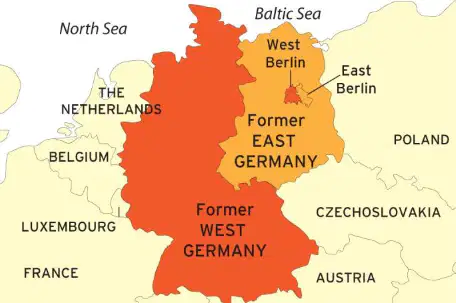
Which part of Germany surrounded West Berlin during the Berlin Airlift?
Former West Germany
Former East Germany
The Netherlands
France
In the Presidential Election of 1948, who was the incumbent president who won the election?
Thomas E. Dewey
Harry S. Truman
Franklin D. Roosevelt
Dwight D. Eisenhower
According to the passage, the 1948 election was considered one of the biggest upsets in election history.
True
False
Which party won both houses of Congress in the 1948 election?
Democratic Party
Republican Party
Progressive Party
States' Rights Democratic Party
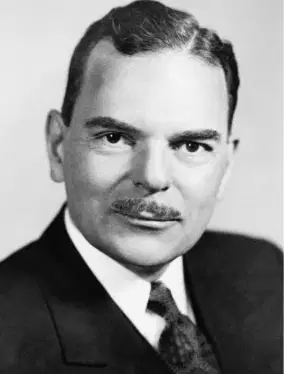
Who was the Republican candidate in the 1948 Presidential Election?
Thomas E. Dewey
Harry S. Truman
Adlai Stevenson
Wendell Willkie
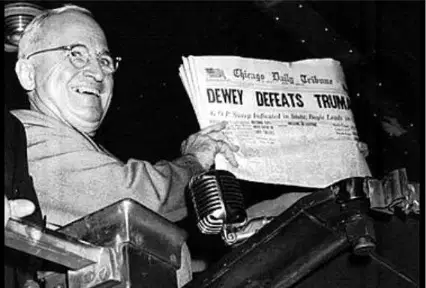
What is significant about the newspaper that Truman is holding in the photograph?
The newspaper incorrectly announced Dewey's victory before the official results were known.
The newspaper was the first to use color photographs on the front page.
The newspaper was published in a foreign language.
The newspaper featured an exclusive interview with Truman.
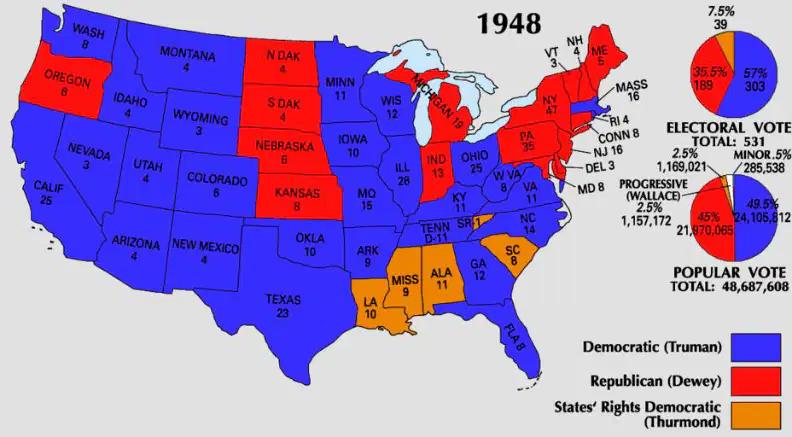
Based on the electoral map and pie chart, which party received the majority of the electoral votes in the 1948 election?
Democratic (Truman)
Republican (Dewey)
States' Rights (Thurmond)
Minor parties
According to the passage, when was the North Atlantic Treaty Organization (NATO) formed?
April 1949
June 1950
March 1947
September 1952
Which countries were involved in the formation of NATO in 1949?
The US, Canada, and ten Western European nations
The US, Mexico, and Brazil
The Soviet Union, China, and North Korea
The UK, Australia, and New Zealand
What was the main purpose of forming NATO according to the passage?
To provide collective security and especially communist containment
To promote economic cooperation among European nations
To establish a single European currency
To create a global environmental agreement
West Germany joined NATO in which year?
1955
1949
1961
1973
How many nations are currently part of NATO according to the passage?
(a)
What does the image shown represent?
The United Nations flag
The NATO flag
The European Union flag
The Red Cross flag
In response to which event did the Soviet Union form the Warsaw Pact in May 1955?
The end of World War II
West Germany joining NATO
The Cuban Missile Crisis
The Berlin Wall being built
The Warsaw Pact included the Soviet Union and how many other Eastern Bloc countries?
Seven
Five
Nine
Four
What was the main purpose of the Warsaw Pact?
To promote economic cooperation
To serve as a mutual defense treaty and counterweight to NATO
To establish a single currency
To expand communism to Western Europe
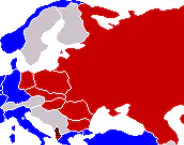
Which color represents the Warsaw Pact countries?
Blue
Red
Gray
Green
According to the passage, which country monopolized the atomic bomb from 1945 until 1949?
Soviet Union
United States
United Kingdom
Germany
Who was the lead scientist of the US run Operation Castle that developed hydrogen bombs?
Edward Teller
J. Robert Oppenheimer
Enrico Fermi
Richard Feynman
Where did the US conduct the Operation Castle hydrogen bomb tests?
Marshall Islands on Bikini Atoll
Nevada Test Site in Nevada, USA
Mururoa Atoll in French Polynesia
Novaya Zemlya in Russia
Hydrogen bombs are a thousand times more powerful than normal atomic bombs using uranium or plutonium.
True
False
What does MAD stand for in the context of the Cold War?
Mutually Assured Destruction
Military Action Directive
Massive Attack Defense
Modern Arms Development
MAD (Mutually Assured Destruction) is considered responsible for keeping the peace between the superpowers during the Cold War because:
both sides had enough nuclear weapons to destroy each other, making war too costly to risk.
the US and Soviet Union signed a peace treaty ending all hostilities.
only one side had nuclear weapons, deterring the other from attacking.
the superpowers had no interest in military conflict.
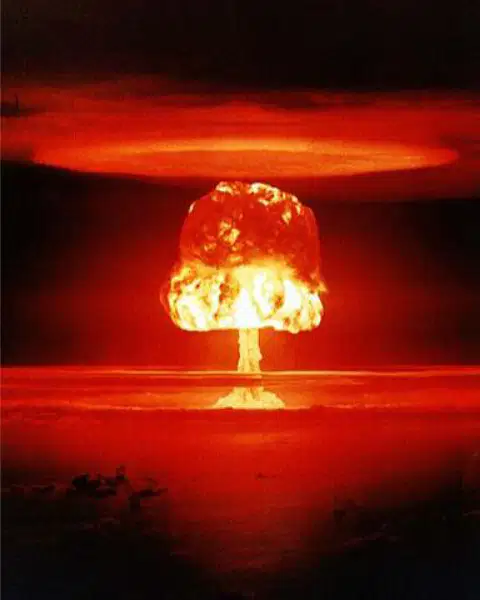
What type of bomb is shown in the photograph, as described in the passage?
(a)
China fell to communism in 1949 when Mao Zedong’s revolution defeated Chiang Kai-shek’s Nationalists after 12 years of civil war. Who led the revolution that resulted in the establishment of the People’s Republic of China?
Chiang Kai-shek
Mao Zedong
Sun Yat-sen
Deng Xiaoping
Where did the Nationalists retreat after being defeated by the Communists?
The island of Taiwan
The Korean Peninsula
Japan
Hong Kong
China fell to communism in 1949 when Mao Zedong’s revolution defeated Chiang Kai-shek’s Nationalists after 12 years of civil war. True or False: The US intervened in the Chinese Civil War to support the Nationalists.
True
False
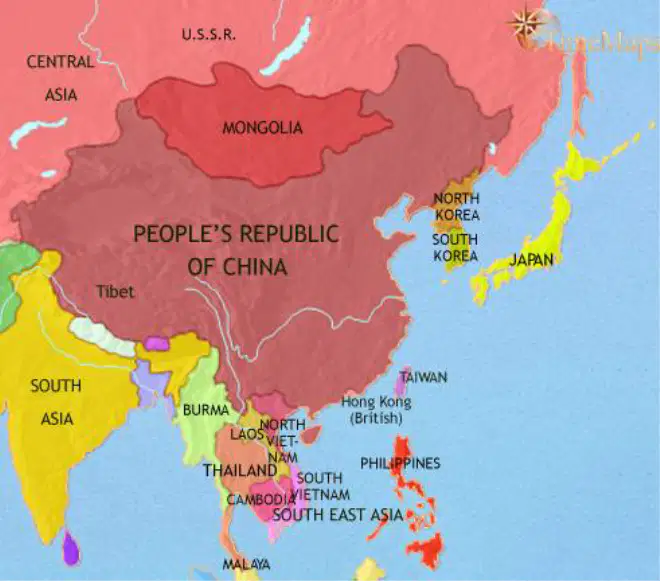
Which country did the Nationalists retreat to after losing the civil war in China?
Japan
Taiwan
Mongolia
South Korea
According to the passage, when did the Korean War begin?
(a)
Who dominated the military effort in the Korean War, according to the passage?
Soviet Union
United States
China
Japan
The North Korean invasion was backed by which country?
United States
Soviet Union
China
Japan
Who did President Truman put in charge of reversing the military disaster during the Korean War?
General Douglas MacArthur
General Dwight D. Eisenhower
General George S. Patton
General Omar Bradley
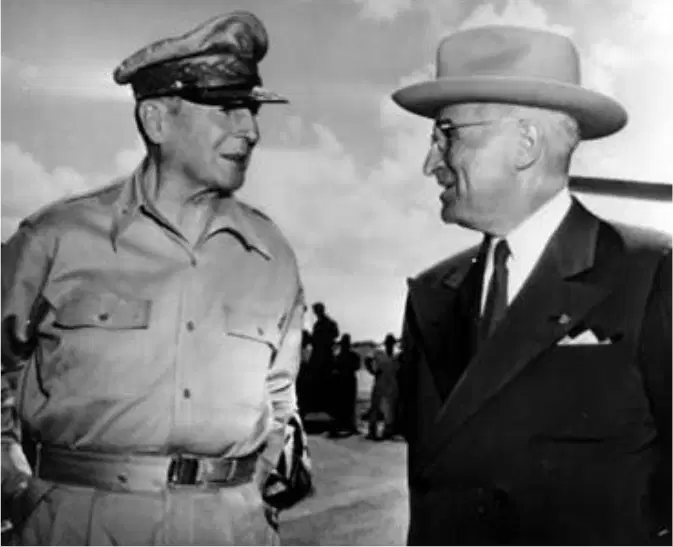
Refer to the image labeled 'MacArthur and Truman.' Who are the two individuals shown in the photograph?
Who conducted a surprise amphibious landing at the port city of Inchon during the Korean War?
MacArthur
Eisenhower
Patton
Montgomery
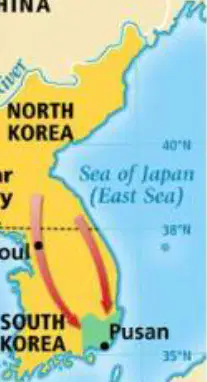
What mistake did the US make after driving North Koreans out of South Korea?
The US tried to capitalize on their advantage by invading and conquering North Korea.
The US immediately withdrew all troops from South Korea.
The US signed a peace treaty with North Korea without consulting South Korea.
The US provided military aid to North Korea.
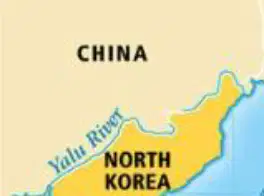
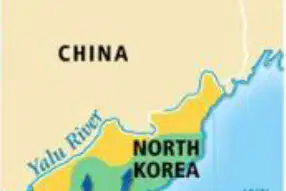
What river marked the border between North Korea and communist China?
Yalu River
Yangtze River
Mekong River
Yellow River
Based on the passage and maps, which country joined the war on the side of North Korea after the US advanced to the Yalu River?
Japan
China
Soviet Union
South Korea
Based on the maps, which city was the site of the surprise amphibious landing by UN forces?
Seoul
Pusan
Inchon
Tokyo
According to the passage, who wanted to invade China and possibly use atomic bombs during the Korean War?
Truman
MacArthur
Stalin
Kim Il-sung
Why did President Truman fire MacArthur, according to the passage?
Because MacArthur created a public debate with the President in the newspapers over his ideas to invade China and use atomic bombs, which Truman refused.
Because MacArthur refused to lead the army in Korea.
Because MacArthur resigned from his position voluntarily.
Because MacArthur was promoted to a higher position in the government.
In what year did the fighting stop with a ceasefire that divided the Korean peninsula at the 38th Parallel?
1953
1945
1960
1948
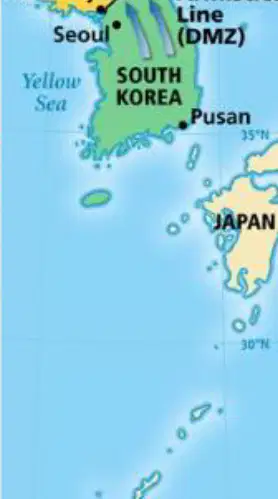
Based on the maps provided, what is the name of the line that currently separates North Korea and South Korea?
Armistice Line (DMZ)
Maginot Line
Berlin Wall
Great Wall of China
There has never been a peace treaty between North Korea and South Korea, so the state of war technically still continues.
True
False
When was the South East Asian Treaty Organization (SEATO) formed?
September 1954
March 1957
June 1960
August 1949
What was the main purpose of SEATO?
To guard mainly against China.
To promote economic cooperation in Southeast Asia.
To establish a common currency in Southeast Asia.
To support decolonization efforts in Africa.
Which of the following countries was NOT a member of SEATO?
United States
France
Japan
Australia
SEATO was dissolved in 1977.
True
False
Name the only two Southeast Asia member countries of SEATO.
Thailand and the Philippines
Malaysia and Indonesia
Vietnam and Singapore
Brunei and Myanmar
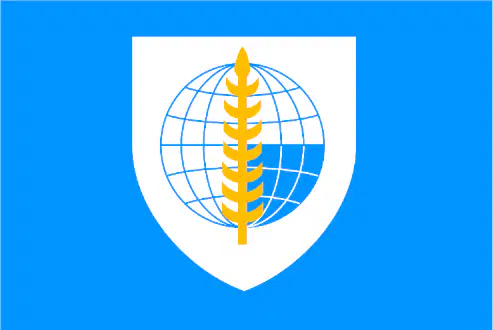
What does the image above show?
The SEATO flag
The NATO flag
The United Nations flag
The ASEAN flag
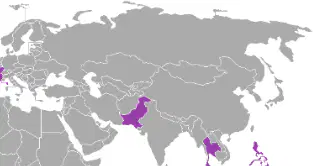
Which countries are highlighted in the map as SEATO members?
US, Britain, France, Australia, New Zealand, Pakistan, Thailand, and the Philippines
US, Canada, Mexico, Brazil, Argentina, Chile, Peru, and Colombia
China, Japan, South Korea, Vietnam, Laos, Cambodia, and Myanmar
Russia, Germany, Italy, Spain, Portugal, Greece, and Turkey
Read the passage below and answer the question: The Second Red Scare happened after World War Two when Stalin seemed to be trying to spread communism across the globe. It was a repetition of even more severe and long-lasting hysteria over possible communist infiltration within the US. Again it would be characterized by government actions designed to protect national security violating personal rights and freedoms. It would uncover some spies, but not many, and would bother and even ruin the lives of many innocent people in dragnets of investigations and punishments. In March 1947 President Truman created the Federal Employee Loyalty Program by executive order, designed to root out communist influence in the federal government. The FBI investigated over 3 million people, and about 3 thousand were either dismissed or resigned. What was the main goal of the Federal Employee Loyalty Program created by President Truman in 1947?
To promote communism in the US
To root out communist influence in the federal government
To increase government spending
To end World War Two
Fill in the blank: The FBI investigated over ______ people during the Second Red Scare, and about 3 thousand were either dismissed or resigned.
3 million
30 thousand
300 thousand
1 million
Read the passage below and answer the question: The Second Red Scare happened after World War Two when Stalin seemed to be trying to spread communism across the globe. It was a repetition of even more severe and long-lasting hysteria over possible communist infiltration within the US. Again it would be characterized by government actions designed to protect national security violating personal rights and freedoms. It would uncover some spies, but not many, and would bother and even ruin the lives of many innocent people in dragnets of investigations and punishments. In March 1947 President Truman created the Federal Employee Loyalty Program by executive order, designed to root out communist influence in the federal government. The FBI investigated over 3 million people, and about 3 thousand were either dismissed or resigned.
True
False
What does HUAC stand for?
House of Un-American Activities Committee
House of United American Citizens
House of Un-American Congress
House of American Activities Committee
In what year was the House of Un-American Activities Committee (HUAC) created?
1938
1947
1954
1929

