
 Worksheets
6th Grade MAP Review
Total questions: 79
Worksheet time: 59mins
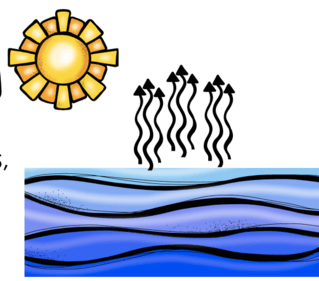
What is the energy source for the water cycle?
the Sun
the Earth
water
the Moon


What force causes the downward movement of water in the water cycle?
thermal energy
air resistance
gravity
friction

What is number 3 in the diagram?
evaporation
precipitation
surface runoff
condensation

What is number 1 in the diagram?
condensation
evaporation
runoff
precipitation

What process is happening in number 6?
transpiration
evaporation
condensation
accumulation

What is rainfall that is not absorbed by soil and travels to the ocean?
run-off
transpiration
precipitation
evaporation
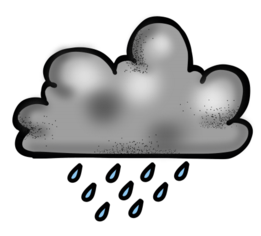
gravity bring the droplets down towards earth


The diagram shows the distribution of water on the Earth. Based on the diagram, which is true?
Most of Earth's water is fresh water.
Most of Earth's fresh water is contained in glaciers and ground water.
Most of Earth's water is contained in glaciers.
Most of Earth's fresh water is contained in the oceans.

The graphic shows that only 3% of the Earth's water is fresh water. The graphic also shows that of this 3%, almost all of it is contained in two reservoirs. What are the two reservoirs that contain almost all of Earth's fresh water?
glaciers and groundwater
streams and estuaries
marshes and swamps
lakes and rivers

The diagram shows the distribution of water on the Earth. Which source is the most abundant supply of liquid surface water that is not salty?
groundwater
oceans
lakes
rivers

This image is an example of what state of matter
Solid
Liquid
Gas
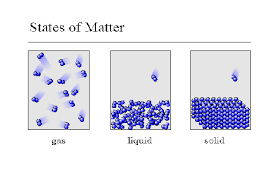
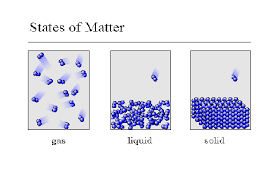

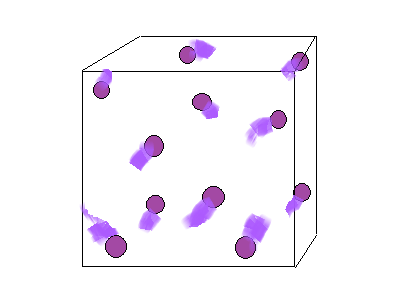


What state of matter is pictured?
Solid
Liquid
Gas
Plasma
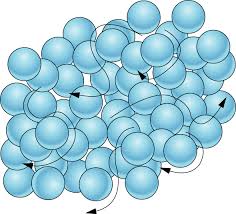
What state of matter?
Solid
Liquid
Gas
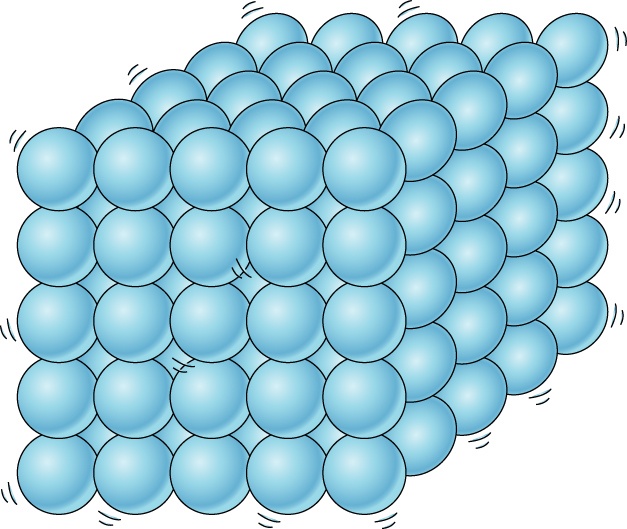
What state of matter?
Solid
Liquid
Gas
Plasma!!!
Transition from a liquid to a gas
Condensation
Freezing
Evaporation
Melting
Gas condenses to a liquid
Evaporation
Melting
Freezing
Condensation
Solid --> Liquid
Boiling
Melting
Freezing
Sublimation
Liquid --> Solid
Boiling
Melting
Freezing
Sublimation

What animal feeds on grasses?
Bee
Caterpillar
Mouse
Snake

What animal eats berries and seeds?
Caterpillar
Blue Lizard
Snake
Bobcat

What animal eats rabbits?
Blue Lizard
Bee
Mouse
Bobcat

What animal eats the caterpillar?
Mouse
Snake
Bobcat
Grasses

What animal does the bobcat eat?
Bee
Berries and seeds
Rabbit
Grasses

Who is a predator of bees?
Blue Lizard
Caterpillar
Rabbit
Mouse

What is prey of the snake?
Bee
Mouse
Grass
Berries and Seeds

Which of the following is a primary consumer?
Snake
Bobcat
Rabbit
Grasses

Which animal consumes the rabbit and mouse?
Blue Lizard
Snake
Bobcat
Bee

Which of the following is a producer?
Bee
Mouse
Bobcat
Berries and seeds

What type of diagram is this?
Food Chain
Food Map
Food Web
Fast Food

Energy transfer; where the energy is goin

Identify the producer in the image above.
Grass
Grasshopper
Frog
Snake
Eagle


Arrows in a food web represent...
eating
sunlight
energy
matter

Then match the organisms with the interaction you predict they will have in the ecosystem.
Hint: Plants are NOT considered prey because they are not hunted!
Lion & Deer.
predator-prey
competition
both predator-prey & competition
neither predator-prey nor competition
Then match the organisms with the interaction you predict they will have in the ecosystem.
Hint: Plants are NOT considered prey because they are not hunted!
Baboon & Deer both eat the Apples from the Tree.
predator-prey
competition
both predator-prey & competition
neither predator-prey nor competition

Predator population lags behind prey population because:
Increase in predators leads to decrease in prey
Increase in predators leads to increase in prey
Increase in predators leads to decrease in producers

The place where two plates come together is known as a _______
transform boundary.
divergent boundary.
convergent boundary.
rift valley.

Below is a picture of sea-floor spreading. How are the ocean crusts moving?
Converging
Diverging
Sliding
No movement
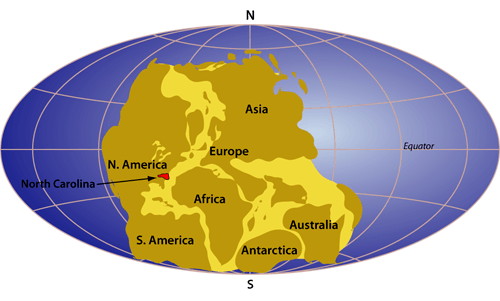

Which correctly identifies the geologic process that formed the Himalayan mountains (The World's Tallest Mountains, including Mt. Everest)?
Two continental plates converging
An earthquake in a subduction zone
A tectonic plate moving over a hot plate
Movement at a transform fault boundary

The Great Rift Valley in Africa and the Mid-Ocean Ridge were all created by this boundary
Divergent
Convergent
Reform
Transform

What evidence did Wegener use to support his theory?
Continents and fossils fitting together/matching-up like puzzle pieces
glacier scars and other climate evidence from temperature
mountain ranges and rocks line up across continents
all of the above

According to the continental drift hypothesis, the presence of similar fossils in South America and Africa supports which scientific idea?
Animals easily and frequently travel from Africa to South America.
Species of animals probably traveled between continents on natural rafts (such as trees destroyed in tsunamis).
Land bridges once existed that connected the continents.
South America and Africa were once connected together.

The image is an example of what type of evidence?
Evidence of matching fossils
Evidence of climate change
Evidence of matching earth features

This image is an example of what type of evidence?
Evidence of matching earth features
Evidence of climate change
Evidence of matching fossils


According to the diagram, what process is shown by letter B?
compaction & cementation
weather & erosion
heat & pressure
melting


Which process is best illustrated by the diagram?
igneous rock formation
sedimentary rock formation
igneous rocks changing into metamorphic rocks
sedimentary rocks changing into metamorphic rocks
What geological process best explains how the Grand Canyon formed?
An earthquake
River erosion
A tsunami
A volcanic eruption
Water carrying sediment down a hill is an example of...
weathering
erosion
deposition
What is erosion?
The movement of rocks
The breaking of rocks
The dropping of rocks
Which of these is an example of erosion?
Light shinning onto a mountain
Rain breaking down rock
Wind blowing away sediment
All of the above

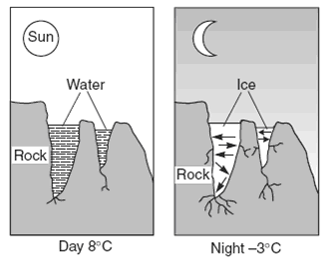
Which statement best explains why this process results in weathering?


