
 Worksheets
Integrated Science Spring Final Exam
Total questions: 196
Worksheet time: 4hrs 37mins
What is the name of group number 1?
halogens
noble gases
alkali metals
alkaline earth metals
What is the name of group number 1?
halogens
noble gases
alkali metals
alkaline earth metals
What is the name of group number 2?
transition metals
halogens
metaloids
alkaline earth metals
where are the metaloids found
far left, vertical
stair step/diagonal
far right horizontal
at the bottom
What group number are the halogens found?
18 (8A)
1
2
17 (7A)
Periodic law states that the elements are arranged according to their atomic ________ so that elements with similar chemical properties are in the same ________ and properties repeat periodically.
numbers, rows
masses, rows
masses, column
numbers, column
A grouping of elements based on similar chemical properties, arranged by columns in the periodic table; also known as a group
family
period
row
isotope
A row on the Periodic Table of Elements
family
period
row
isotope
Metals (select all that apply)
are found on the right side of the periodic table.
are found on the left side of the periodic table.
are good conductors of heat and electricity.
are brittle.
are malleable and ductile.
Nonmetals (select all that apply)
are found on the right side of the periodic table.
are found on the left side of the periodic table.
are good conductors of heat and electricity.
are brittle.
can be solid, liquids, or gases at room temperature.

Which element is found in group 2, period 6?
Oxygen (O)
Barium (Ba)
Selenium (Se)
Carbon (C)
Which halogen is found in period 4?
Krypton (Kr)
Xenon (Xe)
Bromine (Br)
Iodine (I)
Which element has similar chemical properties as sodium but has 7 energy levels?
Francium (Fr)
Cesium (Cs)
Rubidium (Rb)
Potassium (K)
Elements that have the same number of energy levels are said to be in the same ______.
group
period
family
classification
Subatomic particles with a negative charge
Electrons
Neutrons
Protons
Quarks

Which one of these is true?
Opposite charges repulse each other
Opposite charges attract each other
Same charges attract each other
Same charges neither repulse nor attract each other
Which is NOT part of an atom?
protons
neutrons
neurons
electrons
Electrons are located______.
outside the nucleus
inside the nucleus
_?_ is determined by scratching a mineral with other minerals.
Fracture
Hardness
Streak
Color
The tendency for a mineral to split along specific planes of weakness to form, smooth flat surfaces.
cleavage
fracture
crystallization
hardness
The color of the powdered form of a mineral found by rubbing a mineral against a white tile.
luster
cleavage
streak
fracture

The softest minerals is _?_
Quartz
Topaz
Talc
Amethyst

What mineral property is shown in the picture?
hardness
cleavage
fracture
streak

The way a surface (of a mineral) reflect light. Either metallic or nonmetallic:
cleavage
streak
luster
reflection


Rocks that form from colling magma inside Earth?
Igneous intrusive
Igneous extrusive
Metamorphic foliated
Metamorphic nonfoliated

Geologists have classified rocks into three major groups of rocks which are:
inorganic, organic and chemical rocks
igneous, sedimentary and metamorphic rocks
metamorphic, chemical and non chemical rocks
sedimentary, inorganic and igneous rocks
Rocks can turn into any other rocks?
True
False
Minerals and rocks are the same?
True
False


Which are waves that carry large amounts of energy?
Richter Scale
Magnitude
Fault
Seismic
It can travel through only the mantle and the crust.
Seismic waves
Surface waves
Primary waves
Secondary waves
Which measures the strength of an earthquake on a scale of 1 - 10?
Richter Scale
Magnitude
Fault
Moment Magnitude Scale

Which of the following statement correctly identifies the focus and epicenter of an earthquake in the given illustration?
Point A is the focus and Point B is the epicenter.
Point A is the epicenter and Point C is the focus
Point A is the epicenter and Point B is the focus.
Point A is the focus and Point C is the epicenter.
________ are the slowest seismic waves and last to arrive.
What type of wave can travel through all the layers of the Earth?
p wave
s wave
surface wave
none of the above
The point where the earthquake begins.
epicenter
fault
focus
seismic waves
Main type of waves that can travel through the earth's inner layer.
surface waves
body waves
Love waves
Rayleigh waves
Two types of surface waves
Love waves and Rayleigh Waves
P waves and S waves

A cloud of gas and dust is called a....
Solar System
Nebula
Galaxy
Red Giant
What takes up 99.8% of the mass in the solar system?
The moon
The sun
Jupiter
Saturn
What belt separates the Rocky Planets and the Gas Giants ?
Kuiper Belt
Asteroid Belt
Comet Belt
Joivian Belt
What type of galaxy is the Milky Way Galaxy?
Spiral
Elliptical
Irregular
Flat
A group of dust, stars, gas, and planets bound together by gravitational forces is called a....
Solar System
Nebula
Galaxy
Red Giant
Which planet's average temperature make it the hottest planet in the solar system?
Mercury
Venus
Earth
Mars
The solar system formed from
a large cloud of gas & dust.
the milky way galaxy.
a large volcanic eruption.
a large cloud of water vapor
When did Earth and the solar system form?
4.6 million years ago.
14.6 million years ago.
4.6 billion years ago.
14.6 billion years ago.
The main force at play during making of our solar system
strong force
weak force
gravity
electrostatic force
Which of these claims describes one way that technology assists humans with observing distant galaxies? SC.E.5.11
Satellites that orbit distant stars relay information to Earth.
Probes collect materials from distant stars for human analysis.
Instruments on space shuttles make measurements of distant stars.
Telescopes that orbit Earth collect data about the composition of distant stars.
What is one way that astronomers are able to make assumptions about how our solar system was formed?
They collect surface samples from other planets
They observe how our solar system continues to behave
They send spacecraft out to gather samples from other planets
They look for solar systems that are in the process of forming.
Why is evidence useful to scientists?
Even unreliable data is useful to support or refute a claim
It is carefully gathered information that helps them support or refute a claim.
It allows them to draw several conclusions from a small amount of information
Even questionable evidence can be used to support a claim and produce several theories.

As the particles of matter move around they are
Colliding and breaking apart
Colliding and sticking together
Colliding and bouncing around
Breaking down into smaller pieces

What are the steps of solar system formation?
nebula -> protoplanetary disk -> protostar-> sun and planets
protoplanetary disk --> nebula -> sun and planets ->protostar
Which is the largest planet in our Solar System?
Saturn
Neptune
Earth
Jupiter
What is in our Solar System?
Planets
Moons
Sun
All of the above

Which color has the longest wavelength?
Yellow
Red
Green
Purple

The frequency of an x-ray is --
1.41 x 10⁻¹⁰ Hz
1.41 x 10¹⁸ Hz
1.41 x 10¹⁰ Hz
1.41 x 10⁻¹⁸ Hz

Which electromagnetic waves are useful for Television?
Gamma
x ray
radio
microwave
The lowest point on a wavelength is a(n) ____________.
value
trough
crest
medium

What might happen if the ozone layer did not block the sun's ultraviolet rays?
Humans would be able to see in the ultraviolet range of the EM spectrum
Devices that use electromagnetic radiation would no longer work
The surface of the earth would be much hotter
Rates of skin cancer would skyrocket
Place the following types of EM radiation in order, from lowest energy to highest energy: A) Visible light; B) Gamma rays; C) Radio waves
A, C, B
C, A, B
B, C, A
C, B, A
what type of wave is used for phones and WiFi
radio
micro
UV
Xray
What type of wave creates sunburn?
Uv
Xray
Gamma
Infrared
Which color has the longest wavelength?
Yellow
Red
Green
Purple
The frequency of an x-ray is --
1.41 x 10⁻¹⁰ Hz
1.41 x 10¹⁸ Hz
1.41 x 10¹⁰ Hz
1.41 x 10⁻¹⁸ Hz
Which electromagnetic waves are useful for Television?
Gamma
x ray
radio
microwave
The lowest point on a wavelength is a(n) ____________.
value
trough
crest
medium
What might happen if the ozone layer did not block the sun's ultraviolet rays?
Humans would be able to see in the ultraviolet range of the EM spectrum
Devices that use electromagnetic radiation would no longer work
The surface of the earth would be much hotter
Rates of skin cancer would skyrocket
Place the following types of EM radiation in order, from lowest energy to highest energy: A) Visible light; B) Gamma rays; C) Radio waves
A, C, B
C, A, B
B, C, A
C, B, A
what type of wave is used for phones and WiFi
radio
micro
UV
Xray
What type of wave creates sunburn?
Uv
Xray
Gamma
Infrared

Which layer of the Earth is liquid?

This zone is rigid and solid. It contains the crust and the upper mantle
atmosphere

The layer of the earth where convection currents happen and move plates is known as the?
Outer Core
Asthenosphere

What is area 4 called?
Crust
Asthenosphere
The Ocean
Lithosphere

What is area 5 ?
Asthenosphere
Crust
Lithosphere
Mr. Mills Classroom

What is area 7?
Asthenosphere
Outer Core
Inner Core
The Gray Zone

The part of the crust that is thin, dense, young, and made of Basalt is known as the?
What is the thickest layer of the Earth?
Crust
Mantle
Outer Core
Inner Core

What causes the plates to move?
Will Power
Conduction
Nothing, they don't really move
Convection

This layer is made of hot flowing rock (magma).
Crust
Mantle
Core

The layer made of iron and nickel.
Crust
Mantle
Core

This layer is made of soil and rocks.
Crust
Mantle
Core

This layer is divided into two: the inner and outer.
Crust
Mantle
Core

The layer is divided into two: the continental and oceanic.
Crust
Mantle
Core

This is the coolest layer.
Crust
Mantle
Core

Which crust is thicker
oceanic
continental
bread
pizza
In a density column, is the substance with the highest density on the bottom or the top?
Bottom
Top
In a density column, is the substance with the lowest density on the bottom or on the top?
Bottom
Top
Which of the following is the correct definition of density?
The amount of stuff in an object
The amount of space an object takes up
A measure of the force of gravity on an object
The amount of matter (mass) packed into a space (object)

Which object has the highest density in this picture?
A
B
C
Which of the following is an example of an object with a low density?
Pillow
Bowling Ball
Brick
Which of the following is the correct units for density?
grams (g)
Newtons (N)
cm3
g/cm3
What is the density of an object if it has a mass of 6g and a volume of 3cm3? (Hint: Density = mass/volume)
6 g/cm3
3 g/cm3
2 g/cm3
1/3 g/cm3
Does 1cup or 6cups of water have a higher density?
1 cup
6 cups
They have the same density
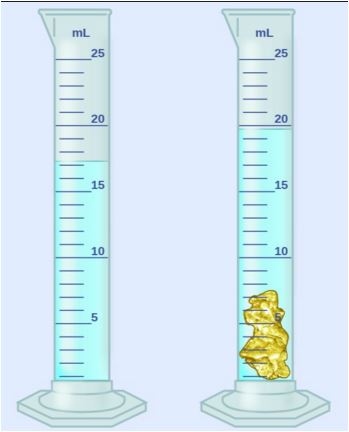

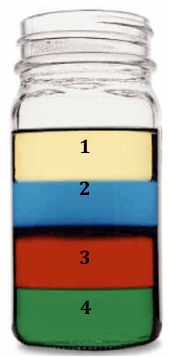

Which object has the lowest density in this picture?
A
B
C


What are the puzzle pieces of the Earth's surface called?
Tectonic plates
Subductions
Earthquakes
Convergents

What type of boundary is shown in the diagram?
Divergent
Convergent
Transform
Transdermal

A boundary that doesn't create or destroy crust is called a:
Transform Boundary
Convergent Boundary
Divergent Boundary
Rift Valley

In what type of boundary is the only feature created going to be Mountains?
Oceanic to Oceanic Convergence
Oceanic to Continental Convergence
Rift Valleys
Continental to Continental Convergence

Which system moves the body?
Skeletal
Muscular
Respiratory
Nervous
Which system breaks down food and absorbs nutrients into the body?
Digestive
Circulatory
Skeletal
Nervous
Which system controls every function of the body?
Skeletal
Muscular
Digestive
Nervous
Which system provides shape and support, protects organs, and moves the body?
Skeletal
Excretory
Nervous
Muscular
Which system takes oxygen into the body and expels carbon dioxide as we breathe?
Circulatory
Muscular
Respiratory
Digestive
Which system transports oxygen throughout the body via heart and blood vessels?
Respiratory
Muscular
Excretory
Circulatory
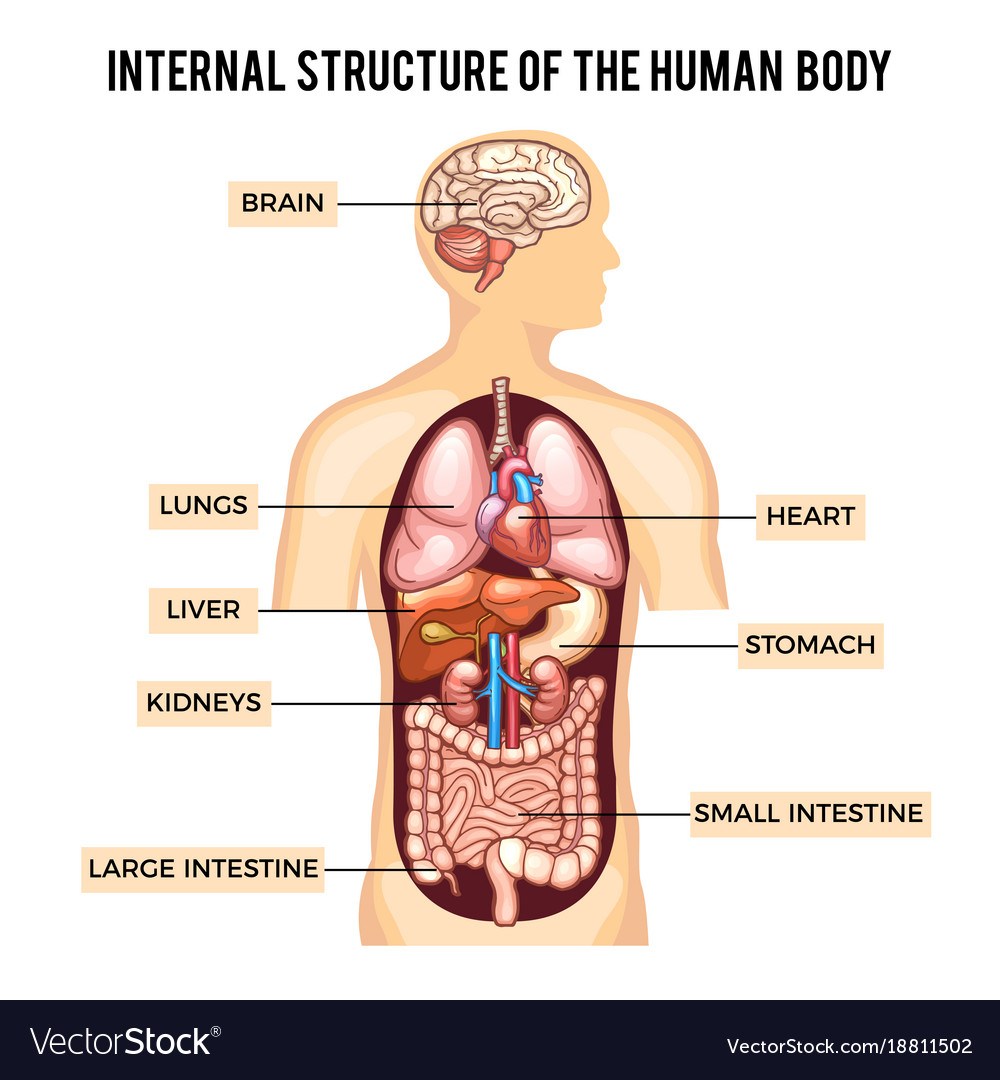
What is an organ?
A group of tissues that work together to perform closely related functions.
the network of nerve cells and fibers that transmits nerve impulses between parts of the body.
all of the bones and muscles in your body and responsible for body structure and movements.
responsible for providing your body with nutrients from food.
Which systems of the human body function together to move and control body parts?
lymphatic
muscular
skeletal
digestive
excretory
Which statement is true about body systems in an organism?
All body systems work together
Each body system works independently
All the body systems function the same way
All systems use the same organs to function properly
Your circulatory and ______________ systems work together to get oxygen and bring it to your cells.
respiratory
integumentary
skeletal
digestive

Identify the internal frog organ that is shown (in color) in this picture. It has 3 chambers and is a muscle responsible for pumping blood.
Lung
Liver
Heart
Stomach
Which system moves the body?
Skeletal
Muscular
Respiratory
Nervous
Which system breaks down food and absorbs nutrients into the body?
Digestive
Circulatory
Skeletal
Nervous
Which system remove waste from the body?
Digestive
Circulatory
Excretory
Muscular
Which system controls every function of the body?
Skeletal
Muscular
Digestive
Nervous
Which system provides shape and support, protects organs, and moves the body?
Skeletal
Excretory
Nervous
Muscular
Which system takes oxygen into the body and expels carbon dioxide as we breathe?
Circulatory
Muscular
Respiratory
Digestive
Which system transports oxygen throughout the body via heart and blood vessels?
Respiratory
Muscular
Excretory
Circulatory
What is an organ?
A group of tissues that work together to perform closely related functions.
the network of nerve cells and fibers that transmits nerve impulses between parts of the body.
all of the bones and muscles in your body and responsible for body structure and movements.
responsible for providing your body with nutrients from food.
Which of the following are MONOMERS (building blocks) SELECT ALL THAT APPLY.
Amino Acid
Protein
Polysaccharide
Nucleotide
What elements are commonly found in all living things?
C, H, O, N, P, F
H, Fe, P, Ar, Hg
C, H, O, N, P, S
No elements are commonly found in living things.
Carbohydrates are:
Monosaccharides
Polymers
Amino Acids
Nucleotides
Fats, Oils, Steroids are examples of (a)
DNA and RNA are examples of which macromolecule:
Proteins
Lipids
Carbohydrates
Nucleic Acids
This macromolecule is considered a triglycerides: ________________
Lipid
Carb
Protein
Nucleic Acids
Which of the following is not one of the four major classes of macromolecules?
Lipids
Carbon
Protein
Carbohydrates
Nucleic Acid
Monomer for lipids
monosaccharide
fatty acid
nucleotide
amino acid
Which macromolecule is used as our main source of energy?
Lipids/Fats
Nucleic Acids
Proteins
Carbohydrates
Nucleic acids make up which of the two molecules listed below?
FDA
RNA
DNA
FDR
Monomer for protein
monosaccharide
fatty acid
nucleotide
amino acid

