
 Worksheets
SS Bio Review 1
Total questions: 192
Worksheet time: 3hrs 44mins

Place the following in order
Question
Hypothesis
Experiment
Conclusion
Analyze
Place the following in order
Question
Hypothesis
Experiment
Conclusion
Analyze
After you make an observation you state the ____________?
Problem/Question
Hypothesis
Conclusion
Research
An educated GUESS OR PREDICTION
CONCLUSION
RESEARCH
ANALYZE
HYPOTHESIS
LISTING PROCEDURES AND MATERIALS ARE PART OF THE __________?
EXPERIMENT
QUESTION
HYPOTHESIS
CONCLUSION
CHARTS AND GRAPHS ARE ALL PART OF ___________.
PROCEDURES
ANALYZING DATA
MATERIALS
QUESTION
A SUMMARY OF YOUR RESULTS
CONCLUSION
HYPOTHESIS
QUESTION
DATA
What characteristic helps a whale protect itself from cold waters?
thick layer of blubber
blue color
large body
smooth skin
Which foot has structures that help the animal dig underground


Which structure helps this tree live where it only rains sometimes?
fruit
roots
leaves
branches
What are you measuring if you want to know how much air you blew in a balloon?
mass
volume
weight
density

What is the ultimate power?!?! Or as some would day, energy?
Oxygen
Glucose
Carbon Dioxide
The Sun
Any organism that eats plants is called a ________.
producer
consumer
decomposer
Plants are ____ because they make their own food.
producers
consumers
decomposers
all of the above
The Scientific Method is...
the way scientists make problems and ask questions.
the way scientists answer questions and solve problems.
the way scientists never solve problem.s
Which of the following is a statement that describes something that happens in nature that seems to be true all of the time?
theory
hypothesis
scientific law
conclusion
Which choice is a testable hypothesis?
Ocean water is too salty.
Water heats faster if it contains salt.
Summer is nicer than fall.
Dogs are better than cats.
How many variables should be tested at one time in a scientific investigation?
none
one
two
three
Why do scientists repeat their experiments?
to avoid making observations
to throw out the information they collected earlier
to make sure that the information they collected is reliable
Information from which a conclusion can be drawn. This is what you collect when you are performing your investigation:
control group
experiment
inference
data
What charge does an electron have?
Positive charge
Neutral charge
Negative charge
None of the above

This biological catalyst speeds up the rate of chemical reactions.
Activation Energy
Enzymes
Substrates
All of the above.
Which element is a component of all biological molecules?
Phospherous
Nitrogen
Oxygen
Carbon
Which of the following is a central energy source for organisms?
Carbohydrates
Proteins
Lipids
Nucleic Acids
Which macromolecule is used as our main source of energy?
Lipids/Fats
Nucleic Acids
Proteins
Carbohydrates
Which macromolecule stores energy?
Carbohydrates
Proteins
Lipids/Fats
Nucleic Acids

carbohydrate

lipid

protein
A denatured protein is one...
(Check all that apply)
whose shape has changed due to the effects of temperature or pH
which is broken down into its building blocks
which may no longer function
which is combined with other proteins to make a peptide
DNA is responsible for
Creating ribosomes
Storing genetic information
Relaying genetic information to other parts of the cell
Building proteins
What is the monomer that make up nucleic acids?
Monosaccarides
Fatty Acids
Amino Acids
Nucleotides


Scientific name for fats and oils (made up of fatty acids)
carbohydrates
lipids
proteins
nucleic acids

Many monomers put together make a
dimer
trimer
polymer
monosaccharide
Monomer is to Macrocolecule like ___ is to ____
Building is to Bricks.
Brick is to Building.
Carpenter is to Building.
Building is to Carpenter.

Water is necessary for life because (choose all that apply)
it carries glucose to tissues
it carries oxygen to tissues
it takes away waste from tissues
it dehydrates you


Which of the following equations represents the overall chemical reaction for photosynthesis?
6O2+ 6H2O → C6H12O6+ 6O2
C6H12O6 + 6H2O→ 6O2+ 6O2
6CO2+ 6H2O→ C6H12O6+ 6O2
6O2 + 6H2O→ C6H12O6 + 6CO2
The rate of photosynthesis can be influenced by...
Temperature
Carbon dioxide levels
Light intensity
Oxygen concentration
Temperatures that are too high can slow photosynthesis because
stomata stay open
enzymes are ruined
there is not enough CO2
there is too much water
Which of the following light color is absorbed by plants?
Red
Green
yellow
Light green

The organic molecule that is the cell's primary form of energy?
Glucose
ATP
ADP
GMP
Choose the statement that best describes light reaction.
It converts CO2 to sugar molecule
It converts light energy to chemical energy of ATP and NADPH
It takes place in the stroma
Which of the following colors is not absorbed by chlorophyll pigments?
green
blue
violet
Autotrophs (producers) can perform photosynthesis because they have -
Mitochondria
Ribosomes
A Nucleus
Chloroplasts
What are the products of photosynthesis?
water and carbon dioxide
oxygen and carbon dioxide
oxygen and glucose
oxygen and water
Cellular respiration occurs...
plants only
plants and animals
animals only
How are photosynthesis and cellular respiration different?
Photosynthesis uses food and cellular respiration makes food
Photosynthesis makes energy and cellular respiration makes food
Photosynthesis creates and stores energy while cellular respiration releases energy
Photosynthesis releases ATP and cellular respiration makes sunlight
What organ relates to the respiratory system?
Lungs
Kidney
Brain
What is the main function of the respiratory system?
to provide oxygen and remove carbon dioxide from your body
to break down food and nutrients
to provide food and remove oxygen
Match the following systems...

Circulatory

Muscular

Respiratory
When you breathe, your lungs take in ___ and remove _
oxygen/carbon dioxide
carbon dioxide/oxygen
waste/air
air/waste
Which of the following is the chemical equation for cellular respiration?
C₆H₁₂O₆ + O₂ → ATP + CO₂ + H₂O
CO₂ + H₂O → ATP + C₆H₁₂O₆ + O₂
C₆H₁₂O₆ + H₂O → ATP + CO₂ + O₂
C₆H₁₂O₆ + CO₂ → ATP + H₂O + O₂
Which of the following is the word equation for cellular respiration?
glucose + oxygen ---> ATP + carbon dioxide + water
carbon dioxide + water ---> ATP + glucose + oxygen
glucose + water ---> ATP + carbon dioxide + oxygen
glucose + carbon dioxide ---> ATP + oxygen + water
In the human body, our ___ system breaks food down into tiny glucose molecules.
digestive
respiratory
circulatory
nervous
Cellular respiration ___ glucose molecules.
breaks
makes
shakes
wakes
Cellular respiration ___ energy.
releases
stores
creates
destroys
Cellular respiration and photosynthesis are ___.
exact opposites
basically the same
not related in any way
not important for life
Both ___ are leftover as waste products after cellular respiration.
water & carbon dioxide
oxygen & glucose
carbon dioxide & oxygen
water & oxygen
The primary purpose of cellular respiration is to produce ___.
ATP
sugar
glucose
heat
Match the trophic level with the producer/consumer
Trophic Level 1
Energy producer
Trophic Level 2
Primary Consumer
Trophic Level 3
Secondary Consumer
Trophic Level 4
Tertiary Consumer
Trophic Level 5
Apex Predator
Match the producer/consumer level with what they eat
Producers
Sun, water, CO2
Primary Consumers
Herbivores
Secondary Consumers
Carnivores
Tertiary Consumers
Omnivores
Apex Predators
Can eat anything below them
How much energy is passed along every trophic level increase?
50%
25%
100%
10%
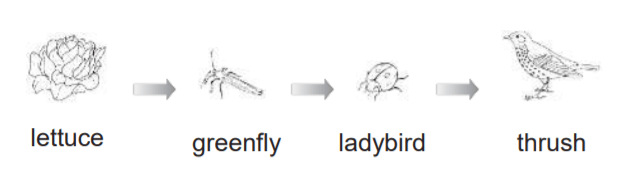
Who is the producer?
lettuce
greenfly
ladybird
thrush

What is a producer?
an organism that gets energy from eating other organisms
an organisms that uses sunlight to make its own food
an organism that gets energy from eating dead organisms, non-living material or waste

An organism that gets energy from eating other organisms is a ______________
producer
consumer
decomposer

A connection of food chains with many food energy paths in an ecosystem is a ____________
ecosystem
food web
environment

An animal that gets energy from eating both plants and animals is a(n)
herbivore
carnivore
omnivore

What is a carnivore?
an animal that gets energy by eating other animals
An animal that gets energy by eating only plants
an animal that gets energy by eating both plants and animals
How does carbon dioxide return to the atmosphere?
Photosynthesis
Combustion and Cellular Respiration
Consumption
Decomposition
What is the main thing that carries out Nitrogen Fixation?
Lightning
Bacteria
Plants
Humans
What part of the water cycle needs a living organism to occur?
Evaporation
Condensation
Transpiration
Precipitation
How does a non-human living organism affect the water cycle? (short answer/fill in the blank)
Trees allow transpiration
Animals drink it
All of the above
Hills can cause runoff
How do non-human living things affect the carbon cycle (fill in the blank/short answer)
animals do cellular respiration
plants do photosynthesis
Fires release carbon into the atmosphere
All of the above
Describe how human's negatively impact the water cycle (short answer- need detail)
Pollution
Deforestation
Building on and paving areas
All of the above
How do humans negatively affect the nitrogen cycle ? (short answer, need detail)
A. Use too much fertilizers causing an imbalance in soil.
B. Combustion- releasing N into the atmosphere
Eating plants
Both A and B
Describe how humans negatively impact the Carbon Cycle (short answer- need detail)
Cutting down trees
Eating plants
Combustion (putting CO2 into the atmosphere)
Cellular Respiration
The following are Greenhouse Gases:
Carbon Dioxide
Methane
Salt
Phosphorus
Water vapor
Why is Carbon Dioxide considered to be a Greenhouse Gas?
It is a combination of natural and human forces
It has a biogeochemical cycle
It is a type of weather that occurs during a particular season
It absorbs and reradiates infrared radiation to warm the Earth
In the 1800's why did CO2 levels increase significantly?
New factories were being built that caused more pollution
The civil war caused more pollution
Scientists figured out how to clean up pollution in the air
It did not increase
What types of data have scientists collected related to climate change?
Measuring Earth’s current temperature and CO2
Examining ice/glacier melting
Taking educated guesses
The ice caps are getting bigger/growing
What are examples of non-renewable energy sources?
Geothermal
Coal
Oil
Hydro
What are examples of renewable energy sources?
Solar
Wind
Coal
Gas
What is the definition of climate?
The condition of the air around the Earth
The rainforest
The pattern of weather over time
How hot it is in a certain place
What is the definition of "Greenhouse Effect?"
Gases that increase Earth's temperature
when the gases in Earth’s atmosphere trap heat from the Sun and keep the planet warm
the pattern of weather that occurs over time
When our climate changes
When did climate change (CO2 in the atmosphere) increase significantly?
1800s Industrial Revolution
1600s Industrial Revolution
1800 Crusades
1600 Crusades
What are examples of renewable energy sources?
Solar
Wind
Coal
Gas
What are some potential consequences of climate change?
The sea levels will rise putting seaside towns and cities at risk of drowning
The sea levels will drop putting seaside towns and cities at risk of drowning
More extreme weather
Animals will be able to adapt to the changes
What is the definition of renewable energy sources?
sources of energy that will never go away or be used up
Sources of energy that can go away and be used up
Wind, Solar, Hydro, Geothermal
Coal, Oil, Gas
What is the definition of non-renewable energy sources?
sources of energy that will never go away or be used up
Sources of energy that can go away and be used up
Wind, Solar, Hydro, Geothermal
Coal, Oil, Gas
Why don't we want to use as much non-renewable energy sources?
They cause pollution and CO2 to be put into our air/atmosphere
The cause less pollution
They are difficult to get
They smell funky
(a) are pure substances made up of only one kind of atom.
Describe the difference between ionic bonds and covalent bonds.

polysaccharide
disaccharide
monosaccharide
it isn't a carbohydrate
Fat
Fiber
Starch
Sugar
Carbohydrate
Lipid
carbon
nitrogen
phosphorus
sulfur

Amino Acid
Fatty Acid
Nucleotide
Monosaccharide
made of lots of double bonds
acidic when mixed with water
no high energy content
do not dissolve in water
What is the monomer or building block of proteins?
glucose
nucleotides
amino acids
lipids
What is another name for a protein?
fat
sugar
amino acid
polypeptide
Enzymes
fats
proteins
catalysts
dogalysts
lower activation energy
reusablility
denaturation
specificity
fragility
The reaction rate will increase.
The equilibrium of the reaction will be maintained.
The reaction rate will decrease.
The reaction will stop.

Covalent bonds
Ionic bonds
Polar bonds
Hydrogen bonds
It can be found anywhere
It freezes when it gets cold
floats when frozen
Dissolves most substances
Which of the following is NOT part of the cell theory?
All living things are made up of cells
New cells can be formed out of dust
All of the processes of life take place in the cells
New cells come from existing cells
___________ are the basic unit of life.
Cells
bacteria
organs
organisms
Organisms that are only made up of one cell are called
unicellular
multicellular
acellular
What do you think homeostasis is?
Keeping your body systems stable
Staying at home
Making body systems unstable
Which of the following cell parts are like little organs in a cell?
lungs
organelles
bacteria
viruses
Which of the following is NOT true of Prokaryotes?
Bacteria
Have cytoplasm
Have mitochondria for energy
Have DNA
Which of the following is more likely to happen if an organelle in a cell stops working?
The cell will go dormant (basically fall asleep).
The cell will die
The cell will adapt to survive
Nothing

What is one function that you think an organelle in a cell might have?

A cell membrane is most like
a plastic bag with holes in it
a stomach
a brain
a body builder

A selectively permeable membrane is one that
Allows nothing to enter or exit the cell
Allows anything to enter or exit the cell
Allows some things to enter the cell and somethings to exit the cell

What is the name of the jelly like substance where organelles are suspended?
Cell Membrane
Chloroplasts
Cytoplasm
Lysosome

Which organelle is responsible for telling the cell and its organelles what to do and holds DNA - the genetic material.
Chromosomes
Nucleus
Golgi Apparatus
Cell Membrane

Which of the following is made in the Nucleolus?
Ribosomes
Cytoplasm
Mitochondria
Chloroplasts

Why is Mitochondria referred to as the "Power House" of the cell?
Because it has muscles
Because it's responsible for making ATP - energy
Because it provides shelter like a house
Because it causes cellular movement

What is the function of the Endoplasmic Reticulum?
helps with making proteins and lipids that
Acts as the cell's brain
Suspends the organelles
acts as a barrier to keep things out of the cell
What do ribosomes do?
make cytoplasm
make proteins
make DNA
make ATP
The Gogli Apparatus is most analagous to which part of a city?
Fed Ex/ the Post Office
A Power Plant
A Fence with a Gate
A Waste Management Facility

Which of the following might you find in a vacuole?
harmful substances
cellular waste
useful substances the cell will need later on
All of the above

What body system is most similar to the lysosome?
Circulatory System
Respiratory System
Digestive System
Immune System

Why is the cell wall important?
It gives plants their structure
It helps cells bond to one another
It give plants their green color
Only A & B
All of the Above

What is the difference between Chloroplasts and Mitochondria?
Chloroplasts take energy from the sun and make glucose and Mitochondria use that glucose to make energy (ATP)
Mitochondria take energy from the sun and make glucose and Chloroplasts use that glucose to make energy (ATP)
There is no difference
vacuole
nucleus
cell membrane
cell wall
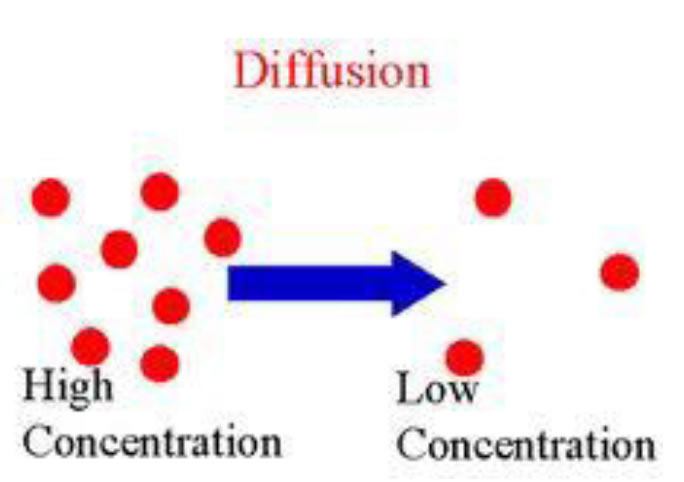
Passive Transport
Active Transport
Which is true about active transport?
it moves material from low to high concentration
it does not require energy
it moves material from high to low concentration
Type of cell transport that uses ATP (energy)
Passive Transport
Active Transport
So why do stomach cells function differently than skin cells?
They have different DNA.
Different types of cells simply use different genes contained in the DNA.
(a) factors typically (b) genes in a cell by causing the cell to (c) specific DNA segments to (d) for (e) .
The process by which cells become more specialized in order to perform different functions is called:
cell transformation
cell differentiation
stem cell changeability
MAGIC!
Which of the following are specialized cells found in the human body? (select all that apply)
lung cells
pancreas cells
heart muscle cells
nuerons
finger nail cells
What determines what type of cell a stem cell will become?
when certain genes in the cell get turned on or turned off
only when all the genes in the cell get turned on
only when all the genes in the cell get turned off
Does a liver cell have the same DNA as a red blood cell?
yes
no
Create a short, general list of ways that humans impact the environment.
What is it called when water changes from liquid to gas
freezeing
evaporation
condensation
How is water returned to earth?
evaporation
transpiration
precipitation
percolation
What do plants do with carbon dioxide (CO2)
Plants use CO2 to make carbohydrates.
Plants use CO2 to produce extra sunshne.
Don't pick this answer.
What are two by products released by plants?
water
oxygen
carbon
sugar
What is climate?
The daily weather changes of an area.
The average weather of a specific area.
What is the main gas responsible for causing global warming?
Oxygen
Carbon Dioxide
Hydrogen
Helium
What is the greenhouse effect?
What are some of the things that could happen due to global warming?
Expanding cities and towns can be damaging to local ecosystems because...
Explain why energy from the sun is a renewable resource but energy form oil is a nonrenewable resource.
(a) is an energy source other than a fossil fuel.
The following are alternative energy sources:
water
sun
coal
wind
geothermal (heat from inside the earth)
Biomass is made from burning...
crops, coal, and oil
crops, wood, and animal waste
wood and natural gas
wood and plastic
Solar energy only works if you have ___________.
solar panels
a tall building
a lot of land
live in a hot enviornment
Geothermal energy is energy
that is found in caves.
that has already been used.
that is found inside the earth.
found in space.
Enter: Oxygen
Exit: Carbon dioxide
Enter: Water vapor
Exit: Glucose
Enter: Carbon dioxide
Exit: Oxygen
Enter: Light
Exit: Water vapor

To make light
To make mitochondria
To make glucose
To release carbon dioxide

Which organelle is responsible making food (Glucose) using sunlight?
Cell Membrane
Nucleus
Chloroplast
Mitochondria
Which of the following is the correct equation for PHOTOSYNTHESIS?
light + carbon dioxide + water --> glucose + oxygen
carbon dioxide + sugar + water --> oxygen + light
oxygen + light + water --> carbon dioxide + sugar
carbon dioxide + oxygen + water --> Light+ Sugar
During photosynthesis (a) energy is converted into (b) energy.
Which organisms are capable of performing photosynthesis?
some bacteria
animals
algae
plants
Cellular respiration is...
the process by which cells break down glucose into energy.
the process by which cells break light down into energy.
the process by which cells communicate with other cells.
In which way are photosynthesis and cellular respiration different?
Cellular respiration stores ATP, while photosynthesis releases ATP.
Cellular respiration produces oxygen, while photosynthesis uses oxygen.
Photosynthesis releases energy, while cellular respiration stores energy.
Photosynthesis uses carbon dioxide, while cellular respiration produces carbon dioxide.
Cellular respiration occurs in
chloroplasts
mitochondria
golgi aparatus
thylakoid
Which type of organism would MOST likely benefit directly from increased levels of CO2?
mushroom
tree
bird
fish
How can energy from the sun be transferred to animals?
The sun's energy is transformed into food by plants, animals eat plants as food so that they can transform that food into energy.
Plants produced energy through photosynthesis, animals that eat that energy can produce food.
Plants transformed energy of the sun into gases that animals can breath in to use as energy through respiration.
Animals are able to use energy from the sun by eating the plants that provides energy for the animals.
Giraffes have long necks that help them reach leaves high up in trees. They get all the energy they need from plants such as this. What type of consumer are giraffes.
carnivore
omnivore
herbivore
decomposer
Mushrooms often grow around dead plants such as decomposing trees. They break down these dead organisms and put energy that stores in the plant back into the ground for other plants to use. What type of consumer are mushrooms?
carnivore
omnivore
herbivore
decomposer
Circle every secondary consumer in red

Put this food chain in the correct order
Grass
Rabbit
Snake
Hawk
What organism is missing from this food chain?
Shrub -> (a) -> Insect Eating Bird -> Hawk
How much energy is passed along every trophic level increase?
50%
25%
100%
10%
A gopher has gained 200 Kcal from eating grass all day. A snake comes along and eats that gopher, gaining a portion of those Kcal. A hawk swoops down and eats the snake; how many trophic levels have we moved up?
2
3
4
5
A gopher has gained 200 Kcal from eating grass all day. A snake comes along and eats that gopher, gaining a portion of those Kcal. A hawk swoops down and eats the snake; how many Kcal from the grass is transferred to the hawk?

