
 Worksheets
Introduction to Supply and Demand
Total questions: 29
Worksheet time: 18mins
What is the definition of 'supply'?
Amount of something
Consumer want + ability to pay
Amount producers are willing to sell
What buyers pay for something
What does 'demand' refer to?
Amount of something
What buyers pay for something
Consumer want + ability to pay
Amount producers are willing to sell
What is a 'market'?
Consumer want + ability to pay
What buyers pay for something
Amount producers are willing to sell
Place where products are exchanged
What happens when there is a surplus?
Supply equals demand
Demand equals supply
Demand is greater than supply
Supply is greater than demand
What is the result of a shortage?
Supply is greater than demand
Demand equals supply
Supply equals demand
Demand is greater than supply
What is 'equilibrium' in a market?
Demand is greater than supply
Supply is greater than demand
Demand equals supply
Supply equals demand
Who is a 'consumer'?
Person who buys the product
Makes or sells the product
Amount producers are willing to sell
Group working towards shared goal
Who is a 'producer'?
Makes or sells the product
Person who buys the product
Amount producers are willing to sell
Group working towards shared goal
What are 'goods'?
Physical items people buy
Actions people buy
Amount producers are willing to sell
Consumer want + ability to pay
What are 'services'?
Actions people buy
Physical items people buy
Amount producers are willing to sell
Consumer want + ability to pay
What is the role of a 'market'?
Where buyers and sellers meet to set prices
What buyers pay for something
Consumer want + ability to pay
Amount producers are willing to sell
What happens when demand exceeds supply?
Prices tend to rise
Supply increases
Prices tend to fall
Demand decreases
What happens when supply exceeds demand?
Demand increases
Prices may rise
Supply decreases
Prices may fall
What is the 'market clearing price'?
Price where demand equals supply
Price where supply exceeds demand
Price where demand exceeds supply
Price where supply equals demand
What is the effect of a new technology on production costs?
It can lower production costs
It can increase production costs
It has no effect on production costs
It always increases demand
What is a 'surplus'?
Supply is greater than demand
Demand is greater than supply
Demand equals supply
Supply equals demand
What is a 'shortage'?
Supply equals demand
Demand equals supply
Supply is greater than demand
Demand is greater than supply
What influences the price of an item in a market?
Supply and demand
Only supply
Only demand
Neither supply nor demand
What is the effect of high demand and low supply on prices?
Prices are unpredictable
Prices usually rise
Prices remain constant
Prices usually fall
What is the effect of low demand and high supply on prices?
Prices usually fall
Prices usually rise
Prices remain constant
Prices are unpredictable
What happens to demand if the price of a good increases?
Demand becomes zero
Demand remains constant
Demand decreases
Demand increases
What happens to supply if the price of a good increases?
Supply remains constant
Supply increases
Supply decreases
Supply becomes zero
What is the equilibrium price?
The price at which the quantity demanded by consumers is greater than the quantity supplied by producers
The price at which the quantity demanded by consumers is less than the quantity supplied by producers
The price at which the quantity demanded by consumers is equal to the quantity supplied by producers
The price at which the quantity demanded by consumers is zero
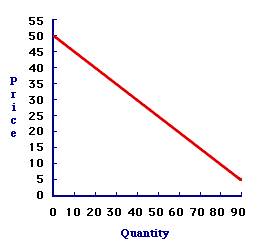
What does this curve represent?
Supply
Equilibrium
Demand
Surplus
According to the law of demand, as price rises, what happens to quantity demanded?
It goes up
It goes down
It stays the same
No change
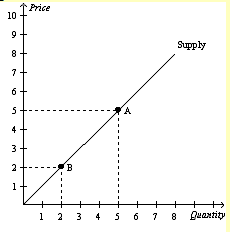
The movement from Point A to Point B represents a(n)
increase in the price
decrease in the quantity supplied
shift in the supply curve
A decrease in the price of a product will
shift supply out
shift supply in
increase quantity supplied
decrease quantity supplied

Which diagram shows the supply curve?
A
B
C
D
According to the law of supply, if the price of a product increases...
Supply decreases
Supply increases
Supply won't change
None of the above

