
Font size
 Worksheets
RADR Chp 13 Patient Transfer Safety Quiz
Total questions: 89
Worksheet time: 45mins
Samuel is being transferred from the emergency room to the intensive care unit. What is the primary purpose of this patient transfer?
To improve patient comfort
To safely move a patient from one place to another
To increase hospital efficiency
To reduce medical costs
Who is involved in ensuring safety during a patient transfer?
Only the patient
Only the medical staff
Both the patient and the people doing the transfer
Only the hospital administration
Ava works in a warehouse where heavy boxes need to be moved frequently. How does the application of proper lifting and transfer techniques affect job safety?
It decreases job safety
It has no effect on job safety
It increases job safety
It complicates job procedures
Luna, a radiologic imaging professional, is learning about the importance of using proper transfer techniques in her workplace. What benefit does she gain from using these techniques?
Increased workload
Reduced injuries and minimized low back pain
Higher salary
Longer working hours
Which of the following is a recommended practice for good body mechanics?
Twist your trunk
Keep objects far from your body
Bend your knees
Pull rather than push
Nora is lifting a heavy box at work. What should she do to maintain her body's line of balance according to good body mechanics?
Keep it above her waistline
Keep it close to her center of gravity
Keep it at arm's length
Keep it behind her back
Oliver is helping his friend move to a new apartment. When lifting a box, what is the best way for Oliver to hold it according to good body mechanics?
Hold it above his head
Hold it close to his body
Hold it with one hand
Hold it at arm's length
Henry is rearranging his living room furniture. According to good body mechanics, what is preferable when moving the sofa?
Push rather than pull
Pull rather than push
Lift rather than slide
Slide rather than lift
David is learning about proper patient handling techniques in his healthcare class. Which of the following is a requirement for proper patient handling?
Use of incorrect muscles for mobility
Lack of awareness of one’s center of gravity
Good base of support
Ignoring muscle use for stability
Why is awareness of one’s center of gravity important in patient handling?
It helps in lifting heavier weights
It ensures proper balance and stability
It reduces the need for assistance
It increases speed of movement
What is the role of using correct muscles for mobility in patient handling?
It decreases the risk of injury
It makes the process faster
It allows for more frequent breaks
It reduces the need for equipment
Imagine you are a nurse like Michael, responsible for transferring patients from their beds to wheelchairs. How does the use of muscles to maintain stability benefit patient handling?
It allows for multitasking
It prevents falls and accidents
It speeds up the handling process
It reduces the need for communication
What is the "base of support"?
The area between the feet, including the plantar surface area, in a standing position
The height of a person when standing
The distance between the shoulders
The length of the arms when extended
Why is a wide base of support essential?
It increases the height of a person
It improves stability
It enhances flexibility
It reduces weight
How can you improve your base of support?
By standing on one foot
By keeping feet close together
By adopting a wider stance
By sitting down
James is trying to balance a seesaw with his friends. What is the center of gravity?
The point where all mass is concentrated
The point where the body is heaviest
The point where the body is lightest
The point where the body is balanced
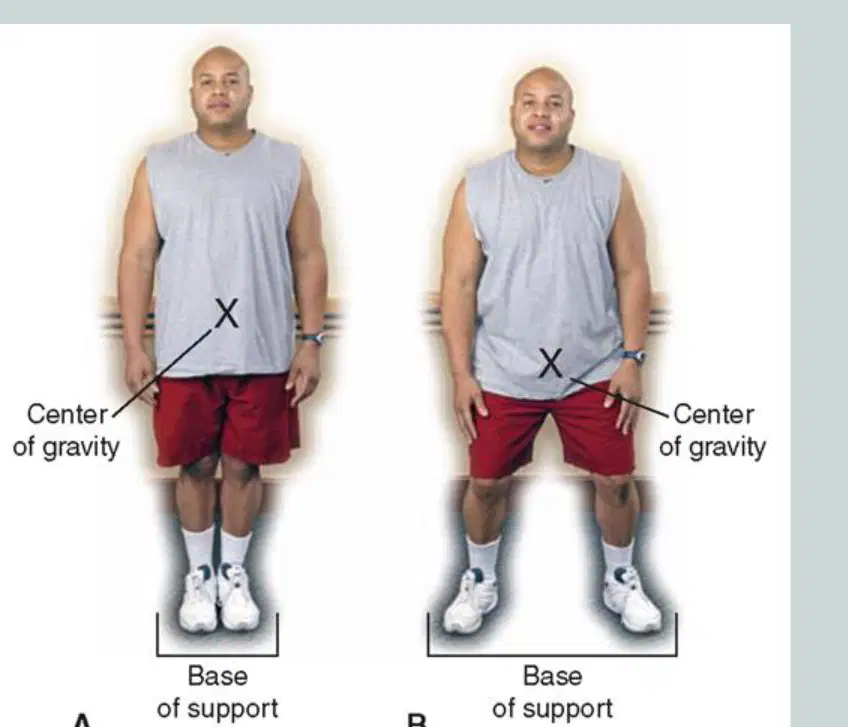
Scarlett is standing in the anatomical position during her anatomy class. At which sacral level is her average center of gravity located?
S1
S2
S3
S4
Abigail is carrying a heavy box. What is one benefit of holding the box close to her center of gravity?
It makes the object heavier.
It permits easier and safer transfer.
It increases the object's size.
It makes the object more difficult to control.
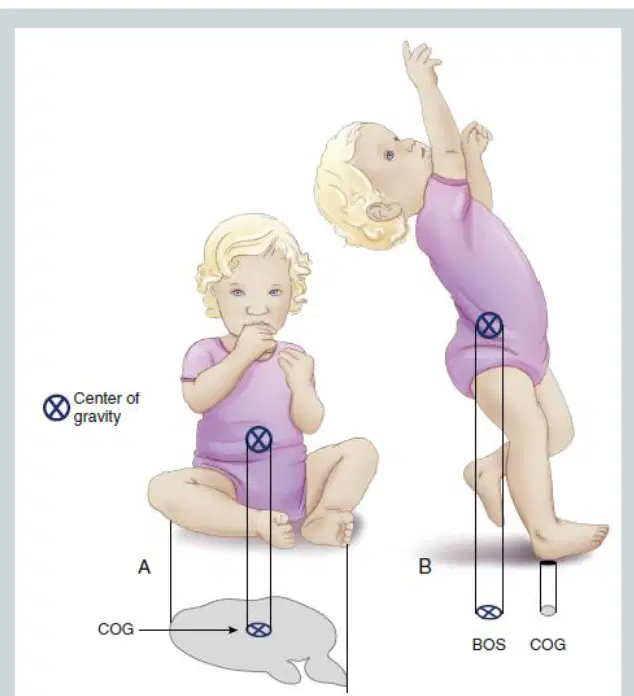
Avery is trying to balance on a narrow beam. How can stability be achieved according to the concept of center of gravity?
By increasing the weight of the object.
By moving the center of gravity away from the base of support.
When a body’s center of gravity is over its base of support.
By decreasing the base of support.
Aiden is studying human anatomy and learns about muscles with long white tendons. What are these mobility muscles also called?
Red muscles
White muscles
Fast-twitch muscles
Slow-twitch muscles
Rohan and Abigail are training for a marathon. They are focusing on strengthening their mobility muscles. Where are these muscles typically found?
In the torso
In the extremities
In the head
In the abdomen
Which of the following is an example of a mobility muscle?
Deltoid
Hamstrings
Trapezius
Pectoralis major
James is learning about the human body in his biology class. He wonders, how many joints do mobility muscles usually span across?
One joint
Two or more joints
Three joints
Four joints
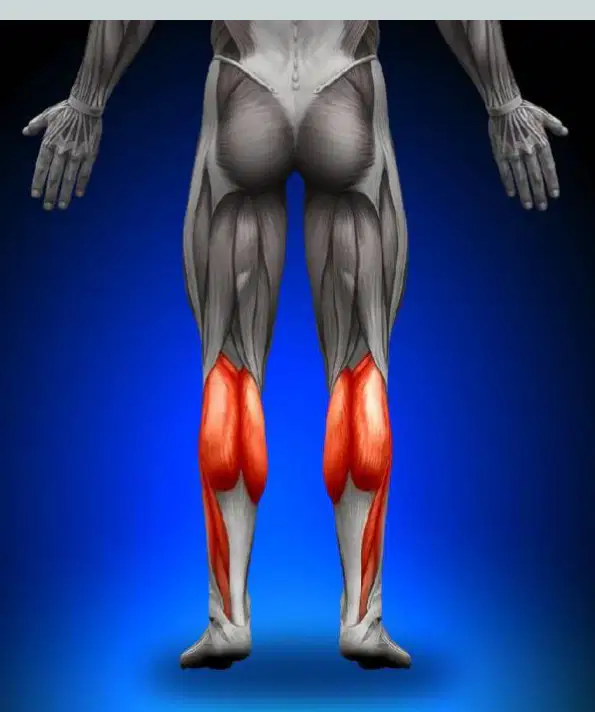
Mason is training for a sprinting competition and is focusing on building his "white" muscles. What type of muscles are these?
Fast-twitch muscles
Slow-twitch muscles
Cardiac muscles
Smooth muscles
Ava is training for a marathon and her coach emphasizes the importance of strengthening her stability muscles, which are also called what due to their thick red muscle bellies?
White muscles
Blue muscles
Red muscles
Green muscles
During a gym session, Arjun is focusing on exercises that enhance his body's stability. Which of the following muscles is he targeting as a stability muscle?
Biceps brachii
Latissimus dorsi
Triceps brachii
Deltoid
Lily is training to improve her posture and overall balance. What is the primary function of stability muscles in her training?
To provide explosive power
To support the torso and provide postural stability
To increase flexibility
To enhance speed
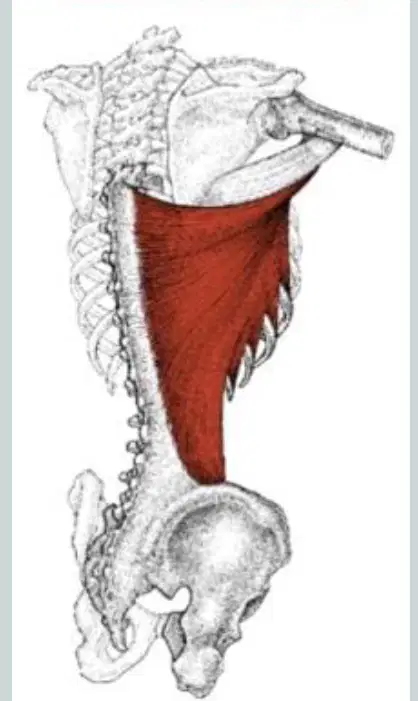
Avery is training for a swimming competition and wants to improve her stroke technique. She asks her coach about the primary function of the Latissimus Dorsi muscle. What does her coach tell her?
Flexion of the knee
Extension and adduction of the arm
Rotation of the neck
Flexion of the wrist
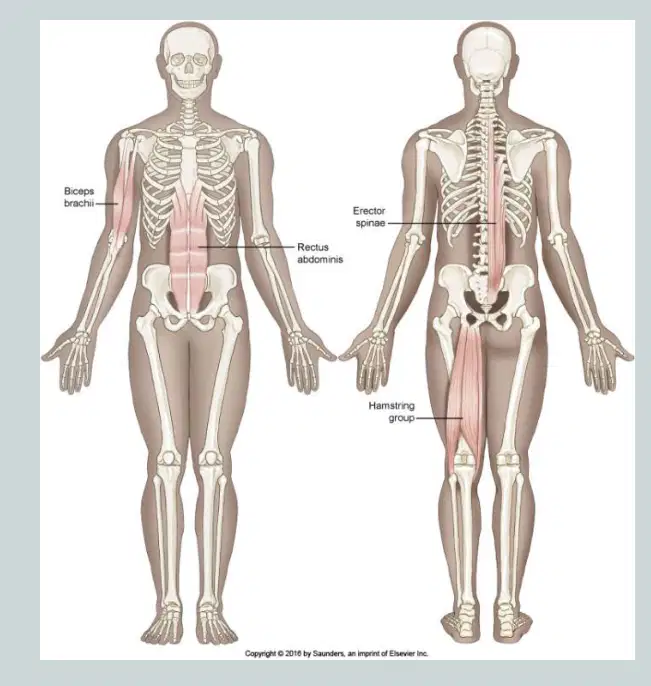
Emma is training for a marathon and wants to focus on strengthening her mobility muscles. Which muscles should she concentrate on?
Extremity muscles
Torso muscles
Abdominal muscles
Postural muscles

During a yoga class, Lily was learning about different muscle groups. Her instructor asked, "What type of muscles are the muscles of the torso classified as?"
Mobility muscles
Stability muscles
Flexor muscles
Extensor muscles
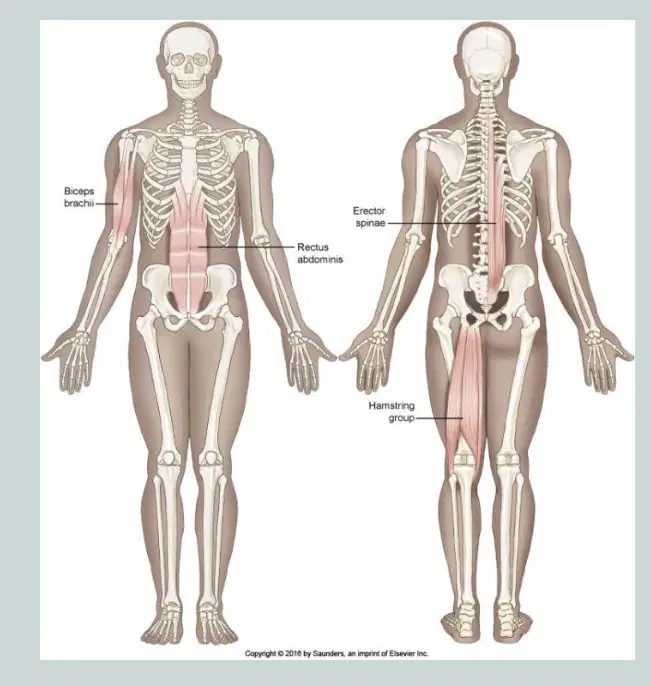
Elijah is helping a patient move from a wheelchair to a bed. For effective patient transfers, which muscles should he use for lifting?
Stability muscles
Mobility muscles
Postural muscles
Abdominal muscles
Nora is helping to move a patient from the bed to a wheelchair. What should she do to ensure safe movement?
Bend and twist your back
Bend and straighten your knees
Lift with your arms only
Keep your legs straight
Emma is a nurse preparing to move a patient. Why is it important for her to check for signs of weakness, arm bands, colored socks, and charts before proceeding?
To ensure the patient is comfortable
To identify any potential risks or needs
To make the process faster
To avoid using equipment
What is a recommended action to take before transferring a patient?
Assume the patient knows the procedure
Explain the transfer steps to the patient and your colleague
Move the patient quickly to avoid discomfort
Do not communicate to save time
What should you always do when moving a patient to ensure safety?
Work alone to avoid confusion
Ask for assistance
Use only your strength
Ignore the patient's condition
Noah stood up quickly after sitting for a long lecture. What is Orthostatic Hypotension?
Increase in blood pressure upon standing
Drop in blood pressure upon standing
Constant blood pressure regardless of position
Increase in heart rate upon standing
Avery stood up quickly after sitting for a long lecture. Which of the following is a symptom she might experience due to Orthostatic Hypotension?
Increased appetite
Dizziness
Insomnia
Fever
What can happen if someone rises too quickly with Orthostatic Hypotension?
Increase in oxygen-rich blood to the brain
Deprivation of oxygen-rich blood to the brain
Stabilization of blood pressure
Increase in heart rate
Elijah has been feeling dizzy and lightheaded when he stands up quickly. Which of the following is NOT a symptom of Orthostatic Hypotension?
Fainting
Blurred vision
Slurred speech
Increased energy
What is one method to minimize the severity of orthostatic hypotension?
Have the patient stand quickly.
Have the patient stand slowly.
Have the patient lie down immediately.
Have the patient sit down quickly.
Evelyn is helping her grandfather move from his wheelchair to the bed. Why should she encourage him to talk during the transfer?
To distract him from the process.
To ensure he is conscious and responsive.
To make the transfer faster.
To keep him entertained.
What should not be done with a symptomatic patient to avoid fainting?
Send them away immediately.
Allow them to rest before moving.
Encourage them to walk slowly.
Ask them to drink water.
Luna is in charge of a school play transfer. What is one of her responsibilities?
To call the transfer "play"
To decide the destination
To choose the team members
To provide medical assistance
Emma is organizing a group project for her class. Why is it important for someone to take charge of the transfer of responsibilities?
To ensure the transfer is synchronized
To reduce the number of team members
To increase the speed of the transfer
To minimize communication
Before transferring a patient, what should David review with his team members?
The procedures
The patient's medical history
The equipment used
The time of day
What should be determined first when preparing for a wheelchair transfer?
The patient's favorite color
The patient's strong and weak sides
The patient's height
The patient's age
Hannah is helping her friend transfer from a wheelchair to a bed. In which direction should she position her friend to ensure a safe transfer?
Toward the weak side
Toward the strong side
Away from the wheelchair
Toward the back
Ethan is helping his grandmother transfer from her wheelchair to a chair. What should he do with the wheelchair locks and footrests before the transfer?
Leave them as they are
Lock the wheelchair locks and move footrests out of the way
Unlock the wheelchair locks and keep footrests in place
Remove the footrests completely
Lily is learning about different methods of wheelchair transfers in her healthcare class. Which of the following is a type of wheelchair transfer?
Standby Assist
Manual Push
Electric Slide
Automatic Lift
Noah and Mia are helping their friend transfer from a wheelchair to a bed. What is the name of the wheelchair transfer that involves two people assisting?
Standby Assist
Assisted Standing Pivot
Two-Person Lift
Hydraulic Lift
Which wheelchair transfer method uses mechanical assistance?
Standby Assist
Assisted Standing Pivot
Two-Person Lift
Hydraulic Lift
Identify a wheelchair transfer method that involves standing and pivoting.
Standby Assist
Assisted Standing Pivot
Two-Person Lift
Hydraulic Lift
What is the primary use of Standby Assist?
For patients who cannot move at all
For patients who need full assistance
For patients who have the ability to move on their own
For patients who are bedridden
At what angle should the wheelchair be parked relative to the table or bed during a Standby Assist?
30° angle
45° angle
60° angle
90° angle
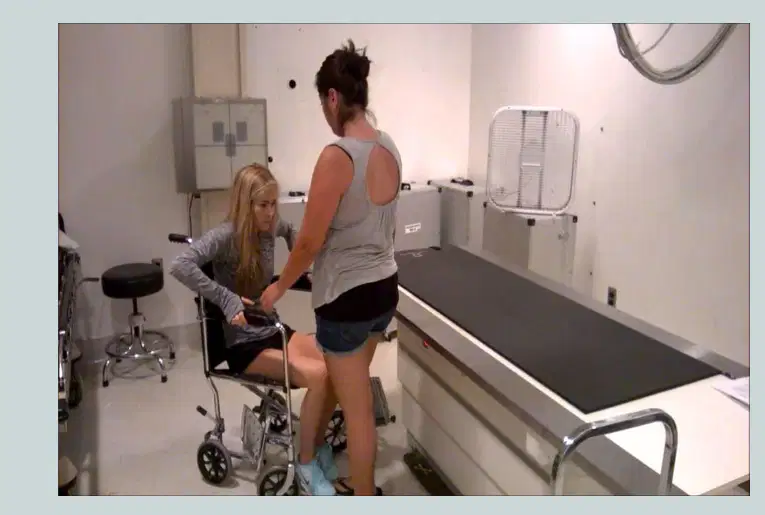
Which of the following is NOT a step in the Standby Assist process?
Lock wheels and move footrests out of the way
Use arm rest for support
Talk patient through each step in moving
Leave the patient unattended
What is the Assisted Standing Pivot used for?
When patients can move on their own
When patients cannot bear weight on legs
When patients cannot move on their own but can bear weight on legs
When patients are unconscious
How should the wheelchair be positioned relative to the table or bed during an Assisted Standing Pivot?
At a 90° angle
Parallel to the table/bed
At a 45° angle with the patient's strongest side closest to the table/bed
At a 30° angle
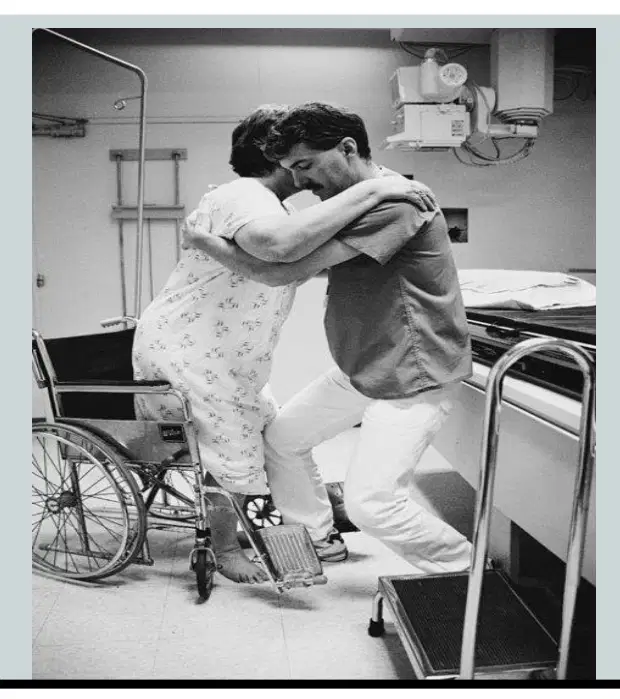
What should be done with the wheelchair wheels during an Assisted Standing Pivot?
Leave them unlocked
Lock the wheels
Remove the wheels
Inflate the wheels

What is the first step in performing an assisted standing pivot transfer?
Bend at the knees and grasp the transfer belt.
Use a transfer belt to hold the patient securely.
Have the patient push down on the arms of the wheelchair.
Pivot toward the table.
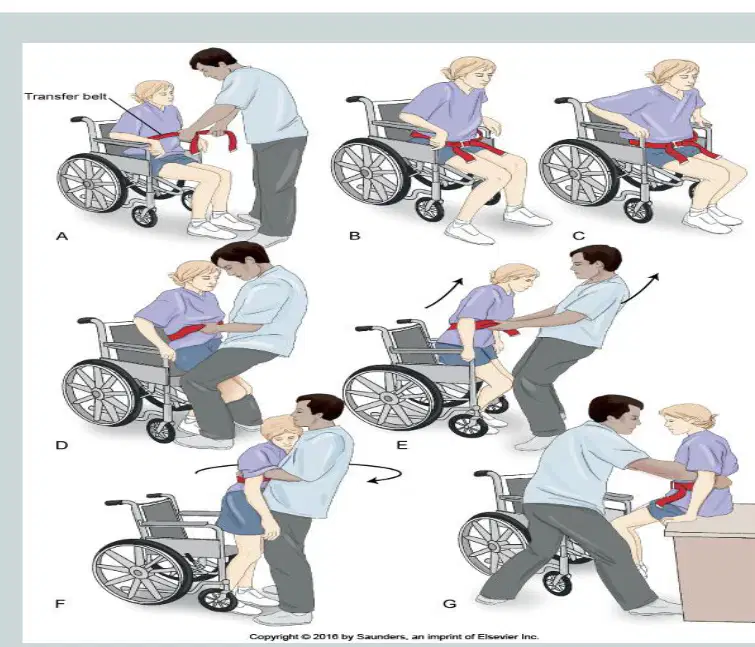
What should the patient do to assist in rising from the wheelchair?
Sit back in the wheelchair.
Push down on the arms of the wheelchair.
Stand up without assistance.
Lean forward without support.
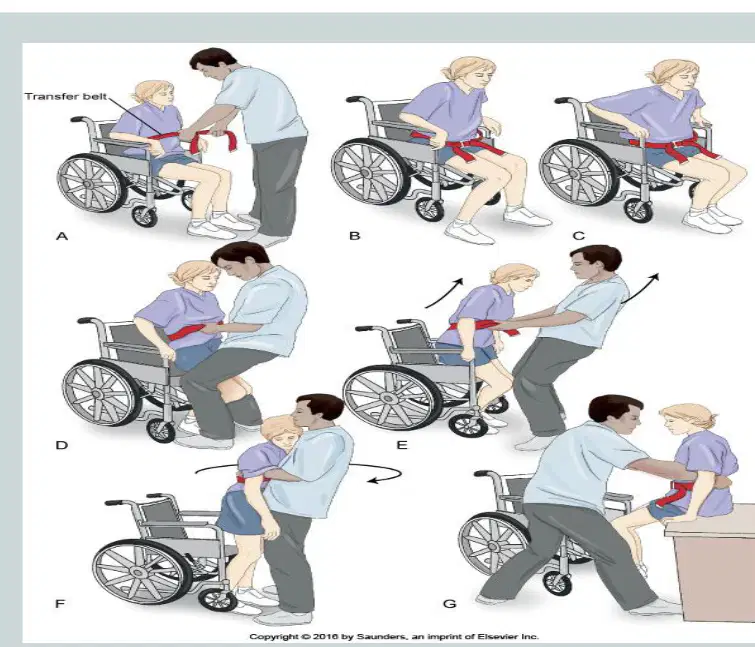
How should the caregiver position their body when helping the patient stand?
Bend at the waist and keep knees straight.
Bend at the knees and keep back straight.
Stand with feet together.
Lean forward over the patient.
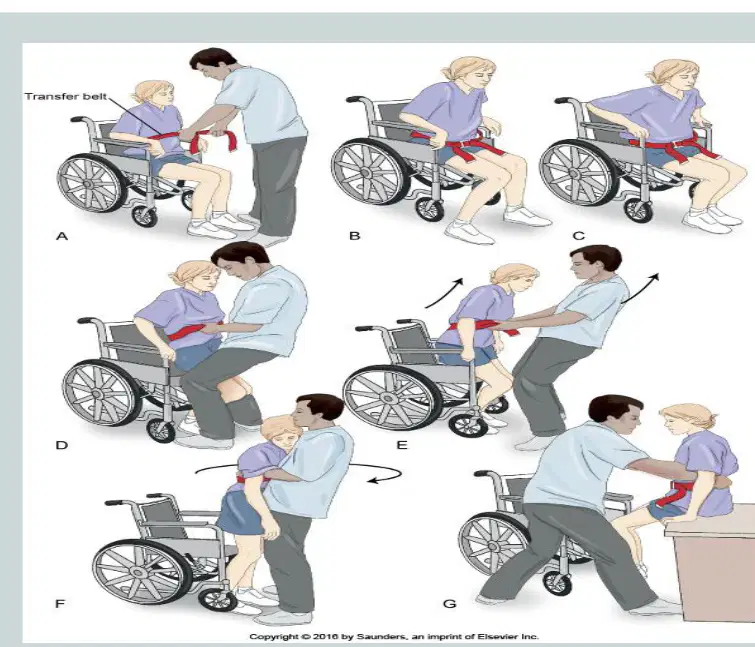
What is the purpose of pivoting toward the table during the transfer?
To allow the patient to sit back in the wheelchair.
To help the patient feel the table against the back of the thighs.
To make the transfer faster.
To avoid using the transfer belt.

What is the primary reason for using a two-person lift?
When the patient can bear weight
When the patient cannot bear weight and must be lifted
When the patient is able to walk
When the patient is asleep
What is essential when two people are moving a patient?
Silence
Communication between the two persons
Speed
Strength
Who should lift the patient's torso during a two-person lift?
The weaker of the two
The stronger of the two
Either person
The person standing on the left
What should the second person lift during a two-person lift?
The patient's arms
The patient's torso
The patient's legs/feet
The patient's head

What is the first step in performing a two-person lift?
The assistant cradles the patient's thighs.
The patient is asked to cross their arms over their chest.
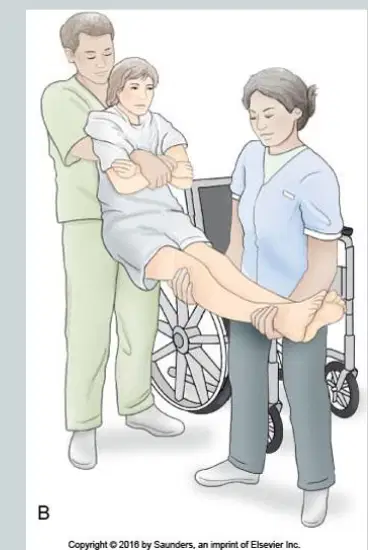
The person making the transfer stands behind the patient.
The patient is lifted to clear the wheelchair.
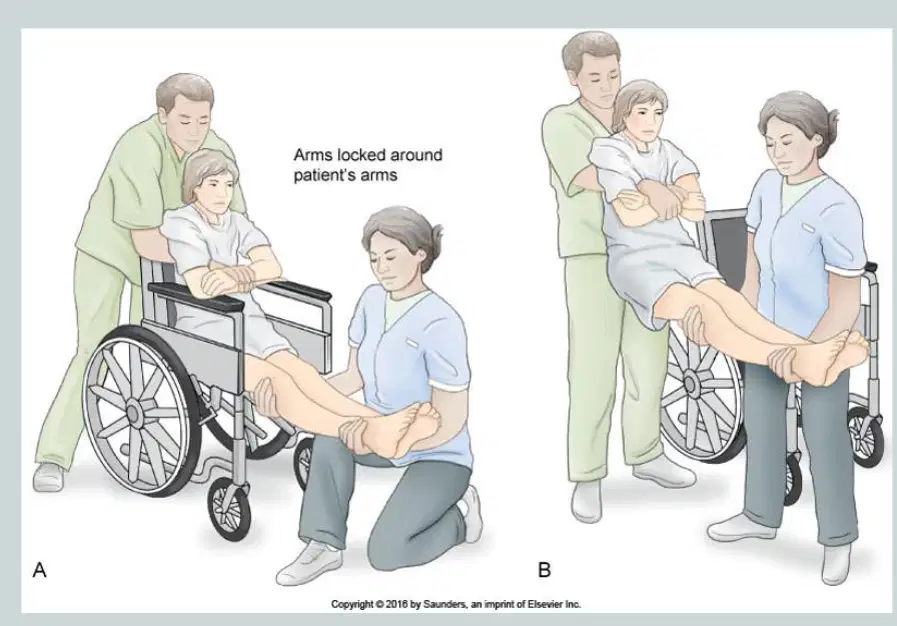
Where does the person making the transfer stand during a two-person lift?
In front of the patient.
Behind the patient.
Next to the wheelchair.
Beside the assistant.
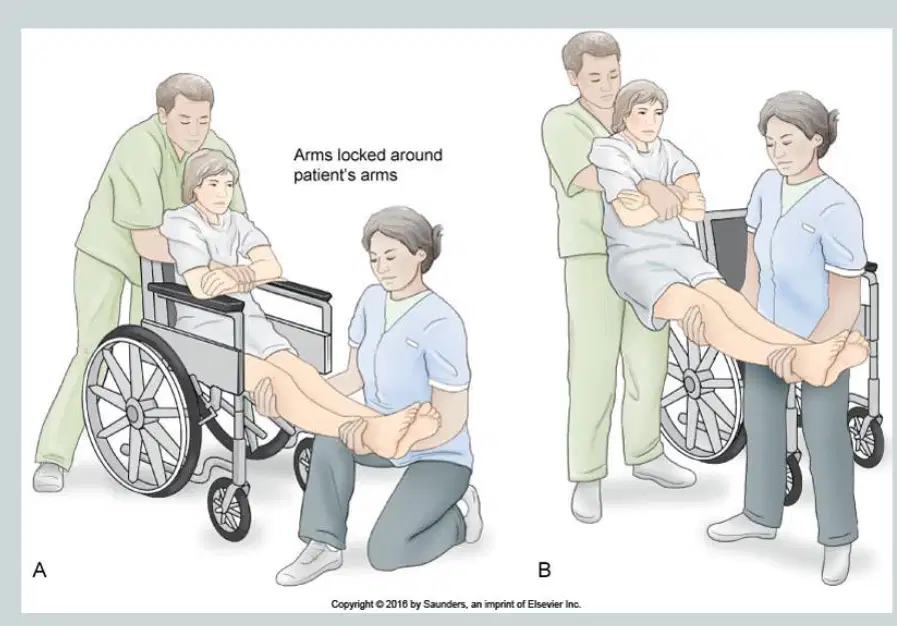
What does the assistant do with the patient's legs during a two-person lift?
Holds the patient's feet.
Cradles the patient's thighs and calves.
Supports the patient's knees.
Lifts the patient's ankles.
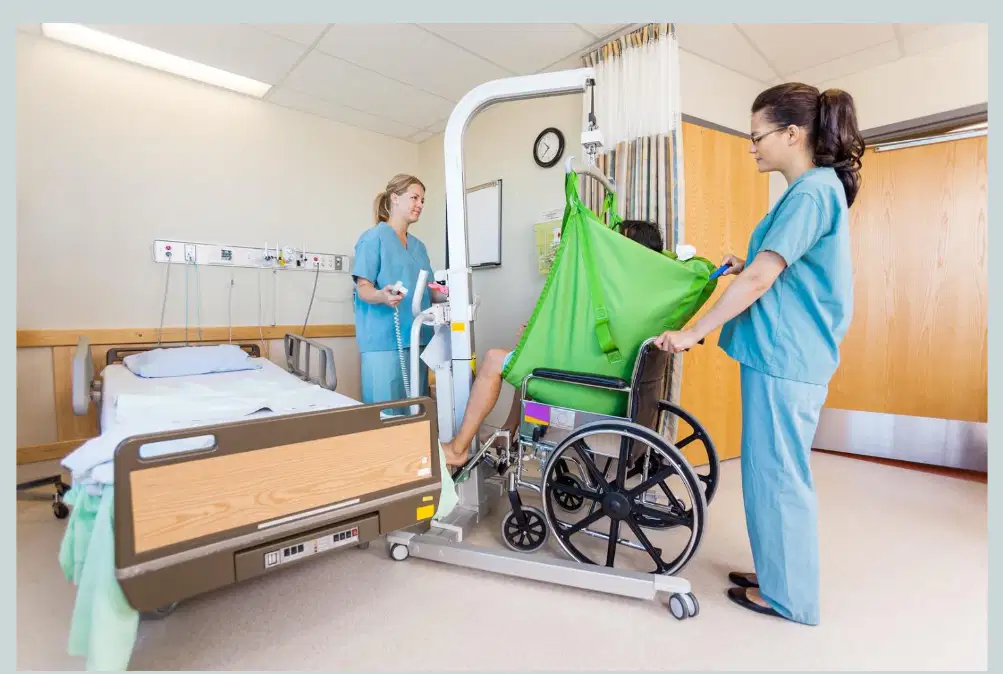
What is the requirement for a patient arriving at the radiology department according to the image?
Patient must arrive sitting on a transfer sling.
Patient must arrive walking.
Patient must arrive on a stretcher.
Patient must arrive in a private vehicle.
How many people are needed at a minimum for a cart-to-table transfer?
1 person
2 people
3 people
4 people
What should be done with the wheels during a cart-to-table transfer?
Leave them unlocked
Lock them
Remove them
Inflate them
If a patient is able to move independently, what should be done?
Move them without instructions
Stabilize the stretcher and give verbal instructions
Use a slide board
Call for additional help
What should be placed beneath a patient who is unable to move?
A pillow
A draw-sheet or slide board
A blanket
A mattress
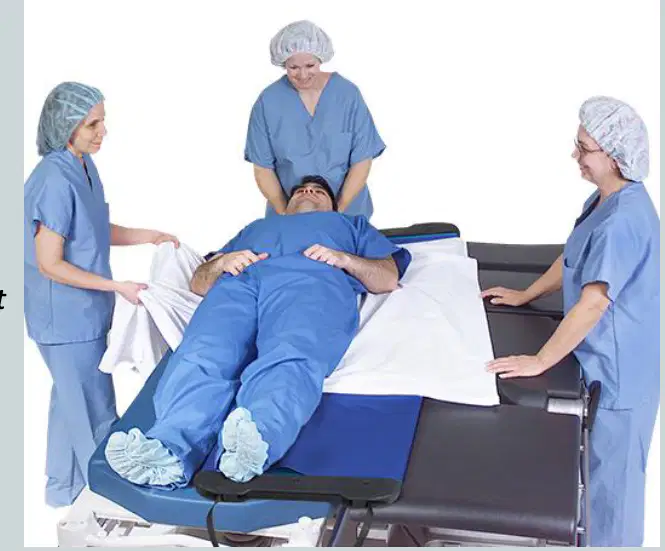
Who is in charge during the cart-to-table transfer?
The person at the foot-end
The person at the head-end
The person on the left side
The person on the right side
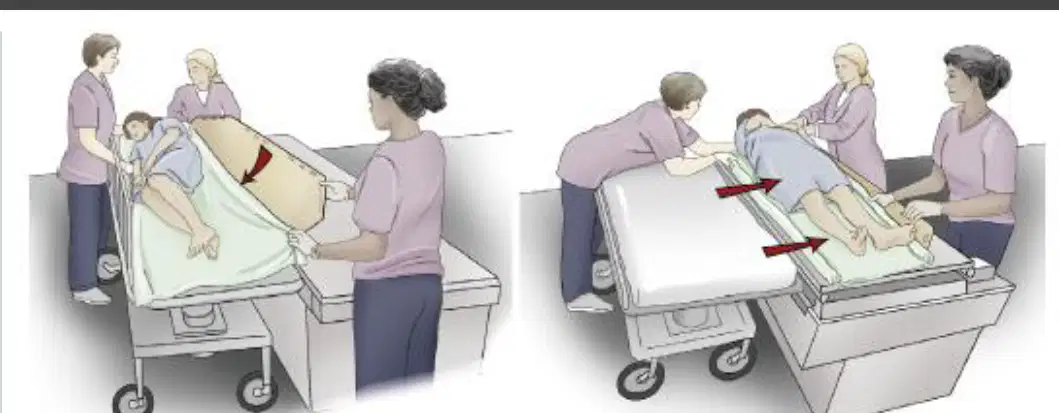
What is typically used in a cart-to-table transfer?
A transfer assist device
A wheelchair
A stretcher
A crane
What is the first step in a cart-to-table transfer?
Roll patient back and ensure they are on device with draw sheet
Roll patient away from table
Gently pull draw sheet and patient onto table
Position device under patient and draw sheet
What should be done after positioning the device under the patient and draw sheet?
Roll patient away from table
Gently pull draw sheet and patient onto table
Roll patient back and ensure they are on device with draw sheet
Call for assistance
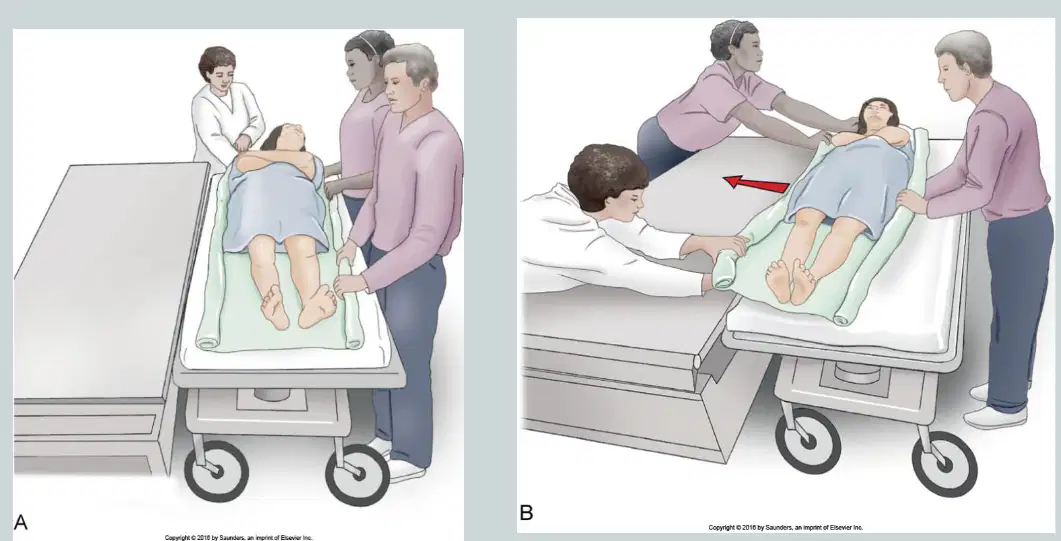
What is the first step in a cart-to-table transfer without a moving device?
Roll up the draw sheet on both sides of the patient.
Support the patient's head and upper body.
Cross the patient's arms over the chest.
Support the patient's legs from the tableside.
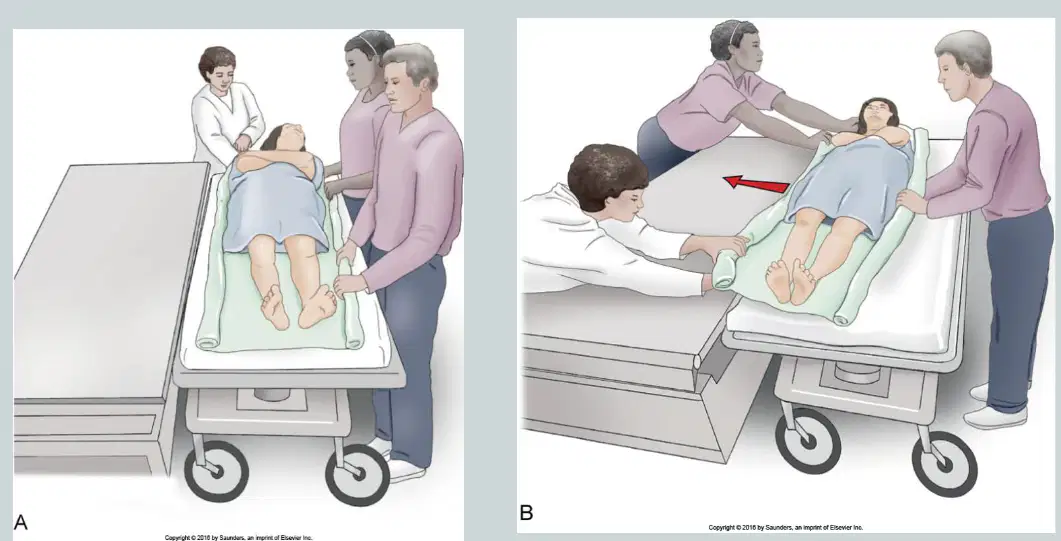
Who supports the patient's pelvic girdle during the transfer?
The person directing the transfer.
An assistant from the cart side.
A second assistant from the tableside.
The patient themselves.

Why should the patient's arms be crossed over the chest during the transfer?
To keep the patient warm.
To avoid injury or getting in the way.
To make the patient comfortable.
To prevent the patient from falling.
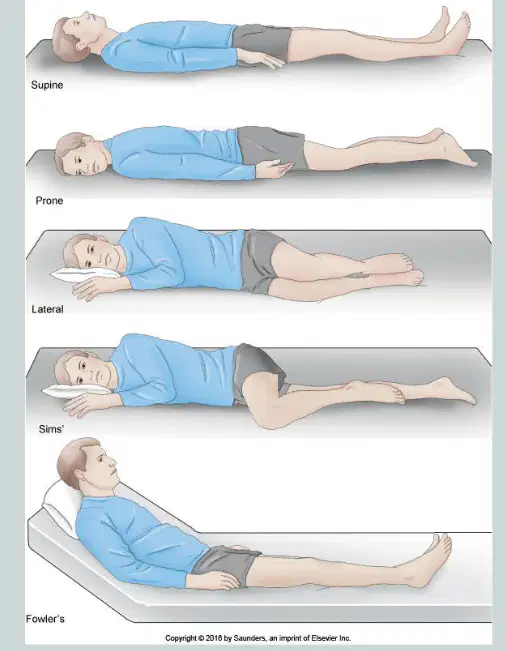
Which patient position involves lying flat on the back with the face upward?
Prone
Supine
Lateral
Sims
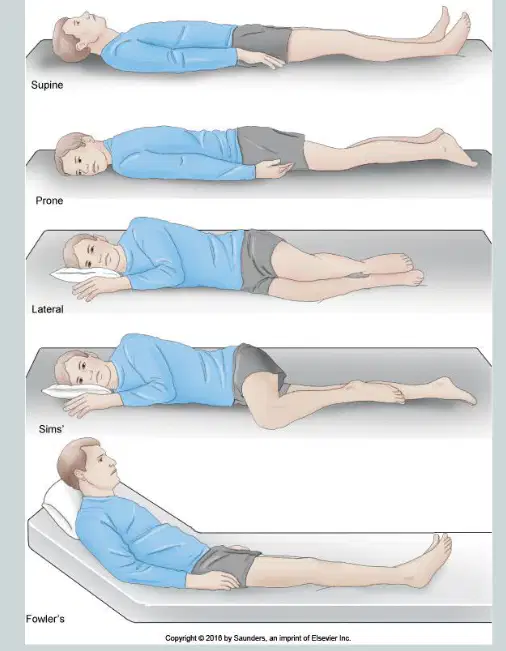
In which position is a patient lying face down?
Fowler
Supine
Prone
Sims
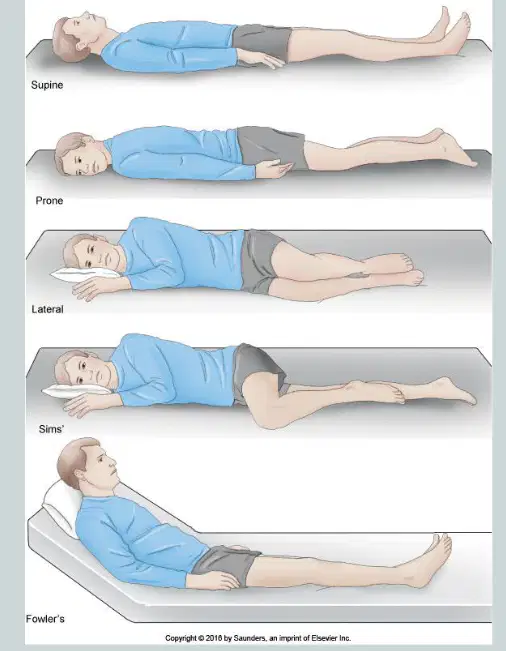
What is the name of the position where the patient is lying on their side?
Lateral
Supine
Fowler
Prone
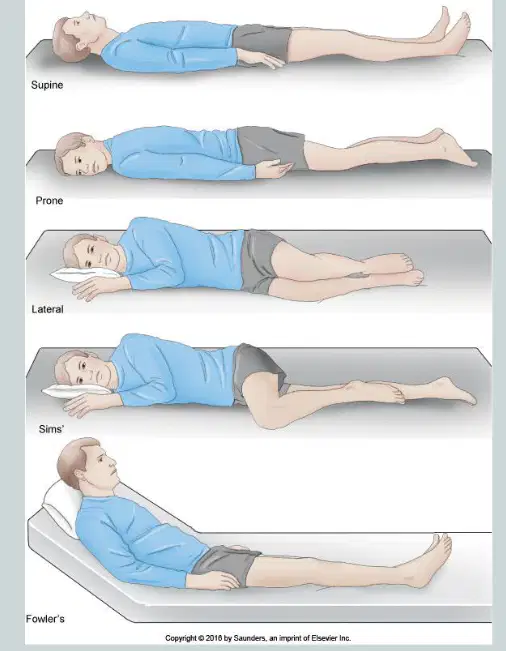
Which position is typically used for patients to rest comfortably with the head elevated?
Sims
Fowler
Prone
Supine
What is the first step to consider when positioning a patient?
Roll the patient toward you.
Talk with the patient and explain what you are going to do.
Provide positioning sponges.
Work as a transfer team.
Why is it important to let the patient assist as much as possible during positioning?
It reduces the workload for the staff.
It ensures the patient feels involved and comfortable.
It speeds up the process.
It is a legal requirement.
What should be done before any move is attempted with a patient?
Roll the patient toward you.
Provide positioning sponges.
Check with the patient.
Work as a transfer team.
What is the purpose of providing positioning sponges to a patient?
To make the patient more comfortable.
To help the patient maintain correct positioning.
To prevent the patient from moving.
To assist in lifting the patient.

