
 Worksheets
Foot Injuries
Total questions: 65
Worksheet time: 33mins
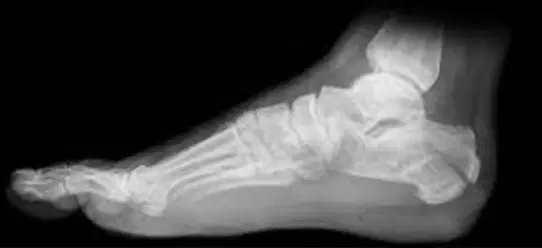
Calcaneus fractures most often occur from ________ after a jump or fall from a height.
landing
twisting
lifting
running

According to the signs and symptoms of a calcaneus fracture, what is one of the immediate responses of the body?
Immediate swelling
Delayed swelling
No swelling
Swelling after a week
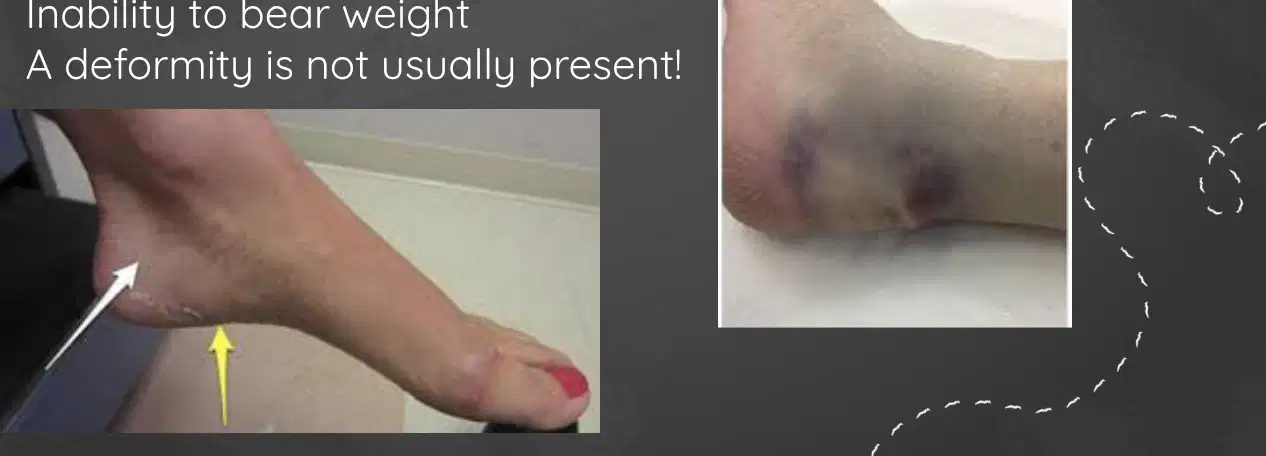
Which of the following is a symptom of a calcaneus fracture?
Immediate pain
Pain after a month
No pain
Pain only when running
Fill in the blank: One of the signs of a calcaneus fracture is the inability to ________ weight.
bear
lift
lose
gain
A deformity is usually present in a calcaneus fracture.
True
False
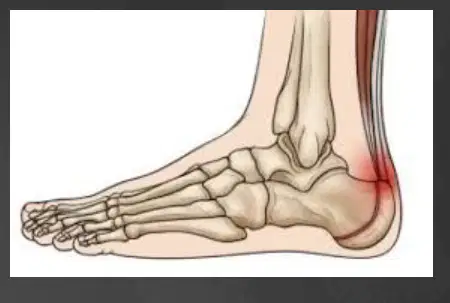
What is the medical term for Sever's Disease?
calcaneal apophysitis
Osgood-Schlatter disease
plantar fasciitis
Achilles tendinitis
What is an apophysis?
A) A type of muscle
B) Bony outgrowth such as a tubercle or tuberosity
C) A ligament
D) A nerve
Sever's Disease occurs at the attachment site of the _______ tendon on the calcaneus.
Achilles
Patellar
Quadriceps
Hamstring
Inflammation in Sever's Disease occurs due to constant tension of the Achilles tendon on the _______.
calcaneus
tibia
fibula
talus
Fill in the blank: Pain from Sever's Disease occurs at the ________ heel.
posterior
anterior
medial
lateral
Where does pain from Sever's Disease occur in relation to the Achilles Tendon?
Above the attachment
Below the attachment
At the side of the attachment
At the front of the foot
Pain from Sever's Disease occurs during vigorous activity.
True
False
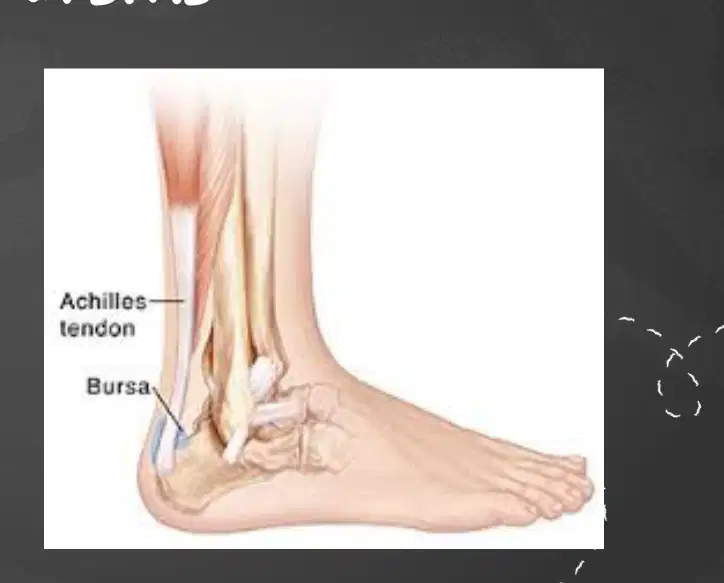
What is Retrocalcaneal Bursitis caused by?
Inflammation of the bursa that lies between the Achilles tendon and the calcaneus
Inflammation of the knee joint
Infection of the skin
Fracture of the calcaneus
Retrocalcaneal Bursitis often occurs from the ______ and rubbing of a shoe.
pressure
cold
stretching
infection
Retrocalcaneal Bursitis is a chronic condition.
True
False
What is a common symptom of Retrocalcaneal Bursitis involving the Achilles tendon?
Pain with palpation above the insertion of the Achilles tendon
Pain in the knee
Swelling of the fingers
Headache
Fill in the blank: Swelling on both sides of the _______ tendon is a sign of Retrocalcaneal Bursitis.
Achilles
Patellar
Quadriceps
Biceps
What is Haglund’s Deformity?
A bony outgrowth that protrudes from the calcaneus
Swelling of the fingers
Pain in the knee
Headache
Where is the tarsal tunnel located?
Behind the medial malleolus
In front of the lateral malleolus
On the dorsum of the foot
At the base of the fifth metatarsal
Tarsal Tunnel Syndrome occurs when which nerve becomes compressed?
Tibial nerve
Peroneal nerve
Sural nerve
Femoral nerve
Which of the following is NOT a cause of tarsal tunnel syndrome?
A) Tendinitis
B) Tenosynovitis
C) Fractures
D) Diabetes
Which aspect of the foot is commonly affected by pain in Tarsal Tunnel Syndrome?
Medial aspect of foot
Lateral aspect of foot
Dorsal aspect of foot
Plantar aspect of foot
Pain from Tarsal Tunnel Syndrome often increases at night.
True
False
What can occur if Tarsal Tunnel Syndrome is left untreated?
Weakness and muscle atrophy
Improved foot flexibility
Increased energy levels
Enhanced vision
What is Plantar Fasciitis?
Inflammation of the plantar fascia
Inflammation of the Achilles tendon
Inflammation of the knee joint
Inflammation of the hip joint
Which of the following can cause Plantar Fasciitis?
Heel spurs
Bursitis
Plantar fascia irritation
All of the above
Plantar Fasciitis occurs in people with which of the following conditions?
Pes cavus (high arch)
Pes planus (flat foot)
Both A and B
None of the above
Fill in the blank: Pes cavus means ________ and is associated with too little motion.
high arch
flat foot
swollen ankle
bent knee
Fill in the blank: Pes planus means ________ and is associated with too much motion.
flat foot
high arch
club foot
bunion
Fill in the blank: One symptom of Plantar Fasciitis is pain in the ________ medial heel.
anterior
posterior
lateral
superior
Fill in the blank: Increased pain during ________ bearing after non-use is a symptom of Plantar Fasciitis.
weight
water
heat
cold
Fill in the blank: Pain is intensified when toes are flexed and ankle ________ in Plantar Fasciitis.
dorsiflexed
plantarflexed
rotated
inverted
Fill in the blank: Development of a ________ spur is a symptom of Plantar Fasciitis.
heel
elbow
knee
wrist
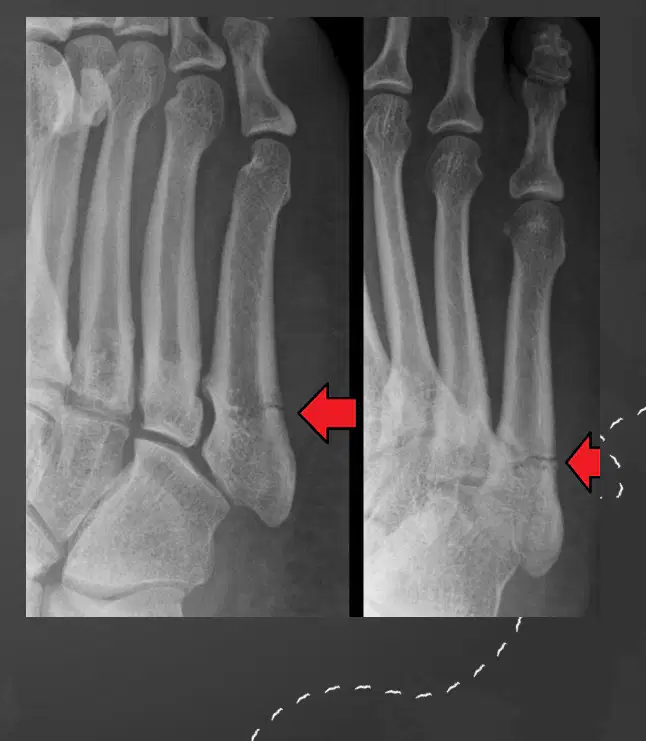
What bone is fractured in a Jones Fracture?
1st metatarsal
3rd metatarsal
5th metatarsal
Calcaneus
Which of the following can cause a Jones Fracture?
Inversion with plantar flexion
Direct force
Both A and B
None of the above
A fracture that does not go all the way through the base of the 5th metatarsal is called a _________.
Dancers Fx
Comminuted fracture
Compound fracture
Greenstick fracture
What is one symptom of a Jones Fracture? (Fill in the blank)
Immediate swelling
Loss of vision
Hearing loss
Nausea
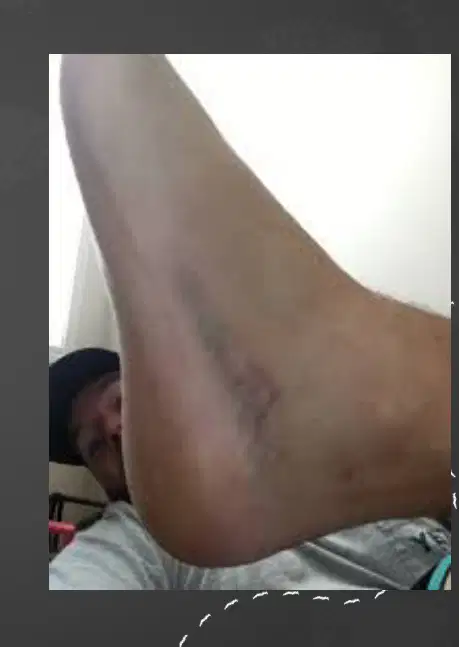
What is a sign of a Jones Fracture involving the 5th metatarsal? (Fill in the blank)
Bruising around the base of the 5th metatarsal and into the pinky toe
Swelling only at the heel
Numbness in the big toe
Pain in the arch of the foot
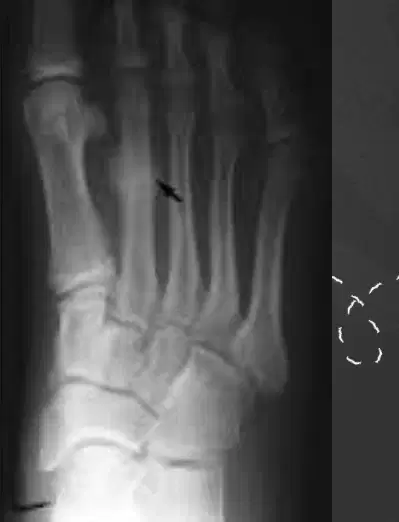
What is the most common metatarsal stress fracture?
Involves the shaft of the 2nd metatarsal
Involves the shaft of the 1st metatarsal
Involves the shaft of the 3rd metatarsal
Involves the shaft of the 5th metatarsal
The most common metatarsal stress fracture is often referred to as a _________
march fracture
Jones fracture
Lisfranc fracture
Pott's fracture
Increasing mileage can lead to a metatarsal stress fracture.
True
False
Running on a hard surface can cause a metatarsal stress fracture.
True
False
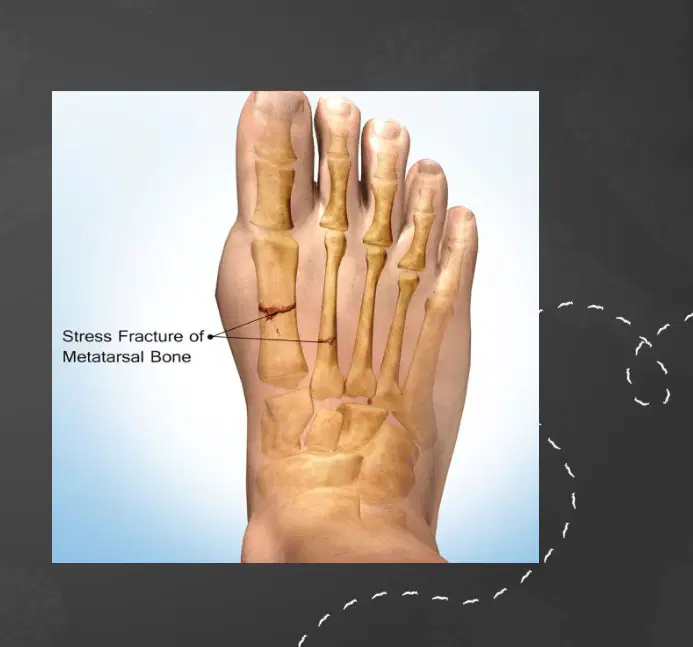
Which of the following is a sign or symptom of a stress fracture?
Dull pain with exercise over a 2-3 week period
Sudden sharp pain with no activity
Swelling without pain
Numbness in the toes
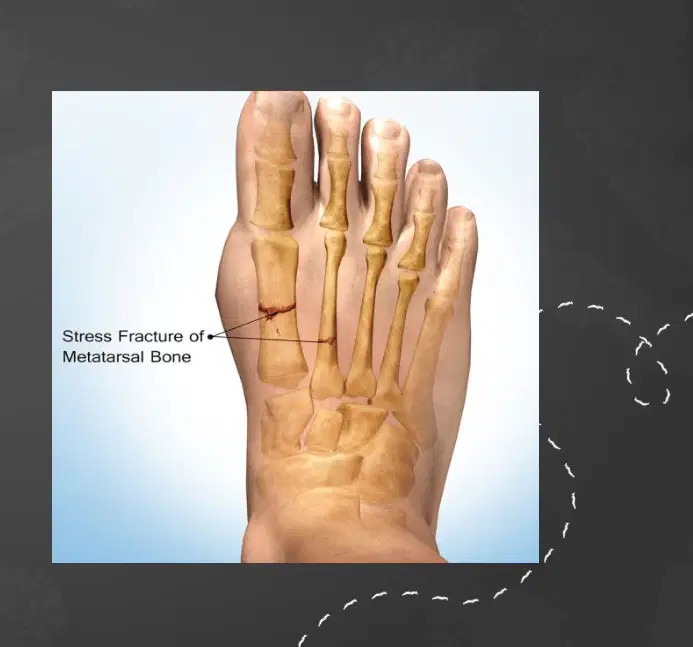
Fill in the blank: In a stress fracture, pain localizes to the site of _______.
fracture
swelling
infection
bruising
What is a Lisfranc fracture?
A) A fracture of the femur
B) One or more of the metatarsal bones are displaced
C) A fracture of the tibia
D) A fracture of the fibula
Lisfranc fractures can be caused by which of the following?
Falls
Car accidents
Sports injuries
Eating spicy food
A Lisfranc fracture can range from a simple sprain to a complex fracture or dislocation.
True
False
Which of the following are signs and symptoms of a Lisfranc injury?
Pain over injury site
Swelling
Bruising
Difficulty weight-bearing
All of the above
Lisfranc injuries are diagnosed by ______ and other imaging techniques to confirm.
x-rays
ultrasound
CT scan
MRI
If untreated or misdiagnosed, Lisfranc injuries can lead to long-term complications like chronic pain, arthritis, and _______.
disability
headache
hearing loss
skin rash
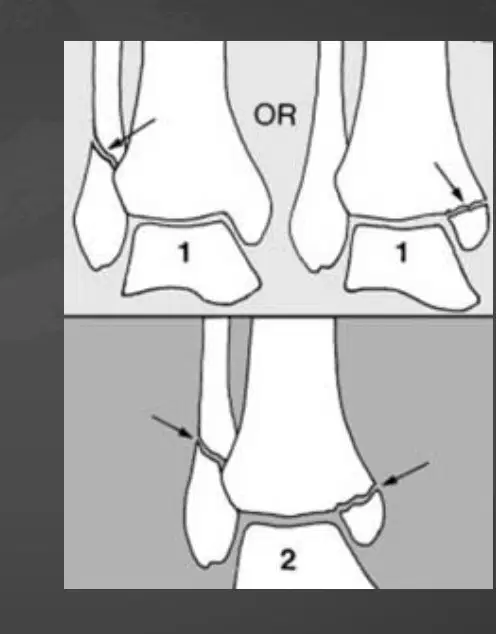
What is a Pott's fracture?
Fracture where one or both of the malleoli are broken
Fracture of the femur
Fracture of the wrist
Fracture of the clavicle
Name one typical cause of Pott's fracture.
A forceful twisting injury to the ankle, forceful inversion, or forceful eversion.
A direct blow to the thigh.
A fall on an outstretched hand.
A repetitive stress injury to the wrist.
What is another name for Hallux Valgus?
Hammer toe
Bunion
Plantar fasciitis
Flat foot
Where does Hallux Valgus occur?
At the head of the first metatarsal
At the heel
At the ankle
At the second toe
Which of the following is NOT a common cause of Hallux Valgus?
A) Shoes that are pointed
B) Shoes that are too narrow
C) Shoes that are too short
D) Shoes that are too wide
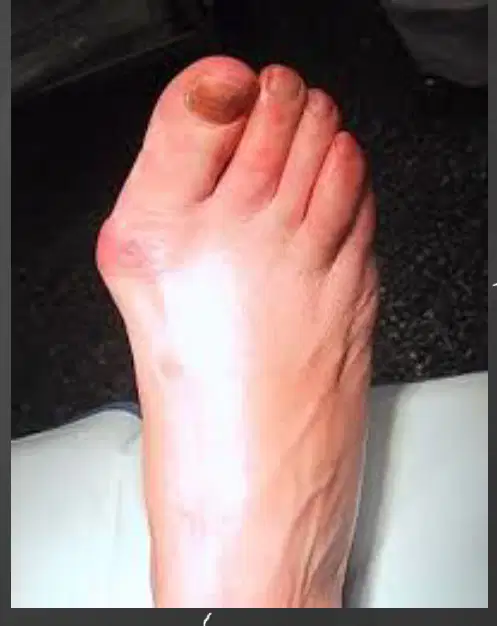
Identify the foot deformity shown in the image.
Hallux Valgus (Bunion)
Pes Cavus
Hammer Toe
Clubfoot
Fill in the blank: One of the signs of Hallux Valgus is an obvious deformity in which the great toe starts to turn ________.
laterally
medially
upward
downward
What is a neuroma?
A) A type of bone fracture
B) Mass that occurs about the nerve sheath of the common plantar nerve
C) Inflammation of the skin
D) A type of muscle tear
Morton's neuroma is the most common nerve problem of the lower extremity.
True
False
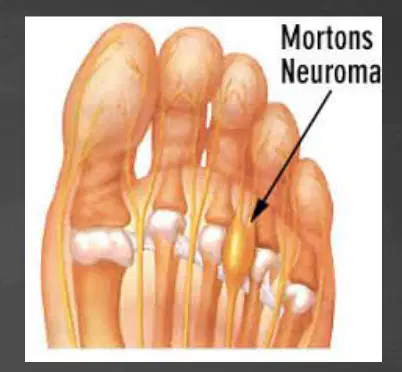
What part of the foot is affected by Morton's neuroma?
The area between the 3rd and 4th metatarsal heads is affected by Morton's neuroma.
The heel is affected by Morton's neuroma.
The arch of the foot is affected by Morton's neuroma.
The area between the 1st and 2nd toes is affected by Morton's neuroma.
Which of the following is a symptom of Morton's Neuroma?
A) Burning sensation of the forefoot
B) Headache
C) Chest pain
D) Blurred vision
Where is Morton's Neuroma most painful?
1st webspace
2nd webspace
3rd webspace
4th webspace
Fill in the blank: Morton's Neuroma symptoms increase with ________ of the toes.
hyperextension
flexion
rotation
abduction
Which activities can increase the symptoms of Morton's Neuroma?
Squatting
Stair climbing
Running
All of the above
Pain of the forefoot is a sign of Morton's Neuroma.
True
False

