
 Worksheets
Properties of water
Total questions: 39
Worksheet time: 20mins
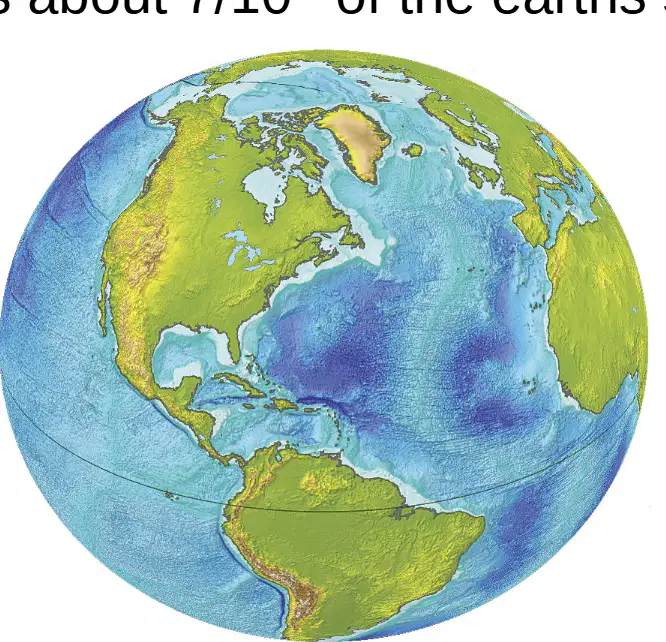
What is the most abundant compound on earth?
Oxygen
Water
Carbon dioxide
Nitrogen
According to the passage, what are some uses of water within a modern property?
Cooking and cleaning only
Hot and cold water supplies and wet central heating systems
Only for drinking
Only for gardening
Fill in the blank: Water is ________, odourless and tasteless.
colourless
thick
sticky
bitter
Any taste that water may have comes from:
The temperature of the water
The minerals dissolved in it
The colour of the water
The smell of the water
The minerals dissolved in water can vary in different parts of the country.
True
False
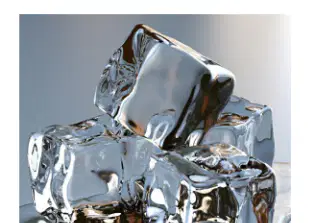
Water is a unique compound as it can exist in three states of matter. What is the solid state of water called?
Steam
Ice
Water
Vapor
Water is a unique compound as it can exist in three states of matter. What is the liquid state of water called?
Ice
Steam
Water
Snow
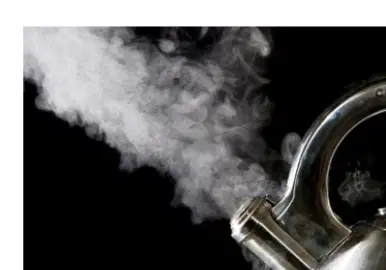
Water is a unique compound as it can exist in three states of matter. The gas state of water is called _________.
steam
ice
snow
dew
What is the freezing point of pure water at atmospheric pressure?
100°C
0°C
50°C
-10°C
The freezing point of pure water is _______ K when at atmospheric pressure.
273 K
300 K
250 K
100 K
The freezing point of water can be lowered by adding _______ (glycol), which is necessary in some plumbing systems.
anti-freeze
salt
sugar
vinegar
By what percentage does water expand when it freezes?
5%
10%
15%
20%
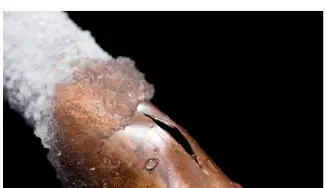
What happens to a pipe when the water inside it freezes and expands?
The pipe shrinks
The pipe bursts
The pipe melts
The pipe stays the same
As the temperature rises from 0ºC, what happens to water?
It freezes
It melts and forms liquid
It evaporates
It turns into gas
At what temperature does water reach its maximum density?
4ºC
0ºC
25ºC
100ºC
If you have 1.0L of water at 4ºC and 1.0L of water at a slightly higher temperature, which one will weigh more?
1.0L at 4ºC
1.0L at a higher temperature
Both will weigh the same
As water increases in temperature from 4ºC to 99ºC, just below boiling point, by what percentage does water expand?
4%
1%
10%
25%
Why does the expansion of water in domestic systems need to be accommodated?
To avoid pipe bursting.
To increase water pressure.
To improve water taste.
To reduce water temperature.
At what temperature does water reach its boiling point?
100°C (373°K)
0°C (273°K)
50°C (323°K)
150°C (423°K)
When water reaches its boiling point, it turns into steam and expands by how many times?
(a)
Fill in the blank: Water in the solid state is ______ because there are more molecules in the same area.
heavy
light
liquid
gaseous
Properties of water: The colder/heavier parts will move downwards and the warmer/lighter parts will move upwards. This movement is called convection currents, and can occur in any liquid or gas.
True
False
Based on the passage, what is the process called in a hot water system where the lighter, warmer material rises and then falls after cooling?
Gravity circulation
Evaporation
Condensation
Radiation
Explain why the lighter rising material eventually falls back down according to the passage about the properties of water.
Because it cools and becomes denser than the surrounding water.
Because it is pushed down by wind.
Because it evaporates into the air.
Because it is absorbed by plants.

Gravity circulation in water involves:
Water moving due to temperature differences, causing hot water to rise and cold water to sink.
Water moving only when stirred mechanically.
Water remaining stationary regardless of temperature changes.
Water moving from low to high temperature areas by force.
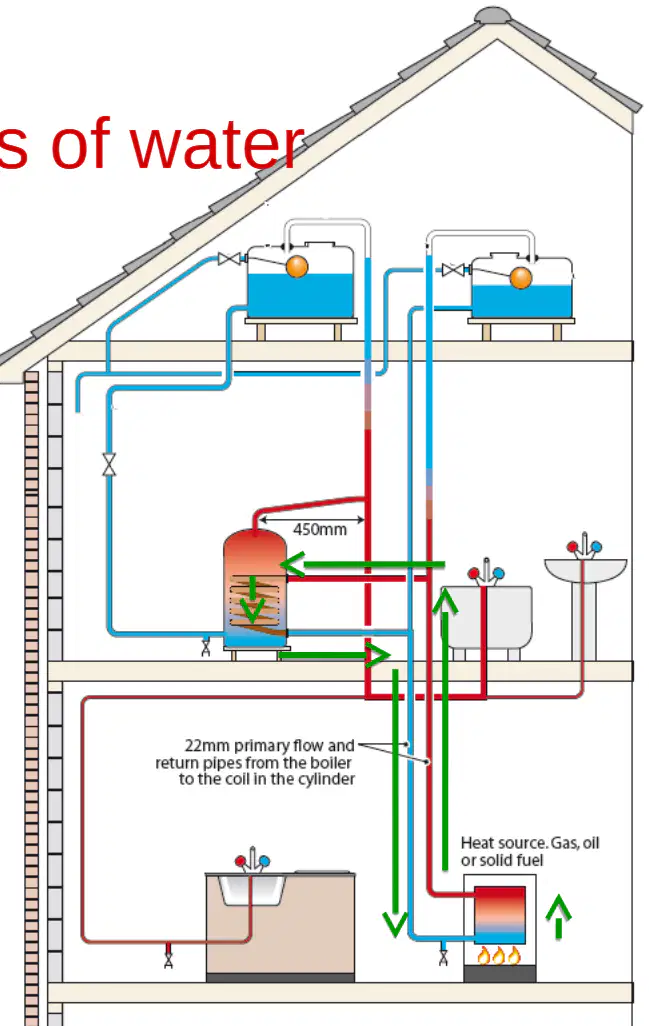
Refer to the diagram of an older indirect system with gravity circulation. What is the primary function of the 22mm pipes shown in the system?
To supply cold water to the taps
To return hot water to the boiler
To carry primary flow and return from the boiler to the coil in the cylinder
To vent air from the system
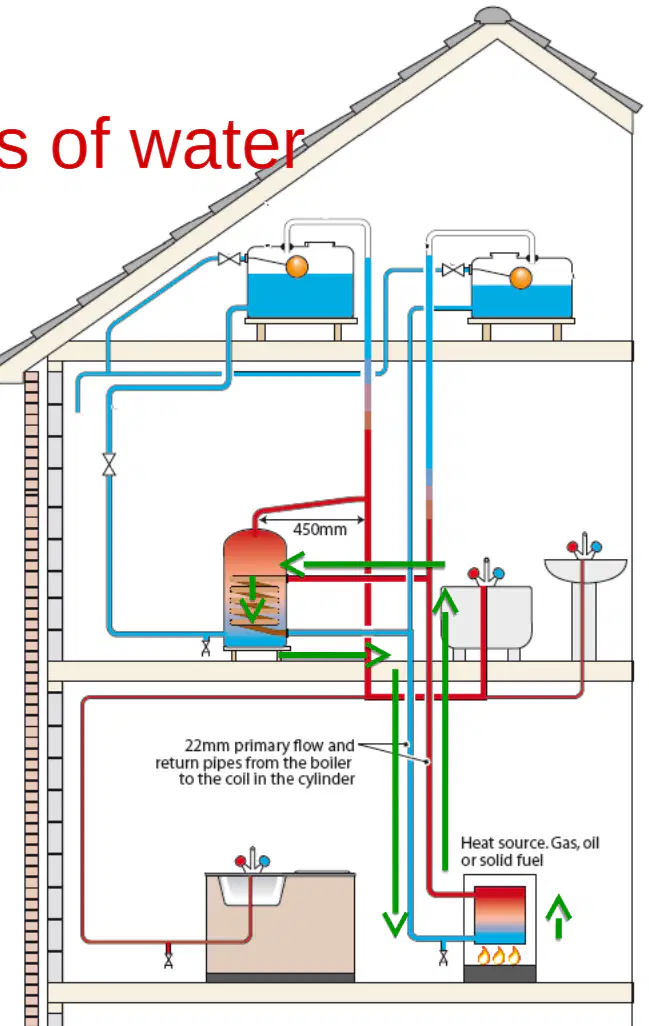
What is the minimum distance required above the cylinder as shown in the diagram?
(a)
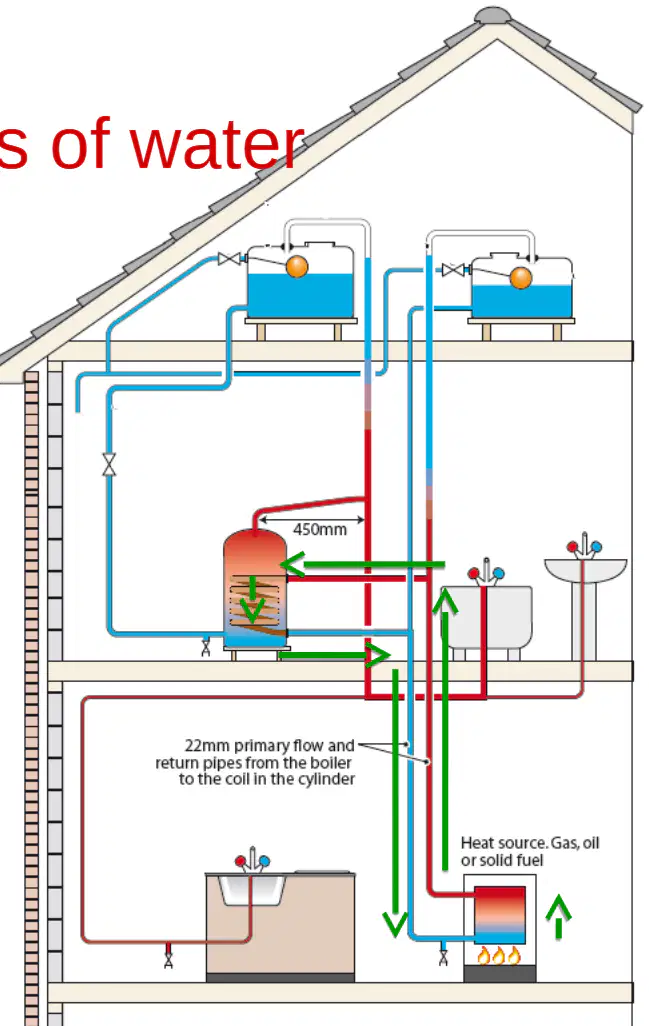
Gravity circulation in an older indirect system works by:
Using a pump to force water through the system
Relying on the natural convection of heated water rising and cooler water sinking
Using fans to move air through the pipes
Employing electrical heating elements in the pipes
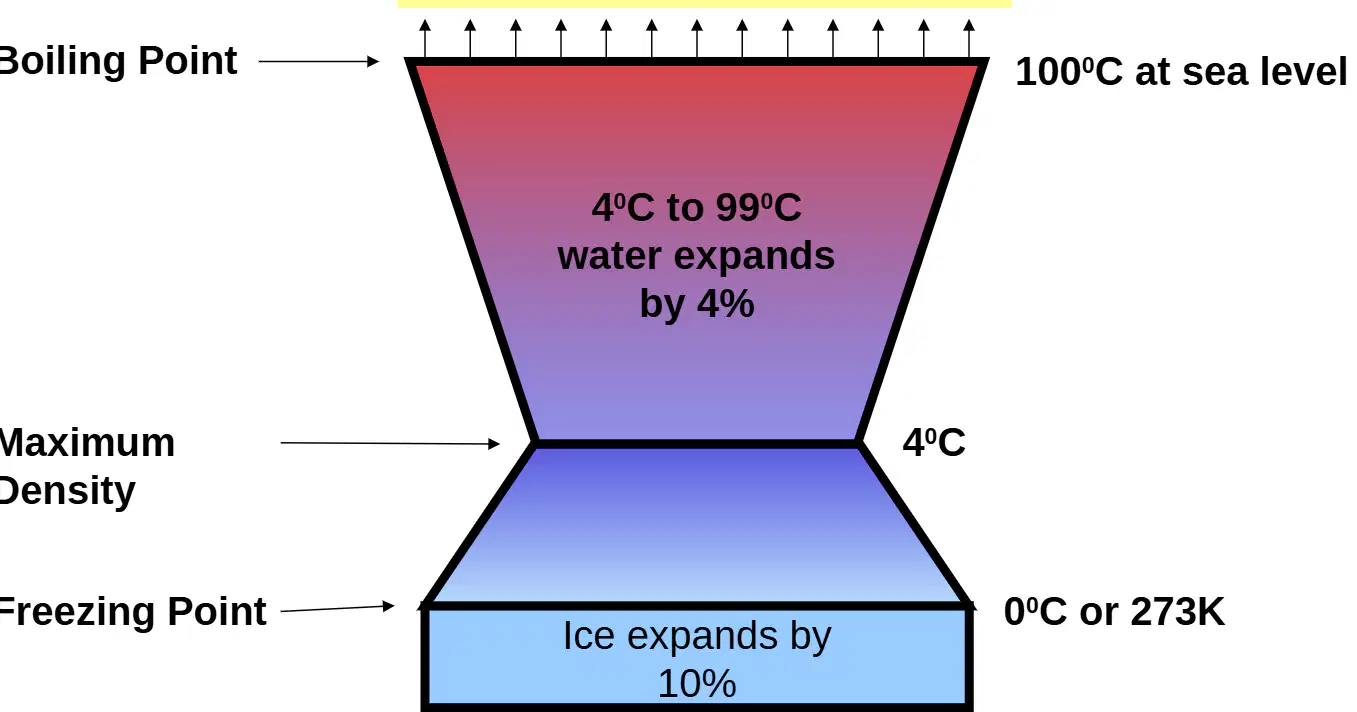
What is the boiling point of water at sea level?
0°C
4°C
100°C
273K
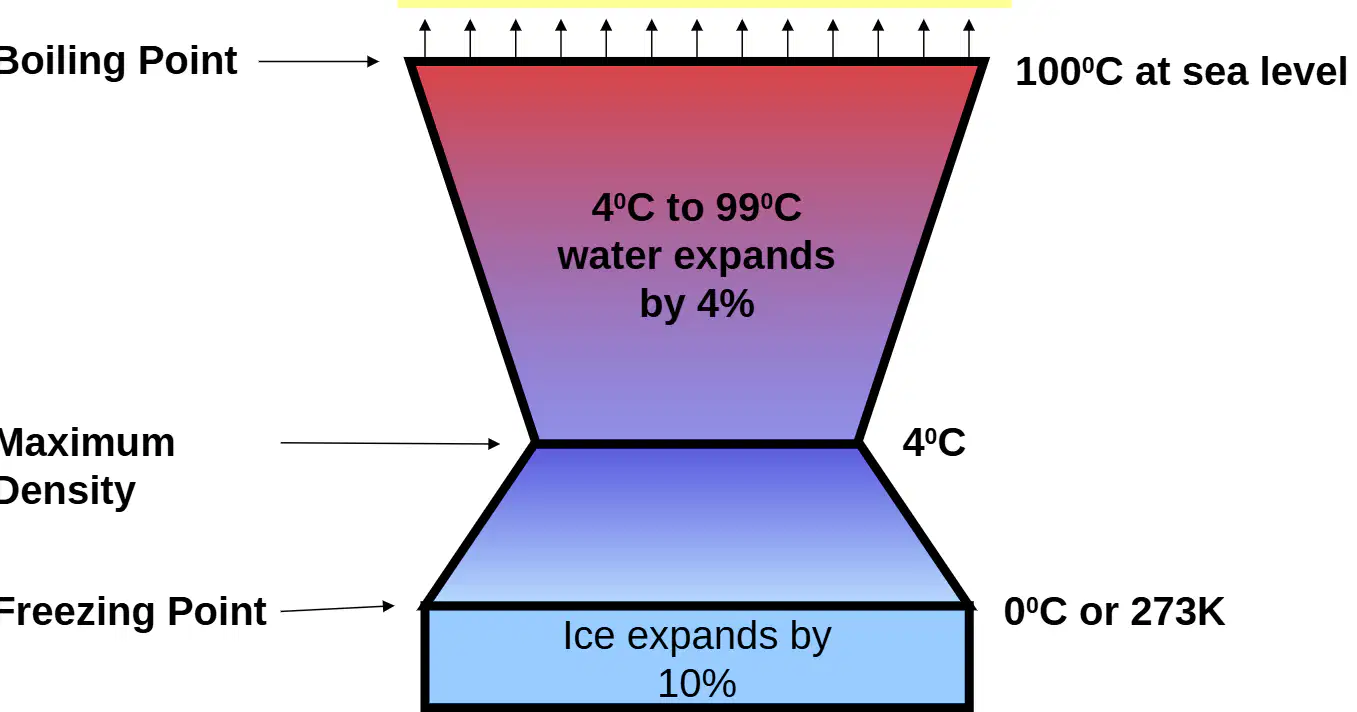
At what temperature does water reach its maximum density?
0°C
4°C
99°C
100°C
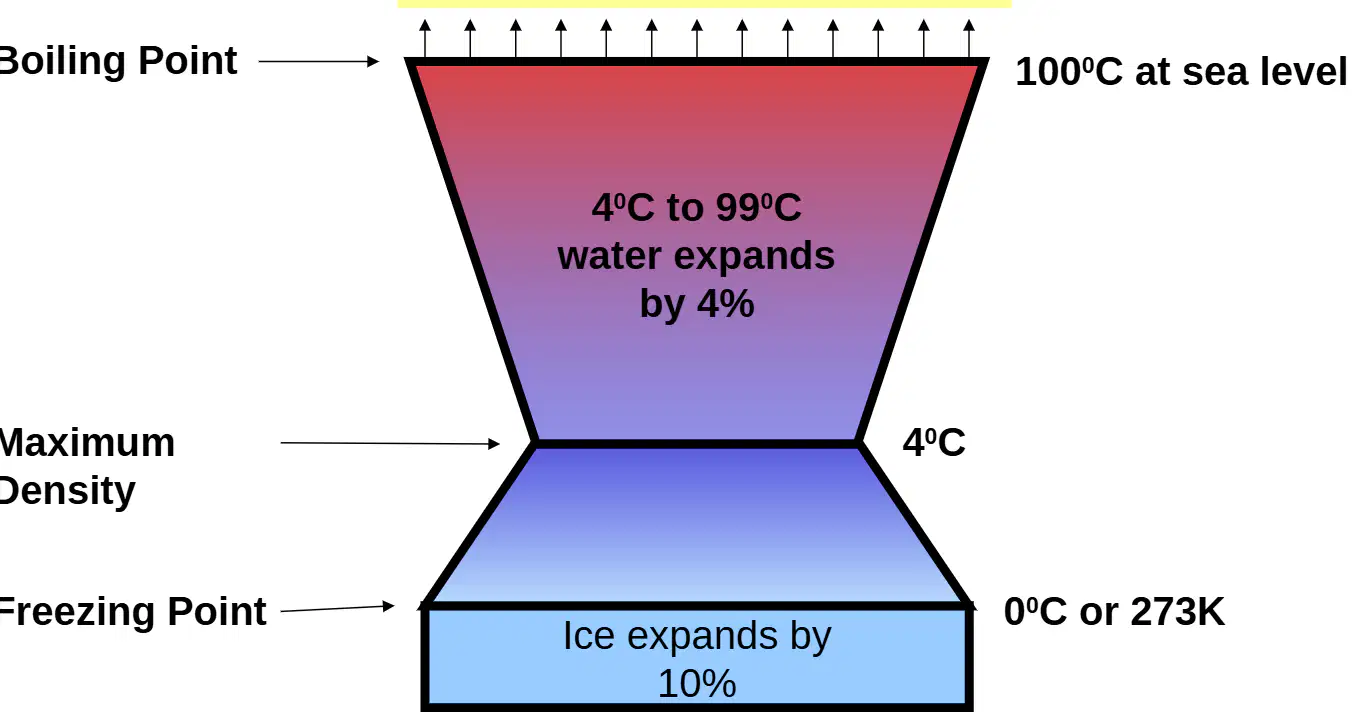
Fill in the blank: Ice expands by ___% when it freezes.
10%
2%
25%
50%
How many times does steam expand compared to liquid water?
4 times
10 times
100 times
1600 times
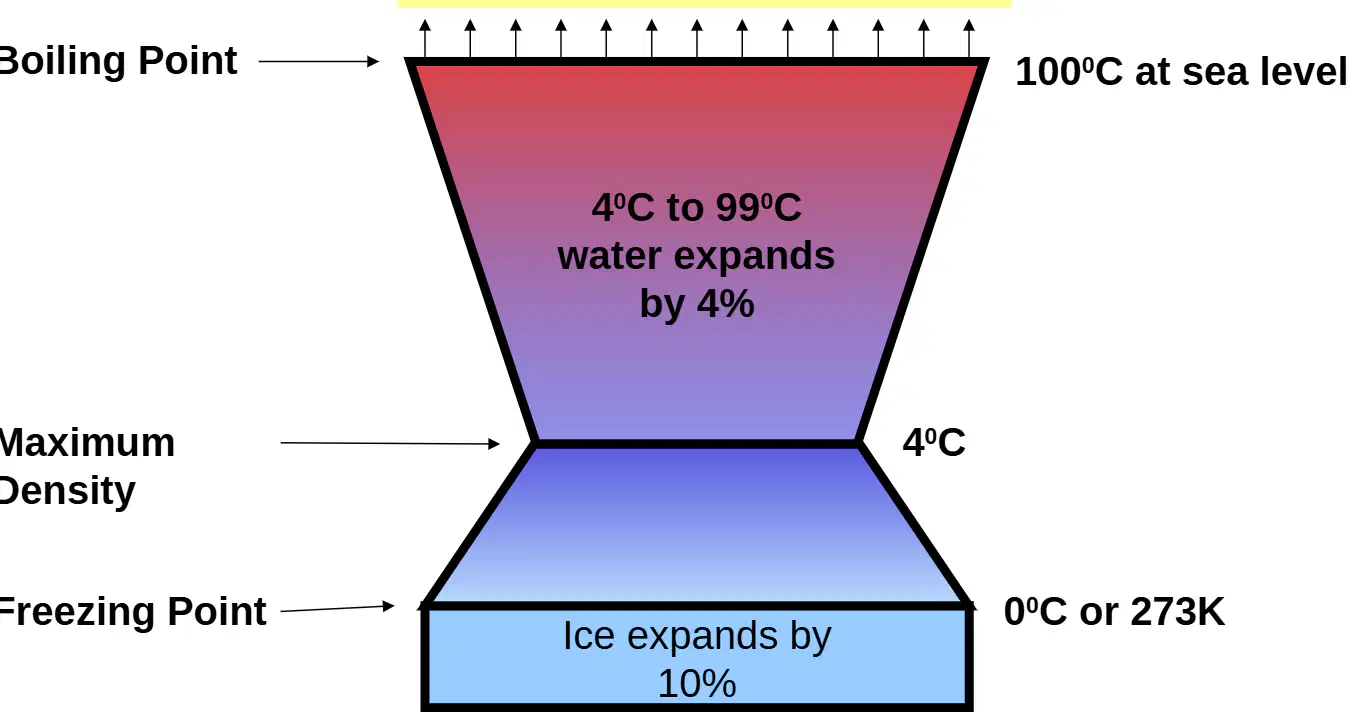
Between 4°C and 99°C, water expands by what percentage?
1%
4%
10%
1600%
What does 'Solubility' mean in connection with water?
The ability of a substance to dissolve in water
The ability of water to evaporate
The temperature at which water boils
The color of water
'Wholesome' in connection with water means:
Safe and suitable for drinking
Containing harmful chemicals
Having a salty taste
Being hard in nature
'Hard' in connection with water means:
Water that contains a high concentration of dissolved minerals
Water that is very cold
Water that is free from impurities
Water that is acidic
'Alkaline' in connection with water means:
The water has a high acid content
The water has a neutral pH
The water has a pH above 7
The water is distilled
As you progress through your plumbing career, there are certain properties and terminologies that will be referred to in connection with water: 'Soft' in connection with water means:
Water that contains a high concentration of dissolved minerals
Water that contains a low concentration of dissolved minerals
Water that is at a high temperature
Water that is colored or cloudy
'Acidic' in connection with water means:
The water has a high pH value.
The water contains a lot of salt.
The water has a low pH value.
The water is at neutral pH.

