
 Worksheets
SCIENCE GRADE 3 4Q
Total questions: 105
Worksheet time: 58mins


A push or pull that causes an object. to move
Force
Gravity
Friction
Lubricant


What is the position of the car based on a reference point?
The car is moving.
The tree is a stationary object.
The car is at the left side of the tree.
The car is very fast.
A measure of how fast something moves over a certain distance.
speed
energy
work
force
a force that causes objects to move by touching them
force
energy
non-contact force
contact force
a force that causes objects to move without touching them
energy
speed
non-contact force
contact force

When two magnets attract, they ______________
push apart
change color
get colder
pull together

When two magnets repel, they ________________
change color
pull together
push apart
get colder

Materials with _______________ surfaces have less friction.
smooth
rough
both

A boy sits halfway down a grassy slope. What force stops him sliding down?
Weight
Gravity
Friction
Magnetism
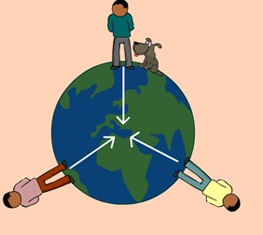
What is gravity?
A force that pulls
A force that pushes
energy
friction
A __ is the area or place where an organism lives in an ecosystem.
habitat
population
3. An ecosystem has
a. animals
b. plants
c. non living - things
d. all of the above
4. What is the study of the interaction of living things with one another and with its environment?
a. community
b. ecosystem
c. ecology
d. population
5. What is the study of the interaction of living things with one another and with its environment?
a. A system that helps animals survive
b. Biotic and Abiotic factors
c. A place with a bunch of dead organism
d. None of the above
7. The kind of interaction in which one organism kills smaller organism for food.
a. mutualism
b. commensalism
c. predation
d. none
Predation occurs when the predator ________________________.
feeds on dead animal matter
captures and kills prey for food
competes with prey for food and shelter
captures and kills prey because they are in its territory
What is a producer?
organism that cannot make their own food so they eat other organisms
organism that makes their own food
organism that break down dead organisms
What is a decomposer?
an organism that breaks down dead organisms for energy
an organism that makes its own food
an organism that eats other organisms
Does a food chain start with the sun?
yes
no
What is a consumer?
an organism that breaks down dead organisms
an organism that makes its own energy and food
an organism that eats other organisms for energy
What is the source of all energy?
water
food
decomposers
sun
If there is a change in the environment, the organism will either die or have to leave
true or false
true
false
An organism that can make its own food
decomposer
producer
consumer
Breaks down and feeds on the remains of other organisms
decomposer
consumer
producer
Small consumers that are hunted and eaten by larger consumers
producer
prey
predator
An animal that hunts and eats other animals for energy
prey
predator
decomposer
NON-living things found in an ecosystem
biotic
abiotc
habitat
LIVING things in an ecosystem
biotic
abiotic
ecosystem
Choose the producer.
rock
tree
cow
bird
Choose the decomposer.
grass
elephant
bacteria
bird
Choose the consumer.
mushroom
horse
tree
grass
Choose the abiotic factor.
sunflower
dog
cat
table
A decomposer is also a producer.
True
False
Which of these living things is a producer?
horse
cow
fly
grass
Mice and grasshoppers are examples of prey.
True
False
Why is the ecosystem important?
It can sustain overpopulation.
It sustains the balance of life in nature.
It allows humans to exploit natural resources.
It can absorb all the toxins humans dispose of.
______ is important for plant growth because plants take in water and mineral salts from this factor.
Light
Temperature
Soil
Air
Plants would need ____________ from the air to make food.
Oxygen
Hydrogen
Temperature
Carbon Dioxide
The __________ of the habitat determines the kinds of organisms living there.
Light
Water
Air
Temperature


What is a carnivore?
An animal that eat plants
A plant
A consumer that eats other animals
(a) is a sphere that contains all the rocks and minerals on the earth.
(a) is a sphere that contains different layers of gasses.
(a) is a sphere that contains all living things on Earth; including humans.
(a) is a sphere that contains all the water on the Earth.
The Greek word Hydro means...
Earth
Life
Water
Air
What is the layer of gas surrounding the Earth called?
Ozone
Atmosphere
Hydrosphere
Lithosphere
A bird flies through the sky. What two spheres are interacting?
Hydrosphere and Biosphere
Biosphere and Geosphere
Atmosphere and Hydrosphere
Biosphere and Atmosphere
A Polar Bear is standing on a glacier. What two spheres are interacting?
Biosphere & Geosphere
Geosphere & Hydrosphere
Atmosphere & Biosphere
Biosphere & Hydrosphere
What are the four major domains or systems of the Earth?
Plants, animals, bacteria, mushrooms
Wind, water, fire, snow
Spring, winter, summer, fall
Geosphere, biosphere, hydrosphere, and atmosphere
What makes up Earth's fresh water? (Choose all correct answers)
Glaciers/ice caps
Oceans
Rivers/streams/lakes
Groundwater
All living things on earth are part of the....
Biosphere
Geosphere
Hydrosphere
Geo =
Ground
Sphere
Life
Water

Which of these two processes change the water of the hydrosphere from a liquid to a gas and back again?
Weathering and erosion
Evaporation and condensation
Condensation and weathering
What gas makes up most of the earth’s atmosphere
Carbon dioxide
Nitrogen
Oxygen
Which gas makes up the smallest amount of earth’s atmosphere
Carbon dioxide
Nitrogen
Oxygen

What is the first layer of the atmosphere called?
Mesosphere
Thermosphere
Troposphere
Exosphere

The ________ layer is considered outer space.
Stratosphere
Mesosphere
Thermosphere
Exosphere

True or False: The stratosphere is where airplanes fly.
True
False

The thermosphere contains shimmering curtains of light called ______
auroras (Northern Lights)
Rainbows
satellites

What layer of the atmosphere do humans live in?
Troposphere
Stratosphere
Mesosphere

In which layer do meteors or "shooting stars" burn up in?
Exosphere
Mesosphere
Stratosphere

Air is made up mostly of -
Carbon Dioxide and Nitrous
Methane gas and air vapor
Oxygen and Carbon Monoxide
Oxygen and Nitrogen

Weather happens in the _________ layer.
Troposphere
Stratosphere
Mesosphere
Thermosphere

The Ozone Layer is located in the ______
Mesosphere
Stratosphere
Exosphere

Where would I find satellites orbiting?
Exosphere
Thermosphere
Mesosphere
Stratosphere
Troposphere

The hottest layer of the atmosphere:
Thermosphere
Troposphere
Exosphere
Stratosphere
This layer is the most difficult to study and the coldest.
Mesosphere
Thermosphere
Exosphere
Which gas in Earth's atmosphere changes into droplets of water during condensation and eventually develops into clouds?
Carbon Dioxide
Nitrogen
Water vapor
Air pressure is highest in which layer?
Troposphere
Stratosphere
Mesosphere
Which layer of the atmosphere is the thickest?
troposphere
mesosphere
stratosphere
thermosphere
Which layer of the atmosphere is the highest?
exosphere
troposphere
mesosphere
stratosphere
Which layer of the atmosphere is the outermost layer?
exosphere
troposphere
mesosphere
stratosphere
Which layer of the atmosphere is responsible for protecting us from harmful UV radiation?
mesosphere
troposphere
thermosphere
stratosphere
Which layer of the atmosphere is where most weather phenomena occur?
mesosphere
troposphere
thermosphere
stratosphere
Which layer of the atmosphere is where meteors burn up upon entering the Earth's atmosphere?
troposphere
mesosphere
stratosphere
thermosphere
The amount of moisture in the air is called...
wind
hail
humidity
temperature
Which is NOT a type of precipitation?
hail
fog
sleet
snow
Low air pressure usually means...
sunny weather
rainy weather
partly cloudy weather
hot weather
What is wind?
a) Moving air
b) Falling leaves
c) Water droplets
d) Snowflakes
What are clouds made of?
a) Cotton candy
d) Tiny water droplets or ice
true or false : more evaporation equals less humidity
true
false
What causes wind
rain
earth's rotation
hail
pressure difference
true or false: precipitation is any form of water that falls to earths surface from the clouds
true
false
Does evaporation happen before or after condensation?
before
after
during
the amount of water vapor in the air
humidity
air pressure
dew point
climate
the movement of air caused by differences in air pressure
wind
weather
precipitation
humidity
a collection of small water droplets or ice crystals suspended in the air, which forms when the air is cooled and condensation occurs
wind
dew point
visibility
clouds

