
 Worksheets
Sem 2 - Surgical Wound Classification Quiz
Total questions: 20
Worksheet time: 10mins
Which surgical wound classification involves a clean procedure with a minor break in aseptic technique and no significant spillage?
Clean
Clean-Contaminated
Contaminated
Dirty
What does a black color in a wound indicate?
Sloughing tissue
Necrotic
Infected
Granulating tissue
Which of the following is a method to prevent wound contamination during preparation for surgery?
Using non-sterile gels
Applying sterile lubricant gels
Leaving the wound uncovered
Using dry scissors
What type of wound is associated with a ruptured pyometra?
Clean
Clean-Contaminated
Contaminated
Dirty
What does a red colour in a wound indicate?
Sloughing tissue
Necrotic
Granulating tissue
Epithelialising
What is the appearance of a healthy wound?
Purple colour bruising, skin edges apposed
Redness, swollen skin edges
Normal skin colour, apposed skin edges
Redness, hot to touch
Which wound category is characterized by purulent exudate?
Healthy
Bruising
Inflammation
Infection
What is the purpose of lavage in wound decontamination?
To apply antibiotic therapy
To remove necrotic tissue
To dilute bacterial contamination and remove debris
To close the wound
What is the ideal lavage solution for wound decontamination?
Distilled water
Sterile and isotonic solution
Alcohol-based solution
Hydrogen peroxide
What is the most critical time period for the risk of infection after surgery?
1-3 days post-op
4-7 days post-op
1-2 weeks post-op
1 month post-op
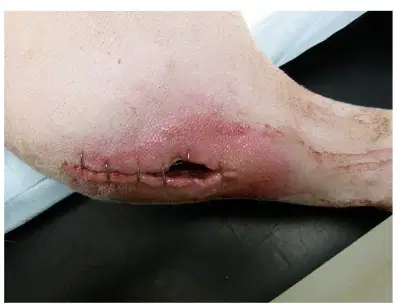
What is dehiscence in the context of wound healing?
Formation of a blood clot
Separation of wound layers
Infection of the wound
Healing of the wound
What is the purpose of dressings that aid debridement?
To increase dead space
To remove debris
To prevent epithelialisation
To reduce granulation
What is the primary function of alginate dressings when moistened?
They release calcium to aid coagulation and absorb exudate.
They provide a cooling effect to soothe the wound.
They release silver ions to inhibit bacterial growth.
They act as a barrier to protect the wound from moisture.
Which type of dressing is used for debridement and has a high sugar content to draw fluid from the wound?
Alginate
Honey
Silver
Hydrocolloids
What is the main purpose of using maggots in wound care?
To absorb exudate and maintain a moist environment.
To digest liquid protein and necrotic tissue.
To release silver ions for antibacterial purposes.
To provide a waterproof barrier for the wound.
Which dressing type is known for being waterproof and used for decubital ulcers?
Hydrogels
Hydrocolloids
Perforated Polyurethane Membranes
Barrier Films
What is the function of silver in wound dressings?
To absorb fluid and maintain a moist environment.
To release ions that inhibit bacterial and fungal growth.
To provide a gas-permeable layer for moisture retention.
To act as a barrier film protecting the wound.
What is the primary purpose of using a cast or splint for joint injuries or fractures?
To enhance blood circulation
To provide stability until surgery or post-operative repair
To increase joint flexibility
To reduce muscle mass
Why can casts and splints only be used on injuries below the elbow or stifle joint?
They are too heavy for upper limbs
They cannot effectively immobilize injuries above those joints
They cause skin irritation
They are not waterproof
What is the purpose of leaving two toes visible under a splint or cast?
To allow for better air circulation
To check for swelling, temperature changes, or slippage
To improve comfort
To enhance mobility

