
NEW
Font size
S
M
L
XL
 Worksheets
IPC Spring Final Exam
Total questions: 80
Worksheet time: 2hrs 0mins
Name
Class
Date
1.
What is the main difference between distance and displacement?
a)
Displacement considers direction, distance does not
b)
Distance considers direction, displacement does not
2.
What does the negative sign mean for one-dimensional motion?
a)
speed
b)
direction
c)
time
d)
distance
3.
A position-time graph can help us see how an object's position changes over time.
a)
True
b)
False
4.
In a position-time graph, time is on the y-axis and position is on the x-axis.
a)
True
b)
false
5.
A position-time graph can show the exact position of an object at every moment in time, including between recorded times.
a)
True
b)
False
6.
In science, what is the definition of work?
a)
work is the amount of energy transferred by a force
b)
work is the speed at which an object moves
c)
work is the distance an object travels
7.
What is the unit of power?
a)
joule
b)
newton
c)
meter
d)
watt
8.
What is power in terms of work and energy?
a)
power is the total amount of work done
b)
power is the rate at which work is done or energy is transferred
c)
power is the distance over which work is done
9.
When a ball is lifted slowly, where does the energy transferred by the hand go?
a)
the energy is lost as heat
b)
the energy is stored as kinetic energy
c)
the energy is stored as gravitational potential energy
10.
A solution with a pH of 3 is more basic than a solution with a pH of 5.
a)
True
b)
false
11.
A strong acid will have a higher concentration of hydrogen ions than a weak acid at the same concentration
a)
True
b)
false
12.
The pH scale ranges from 0 to 7
a)
True
b)
false
13.
If the concentration of hydrogen ions increases by a factor of 10, the pH will increase by 1 unit.
a)
True
b)
False
14.
A solution with a pH of 7 is considered neutral.
a)
True
b)
False
15.
The concentration of hydroxide is always equal to the concentration of hydrogen ions in any solution.
a)
True
b)
False
16.
The pH of a solution can be less than 0.
a)
True
b)
False
17.
Which of the following best describes the transformation of energy when a person eats food and then goes for a run?
a)
Chemical energy into mechanical
b)
mechanical into chemical
c)
thermal into electrical
18.
What type of energy transformation occurs when a roller coaster goes from the top of a hill to the bottom
a)
kinetic to potential
b)
thermal to chemical
c)
potential to kinetic
d)
chemical to thermal
19.
What energy transformation occurs when a flashlight is turned on?
a)
electrical to chemical
b)
chemical to electrical
c)
thermal into electrical
d)
mechanical to thermal
20.
What energy transformation occurs when water flows over a waterfall?
a)
kinetic to potential
b)
potential to kinetic
c)
thermal into chemical
d)
chemical to thermal
21.
What energy transformation occurs when wood is burned in a campfire?
a)
themal to chemical
b)
mechanical into electrical
c)
chemical to thermal
d)
electrical into mechanical
22.
What is the main characteristic of a covalent bond?
a)
transferring electrons from one atom to another
b)
sharing electrons
c)
combining electrons into a single atom
23.
How do oxygen and hydrogen form a covalent bond in a water molecule?
a)
oxygen transfers e- to hydrogen
b)
Hydrogen transfers e- to oxygen
c)
oxygen shares electrons with hydrogen
24.
What is the main difference between speed and velocity?
a)
speed and velocity are both scalar
b)
speed is a vector and velocity is scalar
c)
speed is scalar and velocity is vector
25.
How does velocity differe from speed in terms of direction
a)
speed includes direction and velocity does not
b)
both include direction
c)
velocity includes direction and speed does not
26.
A car travels North at 60 km/hr. What is the car's velocity
a)
the car's speed is 60 km/hr N
b)
the car's velocity is 60 km/hr
c)
the car's velocity is 60 km/hr N
27.
A runner com[pletes a 100-meter race in 5 seconds. What is the runner's speed?
a)
the speed is 20 m/s
b)
the speed is 20 m/s S
c)
the speed is 20 m/s N
28.
A cyclist travels 50 meters East in 5 seconds. What is the cyclist's velocity?
a)
the velocity is 10 m/s
b)
the velocity is 10 m/s east
c)
the velocity is 10 m/s N
29.
A homogenous mixture has the same concentration of substances throughout.
a)
True
b)
False
30.
In a solution, the solute is the substance present in the larger amount.
a)
True
b)
False
31.
An aqueous solution is a solution where water is the solvent
a)
True
b)
False
32.
Sand mixed with water is an example of a homogeneous mixture.
a)
True
b)
False
33.
A solution with a high amount of solute is considered concentrated.
a)
True
b)
False
34.
In a solution, the solvent is the substance that is dissolved
a)
True
b)
False
35.
A solution where the solute is evenly distributed is called a homogeneous mixture
a)
True
b)
False
36.
Water is known as the 'universal solvent' because it can dissolve many different substances
a)
True
b)
False
37.
The polarity of water molucules allows them to form hydrogen bonds with eachother
a)
True
b)
False
38.
In a supersaturated solution, there is more solute dissolved than in a saturated solution at the same temperature.
a)
True
b)
False
39.
A solution is always a liquid.
a)
True
b)
False
40.
The ability of water to dissolve substances is important for many biological processes.
a)
True
b)
False
41.
What is an ionic bond?
a)
two atoms share electrons equally
b)
two atoms have the same number of protons
c)
one atom gives an electron to another atom
42.
What is needed to change the motion of an object?
a)
mass
b)
force
c)
speed
d)
time
43.
What increases when a net force is applied to an object?
a)
acceleration
b)
velocity
c)
speed
d)
momentum
44.
Which law is known as the law of inertia?
a)
Newton's Second Law
b)
Newton's Third Law
c)
Law of Gravity
d)
Newton's First Law
45.
What property of an object does not change when it moves to a diferent planet?
a)
weight
b)
volume
c)
mass
d)
density
46.
How are the forces described in Newton's Third Law?
a)
unequal and opposite
b)
equal and opposite
c)
equal and same
47.
What pair of forces are described in Newton's Third Law?
a)
push and pull
b)
friction and gravity
c)
speed and velocity
d)
action and reaction
48.
Which law explains how force, mass, and acceleration are related?
a)
Newton's First Law
b)
Newton's Third Law
c)
Law of Conservation
d)
Newton's Second Law
49.
What is the term for the total force acting on an object?
a)
friction
b)
gravity
c)
inertia
d)
netforce
50.
What term describes both the speed an direction of an object's motion?
a)
mass
b)
acceleration
c)
velocity
d)
force
51.
Which law states that an object at rest stays at rest unless acted on by a force?
a)
Newton's Second Law
b)
Newton's Third Law
c)
Law of Gravity
d)
Newton's First Law
52.
What changes when a force is applioed to an object, besides speed?
a)
mass
b)
time
c)
direction
d)
temperature
53.
What increases when a constant force is applied to a decreasing mass?
a)
acceleration
b)
velocity
c)
speed
d)
distance
54.
Who formulated the three laws of motion?
a)
Einstein
b)
Galileo
c)
Newton
d)
Tesla
55.
What is the tendency of an object to resist changes in its motion called?
a)
gravity
b)
friction
c)
inertia
d)
momentum
56.
If a box is at rest and the net force acting on it is zero, what will happen to the box?
a)
the box will start moving upward
b)
the box will start moving downward
c)
the box will remain at rest
d)
the box will start moving sideways
57.
If a box is in a delivery truck moving iwth constant velocity, what can we say about the box's motion?
a)
box is accelerating
b)
box is decelerating
c)
box will remain at rest
d)
the box is at rest
58.
If a box is at rest on the ground, what can we say about the forces acting on it?
a)
the forces are unbalanced
b)
there are no forces acting on the box
c)
the box is accelerating
d)
the forces are balanced
59.
If a box is moving with constant velocity, what is the net force acting on it?
a)
net force is positive
b)
net force is negative
c)
net force is increasing
d)
net force is zero
60.
What is the tendency of an object to maintain its present state of motion?
a)
inertia
b)
gravity
c)
friction
d)
momentum
61.
In the reference frame of a truck moving away from a house, what is the satte of a box on the porch?
a)
box is at rest
b)
box is moving forward
c)
box is accelerating
d)
box is moving backward
62.
If you apply an upward force greater than the gravitational force on a box, what will happend to the box?
a)
box will accelerate upward
b)
box will accelerate downward
c)
box will remain at rest
d)
box will move sideways
63.
If a box is falling and you apply an upward force greater than the gravitational force, what will happen to the box's speed?
a)
box will speed up
b)
box will remain at same speed
c)
box will slow down
d)
box will change direction
64.
If a box is in free fall, what will happen to its motion?
a)
the box will accelerate downwar
b)
the box will accelerate upward
c)
the box will remain at rest
65.
What type of force does a box experience when it is near Earth's surface?
a)
upward gravitational force
b)
downward gravitational force
c)
no gravitational force
d)
Sideways gravitational force
66.
According to Newton's Third law, if the Earth puts force on an apple, what does the apple do in return?
a)
The apple puts a smaller force on the Earth
b)
the apple puts a larger force on the Earth
c)
the apple does not put any force on the Earth
d)
the apple out an equal and opposite force on the Earth
67.
Why does the apple accelerate towards the Earth, but the Earth doesn't seem to accelerate towards the apple?
a)
The forces are not equal; the Earth exerts a larger force
b)
the forces are equal, but Earth has a larger mass, so it accelerates less.
c)
the apple's force is delayed, so the earth doesn't accelerate
68.
Why don't the equal and opposite forces described in Newton's thrid law cancel each other out?
a)
The forces are not truly equal and opposite
b)
the forces only cancel out if the objects are the same size
c)
the forces act on different objects, so they don't cancel each other out
69.
How does Newton's third law explain why a balloon flies off when you let go of it?
a)
the balloon pulls air in, and the air pulls the balloon up.
b)
the balloon pushes air down, and the air pushes the balloon up.
c)
The balloon pushes air up, and the air pushes the balloon down
70.
What is the equal and opposite force to the ground pushing up on Batman?
a)
the ground pulls Batman sideways, and Batman pulls the ground sideways
b)
the ground pushes Batman forward, and Batman pushes the ground backward
c)
The ground pushes up on Batman and Batman pushes down on the ground
71.
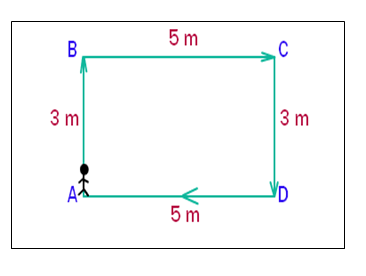
Sara walks from Point A to Point B. Which is true?
a)
Distance and displacement are EQUAL
b)
Distance is less than displacement
72.
What is the primary source of energy for the Earth's climate system?
a)
The Moon
b)
The Sun
c)
Geothermal energy
d)
Wind energy
73.
What is energy transfer?
a)
The process of energy staying in one place
b)
The movement of energy from one place to another
c)
The creation of new energy
d)
The destruction of energy
74.
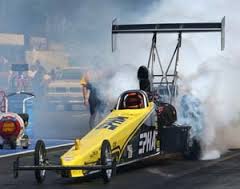
A drag racer accelerated from 0 m/s to 200 m/s in 5 s. What was the acceleration?
a)
0 m/s
b)
40 m/s2
c)
-40 m/s2
d)
40 m/s
75.
The pH scale is a range from:
a)
1-7
b)
0-14
c)
1-14
d)
1-20
76.
A(n) _______ is a substance with a pH greater than 7.
a)
Base
b)
Acid
c)
Buffer
d)
Water
77.
What is the only substance with a neutral pH of 7?
a)
Milk
b)
Orange Juice
c)
Water
d)
Blood
78.
Tastes Sour
a)
Acids
b)
Bases
c)
Salts
d)
All
79.
Tastes bitter.
a)
Acids
b)
Bases
c)
Salts
d)
All
80.

This variable in an experiment is the one being deliberately changed by the scientist.
a)
dependent variable
b)
independent variable
c)
data
d)
control group
Reset

