
Font size
 Worksheets
Final Practice
Total questions: 91
Worksheet time: 3hrs 5mins
How many significant figures: 450 m
3
2
1
0
100000000
3.05 + 0.013
3.063
3.06
3.1
3
432.521 + 3.50
436.021
436.02
436.0
436
340.123 - 63.02
277.103
277.10
277.1
277
100 + 30.6
130.6
131
130
100
5.9 x 6.01
35.459
35.46
35.5
35
7.8 x 5.501
42.9078
42.908
42.91
42.9
42
2.1/5.1
0.4118
0.412
0.41
0.40
0.9/2.3
0.391
0.39
0.40
0.4
Convert 2.38 meters to millimeters.
2380 mm
0.2380 mm
23.8 mm
0.000238 mm
Convert 12.54 liters to hectoliters.
.1254 hL
125.4 hL
1254 hL
0.01254 hL
Convert 2.39 kilograms to grams.
2390 g
0.2390 g
23.9 g
239 g
Convert 732 milliseconds to seconds.
0.732 s
73.2 s
7.32 s
7320 s
Convert 7.5 kilograms to milligrams
7500000 mg
750000000000 mg
750 mg
0.75 mg
Use dimensional analysis to convert the following:
Convert 3867 seconds to minutes. (Hint: 1 minute = 60 seconds)
64.45 min
45 min
62.85 min
7.32 min
How many minutes are in a school year, 190 days?
269,000 minutes
11,400 minutes
16,156 minutes
273,600 minutes
1001
in scientific notation?
.000457
23,948

Which element has the highest electronegativity?
Cr3+ O2-
K1+ S2-
Ca(CO3)
Name the compound: SO3
sulfur trioxide
sulfite ion
sulfur oxide
sodium trioxide
Name the compound: CF4
carbon tetrafluoride
monocarbon tetrafluoride
carbon fluoride
chlorine tetrafluoride
Name the compound: P4O8
tetraphosphorus octoxide
phosphorus oxide
tetrapotassium octoxide
potassium oxide
Name the compound: SF6
sulfur heptafluoride
sulfur hexafluoride
monosulfur hexafluoride
monosulfur heptafluoride
If an atom has 3 valence electrons, what charge will it have as an ion?
+3
-3
+5
-5
If an atom gains 3 electrons, what charge will it have as an ion?
+3
-3
+5
-5
If an atom has 1 valence electron, what charge will it have when it becomes an ion?
+1
-1
+7
-7
If an element gains 2 electrons, what charge will it have when it becomes an ion?
+2
-2
-6
-6
If an atom has 6 valence electrons, what charge will it have when it becomes an ion?
+2
-2
+6
-6
Valence electrons are those electrons that are...
closest to the nucleus.
freely floating between atoms.
farthest from the nucleus
unable to become involved in chemical bonding.
Oxygen has 6 valence electrons. When forming an ion, oxygen will
lose six electrons and have a charge of +6.
lose six electrons and have a charge of -6.
gain two electrons and have a charge is +2.
gain two electrons and have a charge of -2.
Look at the periodic table. What should be the charge on the ion formed by calcium?
+1
+2
-1
-2
Most elements are most stable when their valence shell has ________ electrons.
4
6
8
18
What is the molecular shape of water?
Tetrahedral
Linear
Octahedral
Bent or V-shaped


What 3-D shape would this molecule have?
Trigonal planar
Pyramidal
Tetrahedral
Bent
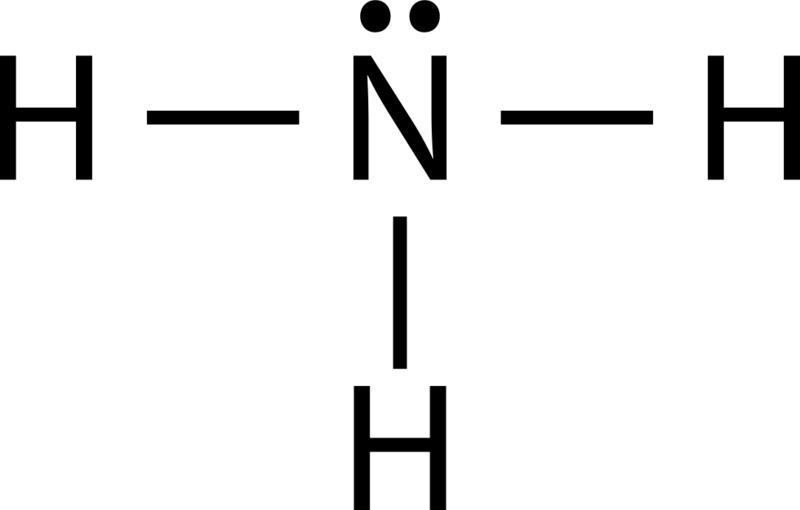
What 3-D shape would this molecule have?
tetrahedral
trigonal planar
trigonal pyramid
bent
What is the formula for percent yield?
TheoreticalActual×100
ActualTheoretical×100
100Actual×Theoretical
Actual×Theoretical100
When reacting Na with Cl2, we calculated that the theoretical yield should be 13 grams. Our actual yield was 12.5 grams. What is the percent yield?
90.4%
104%
96.15%
1.04%
24 grams of CH4 was added to the above reaction. Calculate the theoretical yield of CO2.
2Fe2O3 + C → Fe + 3CO2
You add 28 grams of carbon. You find the actual yield to be 181.2 grams of CO2. What is the percent yield of CO2? (Hint: calculate theoretical yield of CO2 first)
58.83%
308%
6435%
15.5
The reaction of 75.0g P4 with excess chlorine gas produces 110g PCl3 in lab. Find the theoretical yield and calculate percent yield for the reaction.

What is the mass (g) of 2.5 moles of water (H2O)?
Molar mass of H2O = 18 g/mol
45 g
7.2 g
0.16 g
5 g
Calculate the molar mass for Al(OH)3
78.0 g/mol
72 g/mol
28 g/mol
25 g/mol

How many moles are there in 2.00 x 10²³ atoms of oxygen?
0.33 mol
1.2 mol
3.01 mol
How many atoms are contained in 25 g of NaBr? (Atomic mass of Na = 23, Br = 35)
102.96 molecules
0.24 molecules
1.45x10²³ molecules
2.34 x 10²⁰molecules

In the equation, 146C --> 147N + 0-1B, the _______ decay of radioactive carbon-14 results in the creation of a new nitrogen-14 atom.
Gamma
Beta
Alpha
24094Pu —› ____ + 42He
23692U
24796Cm
24493Np
24295Am
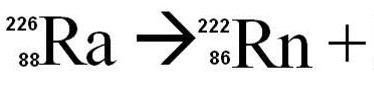

If some Protactinium (Pa) decays by alpha it would become...
[The large number at the top is the atomic number]
Actinium (Ac)
Thorium( (Th)
Uranium (U)
Neptunium (Np)
Plutonium (Pu)
If some Protactinium (Pa) decays by beta it would become...
[The large number at the top is the atomic number]
Actinium (Ac)
Thorium( (Th)
Uranium (U)
Neptunium (Np)
Plutonium (Pu)
The large number before a molecule is called a _______________.
Subscript
Capital Number
Coefficient
Balance the following equation--> What coefficient would need to be put in front of HCl to balance this equation. CH4 + 4 Cl2 → CCl4 + _____ HCl
2
3
4
5
Which coefficients would balance this chemical equation? _Fe2O3 ---> _Fe + _O2
2,1,2
2,4,3
1,1,1
1,3,2
Which coefficients would balance this chemical equation? _K + _Cl2 ---> _KCl
1,1,1
1,2,2
1,1,2
2,1,2
3 Pb + 2 H3PO4 ----> 3 H2 + 1 Pb3(PO4)2
Synthesis (or combination)
Decomposition
Single replacement
Double replacement

