
Font size
 Worksheets
Ethnic Studies Final
Total questions: 51
Worksheet time: 45mins
What is the definition of stereotype?
An idea about a group that is positive.
A trait of a specific ethnic group.
A widely held but fixed and oversimplified image or idea of a particular type of person or thing
2-4.
Answer the questions below after watching the video
What was the main purpose of Emilia interviewing people at her school?
To create a school report
To find differences and similarities
To win a competition
To grade her classmates
According to Emilia, what should differences among people do?
Separate us
Bring us closer together
Create conflicts
Have no effect
What does Emilia hope to achieve by understanding differences?
Winning a prize
Starting a business
Becoming famous
Fostering open-mindedness
Why is it important to challenge stereotypes?
Because it's fun
To spread rumors
To promote understanding and respect among people
It's not important
How can we challenge racial stereotypes?
By avoiding people who are different from us
By learning more about other cultures
By keeping our thoughts to ourselves
By making jokes about stereotypes
What role does media play in the formation of racial stereotypes?
No role at all
It can both challenge and reinforce stereotypes
It only challenges stereotypes
It only reinforces stereotypes
Why is it important to recognize our own biases and stereotypes?
To make better jokes about other cultures
To improve our ability to stereotype accurately
To understand and appreciate the diversity of people
It is not important
How do racial stereotypes affect workplace dynamics?
They ensure a harmonious work environment
They have no effect
They can lead to discrimination and hinder diversity
They increase productivity
What are civil rights?
What protects each citizens' civil rights?
Police officers
Parents
School
The Constitution
Which rights below are protected by the Constitution?
Freedom of Speech.
Right to a fair trial.
Freedom to practice your religion.
All of the above
What were the Jim Crow Laws?
A series of state and local laws in the United States that enforced racial segregation and discrimination against Black Americans from the late 1800s to the mid 1960s.
Laws against disabled people.
Laws against Asian Americans.
When were Jim Crow Laws created?
Right after the American Revolution.
Right after the Vietnam war.
Right after the Civil War.
Which of the following best describes racial relations in America from
the Civil War to the 1950s?
There were many successful attacks on the segregated system
during this time period.
Slavery continued throughout the American South.
The races were segregated and whites maintained many privileges.
Public facilities were desegregated and racial equality prevailed.
Jim Crow laws required segregation in public places such as
Schools
Transportation
Restaurants
All of the above
Who was the leader of the Civil Rights Movement?
Dr. Martin Luther King Jr.
Rosa Parks
Gandhi
John Lewis
Which Supreme Court case declared 'separate but equal' unconstitutional?
Plessy v. Ferguson
Brown v. Board of Education
Roe v. Wade
Marbury v. Madison
What significant event happened at the March on Washington?
Rosa Parks did not give up her seat.
African American students went to an all White school in Little Rock.
200,000 marched on Washington where Dr. King gave his "I have a dream" speech.
All of the above.
What was the goal of the Lunch Counter Sit-ins?
Integrated lunch counters throughout the South.
To have a sandwich.
To have some ice cream and malts.
None of the above.
What were the goals of the Freedom riders?
To ride buses throughout the US.
To challenge the 1960 Supreme Court of finding segregation unconstitutional., because the Jim Crow South still enforced segregation regulations in public facilities despite the Supreme Court ruling..
To go on vacations on buses.
None of the above.
Which event brought Jim Crow laws to an end?
World War II
The Vietnam War
The Civil Rights Movement
The Chicano Movement
What role did the NAACP play in the Civil Rights Movement?
It organized sports events to promote racial unity.
It provided legal representation in landmark civil rights cases.
It focused solely on improving economic conditions for minorities.
It was not involved in the Civil Rights Movement.
Which civil rights activist did not give up her seat on a bus, which started the entire Civil Rights Movement?
Ida B. Wells
Maya Angelou
Bessie Coleman
Rosa Parks
What methods were used against African Americans to prevent them from voting in the South?
Literacy tests
Poll taxes
Physical intimidation
All of the above
What was the primary purpose of the Montgomery Bus Boycott?
To protest against fare increases.
To demand better seating arrangements.
To end racial segregation on public buses.
To support a bus drivers' strike.
In the movie 42: The Jackie Robinson story...... (there is more than one right answer)
Jackie faces racism and discrimination.
Jackie is called all sorts of horrible names including the "N" word.
Jackie gets tired of his treatment and quits baseball.
Jackie beats up one of the White racist baseball players.

What was John Lewis known for?
He was a Freedom Rider.
He was part of the activist group - SNCC.
He was involved in the Civil Rights movement.
All of the above.
What was A Philip Randolph involved in that changed many people's lives?
The women's movement.
The Chicano movement
The Asian American movement
The Civil Rights movement.
What was Julian Bond known for?
He co-founded the Student Nonviolent Coordinating Committee (SNCC)
Bond served in the Georgia House of Representatives from 1967 to 1975 and in the Georgia Senate from 1975 to 1987.
He led a sit-in movement intended to desegregate Atlanta lunch counters.
All of the above
What was Whitney Young known for?
He was an American civil rights leader.
He spent most of his career working to end employment discrimination in the United States
He turned the National Urban League from a relatively passive civil rights organization into one that aggressively worked for equitable access to socioeconomic opportunity for the historically disenfranchised.
All of the above
What issues did Aileen Hernandez focus on through her activism? ( there is more than one right answer)
Equality for African Americans.
Women's rights.
Animal Rights.
None of the above
What was Gloria Anzaldua known for?
Chicana feminist writer who developed theories about the "in between" - Nepantla.
She was a famous Chicana actress.
She was a famous Chicana dancer.
None of the above
What is Nepantla?
The state of feeling happy.
The state of feeling sad.
The state of feeling "in between" not belonging to one group or another.
The state of feeling angry.
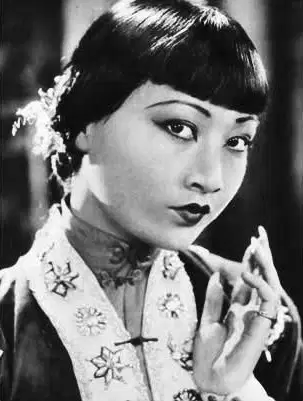
Who is the person to the left?
Grace Lee Bogs
Anna Mae Wong
Dorothy Chin
What significant role did Anna May Wong have in American cinema?
She was a famous costume designer.
She was known for her scriptwriting.
She was the first Chinese American movie star.
What was Bruce Lee known for?
He was a famous martial arts actor.
He was a martial arts fighter.
He was a writer.
All of the above.

What was Grace Lee Boggs known for?
She was the first Chinese American actress.
She was a civil right activist for Asian Americans and Black Americans.
She was the first Chinese American doctor.
What was Larry Itliong known for?
He was a Filipino American labor organizer.
He rose to national prominence in 1965, when he, mobilized Filipino and Mexican farmworkers, along with Cesar Chavez, to demand minimum wage and the right to unionize.
He is regarded as a key figure of the Asian American movement.
All of the above.
What was Patsy Mink known for?
She co-authored the Title IX Amendment of the Higher Education Act,[1] later renamed the Patsy T. Mink Equal Opportunity in Education Act in 2002.
She served in the United States House of Representatives for 24 years as a member of the Democratic Party, initially from 1965 to 1977, and again from 1990 until her death in 2002.
She introduced the Early Childhood Education Act of 1965, among many other civil rights acts.
All of the above
Grace Lee Boggs was an activist, labor rights organizer, philosopher, feminist, and social theorist.
True
Falso
What is Haunani-Kay Trask known for?
She was a Hawaiian activist.
She was an educator.
She was a leader of the Hawaiian sovereignty movement
All of the above
Yuri Kochiyama was a Japanese American political and civil rights _______. Along with her family, she was sent to a _____________during World War II. She was best friends with _____________.
(a)
Queen Liliuokalani was the last ___________ of Hawaii. She was overthrown by White American sugar planters and ________ in her palace for 8 months.
(a)
Which ethnic group is know for building most of the Transcontinental Railroad?
Filipino Americans
Japanese Americans
Chinese Americans
Korean Americans
What did the Chinese Exclusion Act do?
It only allowed a very small number of Chinese immigrants into the country and prohibited all immigration of Chinese laborers for 10 years
It did not allow any Africans into the country
It did not allow any Latin Americans into the country.
None of the above.

Which group of Asian Americans were sent to internment camps during World War II?
Chinese Americans
Korean Americans
Japanese Americans
Vietnamese Americans
Over 110,000 Japanese Americans during World War II were incarcerated. Many were given only a few days' notice and most of them ultimately had to leave their belongings, their houses and their businesses behind - losing much of their life savings and their livelihoods.
True
False
What is a hate crime? Who is targeted? Explain in complete sentences.
Name two effects of systemic racism. Please use complete sentences.
What is the purpose of Land Acknowledgement?
To acknowledge the land we live and study on belongs to Native Americans.
To acknowledge that the land we live on was stolen from Native Americans.
To honor Native American culture.
All of the above
Thinking about ancestor recognitions, which ancestor for second semester do you find most interesting? Why do you find this ancestor interesting? Please use complete sentences and give concrete reasons.
If you could change something about our class (Ethnic Studies) this year, explain what you would change. Why would you make these changes? Justify the reason for your answer.

