
Font size
 Worksheets
Global Climate Change
Total questions: 50
Worksheet time: 28mins
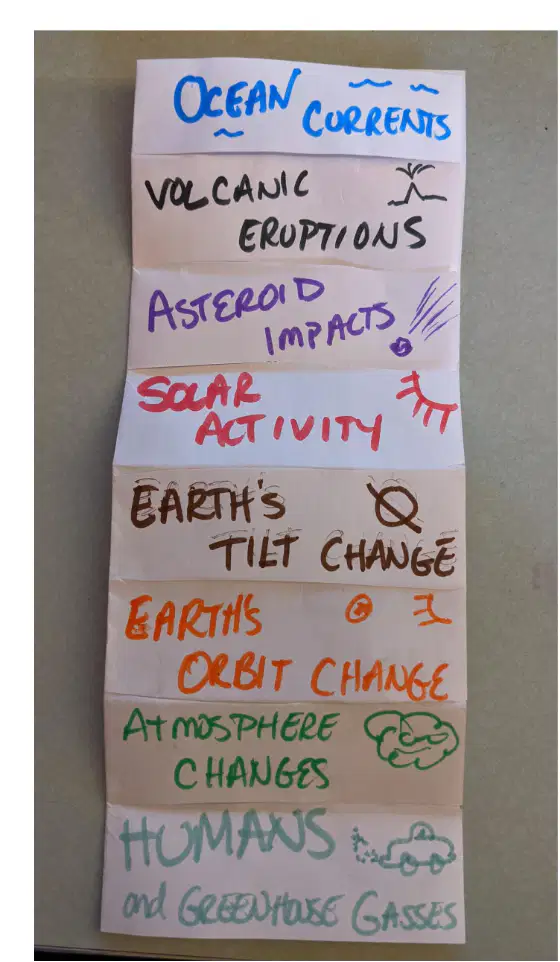
Name one factor that can cause changes on Earth as shown on the Eight Door Foldable: _________.
Ocean Currents
Moon Phases
Constellations
Animal Migration
Name one natural event that can release ash and gases into the atmosphere: _________
Volcanic Eruptions
Earthquakes
Tornadoes
Floods
A large space rock hitting Earth is called an ________ impact.
Asteroid
incremental
Solar
Volcano
Changes in the amount of energy the Sun gives off are called ________ activity changes.
Solar
Lunar
Stellar
Planetary
A shift in the angle of Earth's axis is known as Earth's ________ changing.
Tilt
Rotation
Orbit
Revolution
A change in the path that Earth takes around the Sun is called Earth's ________ changing.
Orbit
Rotation
Axis
Gravity
When the composition of the air around Earth changes, it is called ________ changes.
Atmosphere
Weather
Climate
Seasonal
When people produce gases that trap heat in the atmosphere, it is called humans making ________ gases.
Greenhouse
Oxygen
Nitrogen
Helium
Which of the following is determined by daily movements of air currents?
Weather
Climate
Which of the following is predicted by meteorologists?
Weather
Climate
Which of the following changes daily activities?
Weather
Climate
Which of the following uses words like stormy, hot, windy, and partly sunny?
Weather
Climate
Which of the following is determined by many factors and not just daily air currents?
Weather
Climate
Which of the following determines ecosystems and animal habitats?
Weather
Climate
Which of the following is predicted by climatologists?
Weather
Climate
Which of the following uses words like arctic, tropical, desert, and temperate?
Weather
Climate
Weather is determined by ______ movements of air currents.
daily
yearly
monthly
hourly
Climate is predicted by ______.
climatologists
geologists
astronomers
biologists
Normally, the ocean moves heat off the equator to the poles. What happens if the ocean currents stop?
A) A mini ice age occurs
B) The ocean becomes warmer
C) Continents move faster
D) No change happens
If ocean currents stop, the effect is immediate within ____ years.
0-10
20-30
50-60
100-200
Changes in ocean currents can cause changes in climates.
True
False
Moving continents can block or change ocean movement.
True
False
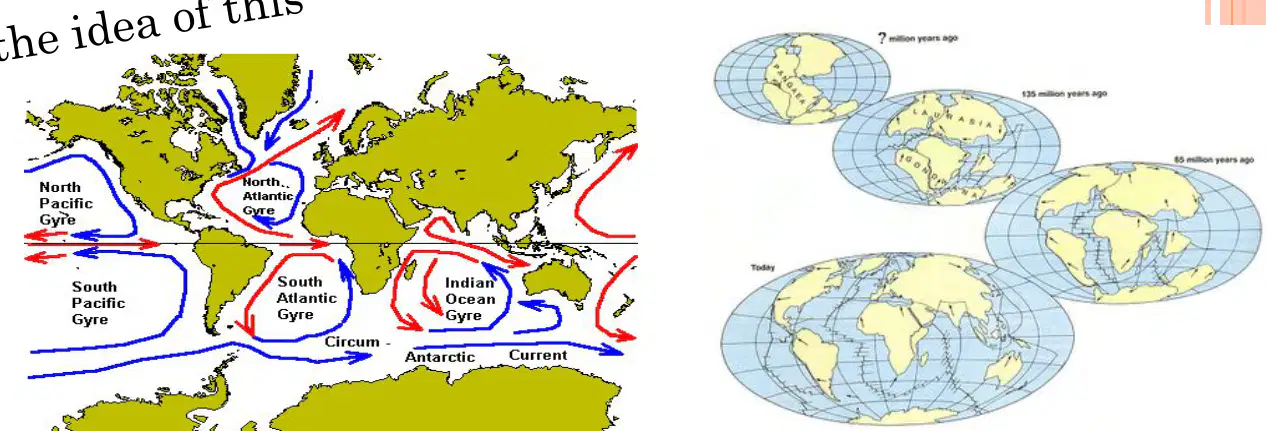
Ocean currents move heat from the equator to the poles. Which of the following best describes this process?
Ocean currents transfer warm water from the equator toward the poles, helping to regulate Earth's climate.
Ocean currents move cold water from the equator to the poles, cooling the planet.
Ocean currents only circulate water near the equator and do not affect the poles.
Ocean currents have no effect on the movement of heat on Earth.
What do ash and sulfur dioxide emissions from volcanoes absorb?
sunlight and UV rays
oxygen and nitrogen
carbon dioxide and methane
water vapor and dust
What happens to global temperatures after a volcanic eruption?
They become cooler.
They become much warmer.
They remain unchanged.
They fluctuate wildly.
What climate phenomenon have volcanic eruptions caused in the past?
Mini ice ages
Heat waves
Tropical storms
Droughts
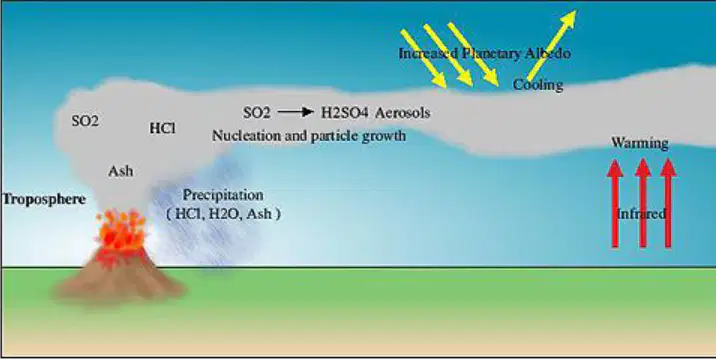
The diagram shows the effects of volcanic eruptions on the atmosphere. Which of the following is NOT typically released during a volcanic eruption?
SO2
HCl
Ash
Ozone
What is one effect on Earth's climate when asteroids hit the Earth?
Effects climate within 0-10 years
No effect on climate
Effects only the oceans
Causes permanent daylight
What do huge dust clouds do when asteroids hit the Earth?
Increase global temperature
Lower global temperature
Have no effect on temperature
Increase rainfall
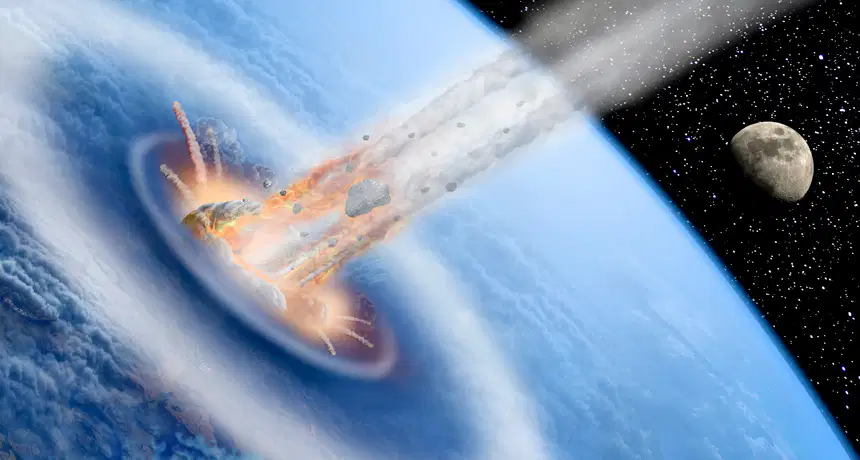
What is the name of the crater that dropped Earth's temperature and killed the dinosaurs 65 million years ago?
Chicxulub Crater
Barringer Crater
Vredefort Crater
Lonar Crater

A cenote is a natural sinkhole, and it might show signs of a shockwave due to which of the following reasons?
Erosion from underground rivers
Impact from a meteorite
Volcanic activity
Earthquake movement

Look at the four images of circular geological formations. What do these formations most likely represent?
Volcanic craters
Impact craters
Sinkholes
Mountain peaks

Based on the images and the title, what kind of event is most likely responsible for the circular features shown in the images?
Earthquakes
Meteorite impacts
Floods
Volcanic eruptions
According to the information provided, how often does the sun get more active and show more sunspots?
Every 5 years
About every 11 years
Every 50 years
Every 100 years
What is one possible effect of increased solar activity on Earth's climate?
It can cause increased temperatures.
It can cause permanent darkness.
It can cause the Earth to stop rotating.
It can cause all oceans to freeze.
The climate effect of solar activity can change within 10-100 years.
True
False

What is the normal tilt of the Earth's axis?
23.5°
0°
45°
66.5°
If the Earth's axis tilts less than normal, what happens to the seasons?

Fill in the blank: The Earth's orbit is ________.
elliptical
circular
rectangular
triangular
What happens if the Earth gets much closer to the sun?
Water freezes
Water evaporates away
Nothing happens
The orbit becomes circular
What happens if the Earth gets much farther from the sun?
Water evaporates away
Water freezes
The orbit becomes circular
Nothing happens
Fill in the blank: Scientists think we might have had long ________ that lasted for 10,000-100,000 years.
ice ages
rainy seasons
volcano eruptions
earthquakes
What was the main change in atmospheric gases from the first to the second atmosphere?
More Methane to more CO2
More CO2 to more Methane
More Oxygen to more Nitrogen
More Nitrogen to more Oxygen
Fill in the blank: Changing from the second to today's atmosphere took ______ years.
1.3 billion
100 million
500 million
2.5 billion
What effect does increasing and decreasing greenhouse gases have on Earth's temperature over time?
Increasing and decreasing greenhouse gases change temperatures over time.
Greenhouse gases have no effect on Earth's temperature.
Increasing greenhouse gases cool the Earth, decreasing them warms it.
Earth's temperature remains constant regardless of greenhouse gases.
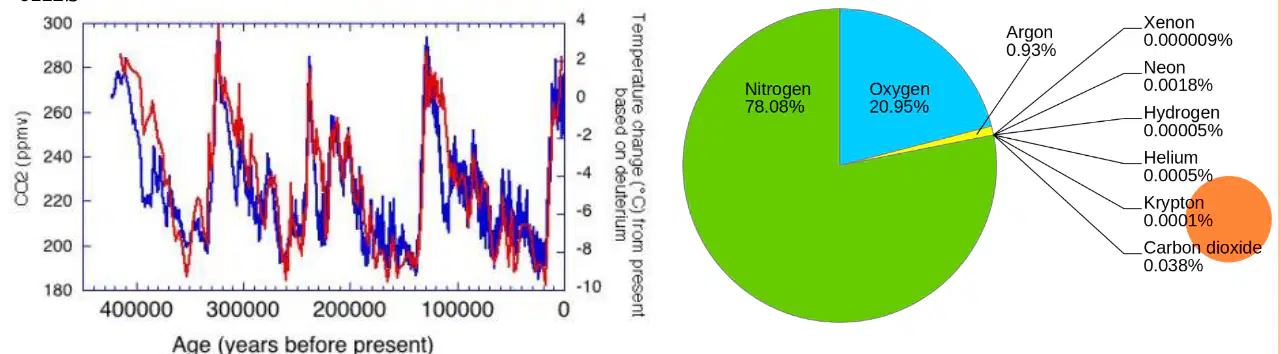
According to the pie chart, what is the most abundant gas in Earth's atmosphere?
Oxygen
Nitrogen
Argon
Carbon dioxide
How do humans impact the atmosphere? What are some substances humans add to the atmosphere?
CO2, Methane, and water
Oxygen and Nitrogen
Helium and Argon
Ozone and Neon
How do humans impact the atmosphere? What are common causes of adding greenhouse gases to the atmosphere?
Planting trees
Burning fossil fuels, cows
Building dams
Using solar panels
How do humans impact the atmosphere? CO2, methane, and water are types of ________ gases.
GREENHOUSE
NOBLE
INERT
HALOGEN
How do humans impact the atmosphere? More CO2 in the atmosphere leads to more heat, which is known as ________.
Global warming
Photosynthesis
Condensation
Erosion

