
NEW
Font size
 Worksheets
Ch.5 Physiological Basis & Sports Training Revision 2425
Total questions: 30
Worksheet time: 27mins
What does muscular strength refer to?
The ability of a joint to move
The amount of work done by a muscle in a single maximal contraction
The ability of the circulatory system to transport oxygen
The endurance of leg muscles during a long-distance run
Which type of athletes typically reach their peak performance in their thirties?
Gymnasts
Throwers
Marathon runners
Swimmers
What is body composition?
Ratio of muscle to bone mass
Ratio of body fat to lean body mass
Ratio of water to muscle mass
Ratio of bone to fat mass
Which substance is known to increase athletes' alertness and reduce tiredness?
Narcotics
Erythropoietin (EPO)
Stimulants
Anabolic agents
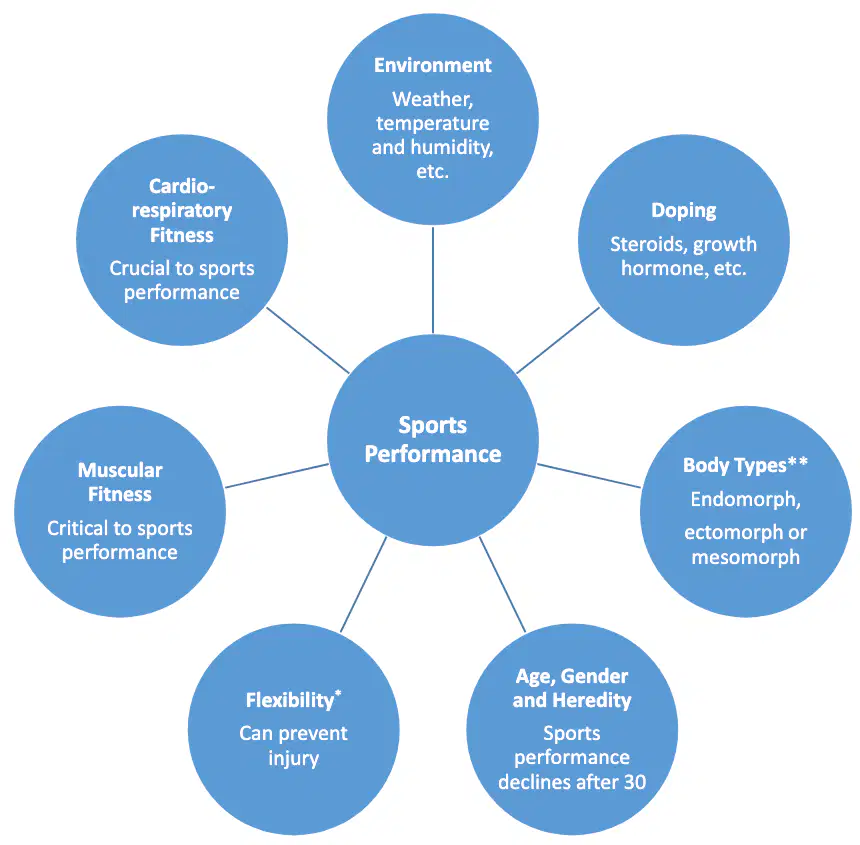
What is the role of flexibility in sports performance according to the diagram?
Increases speed
Prevents injury
Enhances strength
Improves endurance
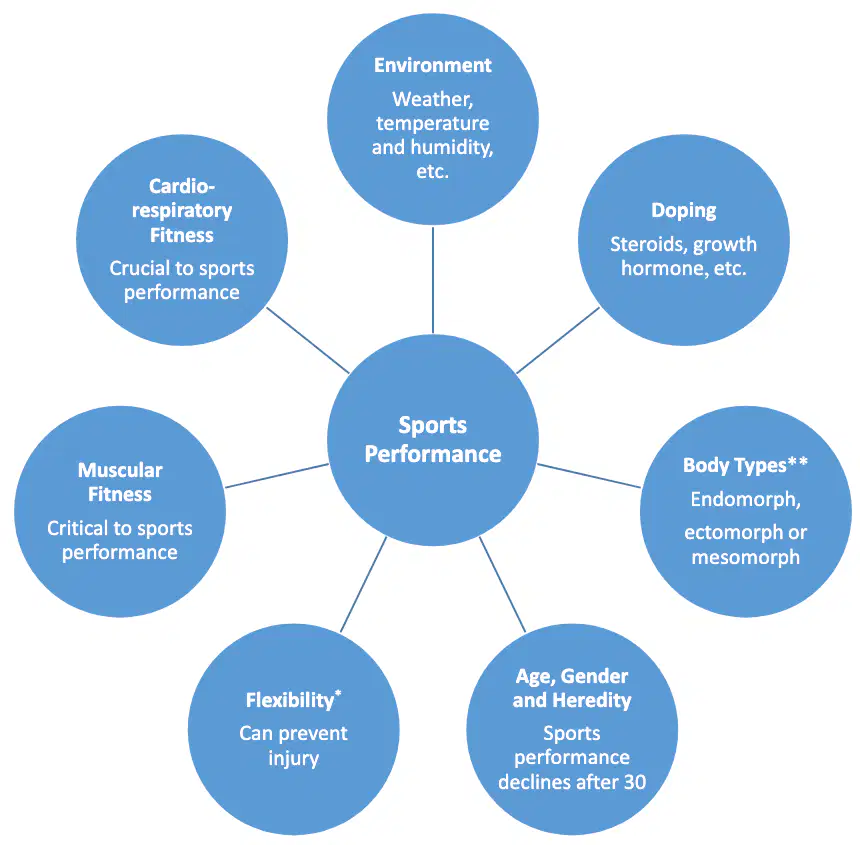
According to the diagram, what happens to sports performance after age 30?
It improves
It remains the same
It declines
It becomes unpredictable
What is the typical VO2max range for non-athletes?
10-20 ml/kg/min
30-40 ml/kg/min
50-60 ml/kg/min
70-80 ml/kg/min
According to the text, how often should elite athletes perform aerobic exercises?
Once a week.
Two or three times a week.
Five or six times a week.
Every day.
What is the recommended training intensity range for burning fat?
50-55%
60-65%
70-75%
80-85%
What is the formula for calculating the target heart rate using the maximum heart rate method?
Training intensity (%) × HRR + HRrest
Training intensity (%) × HRmax
HRmax - HRrest
HRrest + HRR
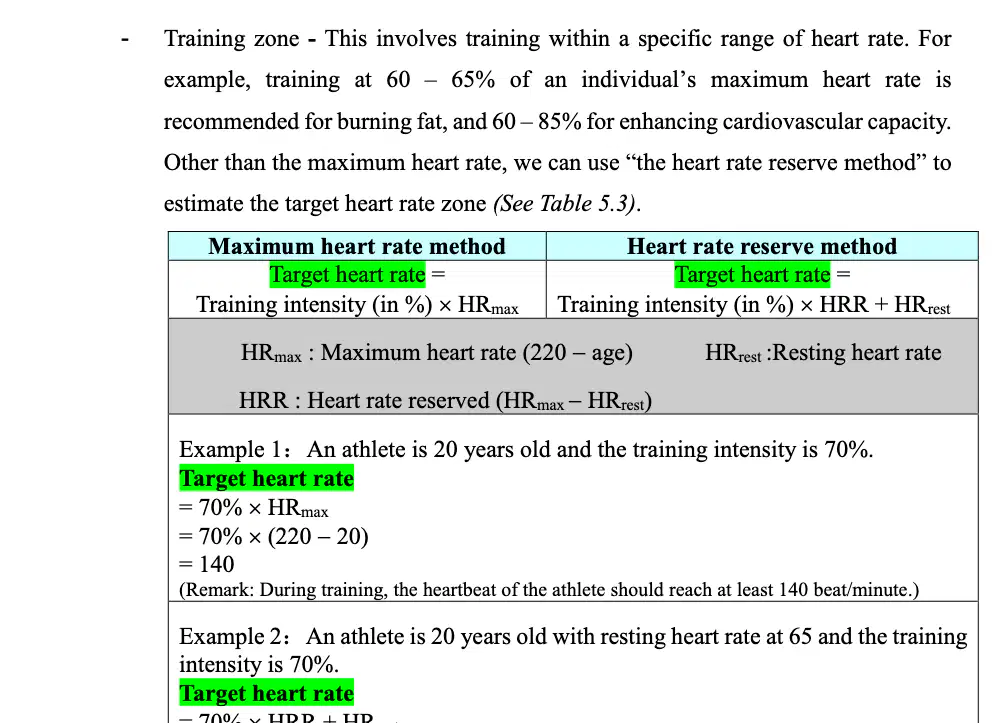
What does HRrest stand for?
Heart rate reserve
Resting heart rate
Maximum heart rate
Target heart rate
What is the primary focus of training for a marathon race compared to gymnastics?
Flexibility
Strength
Endurance
Speed
What type of training is not recommended for young children to avoid overtraining?
Aerobic training
Weight and resistance training
Flexibility exercises
Balance training
What is a significant benefit of regular exercise for adults?
Increases aging process
Delays aging process
Has no effect on aging
Speeds up aging process
What type of training program is usually more effective for adults?
High intensity with fewer workouts
Low intensity with several workouts
High intensity with several workouts
Low intensity with fewer workouts
What is the aerobic fitness rating for cycling?
Poor
Fair
Good
Excellent
What is the flexibility, agility, and coordination rating for table tennis?
Poor
Fair
Good
Excellent
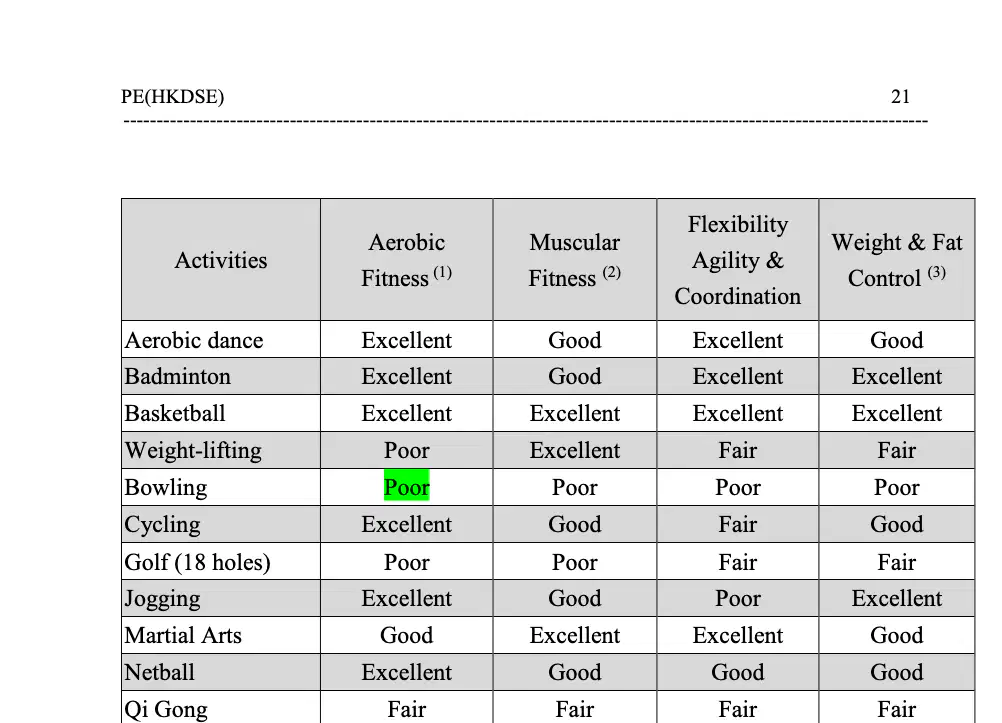
Which activity is rated "Fair" for all components of physical fitness?
Qi Gong
Golf
Bowling
Walking
Which activity is rated "Excellent" for flexibility, agility, and coordination and "Good" for weight and fat control?
Rhythmic exercise
Tennis
Swimming
Table tennis
Which of the following is an example of an endurance activity?
Weightlifting
Brisk walk
Yoga
Swimming
How should the intensity and duration of work be adjusted in training programs?
Based on the coach's preference
According to the athlete's age
In line with the athlete's endurance and strength levels
By following a fixed schedule
During which period is peak performance achieved according to periodisation?
Preparation period
Transition period
Competition period
Off-season
What tests should be carried out before starting a weight-lifting program?
5 and 15-repetition maximum tests
1 and 10-repetition maximum tests
2 and 20-repetition maximum tests
3 and 30-repetition maximum tests
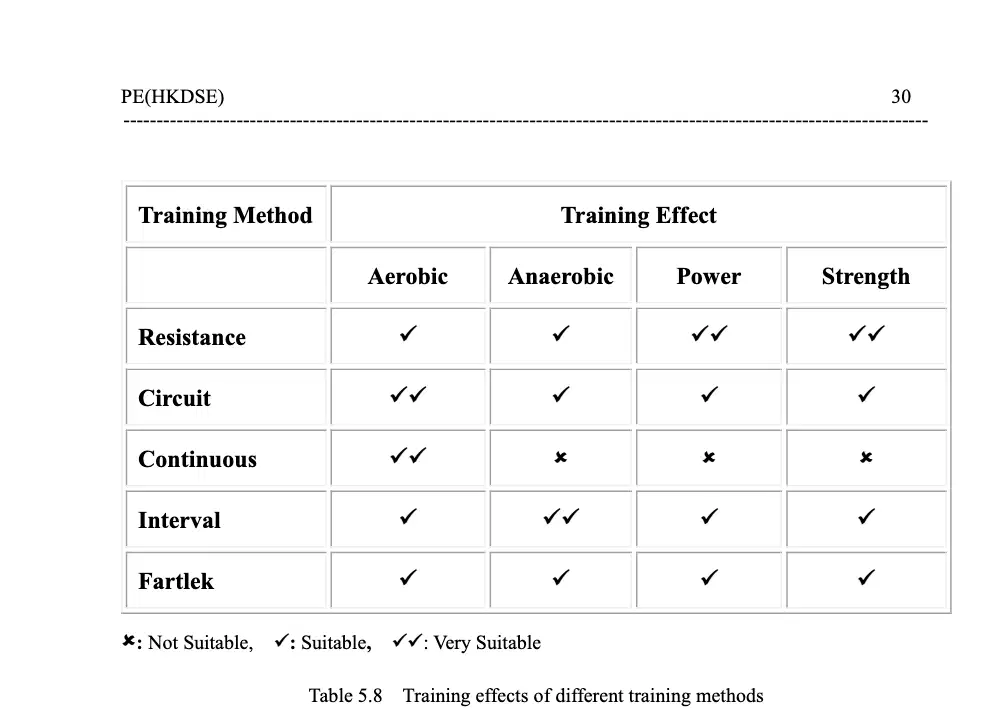
Which training method is very suitable for aerobic training?
Resistance
Circuit
Continuous
Interval
What is the primary benefit of interval training for athletes?
Boosts strength
Enhances speed
Increases endurance
Improves flexibility
Which component of fitness is most crucial for a sprinter?
Endurance
Balance
Flexibility
Speed
What is the recommended recovery period between high-intensity workouts?
12-24 hours
72-96 hours
24-48 hours
48-72 hours
What is the primary benefit of interval training for athletes?
Enhances speed
Increases endurance
Improves flexibility
Boosts strength
Which nutrient is essential for muscle repair after intense exercise?
Proteins
Carbohydrates
Fats
Vitamins
What is the recommended frequency of strength training for beginners?
Every day
Three times a week
Twice a week
Once a week

