
Font size
 Worksheets
EOC Standard 1 Review (23-24)
Total questions: 43
Worksheet time: 22mins
Which is not one of the four crucial macromolecules that support life?
A. Carbohydrates
B. Carbon
C. Protein
D. Nucleic Acid
The mitochondria and chloroplasts are both sites of
energy manufacturing
protein synthesis
photosynthesis
energy conversion
What is the correct order for aerobic cellular respiration?
electron transport chain, kreb's cycle, glycolysis
kreb's cycle, glycolysis, electron transport chain
glycolysis, electron transport chain, kreb's cycle
glycolysis, kreb's cycle, electron transport chain.
Which of the following would have the least effect on the rate of a biochemical reaction?
a change in temperature
changing the container
a change in pH
adding a catalyst
Enzymes are an example of what macromolecule?
Carbohydrates
Lipids
Proteins
Nucleic acids
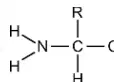
What macromolecule is made of carbon, nitrogen, oxygen, and hydrogen?
Carbohydrates
Lipids
Proteins
Nucleic Acids
Which macromolecule is C6H12O6 an example of?
Carbohydrate
Lipid
Protein
Nucleic Acid
RNA and DNA are considered examples of which macromolecule?
Nucleic Acids
Carbohydrates
Proteins
Enzymes

Amino acids are the monomers that make up which macromolecule?
Nucleic Acids
Proteins
Lipids
Carbohydrates
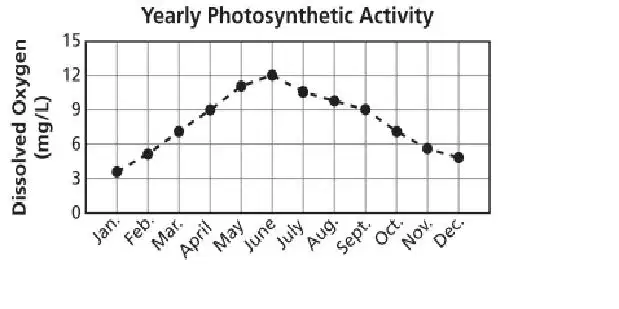
The rate of photosynthetic activity is shown below, which is the best conclusion?
photosynthetic organisms were dormant April-Aug
rate of photosynthesis increased June-Dec
rate of photosynthesis was greater May-July
Photosynthesis dies off Jan-June
Which cellular process converts solar energy into chemical energy?
respiration
transpiration
photosynthesis
chemosynthesis
ATP made during cellular respiration is produced in which organelle?
Cholorplast
Ribosomes
Mitochondria
Cytoplasm
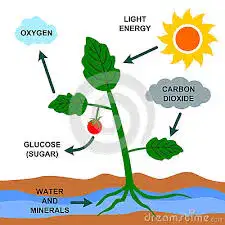
What are the products of Photosynthesis?
Carbon Dioxide and Water
Glucose and Oxygen
Oxygen and Carbon Dioxide
ATP and water
Lactic acid fermentation is
aerobic
anaerobic
What is an important component of ATP that is needed to transfer and release energy directly?
Uracil
Phosphate
Ribose
Deoxyribose
ADP + P + energy = ____
ADP
STP
ATP
NADP

What are the products of Cellular Respiration?
Oxygen and Glucose
Carbon Dioxide, Water and ATP
Water and Glucose
ATP and Oxygen
Balanced equation for photosynthesis
3 CO₂ + 6 H₂O → C₆H₁₂O₆ + 6 O₂
2CO₂ + 6 H₂O → 3C₆H₁₂O₆ + 6 O₂
2CO₂ + 3H₂O → C₆H₁₂O₆ + 6 O₂
6 CO₂ + 6 H₂O → C₆H₁₂O₆ + 6 O₂
Balanced reaction for cellular respiration
6CO₂ + 6H₂O + (energy) ----------> C₆H₁₂O₆ + 6O₂
C₆H₁₂O₆ + 6O₂ ----------> 6CO₂ + 6H₂O + (energy)
CO₂ + H₂O + (energy) ----------> C₆H₁₂O₆ + O₂
C₆H₁₂O₆ + O₂ ----------> CO₂ + H₂O + (energy)

The reactants of photosynthesis are...
oxygen and sugar
carbon dioxide, water and light
oxygen, water and light
carbon dioxide and sugar
Reactants of cellular respiration
glucose + carbon dioxide
glucose + Oxygen
Carbon dioxide + water
oxygen + carbon dioxide
What is the difference between ADP and ATP?
ADP has 2 phosphates and ATP has 3
ADP has 3 phosphates and ATP has 2
ADP has 2 sugars and ATP has 3 sugars
ADP has no phosphates and ATP has 1
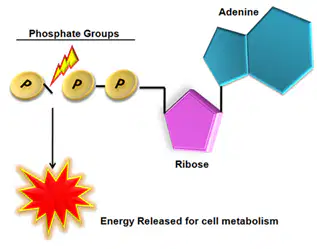
How does ATP become ADP?
Break off two of the phosphate groups
Adding a phosphate group
magic
Breaking off the third phosphate group (releases energy)
The shape of the DNA structure can be described as a twisted ladder or a...
double ladder
double helix
double strand
double trouble
Which two molecules form the sides (backbones) of the DNA ladder?
Deoxyribose and Adenine
Deoxyribose and Cytosine
Deoxyribose and sugar
Deoxyribose and phosphate

DNA vs RNA: Which is true?
DNA is double stranded
DNA has 4 bases: A, U, C, G
RNA is single stranded
RNA has 4 bases, A, T, C, G
If a DNA molecule contains 40% Thymine, what percent would be Adenine?
100%
10%
40%
20%
Which of the following are the correct DNA base pairs?
C-T and A-U
A-T and G-C
C-T and A-G
None are correct
Which of the following are the correct RNA base pairs?
A. A-T, C-G
B. A-U, C-G
C. T-U, G-C
D. A-T, U-C
DNA is located where in eukaryotes?
ribosomes
Nucleus
proteins
cytoplasm
What is the matching DNA sequence for the following DNA strand: AGTCTACAA
TCAGATGTT
TCCATGTTT
TCBTCCGTA
FALALALALA
Which is a monomer of DNA?
Phosphate, Ribose, Adenine
Phosphate, Deoxyribose, Uracil
Phosphate, Ribose, Thymine
Phosphate, Deoxyribose, Guanine
The 2 daughter cells at the end of Mitosis have how many chromosomes compared to the original?
Half
Same
One-third
None
DNA replication occurs at what phase BEFORE Mitosis?
Interphase
Telophase
Mesophase
Prophase
What is the second stage of Mitosis?
Prophase
Metaphase
Anaphase
Telophase
What is the first stage of Mitosis?
Prophase
Metaphase
Anaphase
Telophase

Which part of the cell cycle (mitosis) does chromosomes replicate?
Prophase
Anaphase
Cytokinesis
Interphase
One chromosome is made up of ____ sister chromatids and formed during DNA replication.
2
4
1
3
Cell differentiation means
Cells become specialized
Cells become stem cells
Cells change role
Cells enter the cell cycle
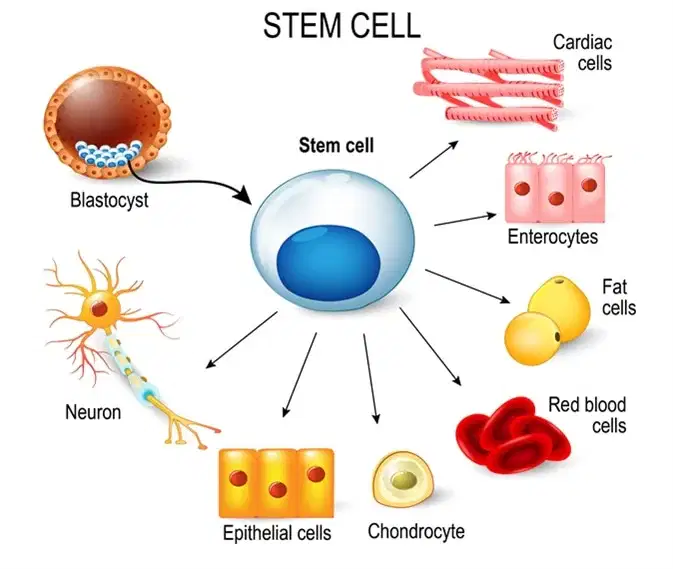
Stem cells are...
unspecialized cells that are able to be programmed to become any cell type
unspecialized cells that are not able to renew themselves
specialized cells that are already differentiated
specialized cells that are not able to renew themselves
Which of the following statements about enzymes is true?
Catalysts slow down chemical reactions.
The active site of an enzyme interacts with the substrate.
Ribozymes are biological catalysts that are made of ribosomes.
all of these
Why are enzymes known by the 'lock and key' model?
Because one enzyme can only be used with one substrate
One enzyme can be re-used
Enzymes can not be re-used
One enzyme can 'open' many different substrates
Enzymes are biological catalysts, this means they....
Slow down the reactions in our cells
Speed up the reactions in our cells
Don't have any effect
They are chemicals

