
 Worksheets
HCOs & Patterns Care Delivery
Total questions: 25
Worksheet time: 12mins

Describe the challenges facing health care that affect the delivery of nursing care.
Limited resources, aging population, and technological advancements
Abundant resources and no technological changes
No challenges exist in health care
Nursing care is unaffected by health care challenges

Describe how changes to the Affordable Care Act since 2016 have affected the delivery of nursing care.
They have increased access to healthcare, impacting nursing care delivery.
They have eliminated all insurance coverage for patients.
They have had no effect on nursing care delivery.
They have reduced the need for nurses in healthcare settings.

The importance of evidence-based care in the delivery of nursing care is to:
Ensure care is based on the best available evidence
Rely solely on traditional practices
Ignore patient preferences
Reduce the need for clinical judgment

The impact of a shortage of health care professionals on nursing care delivery includes:
Improved patient outcomes
Increased workload for nurses
Decreased patient wait times
Enhanced staff satisfaction

Patient safety is a challenge in the delivery of nursing care because:
Nurses often work in complex and high-pressure environments.
Patients always follow instructions perfectly.
There are no risks involved in nursing care.
Patient safety is not a priority in healthcare.

Nurse staffing affects the delivery of nursing care by:
Ensuring adequate patient care and safety
Reducing the need for teamwork
Eliminating the need for documentation
Increasing patient wait times
Consider the ways to structure nursing services to improve care while reducing costs, to ensure that health care is within reach of everyone.
Implementing team-based care and task shifting
Increasing administrative staff
Reducing the number of nurses
Limiting patient access to care
Shortage of nurses is considered a future challenge of health care because:
It leads to increased workload and stress for existing staff.
It reduces the need for advanced technology.
It improves patient care quality.
It decreases healthcare costs.
Describe the importance of 'Patient safety' as a challenge in the future of health care.
Patient safety is crucial as it reduces medical errors and improves health outcomes.
Patient safety is not a significant concern in health care.
Patient safety only affects administrative processes.
Patient safety is only important for doctors.
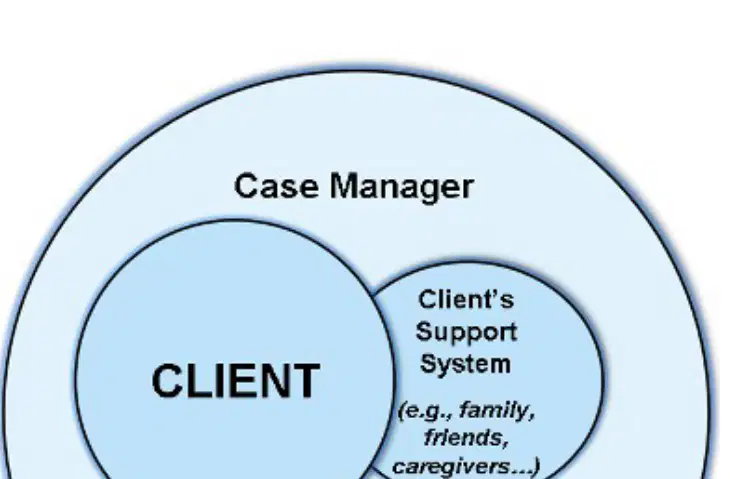
According to the diagram, who is at the center of the case management system?
Case Manager
Client
Healthcare and Service Providers
Client's Support System
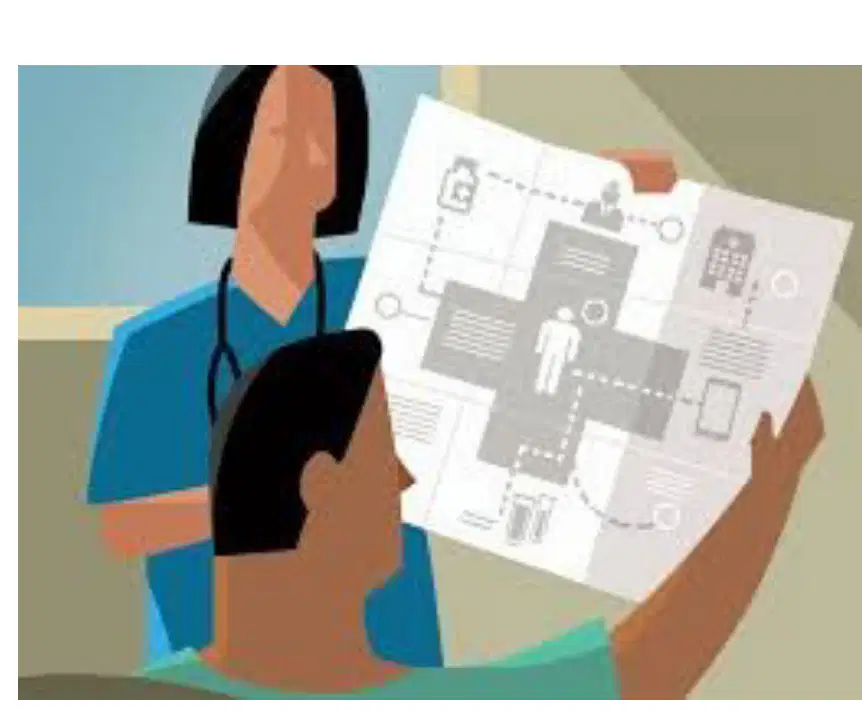
What is the primary purpose of the nurse navigator role in case management?
To provide direct medical treatment
To reduce patient barriers to care for vulnerable patients who may cope with delays in access, diagnosis, treatment, and/or fragmented and uncoordinated care
To perform surgeries
To manage hospital finances
Fill in the blank: Disease management is a system of coordinated health care interventions and communications for populations with conditions in which patient ________ efforts are helpful.
self-care
financial
diagnostic
surgical
What is the goal of disease management?
To cure all diseases
To support patients with chronic diseases who may receive services from various levels of care (acute care to home-based care)
To provide only hospital-based care
To prevent all diseases
Fill in the blank: Disease management teaches patients how to manage a particular ________ disease.
chronic
acute
infectious
temporary
Which of the following is a tool used to support case management?
Disease management protocols
Financial reports
Patient complaints
Insurance claims
Both clinical pathways and disease management protocols are generally based on ______ incorporating nationally acceptable ways to care for specific disease.
clinical guidelines
patient preferences
hospital budgets
insurance policies
Which of the following is an essential element of clinical pathways used to support case management?
Timeline outlining when specific care given
Patient billing
Hospital architecture
Staff vacation schedule
Fill in the blank: One of the essential elements of clinical pathways is the (a) of care activities and interventions.
Intermediate- and long-term outcomes to be achieved are considered essential elements of clinical pathways used to support case management.
True
False
Fill in the blank: A ________ record is an essential element of clinical pathways used to support case management.
variance
summary
progress
incident
Fill in the blank: Disease management protocols support the __________/patient relationship and plan of care.
physician
nurse
technician
administrator
Fill in the blank: Disease management protocols emphasize prevention, use evidence-based practice guidelines, and (a) patients.
Fill in the blank: Disease management protocols evaluate clinical, humanistic, and economic outcomes—the goal is to improve overall __________.
health
cost
compliance
productivity
Both critical pathways and disease-management protocols are generally based on clinical guidelines that incorporate nationally acceptable ways to care for a specific _______.
disease
hospital
medication
procedure
When changing a patient's gown, the nurse will place the bed in which position?
A comfortable working height for the nurse
A height that allows the patient full range of motion
Locked and low
All side rails raised

