
 Worksheets
P3 Science Chapter 7 & 8 Review
Total questions: 80
Worksheet time: 49mins

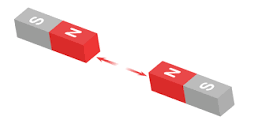
The magnets will repel each other.
True
False
If the same poles facing each other, it will repel.
True
False

The magnets will repel each other.
True
False
A magnet ALWAYS has two poles.
True
False
The names of the poles of a magnet are positive and negative.
True
False
The magnetic fields can cause a pushing or pulling force even on objects that are not touching by the magnet.
True
False
Parts of a magnet that able to attract more iron filings than other parts are the poles.
True
False
What is the factor that causes an object to attract by a magnet?
Shape
Material
Its surface
An object that produces a magnetic field is . . .
magnetism
magnet
nonmagnetic

Look at the picture! The objects . . . by magnet.
repel
do not attracted
attracted
True or False.
Magnets can not attract metal objects without touching them.
True
False

If we put a paper clip on paper, the paper clip will be . . . by the magnet.
repel
attracted
do not attracted

True or False.
Glass can attracted to magnets.
True
False
Which of the following will be attracted to magnets?


Which statement is true?
All magnets have a north and south pole.
Magnets can not attract through a paper.
All magnets have the same shape and size
Which of these materials will a magnet attract?
What do you call the group of objects that are attracted to magnets?
Non-magnetic materials
Metallic materials
Magnetic materials

How is magnet used in the picture?
hold objects
show direction
lift heavy objects

What is the use of magnet in the picture?
lift heavy objects
show direction
hold objects
What do you call the group of objects that are not attracted to magnets?
Non-magnetic objects
Magnetic objects
Translucent objects
Which of the following transportation vehicles uses magnets?


What are the two poles on a magnet?
north and south
east and west
north and east
Is earth a magnet?
Yes
No
4. Like poles of a magnet _________ each other.
attract
repel
touching
5. When a bar magnet is brought near iron dust, where will most of the iron dust sticks?
near the middle
equally everywhere
near two ends
10. What is a device used by pilots and navigators to find directions?
Barometer
Thermometer
Magnetic compass
A compass has a small needle magnet that always points North-South. This is because _____.
gravity makes the needle point this way.
the compass needle points to the cold places.
the earth has a magnetic field
How do forces act when they are not in contact with each other?
by slowing down
through fields
by always attracting

What is this?
Magnetic Compass
Needle
Directions
How many types of magnetic poles are there?
2
3
4

Name the shape of magnets in the given image.
Horse shoe magnet
Bar magnet
Cylinder magnet

Name the shape of the magnet in the given image
Bar magnets
Horse shoe magnet
Disc magnet

Three magnets A, B and C were dipped one by one in a heap of iron filings. Fig. 13.3 shows the amount of iron filings sticking to them. The strength of these magnets will be____.
A>B>C
A<B<C
A=B=C
In which direction does a magnet always point when suspended freely?
South-West
North-South
East-West
Which of the following will NOT be attracted by a magnet?
A) Iron
B) Nickel
C) Gold
D) Cobalt
How is a compass useful to us?
In finding the altitude of a place
In finding all the directions of a place
In making artificial magnets
When two same poles are brought together
They attract each other
They repel each other
They become cold
Pushes and pulls are _____.
forces
friction
energy
A force used to move an object away from you is called a _____.
push
pull
friction
The bigger the push or pull, the ____ the force.
smaller
bigger
longer
During the tug of war, Cayden tries to pull the rope as strongly as he can toward himself.
Cayden _____ the rope.
cuts
pushes
pulls
Kimika makes an experiment.
First, she pushed a toy car with a small push and then measured how far it moved.
Second, she pushed the same toy car with a medium push, then measured how far it moved.
Third, she pushed the same toy car with a big push, then measured how far it moved.
Why does Kimika need to measure the distance each time?
To note the result and get the correct conclusion.
To know what to do next.
To ensure that the toy car isn't broken.
Kimika makes an experiment.
First, she pushed a toy car with a small push and then measured how far it moved.
Second, she pushed the same toy car with a medium push, then measured how far it moved.
Third, she pushed the same toy car with a big push, then measured how far it moved.
She used the same toy car every time to make a fair experiment. What else needs to be the same?
The energy she used to push.
The surface where the toy car moved.
The distance made by the toy car.
Kimika makes an experiment.
First, she pushed a toy car with a small push and then measured how far it moved.
Second, she pushed the same toy car with a medium push, then measured how far it moved.
Third, she pushed the same toy car with a big push, then measured how far it moved.
What tool do you think she needed to measure the distance?
protractor
weighing scale
measuring tape
Kimika makes an experiment.
First, she pushed a toy car with a small push and then measured how far it moved.
Second, she pushed the same toy car with a medium push, then measured how far it moved.
Third, she pushed the same toy car with a big push, then measured how far it moved.
Why did she only change ONE thing and keep everything else the same?
Because it is easier.
Because it makes the fair test
Because she didn't do it correctly.

The picture shows the result of Kimika's experiment, where she pushed a toy car through the same surface with different sizes of push force she gave to the toy car.
What do you think is the correct conclusion?
There is no evidence that the size of the force affected the distance the car moved.
The bigger the force, the shorter the distance the car moved.
The bigger the force, the further the distance the car moved.
Chrissanli pushes a ball on a thick green carpet with a medium push.
Then he pushes the same ball on the floor with the same force.
He measures each distance and finds that on the carpet the toy car reaches a shorter distance.
Which prediction is likely correct?
The smoothness of the surface affects the distance.
The colour of the surface affects the distance.
The distance measuring is not correct, the distance must be the same.
Which of these surfaces causes the most friction?
Ceramic tiles
Glass
Grass
Which conclusion is correct about how the surface affects friction?
The smoother the surface, the greater the friction.
The rougher the surface, the greater the friction.
The whiter the surface, the greater the friction.
If you try to push a book to the left, in which direction is the friction force acting?
Upward
Left
Right
The direction of the friction force is always _______ to the direction of the motion.
opposite
the same
different
Rub your hands together.
What force acts between your moving hands?
Only push
Only pull
Both push and pull
Rub your hands together, giving only a small pressure while doing it. Do it for 30 seconds.
Then, rub your hands together, and give more pressure while doing it. Do it for 30 seconds.
What do you think happens?
More pressure cause more friction and more heat.
More pressure cause more friction but less heat.
More pressure cause less friction and less heat.
Friction is a force that acts between two ________ in contact.
distances
surfaces
directions
These options can increase friction, except _____.
Make the surface rougher.
Make the surfaces that contact larger.
Make the surface smoother.
These options can decrease friction, except _____.
add oil to the surface
use white colour
use wheels
Friction is a contact force. What is meant by a contact force?
A force that is opposite to another force.
A force between objects that are touching.
A force that is equal to another force.

The picture shows a vehicle towing a trailer across sand.
What provides the force to make the trailer move?
The tracks in the sand.
The engine of the vehicle.
The heat of the Sun.

Why do some people put chains on their car tyres to drive in snow.
To increase friction.
To decrease friction.
To melt the snow.

Grease is a thick, slippery stuff that helps things move smoothly. It is basically oil that is not liquid.
The picture shows a worker putting grease on the moving parts of a factory machine.
The purpose of doing it is _________.
so people can see the metal better
to stop light going through the holes
so the parts move more easily

The picture shows a liquid pouring between the parts of a machine that always move around each other.
What is he most likely liquid that used on these moving parts?
honey
oil
vinegar
What happens if no oil used on moving parts of car's machine?
There will be more friction and heat on the machine.
There will be less friction and heat on the machine.
There will be more friction, but less heat on the machine.

The picture shows a spring scale that is also known as a dynamometer or force meter.
What is measured by that tool?
length
weight
force
What does friction do to a moving object?
cools it down
slows it down
speeds it up
Which best describes where friction takes place?
between surfaces
on soft objects
towards us
Collette is investigating the movement of a toy truck.
She lets the truck roll down a slope onto three different surfaces:
(a) glass; (b) wood plank; (c) sand and gravel.
She keeps everything else the same.
Which of the three surfaces will have the most friction?
glass
wood plank
sand and gravel
Hazel do an experiment.
She moved a toy car through 3 different surfaces.
Other than the surfaces, she keeps everything else the same.
She repeated her investigation 3 times before concluding her experiment results.
Why did Hazel do that?
To ensure the experiment is fair and reliable.
To ensure that the toy car is work.
To ensure all surfaces give the same result.
A ball stayed on the grass. Chrissanli kicked it, and the ball moved. Kicking a ball is an example of a _________________________ to move an object.
natural way
force
change
Which has the most slippery surface?
carpet
tile floor
ice
The most slippery surface creates the __________________ amount of friction.
lowest
medium
highest
Friction is a type of ___________________ force, which only happens when two objects are touching each other.
magnetic
contact
push
If you break a bar magnet into two pieces, each piece will have ___________.
one pole
two poles
no poles
Two magnets will push away (repel) from each other when the _____________________ poles are facing.
opposite/ unlike
same/ like
no
A magnet can pull a paper clip from a short distance because magnetism is a ___________________ force.
contact
non-contact
pushing
Objects that magnets can pull toward them are called ______________________ materials.
flexible
electric
magnetic
If friction didn’t exist, trying to walk would make me ___________________________.
fall down or slide
walk faster
jump higher
Which is the correct statement?
Parts of a magnet that can attract more paper clips are the poles.
Magnets cannot attract magnetic materials without touching them.
All metals can be attracted by magnets.

