wayground logo

Free Printable Worksheets

Font size

S
M
L
XL
Worksheets

PS Semester 2 Review

Total questions: 99

Worksheet time: 2hrs 57mins

Name
Class
Date
1.

What is the atomic number?

a)

the number of protons in the nucleus

b)

the number of protons and neutrons in the nucleus

c)

the number of neutrons in the nucleus

d)

the number of protons in the energy levels

2.

What is the mass number?

a)

the number of protons in the nucleus

b)

the number of protons and neutrons in the nucleus

c)

the number of neutrons in the nucleus

d)

the number of protons and electrons in the atom
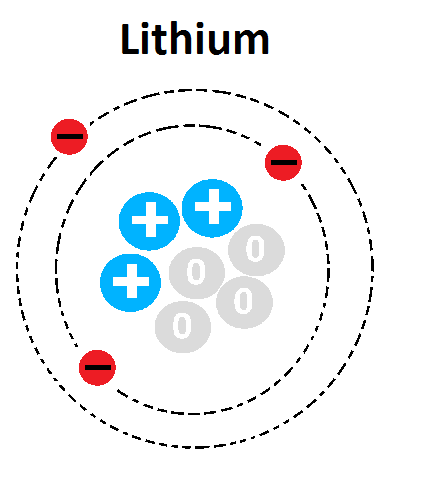
3.

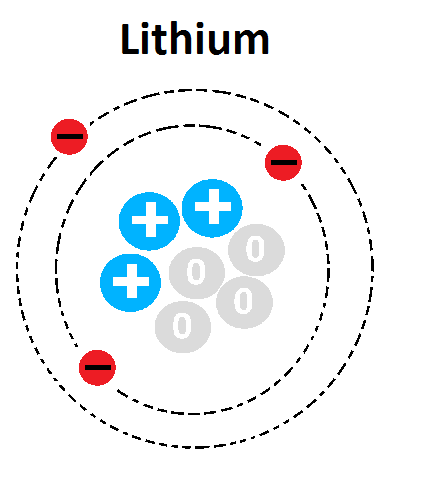
What is the atomic number of this atom?

a)

1

b)

3

c)

4

d)

7

4.

What is the mass number of this atom?

a)

1

b)

3

c)

4

d)

7

5.
Most of the mass in an atom is made up of _____________________?
a)
protons and electrons
b)
protons and neutrons
c)
neutrons and electrons
d)
electrons and quarks
6.
In order for an atom to be neutral what has to be true?
a)
The atom has more protons than neutrons
b)
The atom has more neutrons than protons
c)
The atom has the same number of protons and neutrons
d)
The atom has the same number of protons and electrons
7.
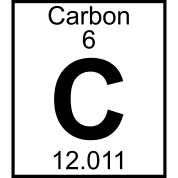
What does the C represent?
a)
atomic mass
b)
atomic number
c)
element name
d)
chemical symbol 
8.

What does the 6 represent?

a)

Atomic mass

b)

atomic number

c)

chemical symbol

d)

element name

9.
How is the number of neutrons in the nucleus of an atom calculated?
a)
Add the number of e- and p+ together
b)
Subtract the number of e- from p+
c)
Subtract the number of p+ from the mass number
d)
Add the mass number to the number of e-
10.
What subatomic particles would you find in the nucleus of an atom?
a)
Protons only
b)
Protons and Neutrons
c)
Neutrons and Electrons
d)
Protons and Electrons 
11.
Which subatomic particles contribute the most to the mass of an atom?
a)
Protons, Neutrons, Electrons
b)
Protons only
c)
Protons and Electrons
d)
Protons and Neutrons
12.
If an atom has 12 positively charged subatomic particles, which of the following must it also have to be considered a neutral atom?
a)
12 neutrons
b)
12 electrons
c)
12 protons
d)
24 protons and neutrons
13.

An atom has 10 protons, 15 neutrons and 10 electrons what is its mass number.

a)

20

b)

10

c)

35

d)

25

14.

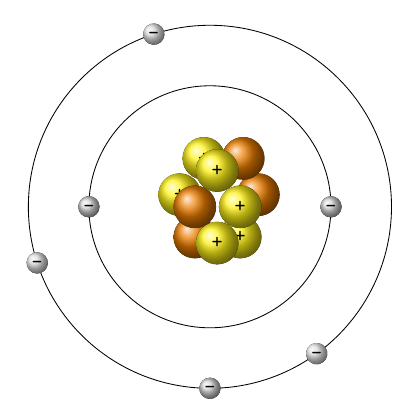
How many electrons does this atom have?

a)

2

b)

4

c)

6

d)

10

15.
The atomic number of an element that has 9 protons, 9 electrons, and 10 neutrons is _____.
a)
9
b)
10
c)
19
d)
28
16.
An element with a mass number of 11 and an atomic number of 5 has how many neutrons?
a)
11
b)
5
c)
6
d)
16
17.
Where is most of the mass in an atom located?
a)
in the nucleus
b)
in the protons
c)
in the neutrons
d)
in the electrons
18.
An atom has an atomic number of 15 and a mass number of 31. How many protons are there in the atom?
a)
15
b)
31
c)
16
d)
47
19.

Which of the following determines the identity of an element?

a)

number of protons

b)

atomic mass

c)

number of neutrons

d)

number of shells

20.
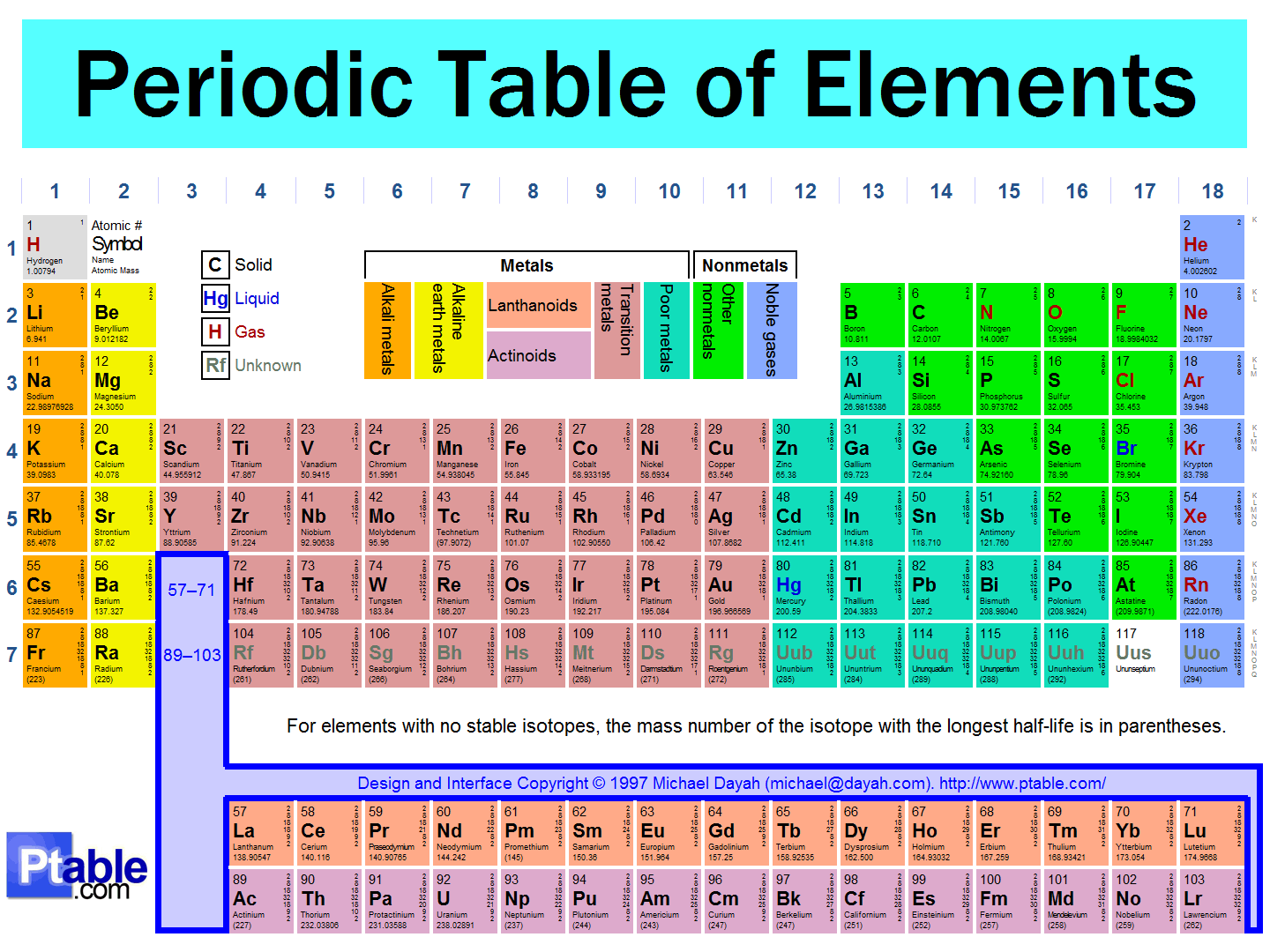
What is the name of Groups 18?
a)
Alkali Metals
b)
Alkali Earth Metals
c)
Halogens
d)
Noble Gases
21.
What type of elements touch the zigzag line?
a)

Metals

b)

Nonmetals

c)

Metalloids

d)

Solids

22.
Where are the metals on the Periodic Table?
a)
To the left
b)
In the upper right hand corner
c)
On the zigzag line
d)
At the bottom
23.
Where are the nonmetals on the Periodic Table?
a)
To the left
b)
In the upper right hand corner
c)
On the zigzag line
d)
At the bottom
24.
How is the Periodic Table arranged?
a)
Increasing atomic mass
b)
Increasing atomic number
c)
Decreasing atomic mass
d)
Decreasing atomic number
25.
Which of these elements has the greatest atomic radius? 
a)
H
b)
N
c)
Cl
d)
Cs
26.
The Periodic Table of the Elements is useful for revealing patterns and trends in the elements. Which statement accurately describes a pattern in the size of atomic radii in the Periodic Table of the Elements?
a)
Atomic radii decrease from left to right across a period and decrease from top to bottom in a group.
b)
Atomic radii increase from left to right across a period and increase from top to bottom in a group.
c)
Atomic radii decrease from left to right across a period and increase from top to bottom in a group.
d)
Atomic radii increase from left to right across a period and decrease from top to bottom in a group.
27.
All elements found on the left side of the Periodic Table of the Elements have what properties in common?
a)
They conduct heat and electricity 
b)
They are all gases 
c)
They are brittle and dull
d)
They are radioactive
28.
Which of these elements has an electron structure most similar to that of element X?
a)
1
b)
2
c)
3
d)
4
29.
Based on their locations in the periodic table, which element has chemical properties most similar to those of calcium, Ca?
a)
beryllium, Be
b)
potassium, K
c)
titanium, Ti
d)
yttrium, Y
30.
The number of valence electrons in an element affects the reactivity of that element. Which element listed has the fewest valence electrons?
a)
beryllium (Be)
b)
sodium (Na) 
c)
oxygen (O) 
d)
neon (Ne)
31.
What is the family name of this group of elements? 
a)
Alkali metals 
b)
Halogens 
c)
Noble Gases 
d)
Alkali Earth Metals 
32.
Which element has 2 valence electrons? 
a)
cesium (Cs) 
b)
magnesium (Mg)
c)
boron (B)
d)
argon (Ar) 
33.
How many Valance electrons does Iodine Have?
a)
6
b)
16
c)
7
d)
17
34.
Which of the following will have a lower ionization energy than Scandium (Sc)?
a)
Helium (He)
b)
Titanium (Ti)
c)
Calcium (Ca)
d)
Magnesium (Mg)
35.

The vertical (up and down) columns in the Periodic Table are called

a)

groups

b)

towers

c)

periods

d)

atomic numbers

36.
Elements in a ..................have similar chemical properties.  
a)
period
b)
group
c)
row
37.
Elements in the same column of the periodic table always have the same # of _______ as one another.
a)
Protons
b)
Neutrons
c)
Electrons
d)
Valence Electrons
38.

Valence electrons are found

a)

in the innermost energy level of an atom

b)

in the middle energy levels of an atom

c)

in the outermost energy levels of an atom

39.

An atom with 3 valence electrons "wants" a full shell, so it can either gain 5 or lose 3. Which is more likely to occur?

a)

Gain 5

b)

Lose 3

c)

Nothing

40.

How do covalent bonds form?

a)

By donating and receiving valence electrons between atoms.

b)

Scientists still aren't sure.

c)

Opposite slight charges attract each atom in the compound.

d)

Sharing valence electrons between atoms

41.

What two types of atoms make a covalent bond?

a)

2 Nonmetals

b)

1 Metal and 1 Nonmetal

c)

2 Metals

d)

2 Noble Gases

42.

Ionic Bonds

a)

metal with nonmetal

b)

nonmetal with nonmetal

43.
How are ionic bonds formed?
a)
Transfer of electrons
b)
Sharing of electrons
44.
What is the charge on a Hydrogen ion?
a)
+1
b)
1
c)
2
45.

What kind of bond will form between Hydrogen and Oxygen?

a)

ionic

b)

covalent

c)

metallic

d)

no bond

46.
Ionic or covalent?
C  H
a)
Ionic
b)
Covalent
47.
Ionic or covalent?
Na  Cl
a)
Ionic
b)
Covalent
48.
Ionic or covalent?
Na  F
a)
Ionic
b)
Covalent
49.

What is a cation's charge?

a)

positive

b)

negative

c)

neutral

d)

depends on the element

50.

What is an anion's charge?

a)

positive

b)

negative

c)

neutral

d)

depends on the element's charge

51.

Is potassium a cation or an anion?

a)

cation

b)

anion

52.

What is the ion formed from Sulfur? If it has 6 valence electrons.

a)

S+2

b)

S-2

c)

S+6

d)

S-6

53.

How many electrons would a Calcium ion gain/lose? If it has 2 valence electrons.

a)

lose 1

b)

gain 1

c)

lose 2

d)

gain 2

54.

A Bromine ion gains 1 electron, which of the following is the correct symbol for a Bromine ion?

a)

Br-1

b)

Br+1

c)

Br+7

d)

Br-7

55.
What is the charge of an atom that has lost one electron?
a)
-1
b)
-2
c)
+1
d)
+2
56.

An atom with 2 protons, 3 neutrons, and 4 electrons has a charge of ____.

a)

+2

b)

-2

c)

+3

d)

0

57.

If an element has 3 valence electrons, what charge will likely form on its ion ?

a)

+3

b)

+5

c)

-3

d)

-5

58.
Ions are: 
a)
atoms with a positive or negative charge
b)
atoms with no charge
c)
atoms with ONLY a positive charge
d)
atoms with ONLY a negative charge
59.

Choose the answer that balances this equation.

H2 + O2 --> H2O

a)

2H2 + O2 --> 2H2O

b)

2H2 + 2O2 --> H2O

c)

H2 + 2 O2 --> 2H2O

d)

balanced already

60.

The Law of Conservation of Mass says:

a)

Matter can be destroyed, but it can't be created.

b)

Matter can be created with any density as long as the volume remains constant.

c)

Matter cannot be created nor destroyed.

d)

Matter can change phases and still be the same substance.

61.

If I have 100 grams of reactants, how many grams of products should I have?

a)

0g

b)

100g

c)

50g

d)

75g

62.

H3PO4 + KOH ------> K3PO4 + H2O


Is this equation balanced?

a)

yes

b)

no

c)

impossible to determine

63.

Which choice shows this equation balanced?


K + B2O3 -----> K2O + B

a)

2K + B2O3 -----> K2O + 3B

b)

K + 2B2O3 -----> 4K2O + B

c)

6K + B2O3 -----> 3K2O + 2B

d)

balanced as is.

64.

How many different elements are present in H2COCH2

a)

5

b)

4

c)

3

d)

2

65.

Coefficients in chemical formulas...

a)

Multiply just the first atom

b)

Add to the subscripts at the end of the molecule

c)

Multiply elements without subscripts

d)

Multiply EVERYTHING!

66.

The ______ are numbers found on the lower right-hand side of an element symbol.

a)

Coefficient

b)

Exponent

c)

Multiplier

d)

Subscript

67.

4CF2Cl2

a)

C = 4, F = 4, Cl = 2

b)

C = 1, F = 8, Cl = 8

c)

C = 4, F = 8, Cl = 8

d)

C = 1, F = 4, Cl = 8

68.
One reactant into several products.
a)
Decomposition
b)
Synthesis
c)
Combustion
d)
Single Replacement
69.
One element replaces another in a compound.
a)
Synthesis
b)
Combustion
c)
Single Replacement
d)
Double Replacement
70.
KOH + H3PO4 --> K3PO4 + H2O
a)
Synthesis (combination)
b)
Decomposition
c)
Single replacement
d)
Double replacement
71.
Si + S8 --> Si2S4
a)
Synthesis (combination)
b)
Decomposition
c)
Single replacement
d)
Double replacement
72.
Pb(NO3)2 --> PbO + NO2 + O2
a)
Synthesis (combination)
b)
Decomposition
c)
Single replacement
d)
Combustion
73.
What is the left part of a chemical equation called?
H2 + O → H2O
a)
Reactants
b)
Products 
c)
Yields 
d)
Chemical Equation 
74.

Combustion reactions will always involve

a)

Oxygen and a solid

b)

Liquid nitrogen and heat

c)

Oxygen and heat/energy

d)

CO and H2O

75.

Select each compound that can be produced by combustion reactions. (more than 1 answer)

a)

Oxygen

b)

Carbon Dioxide

c)

Water

d)

Glucose

e)

Carbon

76.

Classify the follow chemical reaction.


2C6H6(l) + 15O2 --> 6H2O(l) + 12CO2(g)

a)

Composition/Synthesis

b)

Decomposition

c)

Single Replacement

d)

Double Replacement

e)

Combustion

77.

A substance that is 3 on the pH scale would be a(n):

a)

acid

b)

base

c)

neutral

d)

solute

78.
Which one of the following is an example of a base?
a)
orange juice
b)
dish soap
c)
vinegar
d)
lemons
79.
Bases are located where on the pH scale?
a)
any number can be a base
b)
below 7
c)
above 7
d)
number 7 is a base
80.
A substance that is a 10 on the pH scale would be a(n) ____.
a)
acid
b)
neutral
c)
base
d)
indicator
81.
At what location on the pH scale can you find acids?
a)
number 7 on the pH scale is acidic
b)
below 7
c)
above 7
d)
you can find acids all throughout the scale
82.
Which of the following is neutral?
a)
milk
b)
eggs
c)
gummy worms
d)
pure water
83.

An acidic solution has a

a)

higher concentration of hydrogen ions than hydroxide ions

b)

higher concentration of hydroxide ions than hydrogen ions

c)

equal concentration of hydrogen ions and hydroxide ions

84.

A basic ( alkaline ) solution has a

a)

higher concentration of hydrogen ions than hydroxide ions

b)

equal concentration of hydroxide ions and hydrogen ions

c)

higher concentration of hydroxide ions than hydrogen ions

85.
Increase in temperature of the reactants can do one of the following
a)
Slow collision frequency
b)
Allow less effective collision between the particles
c)
Cause particles to lose speed
d)
Increase collision between the particles thus increasing the rate.
86.
Grinding a seltzer tablet into powder increases the rate of reaction due to increased
a)
concentration
b)
surface area
c)
temperature
d)
reactants
87.
A ______________ is a substance that increases the rate of a reaction without being used up during the reaction. 
a)
catalyst
b)
product
c)
reactant
d)
solute
88.

Smaller clumps allow for a _________ surface area to be exposed for the reaction.

a)
larger
b)
smaller
89.
Increasing the concentration of the reactants will slow down the reaction.
a)
false 
b)
true
90.
Exothermic reactions...
a)
Absorb energy
b)
Release energy
c)
Release Color
d)
Absorb Color
91.
In an exothermic reaction, heat is ...
a)
taken in
b)
given out
92.
What is the rate of reaction?
a)
How fast a reaction is 
b)
How big a reaction is
c)
How loud a reaction is
d)
How much gas a reaction produces
93.
This slows down or even stops a chemical reaction.
a)
de-activator
b)
catalyst
c)
enzyme
d)
inhibitor
94.

Observations that deal with descriptions that cannot be expressed in numbers are called

a)

manipulated observations.

b)

quantitative observations.

c)

qualitative observations.

d)

operational observations.

95.

In a scientific experiment, the responding variable can also be called the

a)

operational variable

b)

manipulated variable

c)

dependent variable

d)

independent variable

96.

Observations that deal with a number or amount are called

a)

manipulated observations.

b)

quantitative observations.

c)

qualitative observations.

d)

operational observations.

97.
What is a factor that is measured for change in an experiment?
a)
control
b)
constant
c)
independent variable
d)
dependent variable
98.
What is the factor that an experimenter changes on purpose?
a)
Dependent Variable
b)
Independent Variable
c)
Constant
d)
Control
99.
What are all the things that are kept the same in an experiment?
a)
controls
b)
data
c)
constants
d)
independent variables