
 Worksheets
Unit 3.2 and 3.3 Review
Total questions: 59
Worksheet time: 50mins
What's the difference between comets and asteroids?
Asteroids are made of metal and rock, while Comets are ice and rock
Asteroids are made of ice and rock, while Comets are made of metals and rock
There is no difference
Asteroids are made of stardust, while Comets are made up of water
Where do comets not come from?
Kuiper belt
Oort cloud
Past Neptune
Asteroid Belt
How does the orbit of a comet compare to the orbit of a planet?
Comets have a shorter rounder orbit than a planet
Comets have a longer more elliptical like orbit than a planet
They have the same orbit
Comets do not have an orbit, they are all random
What's the difference between meteoroid, meteor, and meteorite?
Meteoroids are in space, meteors are streaks of light in the sky, and a meteorite is the meteors that land.
Meteoroids are huge, Meteors are the pieces that land, and Meteorites are shooting stars
There are no differences
Meteoroids are small, Meteors are another name for comets, and Meteorites are shooting stars
What is the composition of most Comets?
Rock, Ice, Salt, Carbon
Rock, Ice, Magma, Frozen Gases
Ice, Dust, Rock, Frozen Gases
Ice, Dust, Rock, Soil
What causes Meteoroids to burst into flames upon entering the Earth's Atmosphere?
They are made out of flammable materials
They cannot handle the pressure of Earth
They do not burst into flames, they only reflect the Sun's light
Friction from the Earths atmosphere
An object described as a ball of dust, ice, and gases, and usually has a tail is called an ______
Asteroid
Meteor
Meteorite
Comet
What do we call the path of an object that revolves around another object in space?
Gravitational pull
Orbit
Free fall
Spinning
What is the invisible force that causes massive objects to pull other objects towards them?
Orbit
Gravitational Pull
Might
Force
A meteorite is DIFFERENT from a comet mainly because
has a tail of ice and gas
is found in orbit between Jupiter and Mars
enters the Earth's atmoshere
has a nucleus made of rock and snow.
What causes days and nights on earth?
Revolution
Rotation
What causes years on Earth?
Revolution
Rotation
Planets that are small, close to the sun, and rocky are....
Jovian
Gas Giants
Terrestrial
Dwarf
Planets that are large, mostly atmosphere, and farther from the earth are...
Rocky
Dwarf
Jovian
Terrestrial
An object that orbits a planet
Sun
Asteroid
Moon
Comet
These planets have more moons
Jovian
Terrestrial
Dwarf
Rocky
What is the part of the comet that is always present as it orbits the sun?
Tail
Nucleus
Coma
Shooting star
Which of the following are the Jovian Planets?
Earth, Jupiter, Uranus, Mars
Mars, Mercury, Venus, Earth
Jupiter, Uranus, Neptune, Saturn
Jupiter, Saturn, Uranus, Pluto
Whish of the following are the Terrestrial Planets
Ceres, Eris, Mercury, Mars
Mars, Earth, Venus, Mercury
Mercury, Venus, Uranus, Mars
Pluto, Jupiter, Earth, Venus
Which fact about our solar system is true?
It is the center of our galaxy.
Earth is at its center.
It is our sun and everything that orbits it.
It is going to collapse into our sun.
The moon is a
Natural Sattelite
Artificial Sattelite
A and B only
None of the above
Two factors effecting the strength of gravity between 2 objects are...
weight and mass
distance and weight
mass and matter
mass and distance
WHAT IS THE CORRECT ORDER FROM THE SUN FOR THE LAST FOUR PLANETS?
NEPTUNE, URANUS, SATURN, JUPITER
URANUS, SATURN, JUPITER, NEPTUNE
JUPITER, URANUS, NEPTUNE, MARS
JUPITER, SATURN, URANUS, NEPTUNE


The Sun takes up 99.8% of the Solar System
True
False
The distance light can travel in one year is ______________
15,000 kilometers
1 light-year
15 Astronomical Units
6,000 miles
Which unit of measurement is used to measure distances within our solar system?
inches
kilometers
miles
Astronomical units
What unit of measurement is used to calculate distance in our universe?
astronomical units
kilometers
light years
parsecs
Why do we use light years and astronomical units to measure distances in space?
Scientists want to sound smart.
Hubble discovered these units and wanted to use them.
Space is too small to use km, it wouldn't make sense.
Space is too big, vast, enormous to use traditional units, like miles.
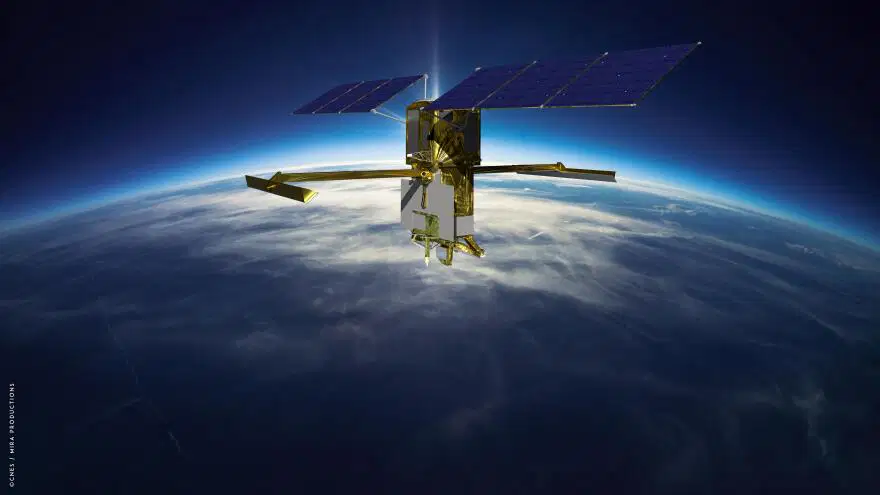
As distance between two objects increases, the pull of gravity between them...
increases.
decreases.
stays the same.
has no effect.
If an object's mass increases, its gravitational force...
Increases
Decreases
Stays the same
Disappears
Which object in our solar system has the strongest gravitational force?
Which of the following is true about dwarf planets?
Their gravity is stronger than planets since they are larger
They still have asteroids in their path around the Sun
Their gravity is so strong that it shaped it into a square
They revolve around planets not the Sun
Place these objects in order from largest (1) to smallest (5).
Planets
Solar system
Galaxies
Universe
Us
If a star is 100 light years away form Earth, which of the following is TRUE?
It would take us 100 years to travel to the star
The star is 100 trillion miles away from Earth
The light from that star takes 100 years to reach us
The star is dangerously close to Earth
A measure of how much matter an object has is--
weight
gravity
mass
volume
On which celestial object (outer space) would your mass be the greatest?
Earth
Jupiter
Sun
Your mass doesn't change on different celestial objects

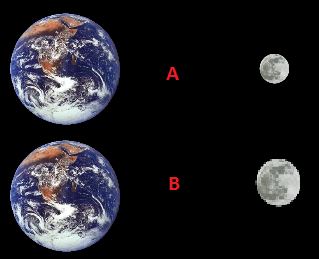
Differences in the moon's and sun's pull on different sides of the Earth cause _________.
gravity
thunderstorms
tides
Earth's orbit

