wayground logo

Free Printable Worksheets

Font size

S
M
L
XL
Worksheets

Science 8 Year End Review

Total questions: 60

Worksheet time: 3600secs

Name
Class
Date
1.
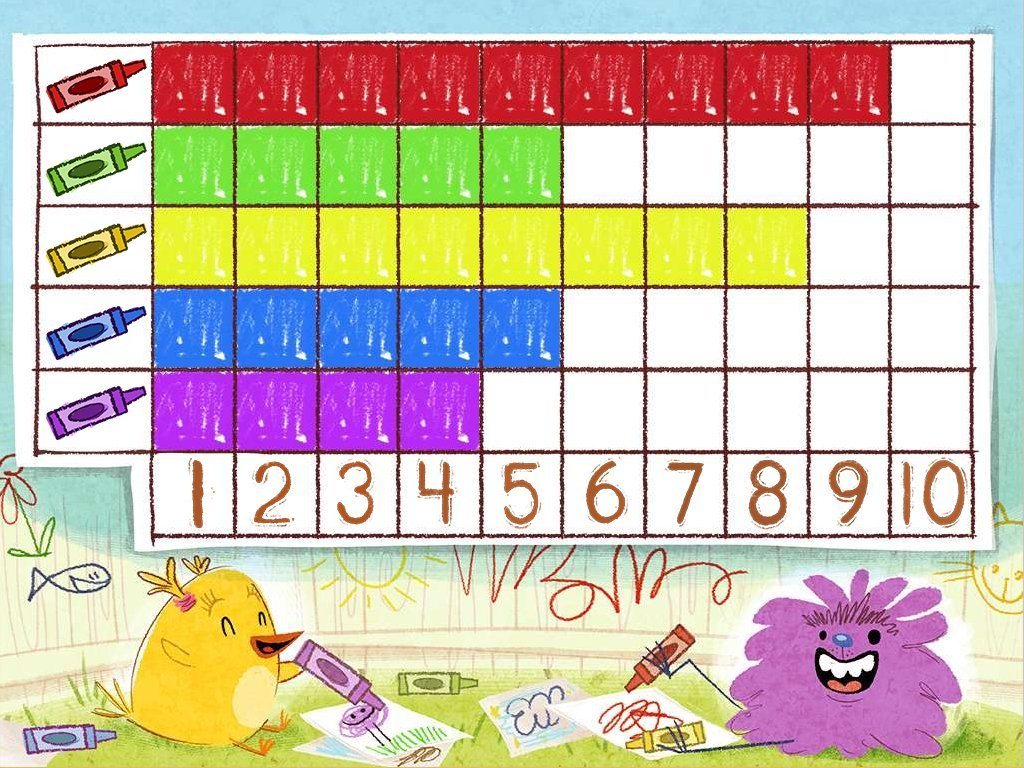
How many students take the bus to school?
a)
35
b)
20
c)
10
d)
15
2.
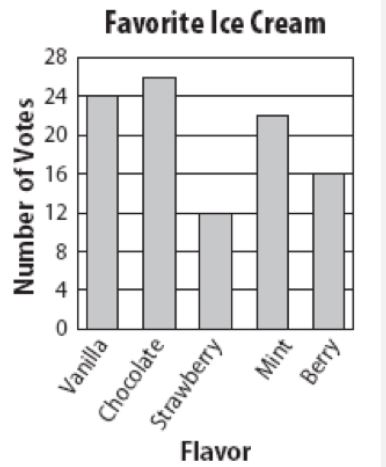
How many people voted for red as their favorite color?
a)
100
b)
2
c)
4
d)
9
3.
How many total people took the survey?
a)
50
b)
150
c)
100
d)
200
4.
At 60 seconds, how far had this object traveled? 
a)
0 m
b)
10 m
c)
20 m
d)
40 m
5.
People buy more drinks on ____ than any other day.
a)
Monday
b)
Tuesday
c)
Thursday
d)
Friday
6.
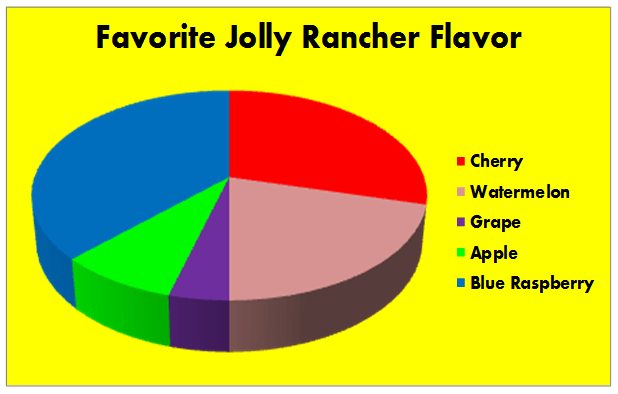
According to this circle graph, what is the least popular flavor of Jolly Rancher?
a)
Blue Rasberry
b)
Watermelon
c)
Grape
d)
Apple
7.

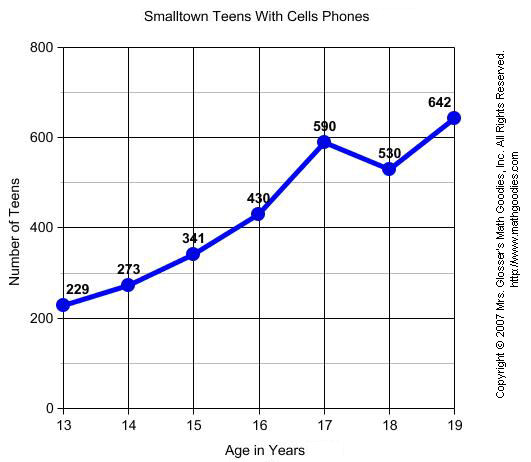
What label is along the y-axis in this graph?

a)

Copyright 2007

b)

Lines

c)

Age in Years

d)

Number of Teens

8.

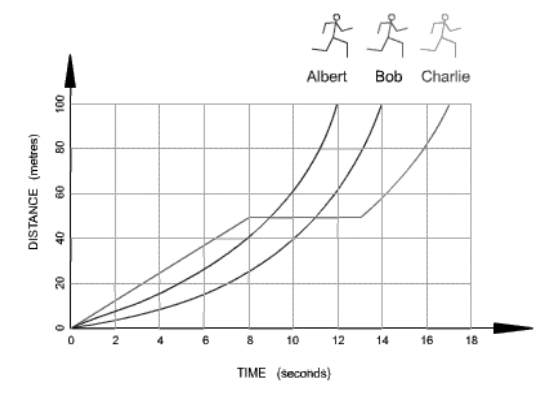
Which runner stopped for a rest?

a)

Albert

b)

Bob

c)

Charlie

9.

Subatomic particles with a negative charge

a)

Electrons

b)

Neutrons

c)

Protons

d)

Quarks

10.

Subatomic particle that has a positive charge

a)

electron

b)

poitron

c)

neutron

d)

proton

11.

The center of an atom is called the ________________.

a)

electron cloud

b)

nucleus

c)

neutrion

d)

nuetron

12.
The Modern Periodic Table of Elements is arranged by
a)
atomic mass
b)
atomic number
c)
valence electrons
d)
number of isotopes
13.
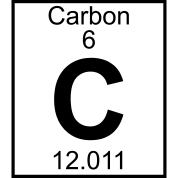
What does the 6 represent?
a)
atomic mass
b)
atomic number
c)
element name
d)
chemical symbol 
14.

The atomic number tells you what?

a)

only the number of electrons

b)

only the number of protons

c)

only the number of neutrons

d)

the number of both electrons and protons

15.

The number 16 for the atomic element sulfur is the

a)

ionic number

b)

isotope

c)

atomic mass

d)

atomic number

16.

Which element is located in Group 11 & Period 4?

a)

Vanadium

b)

Cadmium

c)

Copper

d)

Rhodium

17.

A student is asked to conduct an investigation to explore properties of matter. Which procedure BEST measures a physical property of the sample?

a)

experiment: Place the sample in water. results: The sample floats.

b)

experiment: Place the sample in water. results: The water begins to fizz.

c)

experiment: Place the sample in water. results: It catches on fire.

d)

experiment: Place the sample in water for an extended period of time. results: The sample changes color.

18.

Which is evidence that a chemical reaction (change) has occurred?

a)

red and yellow paint mixing to make orange paint

b)

the temperature of the substance remains constant

c)

a change in state of matter

d)

a new gas is observed in the form of bubbles

19.

Which of the following is considered a chemical property?

a)

flammability

b)

the ball is red

c)

carbon dioxide is made from mixing baking soda and vinegar

d)

melting

20.

Which of following describes what is happening in this picture?

a)

physical property

b)

chemical property

c)

physical change

d)

chemical change

21.

The ball is red is an example of which of the following?

a)

physical property

b)

physical change

c)

chemical property

d)

chemical change

22.

Melting butter for popcorn is a

a)

chemical change

b)

physical change

23.

A change in which NEW substances are formed.

a)

Chemical change

b)

Physical change

24.
Change in density is a physical change.
a)
True
b)
False
25.

How do particles move if in a solid?

a)

Not at all.

b)

Quickly

c)

Slow

d)

They don't move they vibrate

26.

The colder the temperature, the _______ the particle's motion.

a)

Faster

b)

Slower

c)

Smaller

d)

Larger

27.
If the tops were removed from the cylinders, the following would happen:
a)
The solid would fly out of the container
b)
The liquid would fly out of the container.
c)
The gas would fly out of the container.
d)
They ALL would fly out of the container.
28.
All changes in the state of matter of a substance requires
a)
vibration
b)
water
c)
permission
d)
energy
29.

What is the term for the changing of a solid directly into a gas?

a)

condensation

b)

sublimation

c)

vaporization

d)

evaporation

30.

What is commonly known as the 4th State of Matter?

a)

antimatter

b)

plasma

c)

dark matter

d)

condensates

31.

What state of matter could be described by super freezing or removing most of the thermal energy from it called? 

a)

plasma

b)

antimatter

c)

dark matter

d)

Bose-Einstein Condensate

32.

A bond between a nonmetal and a nonmetal is called a(n)

a)

covalent bond

b)

ionic bond

c)

metallic bond

d)

transfer bond

33.

Which particle is responsible for bonding?

a)

Protons

b)

Electrons

c)

Neutrons

d)

Nucleus

34.

Which of the following is true about Ionic Bonds? (select ALL TRUE options)

a)

High melting point

b)

Low melting point

c)

Can dissolve in water

d)

Cannot dissolve in water

e)

Can conduct electricity

35.

Potassium Chloride is...

a)

Ionic

b)

Covalent

36.

Water (H2O) is...

a)

Ionic

b)

Covalent

37.
Share electrons
a)
Ionic Bonds
b)
Covalent Bonds
c)
Both bonds
d)
Neither bond
38.
Gain or lose electrons
a)
Ionic Bonds
b)
Covalent Bonds
c)
Both bonds
d)
Neither bond
39.
This picture shows a...
a)
Ionic Bond
b)
Covalent Bond
c)
Both bonds
d)
Neither bond
40.
This picture shows a...
a)
Ionic Bond
b)
Covalent Bond
c)
Both bonds
d)
Neither bond
41.

What is a substance made of two or more elements that are chemically combined called?

a)

A. element

b)

B. compound

c)

C. mixture

d)

D. solution

42.
All matter is made of .....
a)
energy 
b)
atoms 
c)
air
d)
chemistry
43.

A substance that cannot be broken down into any other substance by ordinary chemical means is called

a)

a molecule.

b)

a mixture.

c)

an element.

d)

a compound.

44.

What is an example of a mixture?

a)

Table salt

b)

Water

c)

Oxygen

d)

Air

45.
This picture represents which of the following?
a)
element
b)
compound
c)
mixture of elements
d)
mixture of compounds
46.
This picture represents which of the following?
a)
element
b)
compound
c)
mixture
47.
A series of steps used by scientists to solve a problem or answer a question. 
a)
scientific method
b)
recipe
c)
data collection
d)
metric system
48.
Testing a hypothesis often involves a(n):
a)
answer
b)
experiment
c)
problem
d)
safety check
49.
What would the INDEPENDENT variable be in an experiment testing which types of paper airplane goes furthest?
a)
the paper used
b)
the type of paper airplane
c)
the distance of each plane's flight
d)
how hard the plane is thrown
50.
Steve wanted to see if the type of fertilizer made sunflowers grow larger. What is the independent variable 
a)
Type of fertilizer
b)
Size of sunflower
c)
type of sun flower
51.

Carey and Justin are raising money to purchase books for the library. The more money they raise, the more books they will be able to purchase for the library.


Which of the variables is dependent?

a)

amount of money raised

b)

number of books

52.

What is the first step in the scientific method?

a)

Data

b)

Conclusion

c)

No Horse Play

d)

Observe a problem

53.
Which of these is a property of metals?
a)
It's malleable
b)
It can't conduct electricity
c)
They are used in food
d)
It's very brittle
54.
Which of these grouping of elements could have the characteristic of brittle?
a)
Metal
b)
Nonmetal
55.
Some characteristics of a metal are that it is malleable and ductile.
a)
TRUE
b)
FALSE
56.
Silicon is a semiconductor and has properties of both metals and nonmetals. What type of element is Silicon? 
a)
Metal
b)
Nonmetal
c)
Metalloid
d)
Pretty
57.
Which element is a metalloid?
a)
Titanium
b)
Selenium
c)
Potassium
d)
Polonium
58.
Anytime you see the word SEMICONDUCTOR - what substance do you have?
a)
Metal
b)
Nonmetal
c)
Metalloid
59.
Look at the periodic table that is provided. Where would nonmetals be located? 
a)
to the left of the table 
b)
to the right of the table 
c)
in the zigzag line 
60.
Look at the periodic table that is provided. Where would metals be located? 
a)
to the left of the table 
b)
to the right of the table 
c)
in the zigzag line