
NEW
Font size
 Worksheets
Assessment by MCQ, Multicellular Organisms
Total questions: 40
Worksheet time: 32mins
One role of stem cells in the human body is to produce
antibodies for defence
new skin tissue to repair a cut
enzymes for digestion
hormones for communication
What term describes the location where chromosomes line up during mitosis?
A chemical called colchicine stops cells from producing spindle fibres during mitosis, which prevents further stages occurring. Which stage of mitosis would still occur when colchicine is present?
Chromosomes move to opposite poles of the cell.
Chromatids are pulled apart.
Chromosomes shorten and thicken.
Two diploid cells produced.
Each skin cell in a mouse has 40 chromosomes. How many chromosomes were present in each cell after dividing four times during cell culture?
10
20
40
160
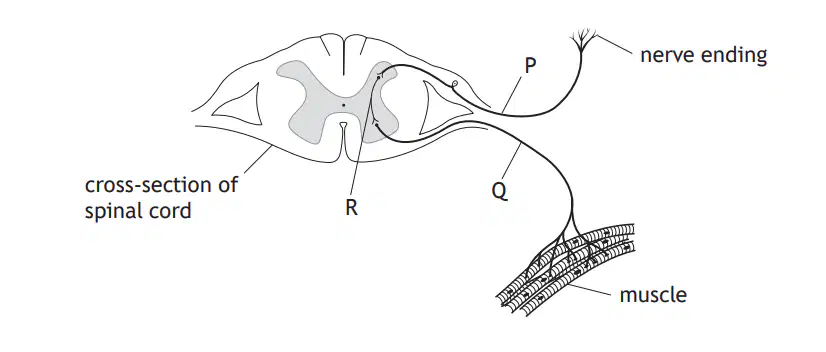
The diagram shows some of the structures found in a reflex arc.
Which option correctly identifies P, Q and R?
Motor Neuron : P
Inter neuron : R
Sensory neuron : Q
Motor Neuron : P
Inter neuron : Q
Sensory neuron : R
Motor Neuron : Q
Inter neuron : R
Sensory neuron : P
Motor Neuron : R
Inter neuron : P
Sensory neuron : Q
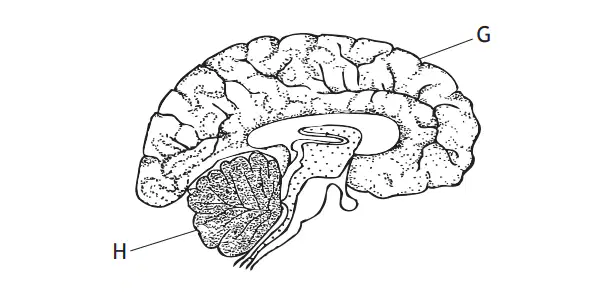
The diagram represents a section through the brain.
Which of the following links a letter to its correct structure and function?
G is the cerebrum and is the site of reasoning and memory.
G is the cerebellum and is the site of reasoning and memory.
H is the medulla and controls muscle coordination.
H is the cerebellum and controls breathing and heart rate.
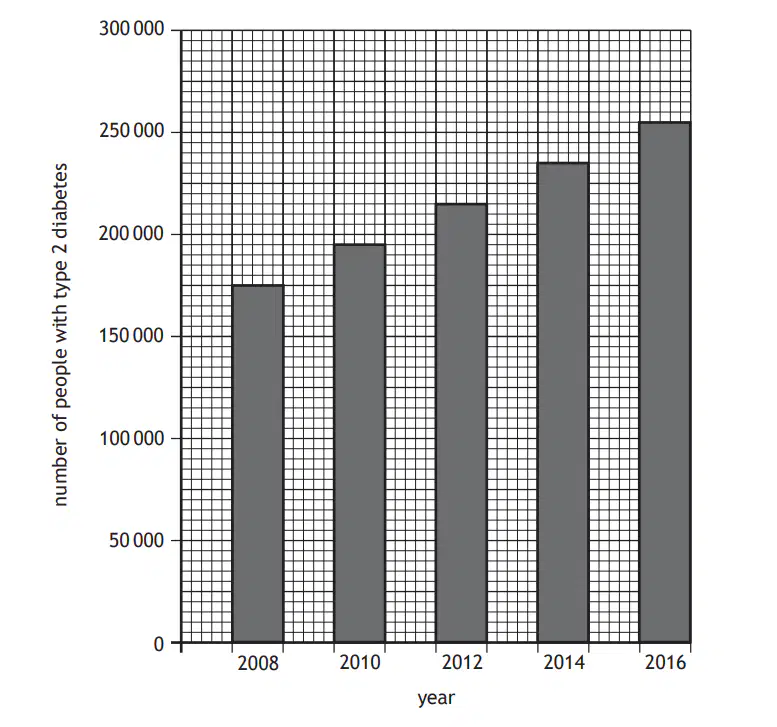
The graph shows the number of people in Scotland with type 2 diabetes over a period of nine years.
If the trend shown continued, predict the number of people that would be expected to have type 2 diabetes in 2018.
215000
300000
275000
200000
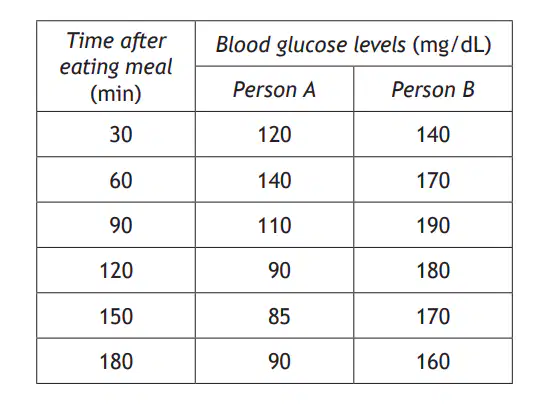
The table below shows the blood glucose levels of two people after eating the same meal. The normal range of blood glucose levels is 82–110 mg/dL.
Using the information given, which of the following statements is correct?
Person A always stayed within the normal range.
Person B was outwith the normal range 180 minutes after eating.
Person B had a level twice as high as that of person A 180 minutes after eating.
Person A and person B both had their highest levels 90 minutes after eating.
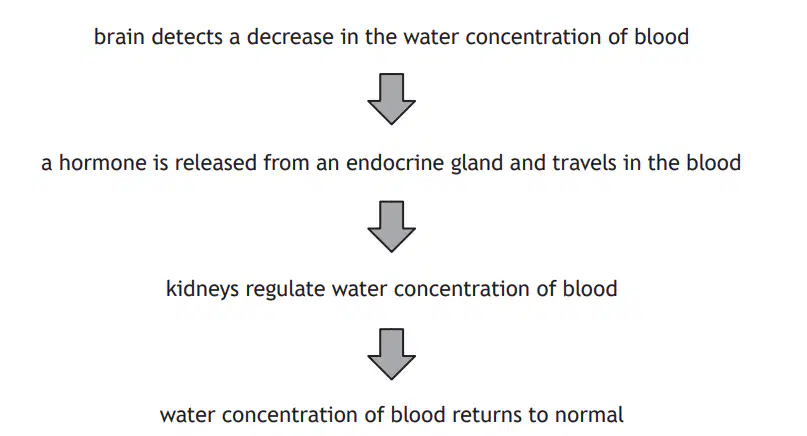
The flowchart shows how the water concentration of blood in the human body is controlled by a hormone.
The target tissue for this hormone is the:
brain
kidneys
blood
endocrine gland
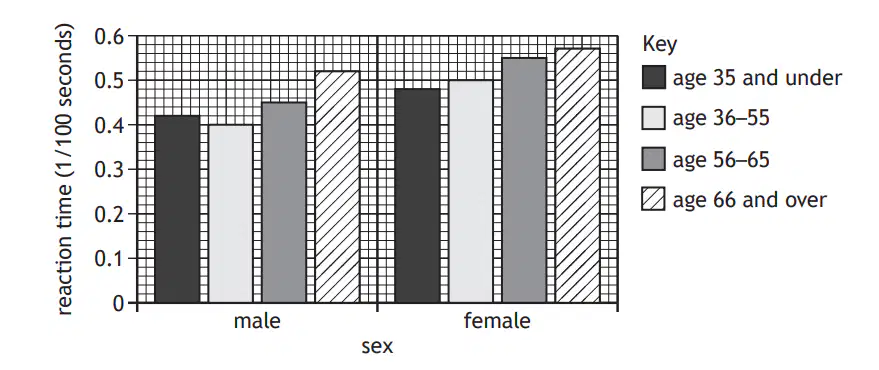
A study was carried out to investigate the relationship between age and reaction time. The results are shown in the graph.
Which of the following conclusions is correct for these results?
Reaction time always increases with age for both males and females.
Reaction time always decreases with age for both males and females.
Females have a lower reaction time than males in each age group.
Males have a lower reaction time than females in each age group.
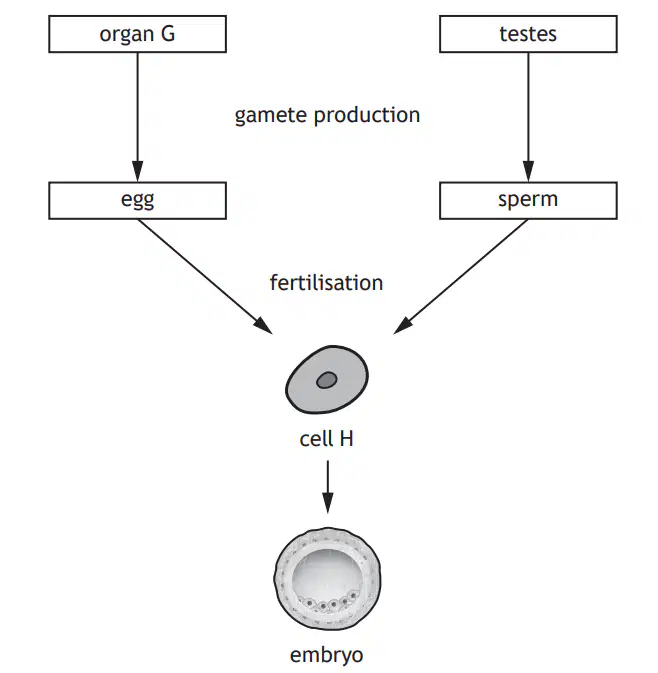
The diagram relates to reproduction in humans.
Which option identifies organ G and Cell H
uterus, zygote
ovary, egg or ovum,
testes, sperm
ovary, zygote
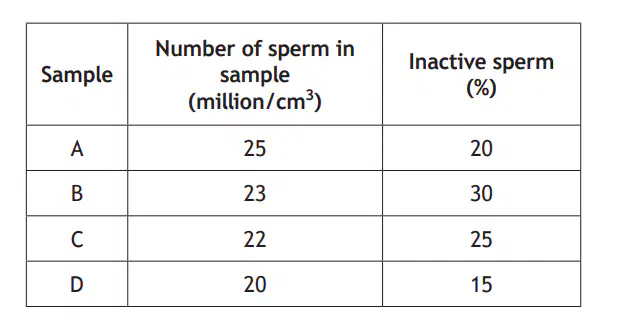
A man is fertile if his semen contains a minimum of 20 million sperm per cm3 and at least 75% of the sperm cells are active. The table shows the results of semen analysis from four sperm samples. Identify the sample that was from an infertile man.
Sample A
Sample B
Sample C
Sample D
In mice, the dominant form of one gene (B) determines black coat colour and the recessive form (b) determines brown coat colour. If two heterozygous mice were crossed, the expected phenotypes of the offspring would be
3 black : 1 brown
1 black : 1 brown
all black
all brown
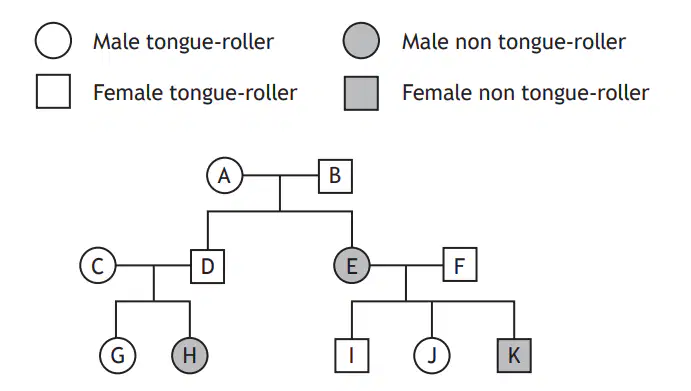
Tongue-rolling is an inherited characteristic controlled by different forms of a gene. T (roller) represents the dominant form of the gene, and t (non-roller) represents the recessive form. The family tree diagram shows a pattern of inheritance of the characteristic.
Which option shows the genotypes of individuals E and F?
E : Gg
F : Gg
E : GG
F : Gg
E : Gg
F : gg
E : gg
F : Gg
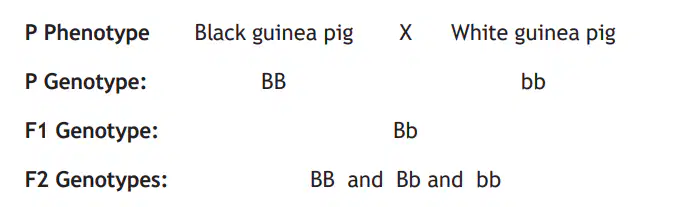
The following diagram shows the inheritance of coat colour in guinea pigs.
Which of the following generations contain heterozygous individuals?
P and F1
P and F2
F1 and F2
P, F1 and F2

The following key can be used to identify the different components of blood.
Use the key to identify which of the diagrams represents a platelet.
A
B
C
D
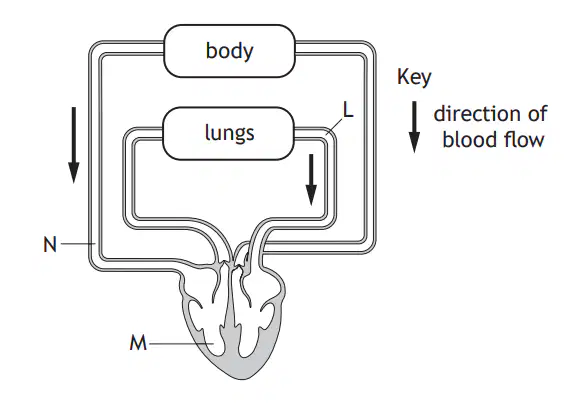
The diagram represents part of the circulatory system in humans.
Select the option that shows the correct comparison of carbon dioxide (CO2) and oxygen (O2) concentrations in the blood travelling through blood vessels L and N.
Vessel L low CO2 and high O2
Vessel N has high CO2 and low O2
Vessel L high CO2 and low O2
Vessel N has low CO2 and high O2
Vessel L low CO2 and high O2
Vessel N has low CO2 and high O2
Vessel L low CO2 and low O2
Vessel N has high CO2 and high O2
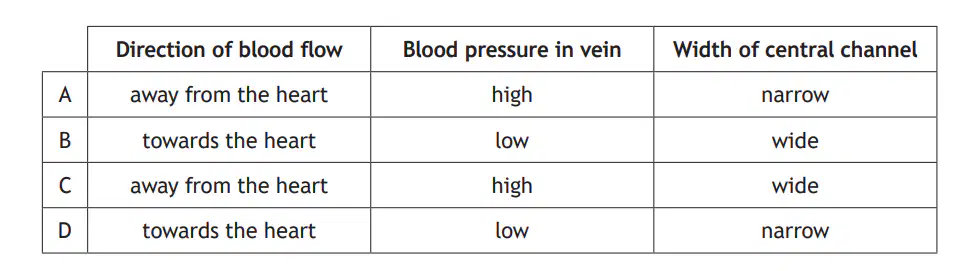
Which row in the table describes some features of veins?
A
B
C
D

