wayground logo

Free Printable Worksheets

NEW

Font size

S
M
L
XL
Worksheets

Q1 Basic Chemistry Concepts

Total questions: 78

Worksheet time: 39mins

Name
Class
Date
1.

Chemistry is

a)
the branch of science that studies matter and its interactions.
b)
the exploration of outer space
c)
a form of art and design
d)
the study of living organisms
2.

An atom is

a)
a form of energy
b)
a type of molecule
c)

the largest particle of an element

d)
the basic unit of matter
3.

A molecule is

a)
A group of two or more atoms bonded together.
b)
A single atom with no bonds.
c)
A collection of molecules in a solution.
d)
A type of chemical reaction involving atoms.
4.

A compound is

a)
A single element in its pure form.
b)
A substance formed from two or more elements chemically bonded together.
c)
A solution of two or more liquids.
d)
A mixture of different substances.
5.

Matter is defined as

a)
A substance that can only be seen under a microscope.
b)
Anything that is invisible and has no weight.
c)
A form of energy that cannot be measured.
d)
Anything that has mass and occupies space.
6.

A property of matter is

a)
temperature
b)
pressure
c)
light
d)
mass, volume, density, color, state
7.

A substance is defined as

a)
A type of energy that can be measured.
b)
A mixture of different elements and compounds.
c)
A living organism with specific characteristics.
d)
A form of matter with a definite composition and distinct properties.
8.

If a substance is soluble, then

a)
It remains unchanged in a solvent.
b)
It forms a solid when mixed with a solvent.
c)
It cannot dissolve in any liquid.
d)
It can dissolve in a solvent.
9.

What is a State of Matter?

a)
A state of matter is a chemical reaction.
b)
A state of matter refers only to gases.
c)
A state of matter is a distinct form that matter can take, such as solid, liquid, gas, or plasma.
d)
A state of matter is a type of energy.
10.

What is a phase change?

a)
A phase change is the process of mixing different substances.
b)
A phase change refers to a chemical reaction.
c)
A phase change is a transition of matter between different states.
d)
A phase change is a change in temperature only.
11.

What is density?

a)
Density is the weight of an object.
b)
Density is the temperature of a substance.
c)
Density is mass per unit volume.
d)
Density is the volume of an object divided by its mass.
12.

In a chemical equation, what is a product?

a)
A product is a catalyst in a chemical reaction.
b)
A product is a reactant before the reaction occurs.
c)
A product is a type of chemical bond formed during reactions.
d)
A product is a substance formed from a chemical reaction.
13.

In a chemical reaction, what is a reactant?

a)
A reactant is a catalyst that speeds up a reaction.
b)
A reactant is a product formed after a chemical reaction.
c)
A reactant is a substance that does not change during a chemical reaction.
d)
A reactant is a substance that participates in a chemical reaction.
14.

What are the phases of matter?

a)
Gasoline, Steam, Ice
b)
Air, Water, Fire
c)
Rock, Vapor, Mist
d)
Solid, Liquid, Gas, Plasma
15.

What causes phase changes?

a)
Phase changes happen without any energy transfer.
b)
Phase changes are caused by chemical reactions only.
c)
Phase changes occur due to changes in atmospheric pressure.
d)
Phase changes are caused by the addition or removal of energy.
16.

Which of these can cause a phase change?

a)
Changes in temperature or pressure can cause a phase change.
b)
Changes in humidity or light exposure can cause a phase change.
c)
Chemical reactions always lead to a phase change.
d)
Adding salt to water causes a phase change.
17.

What happens to atoms during a chemical reaction?

a)
Atoms are rearranged to form new substances, but are not created or destroyed.
b)
Atoms are transformed into energy during a reaction.
c)
Atoms remain unchanged throughout the reaction.
d)
Atoms are created and destroyed during a reaction.
18.

What happens to mass during a chemical reaction?

a)
Mass increases during a chemical reaction.
b)
Mass is destroyed during a chemical reaction.
c)
Mass is irrelevant in a chemical reaction.
d)
Mass is conserved during a chemical reaction.
19.

Which is a property of matter?

a)
Mass
b)
Color
c)
Temperature
d)
Volume
20.

What is a structure of matter?

a)
The structure of matter refers to the arrangement and organization of atoms and molecules that compose substances.
b)
The structure of matter is unrelated to atoms and molecules.
c)
The structure of matter only includes living organisms.
d)
The structure of matter is solely defined by its color.
21.

What is an interaction of matter?

a)
An interaction of matter is the combination of different elements into a single entity.
b)
An interaction of matter refers to the physical properties of a substance.
c)
An interaction of matter is the influence of one form of matter on another through various forces.
d)
An interaction of matter is the process of matter being created from energy.
22.

Which is an example of an interaction of matter?

a)
Boiling water
b)
Melting ice
c)
Dissolving sugar
d)
Rusting of iron
23.

What are the parts of an atom?

a)
Protons, neutrons, and electrons
b)
Nuclei, ions, and isotopes
c)
Atoms, molecules, and compounds
d)
Quarks, leptons, and bosons
24.

What's the difference between a molecule and a compound?

a)
A molecule is any bonded group of atoms; a compound is a molecule made of different elements.
b)
A molecule is always a compound; a compound cannot be a molecule.
c)
A molecule consists of only one type of atom; a compound consists of multiple types of atoms.
d)
A molecule is a single atom; a compound is a group of atoms.
25.

What's the difference between a compound and a mixture?

a)
A compound has a fixed composition and chemical bonds, while a mixture has a variable composition and retains the properties of its components.
b)
A compound can be separated by physical means, while a mixture cannot.
c)
A mixture has a fixed composition and chemical bonds, while a compound has a variable composition.
d)
A compound is always a solid, while a mixture can be a liquid or gas.
26.

How can mixtures be separated?

a)
Mixtures can be separated by methods such as filtration, distillation, evaporation, and chromatography.
b)
By mixing them with water
c)
By heating them until they dissolve
d)
By adding more substances to them
27.

What's similar between compounds and molecules?

a)
Compounds and molecules are both made of ions.
b)
Compounds are always larger than molecules.
c)
Molecules can only consist of one type of atom.
d)
Both compounds and molecules are made up of atoms.
28.

What's a heterogenous mixture?

a)
A heterogeneous mixture is a solution that cannot be separated by physical means.
b)
A heterogeneous mixture is a mixture where the components are not uniformly distributed and can be easily distinguished.
c)
A heterogeneous mixture is a type of pure substance with uniform composition.
d)
A homogeneous mixture is a mixture where the components are evenly distributed.
29.

What's a homogenous mixture?

a)
A homogeneous mixture is a mixture with distinct layers.
b)
A homogeneous mixture is a mixture that can be easily separated.
c)
A homogeneous mixture is a mixture with a uniform composition throughout.
d)
A homogeneous mixture is a mixture that has a strong odor.
30.

What's the difference between a homogenous and a heterogenous mixture?

a)
A homogeneous mixture is always solid, while a heterogeneous mixture is always liquid.
b)
A homogeneous mixture can be easily separated into its components, while a heterogeneous mixture cannot.
c)
A homogeneous mixture has distinct layers, while a heterogeneous mixture is completely blended.
d)
A homogeneous mixture has a uniform composition, while a heterogeneous mixture has a non-uniform composition.
31.

What is an element?

a)
An element can be broken down into simpler substances.
b)
An element is a mixture of different atoms.
c)
An element is a pure substance made of only one type of atom.
d)
An element is a type of molecule made of two or more atoms.
32.

What's the difference between an element and an atom?

a)
An element is a substance made of one type of atom, while an atom is the smallest unit of an element.
b)
An element can be made of multiple types of atoms.
c)
An atom is a larger unit that contains elements.
d)
Elements are only found in nature, while atoms are synthetic.
33.

What's the difference between an atom and a molecule?

a)
An atom is a group of molecules, while a molecule is a single element.
b)
An atom is a single unit of an element, while a molecule is a group of two or more bonded atoms.
c)
Molecules are always larger than atoms and contain only one type of atom.
d)
Atoms can exist independently, but molecules cannot.
34.

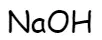
What does the chemical symbol on the left mean?

a)

It's a molecule made of a pure element.

b)

It's a molecule made of a compound.

c)

It's an atom made of a pure element.

d)

It's a compound made of a pure element.

35.

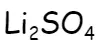
What does the chemical symbol on the left mean?

a)

It's a molecule made of a pure element.

b)

It's a molecule made of a compound.

c)

It's an atom made of a pure element.

d)

It's a compound made of a pure element.

36.

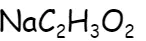
What does the chemical symbol on the left mean?

a)

It's a molecule made of a pure element.

b)

It's a molecule made of a compound.

c)

It's an atom made of a pure element.

d)

It's a compound made of a pure element.

37.

What does the chemical symbol on the left mean?

a)

It's a molecule made of a pure element.

b)

It's a molecule made of a compound.

c)

It's an atom made of a pure element.

d)

It's a compound made of a pure element.
38.

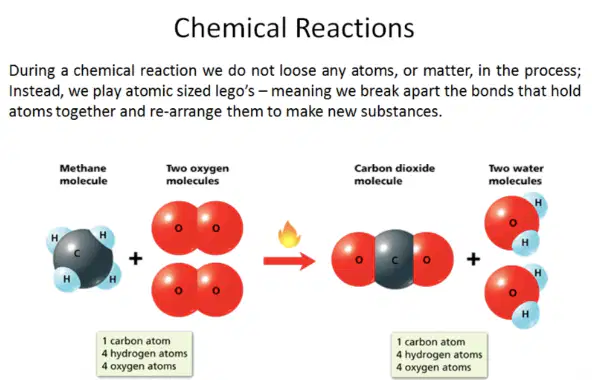
In the chemical equation pictured on the left, which is a reactant?

a)

LEGO molecules

b)

carbon dioxide

c)

water molecules

d)

methane molecule

39.

In the chemical equation pictured on the left, which is a product?

a)

oxygen molecules

b)

carbon dioxide

c)

reactant molecules

d)

methane molecule

40.
What is anything that has mass and takes up space?
a)
matter
b)
substance
c)
chemistry
d)
property
41.

The simplest form of matter is

a)

an atom

b)

a mixture

c)

a compound

d)

a substance

42.

Conservation of Matter is shown by

a)
Mass can be created in chemical reactions.
b)
Atoms can be destroyed during reactions.
c)
Energy is conserved in physical changes.
d)

The principle that he number of atoms is conserved in chemical reactions.
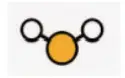
43.

This molecule has

a)

2 elements and

3 atoms

b)

2 atoms and

3 elements

c)

1 compound and

3 chemical bonds

d)

3 molecules and

3 atoms

44.

How many atoms are in this molecule?

a)

5

b)

4

c)

3

d)

9

45.

Which molecule has 3 atoms?

a)

b)

c)

d)

46.

What do the spheres in a molecular model represent?

a)

atoms

b)

molecules

c)

compounds

d)

substances

47.

What do the sticks or connectors in a molecular model represent?

a)

chemical bonds

b)

elements

c)

atoms

d)

compounds

48.

Which of these states of matter has the MOST energy?

a)

solid

b)

liquid

c)

gas

d)

plasma

49.

Which of these states of matter has the LEAST energy?

a)

solid

b)

liquid

c)

gas

d)

plasma

50.

What's the difference between a solid and a liquid?

a)
Solids can flow while liquids cannot.
b)
Liquids have a fixed shape, while solids take the shape of their container.
c)
Solids are always heavier than liquids.
d)
The main difference is that solids have a fixed shape, while liquids take the shape of their container.
51.

What's the difference between a liquid and a gas?

a)
Gases have a fixed volume and shape, while liquids do not.
b)
Liquids have a fixed volume and take the shape of their container; gases have no fixed volume or shape and expand to fill their container.
c)
Liquids can be compressed easily while gases cannot.
d)
Liquids evaporate instantly, whereas gases remain stable.
52.

What's the difference between a gas and plasma?

a)
Gas contains only neutral particles, while plasma does not.
b)
The main difference is that plasma is ionized gas, containing charged particles, whereas gas is not ionized.
c)
Plasma is a liquid that conducts electricity.
d)
Gas is a solid at room temperature.
53.

What is melting?

a)
Melting is the change of a gas to a solid.
b)
Melting is the transition of a substance from solid to liquid.
c)
Melting is the process of freezing a liquid.
d)
Melting is the evaporation of a liquid.
54.

What's an example of melting?

a)

Ice becoming liquid water.

b)
Water freezing into ice.
c)
Steam condensing into water.
d)
Snow falling from the sky.
55.

What is freezing?

a)
Freezing is the process of a solid turning into a gas.
b)
Freezing is when a substance evaporates into the air.
c)
Freezing is the change of a gas into a liquid state.
d)
Freezing is the transition of a substance from a liquid to a solid state.
56.

What's an example of freezing?

a)
Water evaporating into steam.
b)
Water turning into ice.
c)
Water boiling at 100 degrees Celsius.
d)
Ice melting into water.
57.

What is vaporization?

a)
Vaporization is the process of freezing a substance.
b)
Vaporization is the change of a substance from gas to solid.
c)

Vaporization is the transition of a substance from liquid to gas.

d)
Vaporization refers to the condensation of gas into liquid.
58.

What's an example of vaporization?

a)
Ice melting into water.
b)
Condensation of steam into water droplets.
c)
Sublimation of dry ice into gas.
d)
Boiling water turning into steam.
59.

What is condensation?

a)
Condensation is the process of ice melting into water.
b)
Condensation is the evaporation of liquid water into vapor.
c)
Condensation is the process of water vapor turning into liquid water.
d)
Condensation is the process of water turning into steam.
60.

What's an example of condensation?

a)
Rain falling from the sky.
b)
Ice melting in the sun.
c)
Steam rising from a hot cup of coffee.
d)
Dew forming on grass in the morning.
61.

What is sublimation?

a)
Sublimation is the process of a gas turning into a solid.
b)
Sublimation is the transition of a substance from solid to gas without becoming liquid.
c)
Sublimation is the transition of a liquid to a gas.
d)
Sublimation is the change of a solid to a liquid without becoming gas.
62.

What's an example of sublimation?

a)
Water boiling into steam.
b)
Dry ice turning into carbon dioxide gas.
c)
Ice melting into water.
d)
Sugar dissolving in water.
63.

What is deposition?

a)
Deposition is the process of melting ice into water.
b)
Deposition refers to the evaporation of water from a surface.
c)

Deposition is the transition of a gas to a solid.

d)
Deposition is the process of erosion of rocks.
64.

What's an example of deposition?

a)

Crystal formation from a gas.

b)
Ice melting into water.
c)
Water boiling to steam.
d)
Rain falling from the sky.
65.

In which physical state are particles tightly packed and vibrate in place?

a)

solid

b)

liquid

c)

gas

d)

plasma

66.

In which physical state do particles have some freedom of movement, but stay close together?

a)

solid

b)

liquid

c)

gas

d)

plasma

67.

In which state of matter are particles widely spaced and have freedom of movement?

a)

solid

b)

liquid

c)

gas

d)

plasma

68.

Which state of matter has ionized (charged) gas with free electrons and ions?

a)

solid

b)

liquid

c)

gas

d)

plasma

69.

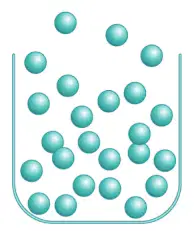
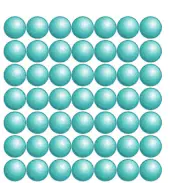
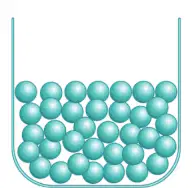
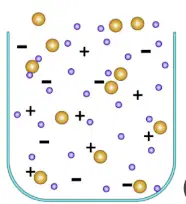
Which physical state is pictured?

a)

solid

b)

liquid

c)

gas

d)

plasma

70.

Which physical state is pictured?

a)

solid

b)

liquid

c)

gas

d)

plasma

71.

Which physical state is pictured?

a)

solid

b)

liquid

c)

gas

d)

plasma

72.

Which physical state is pictured?

a)

solid

b)

liquid

c)

gas

d)

plasma

73.

What's the difference between mass and weight?

a)
Mass is the weight of an object in space.
b)
Mass is a measure of matter; weight is the force of gravity on that mass.
c)
Weight is the amount of matter in an object.
d)
Mass and weight are the same thing.
74.

What is volume?

a)
Volume is a measure of weight.
b)
Volume refers to the color of an object.
c)
Volume is the speed at which an object moves.
d)
Volume is the amount of space an object occupies.
75.

Density is a characteristic that can be used to identify a substance. This means that

a)
Density varies with temperature and pressure only.
b)
Density is irrelevant for substance identification.
c)
Density cannot be measured accurately.
d)

Density can be measured accurately and it will always be the same for that substance.

76.

If a block of iron were cut in half, the densities of the individual pieces would

a)

be different

b)

be equal

c)

depend on the size

d)

depend on the temperature

77.

If a block has a density of 1.5 g/mL and water has density of 1 g/mL, would the block sink or float?

a)

sink, because the block is more dense than water.

b)

float, because water is less dense than the block.

c)

sink, because the size of the block is bigger

d)

float, because the water can float anything.

78.

If a block has a density of 0.5 g/mL and water has density of 1 g/mL, would the block sink or float?

a)

sink, because the block is more dense than water.

b)

float, because the block is less dense than water.

c)

sink, because the size of the block is bigger

d)

float, because the water can float anything.