wayground logo

Free Printable Worksheets

NEW

Font size

S
M
L
XL
Worksheets

3rd Qtr QA Review

Total questions: 80

Worksheet time: 1hrs 1mins

Name
Class
Date
1.
Which system enables the body to move, moves food through the digestive system, and keeps the heart beating?
a)
skeletal 
b)
muscular
c)
digestive
d)
nervous
2.
Which system provides shape and support, enables you to move, protects your internal organs, and stores minerals?
a)
skeletal
b)
muscular
c)
digestive
d)
nervous
3.
Which system takes oxygen into the body and eliminates carbon dioxide?
a)
immune
b)
nervous
c)
respiratory
d)
circulatory
4.
Which system takes food into the body, breaks down food, and absorbs the digested materials?
a)
respiratory
b)
circulatory
c)
digestive
d)
excretory
5.
Which system is made of the smooth, skeletal, and cardiac muscles?
a)
skeletal
b)
muscular
c)
nervous
d)
excretory
6.
Which system detects information from the environment and directs the way your body responds to this information?
a)
excretory
b)
circulatory
c)
respiratory
d)
nervous
7.
Which system includes bones, cartilage, and ligaments?
a)
nervous
b)
muscular
c)
skeletal
d)
excretory
8.
Which system includes the nose, trachea and the lungs?
a)
respiratory
b)
circulatory
c)
immune
d)
digestive
9.
Which system includes the mouth, esophagus, and the small and large intestines?
a)
nervous
b)
excretory
c)
respiratory
d)
digestive
10.
Which system fights disease?
a)
excretory
b)
nervous
c)
immune
d)
digestive
11.
Which system collects and removes wastes?
a)
Muscular
b)
Circulatory
c)
Digestive
d)
Excretory
12.
Which system carries needed materials to the body cells and carries wastes away from the body cells?
a)
Circulatory
b)
Digestive
c)
Nervous
d)
Excretory
13.

Which system includes the kidneys, ureters, urinary bladder, and urethra?

a)

digestive

b)

excretory

c)

circulatory

d)

muscular

14.
Which system includes the heart and blood vessels?
a)
respiratory
b)
circulatory
c)
nervous 
d)
skeletal
15.

Which system includes the brain, and spinal cord?

a)

Muscular

b)

Nervous

c)

Respiratory

d)

Skeletal

16.
Which two body systems deliver oxygen to your cells and take away carbon dioxide?
a)
respiratory and nervous
b)
circulatory and nervous
c)
circulatory and excretory
d)
Respiratory and circulatory
17.
Which two body systems work together to break down food and get rid of wastes?
a)
digestive and excretory
b)
digestive and circulatory
c)
excretory and respiratory
d)
nervous and digestive
18.
What is the level o organization known as a group of cells that work together?
a)
cells
b)
organ system
c)
organ
d)
tissue
19.

Which three body systems allow you to move?

a)

muscular, skeletal, digestive

b)

nervous, respiratory, digestive

c)

nervous, muscular, skeletal

d)

Muscular, skeletal, circulatory

20.
Which of the following is the correct order of organization in living things from most basic (simple) to most complex?
a)
a.  Organism, cell, tissue, organ, organ system
b)
a.  Organ system, organ, tissue, cell, organism
c)
a.  Cell, tissue, organ, organ system, organism
d)
a.  Cell, organ, tissue, organ, organism, organ system
21.
A group of similar cells that come together to perform a specific function is a/an
a)
organ
b)
organism
c)
organ system
d)
tissue
22.
When a group of organs work together to perform a particular function they create a/an
a)
organ system
b)
organism
c)
tissue
d)
organ
23.
The smallest level of organization of life in an organism
a)
tissue
b)
cell
c)
organ
d)
organ system
24.
The cell is the building block of all living things.
a)
True
b)
False
25.
A group of organs that work together to perform big jobs for your body is an organ system.
a)
True
b)
False
26.
Which is an example of an organism?
a)
a beetle
b)
a lake
c)
a rock
d)
a shell
27.
The basic unit of structure and function in the human body is the....
a)
organ
b)
organ system
c)
cell
d)
tissue
28.
What is the difference between a cell and a tissue?
a)
cell is basic unit of life; tissue is group of cells that work as one
b)
cell is group of tissues; tissue is basic unit of life
c)
cell is basic unit of life; tissue is groups of different cells
d)
cell is group of organs; tissue is group of different cells
29.
What do you have when organ systems work together?
a)
organs
b)
organism
c)
cells
d)
tissue
30.
The basic unit of structure and function in a living things.
a)
chloroplast
b)
nucleus
c)
cell
d)
cell membrane
31.
This thin layer protects the cell and regulates what substances enter and leave the cell.
a)
cell membrane
b)
cell
c)
cell wall
d)
golgi body
32.

In a plant cell, a stiff wall surrounds the membrane, giving the cell a rigid, boxlike shape?

a)

cell membrane

b)

cell

c)

ribosome

d)

cell wall

33.
These organelles capture energy from sunlight and use it to produce food for the cell.
a)
cell membrane
b)
chloroplasts
c)
cell wall
d)
ribosomes
34.
A gel-like fluid in which many different organelles are found.
a)
cell membrane
b)
nucleus
c)
organelle
d)
cytoplasm
35.
The network of passageways carries materials from one part of the cell to another.
a)
endoplasmic reticulum
b)
golgi bodies
c)
vacuole
d)
cell
36.
Most of the cell's energy is produced within these rod-shaped organelles. This organelle is considered the "powerhouse" of the cell.
a)
ribosomes
b)
mitochondria
c)
vacuole
d)
endoplasmic reticulum
37.
Directs all the cell's activities.
a)
mitochondria
b)
chloroplasts
c)
vacuole
d)
nucleus
38.
A tiny cell structure that carries out a specific function within a cell.
a)
organelle
b)
cell
c)
nucleus
d)
ribosomes
39.
These small structures function as factories to produce proteins.
a)
mitochondria
b)
golgi body
c)
endoplasmic reticulum
d)
ribosomes
40.
This sac with the cytoplasm stores water, food, waste, products and other materials.
a)
vacoule
b)
organelle
c)
cytoplasm
d)
cell membrane
41.
All living things have an internal structure of ____________, which are the smallest unit of life. 
a)
Cells
b)
ATP
c)
Glucose
d)
Sugar
42.
Rocks are not living because
a)
they never move
b)
they aren't needed for humans
c)
they are not made of cells
d)
they don't break down
43.
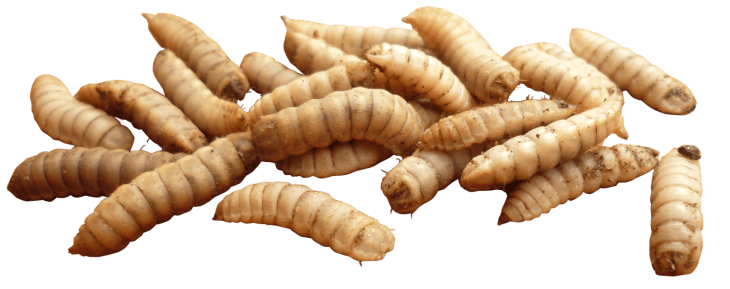
A maggot changing into a fly is an example of 
a)
reproduction.
b)
growth and development.
c)
homeostasis.
d)
evolution.
44.
When you step out into the cold, your body shivers in order to keep its temperature at 98.6F.
a)
All living things use energy
b)
All living things contain cells
c)
All living things maintain homeostasis
d)
All living things grow
45.
A camel has eyelashes that work to keep the dust and sand out of its eyes.
a)
All living things adapt to their environment
b)
All living things grow
c)
All living things have cells
d)
All living things use energy
46.
A tulip opens in the morning at sunrise and closes in the evening at sunset.
a)
All living things have cells
b)
All living things use energy
c)
All living things respond to their environment
d)
All living things grow
47.
Over three years, Tim's height has increased from 5'4" to 5'11".
a)
All living things contain cells
b)
All living things maintain homeostasis
c)
All living things use energy
d)
All living things grow
48.
The following are all characteristics of life EXCEPT _______________. 
a)
made of cell(s)
b)
eat food
c)
respond to the environment 
d)
reproduce 
49.
All living things ____ to make more living things.
a)
reproduce
b)
develop
c)
grow
d)
adapt
50.
Which cell structure is found in plant and animals cells and controls what can come into or leave a cell?
a)
cell membrane
b)
cytoplasm
c)
nucleus
d)
vacuole
51.
What is the function of the cell nucleus found in both plant and animal cells?
a)
to produce energy
b)
to control cell activity
c)
to remove waste products
d)
to allow molecules to enter the cell
52.
Cell organelles that are responsible for digesting food, worn out organelles and other cellular wastes are called ___________________.
a)
Mitochondria
b)
Vacuoles
c)
Lysosomes
d)
Chlororplasts
53.
What is one basic function of the vacuoles?
a)
circulating oxygen
b)
producing food
c)
controlling cell processes
d)
storing water
54.
Chloroplasts in plant cells allow the plant to perform a function that animal cells cannot do.  What is the main function of the chloroplasts found in plant cells?
a)
to absorb light energy and manufacture food
b)
to remove waste materials by active transport
c)
to manufacture chemical energy from food
d)
to control the shape of the cell
55.
All cells need energy to function.  Which cell organelle is responsible for producing energy in the cell?
a)
chloroplasts
b)
mitochondria
c)
nucleus
d)
vacuoles
56.
What is the function of a cell wall?
a)
to protect and support the cell
b)
to perform different functions in each cell
c)
to prevent water from passing through it
d)
to prevent oxygen from entering the cell
57.
Cells with a nucleus and membrane-bound organelles are called ____________________.
a)
prokaryotes
b)
eukaryotes
c)
bacteria
d)
protists
58.
The network of passageways carries materials from one part of the cell to another.
a)
endoplasmic reticulum
b)
golgi bodies
c)
vacuole
d)
cell
59.
An organism made of one cell is called
a)
unicellular
b)
multicellular
60.
Which of the following is the correct order of organization in living things from most basic (simple) to most complex?
a)
a.  Organism, cell, tissue, organ, organ system
b)
a.  Organ system, organ, tissue, cell, organism
c)
a.  Cell, tissue, organ, organ system, organism
d)
a.  Cell, organ, tissue, organ, organism, organ system
61.

Which two systems work together to maintain homeostasis while transporting oxygen throughout the body and removing carbon dioxide?

a)

circulatory and respiratory

b)

respiratory and excretory

c)

circulatory and digestive

d)

respiratory and digestive

62.
Which organelle belongs in plant cells only?
a)
Cytoplasm
b)
Mitochondrion
c)
Large Central Vacuole
d)
Cell Membrane
63.
What type of cell has a defined nucleus and membrane bound organelles.
a)
Bacteria
b)
Prokaryote
c)
Eukaryote
d)
Archaeabacteria
64.
What type of cell does not have a defined nucleus or membrane bound organelles.
a)

Animal Cell

b)
Prokaryote
c)
Eukaryote
d)

Plant Cell

65.
7. Classify the following examples (pictures) as unicellular or multicellular
a)
1. Unicellular
b)
2. Multicellular
66.
Why do humans require many different types of cells to survive?
a)
Human cells are identical and work together to perform the same function.
b)
Human cells are specialized and work together to perform the same function.
c)
Human cells are identical and work independently to perform different functions.
d)
Human cells are specialized and work independently to perform different functions.
67.
Plants and animal cells are examples of ___ cells 
a)
prokaryotic cells 
b)
eukaryotic cells 
68.

The process of maintaining a stable internal environment is called ______________.

a)

homeostasis

b)

reproduction

c)

growth

d)

metabolism

69.

To qualify as life how many of the characteristics of life must something have?

a)

any 1

b)

at least 2

c)

at least half

d)

all

70.

A caterpillar hibernates in a cocoon and emerges as a butterfly.

a)

All living things adapt to their environment

b)

All living things use energy

c)

All living things respond to their environment

d)

All living things grow and develop

71.
Green plants produce their own food through the process of photosynthesis.
a)
All living things use energy
b)
All living things contain cells
c)
All living things maintain homeostasis
d)
All living things grow
72.
Organs are composed of tissues, which are composed of cells.  This is an example of which characteristic of life?
a)
Living things display organization.
b)
Living things reproduce.
c)
Living things maintain homeostasis. 
d)
Living things contain genetic information.
73.
 What is the main function of the respiratory system?
a)
take in oxygen and exhale waste like carbon dioxide
b)
move nutrients throughout the body
c)
take in carbon dioxide and exhale oxygen
74.
Which systems main function is to allow movement of the body?
a)
muscular
b)
digestive
c)
skeletal
d)
excretory
75.
Which system provides shape and support, enables you to move, protects your internal organs, and stores minerals?
a)
skeletal
b)
muscular
c)
digestive
d)
nervous
76.
Which system takes food into the body, breaks down food, and absorbs the digested materials?
a)
respiratory
b)
circulatory
c)
digestive
d)
excretory
77.
Which best compares the respiratory system to the circulatory system?
a)
The respiratory system transports oxygen to cells, while the circulatory system provides oxygen for cells.
b)
The respiratory system provides oxygen for cells, while the circulatory system transports oxygen to cells.
c)
The respiratory system breaks down food for cell energy, while the circulatory system rids the body of waste.
d)
The respiratory system rids the body of waste, while the circulatory system breaks down food for cell energy.
78.
Bob hits a baseball.  What two systems are working together to make this happen?
a)
muscular & excretory
b)
muscular & nervous
c)
muscular & circulatory
d)
digestive & muscular
79.
How does the muscular system depend on the nervous system?
a)
The nervous system transports blood to the muscles.
b)
The nervous system provides support for the muscles.
c)
The nervous system supplies food and oxygen to the muscles.
d)
The nervous system sends signals to the muscles to cause movement.
80.
What body systems work together to help food get to your stomach?
a)
Immune & Circulatory
b)
Digestive & Muscular
c)
Muscular & Respiratory
d)
Digestive & Cardiovascular