
Font size
 Worksheets
Health Status
Total questions: 40
Worksheet time: 20mins
Define Health status.
Health status refers to the overall condition of a person's health, taking into account various indicators such as physical, mental, and social well-being.
Health status is only about the absence of disease in a person.
Health status refers exclusively to a person's physical appearance.
Health status is determined solely by a person's age.
Define incidence.
Incidence is the number of new cases of a disease or condition in a specific population during a certain period of time.
Incidence is the total number of existing cases of a disease in a population at a given time.
Incidence is the rate at which people recover from a disease in a population.
Incidence is the number of deaths caused by a disease in a specific population during a certain period of time.
Define prevalence.
Prevalence is the total number of cases of a disease or condition in a population at a given time.
Prevalence is the rate at which new cases of a disease occur in a population over a period of time.
Prevalence is the number of deaths caused by a disease in a population during a specific period.
Prevalence is the average duration of a disease in a population.
Define life expectancy.
Life expectancy is the average number of years a person is expected to live based on current mortality rates.
Life expectancy is the number of children born per woman in a population.
Life expectancy is the total population divided by the land area.
Life expectancy is the age at which a person retires from work.
Define morbidity.
Morbidity refers to the presence of illness or disease within a population.
Morbidity refers to the rate of recovery from a disease.
Morbidity refers to the absence of any disease in a population.
Morbidity refers to the process of vaccination in a population.
Define mortality.
Mortality refers to the number of deaths in a population during a specific period of time.
Mortality refers to the number of births in a population during a specific period of time.
Mortality refers to the number of people migrating into a population during a specific period of time.
Mortality refers to the number of people recovering from illness in a population during a specific period of time.
Health Status: An individual’s or population’s overall health, taking into account various aspects such as _________. Fill in the blank with the aspects mentioned in the worksheet.
life expectancy, amount of disability and level of disease
favorite foods and hobbies
hair color and eye color
number of friends and pets
can you guess what these could be? (Aspects of health status)
Physical, mental, and social well-being
Only physical fitness
Economic status
Educational level
Health status is measured around the world to:
Monitor disease trends and improve public health
Increase population growth
Reduce healthcare costs only
Promote unhealthy lifestyles
Health status is measured around the world because:
It helps track and improve public health.
It is required for entertainment purposes.
It is only for academic interest.
It has no real-world application.
Fill in the blank: Measuring health status around the world allows countries to identify ________ health issues.
priority
minor
historical
seasonal
Fill in the blank: Measuring health status helps authorities determine future ________.
actions
diseases
medicines
hospitals
Fill in the blank: Monitoring health status helps to monitor the ________ which is already being made.
progress
problem
disease
treatment
Do Females or Males have a higher rate of overweight/obesity in Australia?
Males 75%
Females 75%
Males 55%
Females 60%
What is the definition of Self-assessed Health Status?
A person's own opinion/feelings about their health and wellbeing, their state of mind and life in general. This data is usually collected from surveys.
A medical professional's evaluation of a person's physical health based on clinical tests.
A government-issued rating of a population's health based on national statistics.
A measure of the number of hospital visits a person has in a year.
An individual's or population group's health status is always changing, allowing movement along the continuum on a regular basis.
True
False

Match each color to the corresponding level of self-assessed health status:
Poor
Poor
Fair
Fair
Good
Good
Very good
Very good
Excellent
Excellent
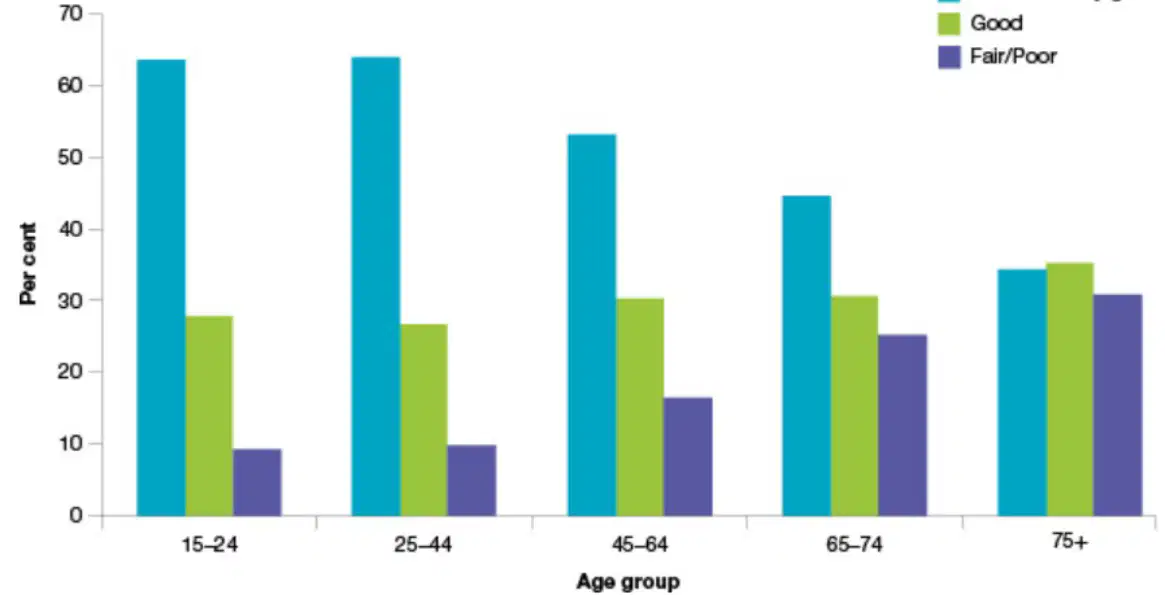
Using data from the bar graph, the percentage of people aged '15 - 24' who rate their health as 'excellent/very good' is:
Higher than those aged '75 +'
Lower than those aged '75 +'
Equal to those aged '75 +'
Cannot be determined from the graph
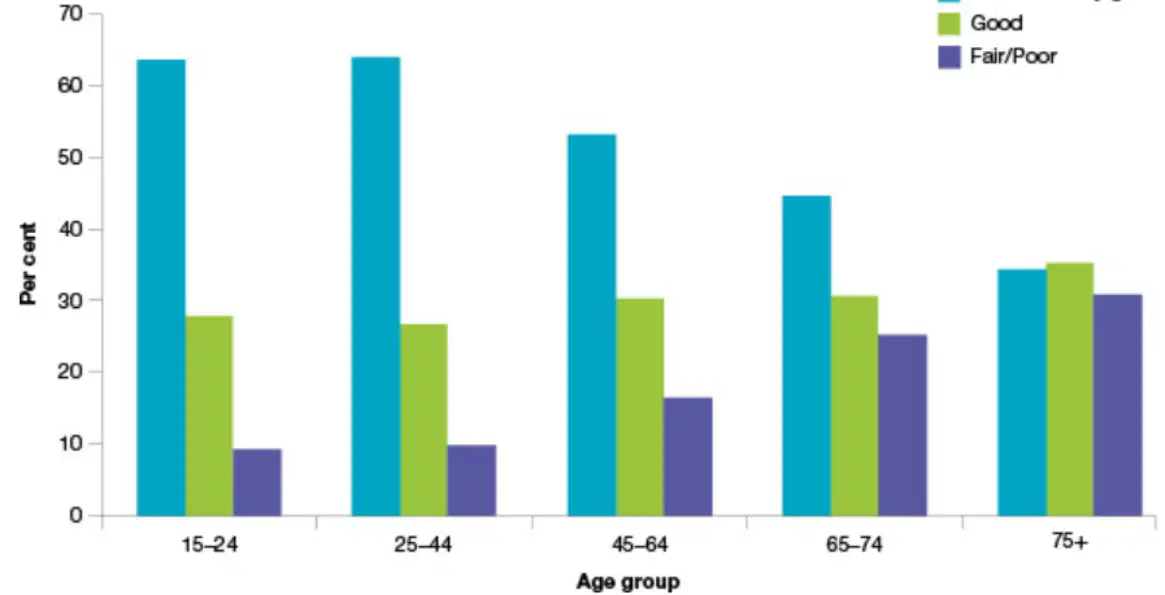
Which of the following lists the top three age groups who rate their health as 'excellent/very good' according to the bar graph?
18-24, 25-34, 35-44
45-54, 55-64, 65-74
18-24, 25-34, 65-74
35-44, 45-54, 55-64
Older age groups (75+) are less likely to rate their health and wellbeing as excellent/very good because:
They generally experience more health issues and physical limitations.
They have better access to healthcare services.
They are more optimistic about their health.
They participate in more physical activities than younger groups.
Life expectancy is how long a person is expected to live from ______ to ______ (if the current death rates stay the same).
birth, death
childhood, adulthood
adulthood, old age
infancy, adolescence
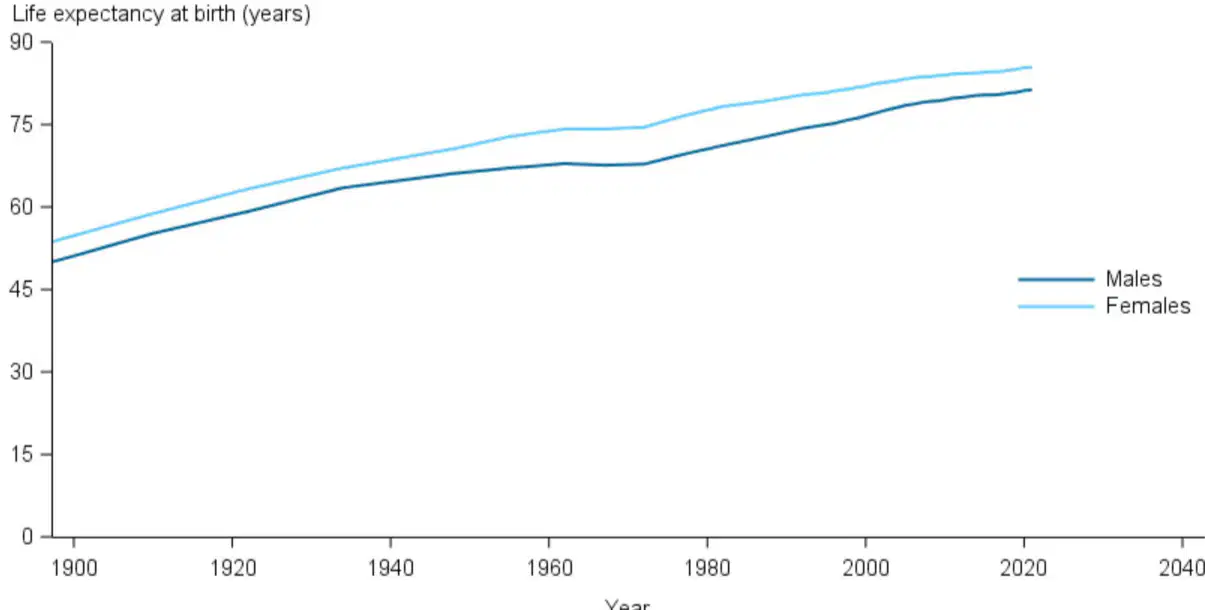
The difference between life expectancy for males and females in 2020 is:
2 years
5 years
7 years
10 years
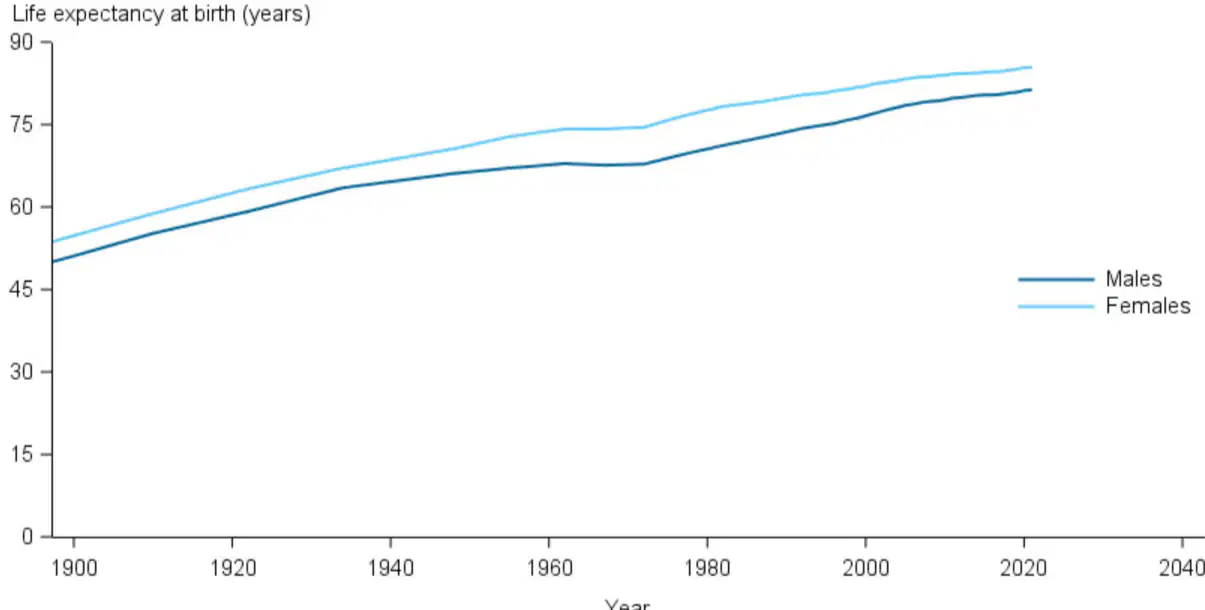
Identify a trend in the life expectancy of Australians from 1900 - 2020.
It has increased steadily.
It has decreased steadily.
It has remained the same.
It has fluctuated wildly.
Females may have a higher life expectancy than males because:
They generally have healthier lifestyles and biological advantages.
They are more likely to engage in risky behaviors.
They have a higher rate of chronic diseases.
They have a lower pain tolerance.

Fill in the blank: Prevalence is ___ (Like a photograph)
the total number of cases of a disease or condition present in a population at a given time
the number of new cases of a disease occurring in a population over a period of time
the rate at which a disease causes death in a population
the proportion of people who recover from a disease in a given time period

Guess the top 5 leading causes of death in Australia.
Heart disease, cancer, respiratory diseases, stroke, diabetes
Car accidents, drowning, poisoning, falls, burns
Malaria, tuberculosis, HIV/AIDS, cholera, typhoid
Influenza, measles, chickenpox, mumps, rubella
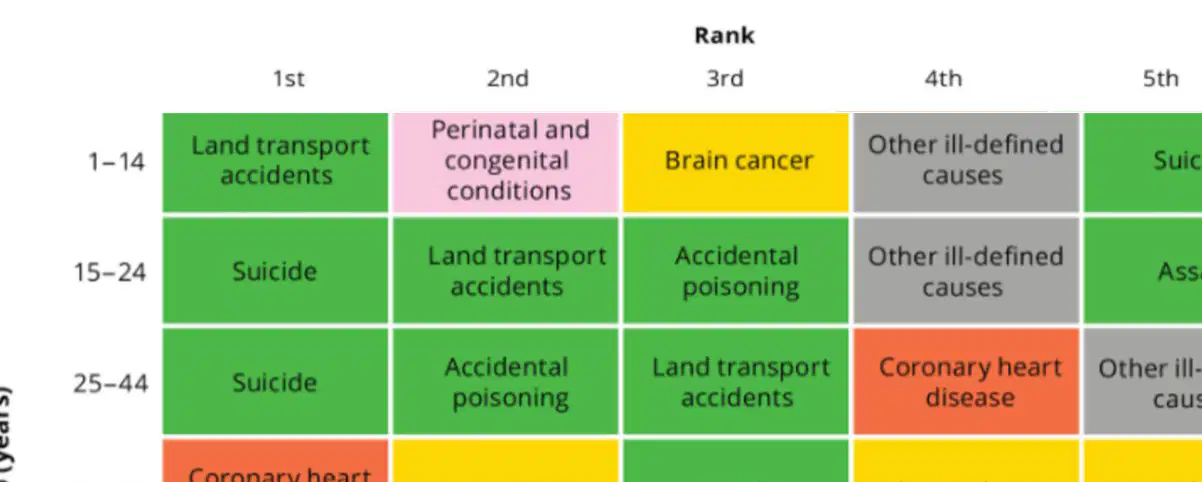
According to Figure 3.2: Leading underlying causes of death in Australia, by age group, 2019–2021, what is the leading cause of death for the age group 1–14 years?
Suicide
Land transport accidents
Brain cancer
Perinatal and congenital conditions
According to Figure 3.2: Leading underlying causes of death in Australia, by age group, 2019–2021, which cause is ranked 2nd for the age group 65–74 years?
Lung cancer
Coronary heart disease
Colorectal cancer
Chronic obstructive pulmonary disease
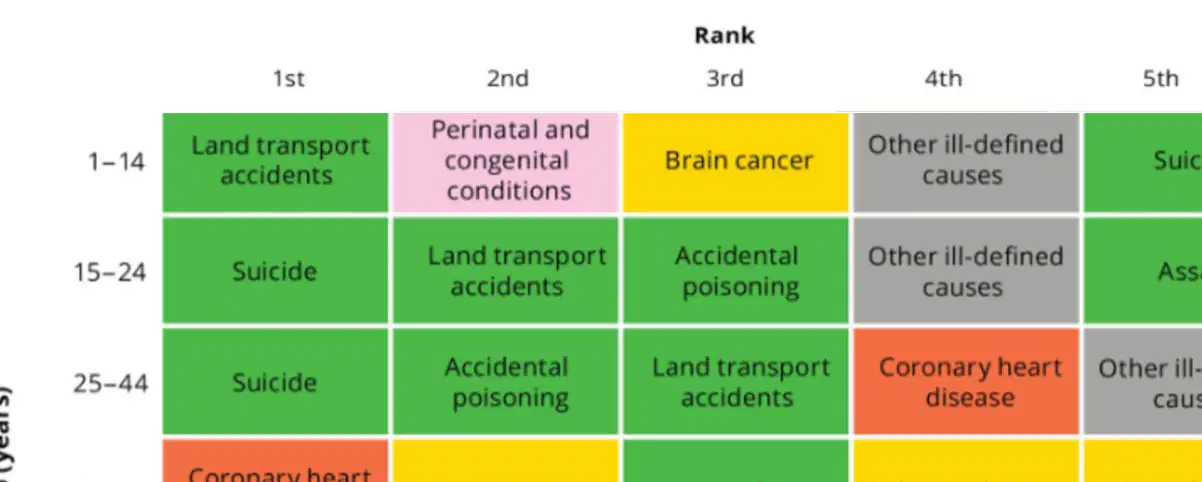
According to Figure 3.2: Leading underlying causes of death in Australia, by age group, 2019–2021, fill in the blank: The 3rd leading cause of death for the age group 25–44 years is ________.
Land transport accidents
Diabetes mellitus
Chronic lower respiratory diseases
Breast cancer
According to Figure 3.2: Leading underlying causes of death in Australia, by age group, 2019–2021, match the age group to its leading cause of death:
15–24 years
Coronary heart disease
45–64 years
Suicide
75–84 years
Dementia including Alzheimer's disease
According to Figure 3.2: Leading underlying causes of death in Australia, by age group, 2019–2021, True or False: 'Lung cancer is the leading cause of death for the age group 65–74 years.'
True
False
Using data (from the table on the PowerPoint), which of the following lists shows the top 5 leading causes of death for your age group?
Heart disease, cancer, accidents, stroke, diabetes
Accidents, suicide, homicide, cancer, heart disease
Cancer, heart disease, stroke, respiratory disease, diabetes
Accidents, cancer, heart disease, stroke, influenza
Identify the causes of death that could be preventable.
Heart disease due to unhealthy lifestyle
Genetic disorders
Natural disasters
Old age
Which of the following best describes the main difference between the leading causes of death for your age group and those aged 45–64?
Younger age groups have more deaths from accidents, while ages 45–64 have more deaths from chronic diseases.
Both age groups have the same leading causes of death.
Younger age groups have more deaths from chronic diseases, while ages 45–64 have more deaths from accidents.
Ages 45–64 have more deaths from infectious diseases than younger age groups.
The leading causes of burden of disease for 15-24 year olds in Australia are:
Mental health disorders and injuries
Cardiovascular diseases
Cancers
Respiratory diseases
According to the chart, what is the leading cause of total burden amongst females aged 15-24 years in 2022?
Depressive disorders
Eating disorders
Anxiety disorders
Asthma
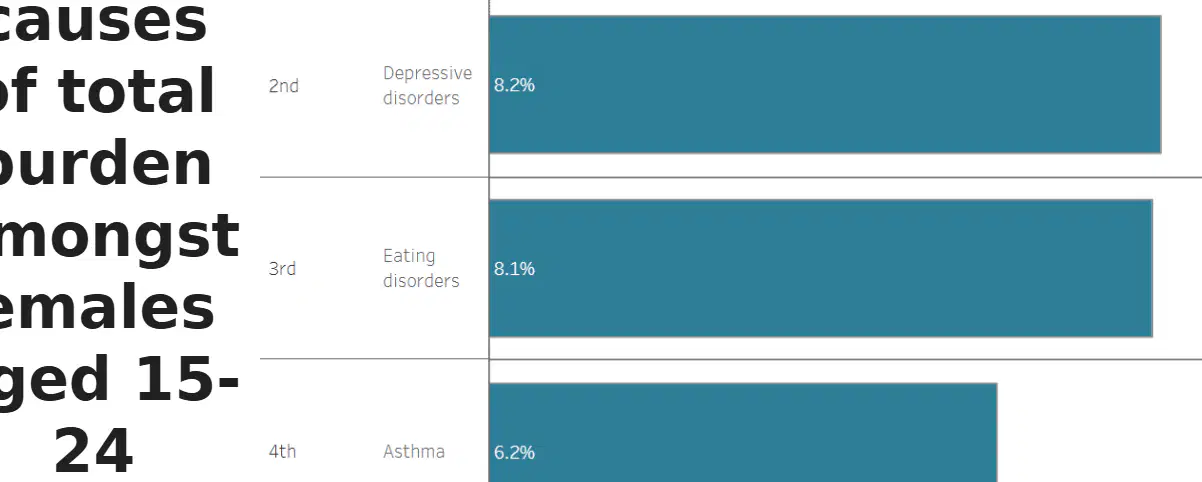
Fill in the blank: The percentage of total burden caused by Depressive disorders amongst females aged 15-24 years in 2022 is _____
8.2%
4.5%
12.7%
6.1%
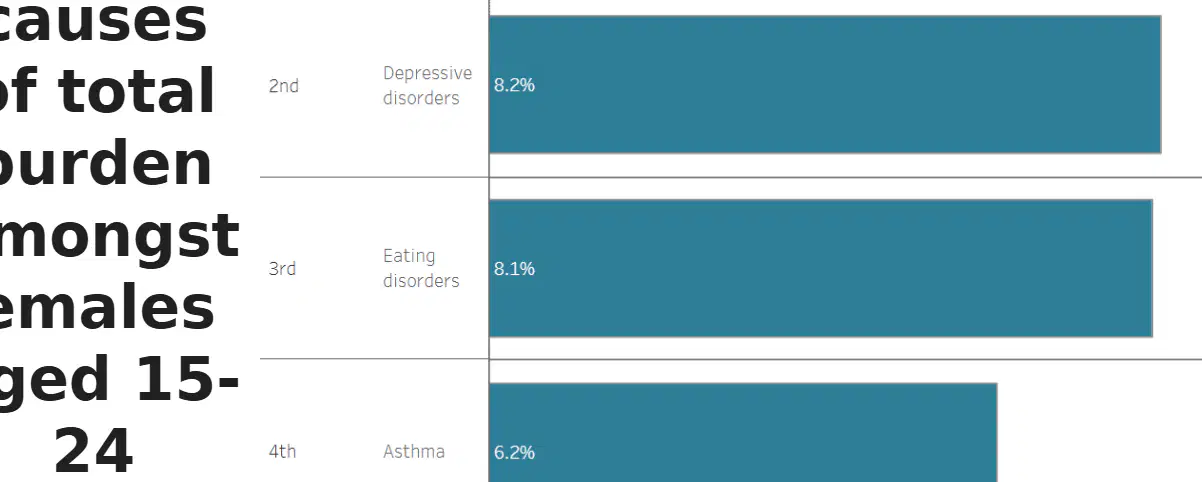
Which of the following causes is ranked 3rd in total burden amongst females aged 15-24 years in 2022?
Asthma
Eating disorders
Suicide and self-inflicted injuries
Anxiety disorders
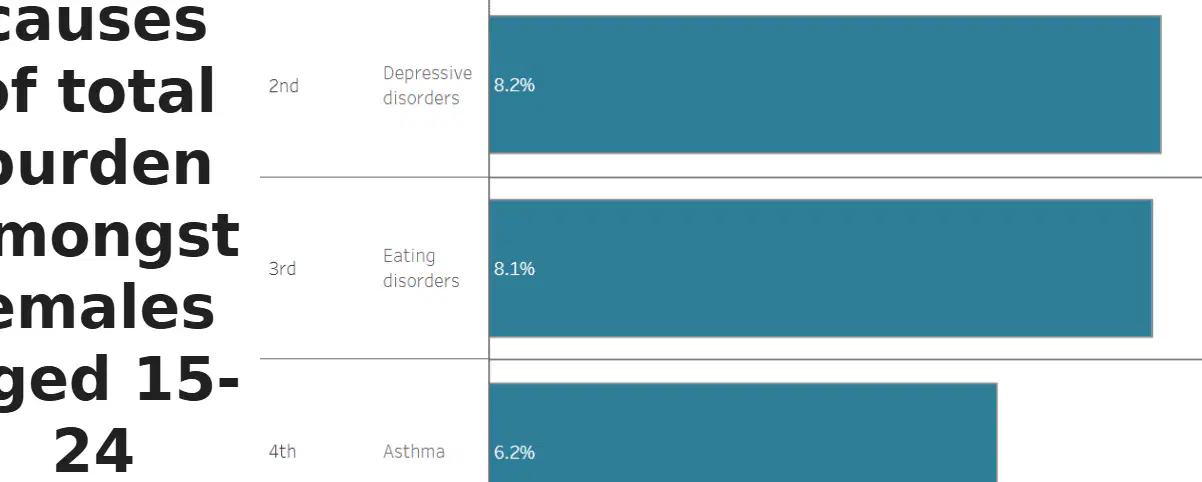
Match the following causes to their respective percentages of total burden amongst females aged 15-24 years in 2022:
6.2%
10.2%
10.2%
6.2%
5.6%
5.6%
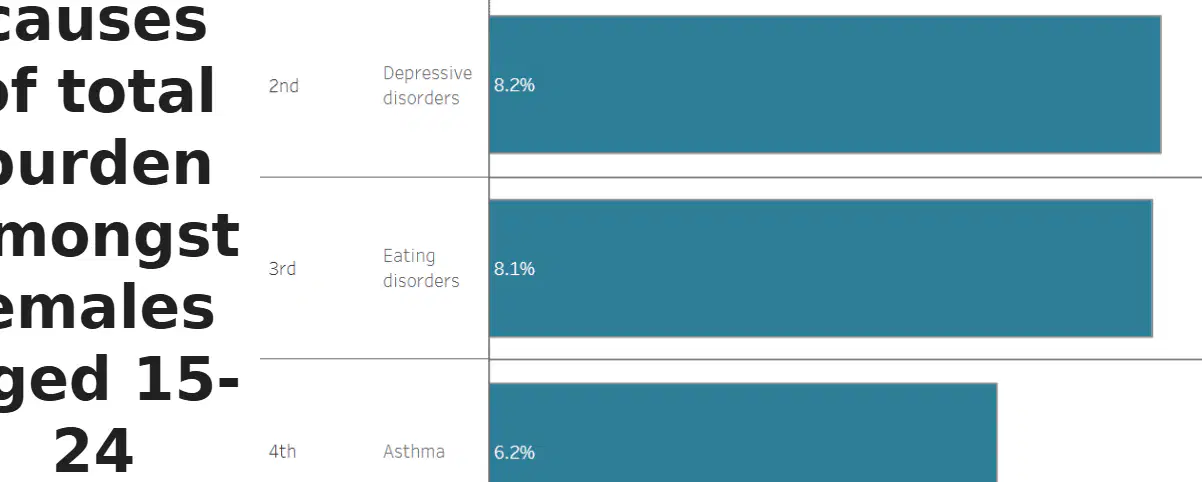
Eating disorders account for a higher percentage of total burden than Asthma amongst females aged 15-24 years in 2022.
True
False

