
 Worksheets
Transducers
Total questions: 120
Worksheet time: 2hrs 41mins
Transforms one form of energy into another.
(a)
Ultrasound (a) : Generates and receives ultrasound.
During transmission, electrical energy from the system is converted into (a)
During reception the reflected sound pulse is converted into (a)
Creation of VOLTAGE when the material is deformed by applied PRESSURE
(a)
Creation of PRESSURE when a VOLTAGE is applied to the material
(a)
Piezoelectric elements convert:
pressure into ultrasound pulses and convert returning echoes back into pressure
voltage into ultrasound pulses and convert returning echoes back into pressure
pressure into ultrasound pulses and convert returning echoes back into voltages
voltage into ultrasound pulses and convert returning echoes back into voltages
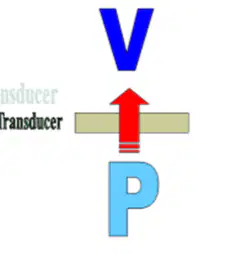
What is this image showing?
Piezoelectric effect
Reverse piezoelectric effect
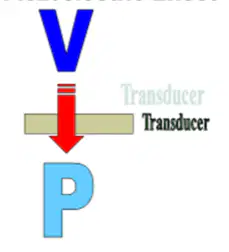
What is this image showing?
Piezoelectric effect
Reverse piezoelectric effect
Materials with the property to be deformed by a pressure and produce a voltage
(a)
Materials with the property to be deformed by a voltage and create a pressure.
(a)
Quartz and Tourmaline are (a) piezoelectric materials
Lead zirconate titanate (PZT) is a (a) piezoelectric material
Why can we not sterilize transducers?
Low temperatures will polarize the crystals, making them active
High temperatures will depolarize the crystals, making them inactive
What temperature does PZT need to be heated to under high voltage?
20 C
365 C
366 C
200 C
Piezoelectric materials need to be heated above (a) temperature
What is the curie point?
The uncritical point on which the ceramic will gain its piezoelectric properties
The critical point beyond which the ceramic will lose its piezoelectric properties (350 degrees celsius for PZT)
The critical point below which the ceramic will lose its piezoelectric properties (50 degrees celsius for PZT)
True or false: The molecules in piezoelectric material are naturally in diasrrange
True
False
At what point will molecules realign with respect to each other?
Below the curie point temperature
Inside the curie point temperature
Beyond the curie point temperature
Along the curie point temperature
Beyond the curie point, A (a) will make molecules align
When the system is cooled down below the curie point temperature while still in the electric field, what do the molecules do?
Line up parallel to each other
Line up perpendicular to each other
Stay the same
If polarized crystals are heated above the cure point they (a) their piezoelectric properties
Non piezoelectric materials combined with piezoelectric materials
(a)
Piezocomposites (a) impedance
Which of the following are improved by piezocomposites?
Frequency
Resolution
Sensitivity
Bandwidth
Pulse ultrasound, range of frequencies in a transducer
(a)
The (a) the pulse, the more frequencies and the broader the bandwidth
Shorter frequency= (a) resolution
A basic ultrasound transducer has the appearance of a ___ tube
Pyramidal
Cylindrical
Rectangular
Squared
Single element transducer = (a) shape
Array or multiple elements = (a) shape
Alternating (a) drive the transducers
How many cycles are produced for a regular sonographic image?
1-9
1-3
1-8
1-7
How many cycles are produced while using doppler?
1-3
1-20
5-9
5-30
Is the coupling gel apart of the transducer?
NO
YES
Wire
(a)
PZT or active element
(a)
Damping or backing material
(a)
Matching layer
(a)
Case
(a)
Electrical Shield
(a)
Acoustic insulator
(a)
Cylindrical tube (metal or plastic)
Protects parts of transducer
Insulates patient from electrical shock
(a)
Thin metallic barrier lining inside the case
Prevents electrical noise
(a)
Thin barrier of cork or rubber
Isolates internal components from the case
(a)
Prevents vibrations from inducing an electrical voltage in the PZT
(a)
Piezoelectric crystal itself
Single element: disco (coin-like)
Multiple element: Array
(a)
One half wavelength thick
(a)
What are the characteristics of the sound beam emitted by the transducer related to?
Case
PZT
Electrical shield
Wire
Electrical connection between PZT and ultrasound system
Allows the voltage to trigger vibration of the crystal and produce sound wave
(a)
During reception: conducts the voltage returning to the system
(a)
At the face of the transducer
Increases sound energy transfer (crystal/body)
Protects the crystal
(a)
One-quarter wavelength thick
(a)
What are the three MAIN elements of the transducer?
Matching layer, wire, case
Acoustic insulator, wire, electrical shield
Backing element, matching layer, PZT
Wire, PZT, case
Matching layer (a) mismatching impedances
The impedance of PZT is about how many times larger than the impedance of skin?
(a)
The thickness of the (a) layer is one quater of a wavelength
The thickness of the (a) element is one-half of the wavelength
It is the operating frequency
(a)
The (a) depends on the thickness of the crystal
Propagation speed in the crystal, Thickness of the crystal
(a)
(a) is determined by the crystals thickness when this is equal to half the wavelength

This equation applies to:
(a)
What is the preferred frequency of the crystal determined by?
Spatial pulse length
Thickness
Depth
Speed of propagation within the material

What does this equation apply to?
(a)
Thickness for a 2.0MHz transducer
1mm
0.6mm
0.4mm
0.2mm
Thickness for a 3.5MHz transducer
1.0mm
0.6mm
0.4mm
0.3mm
Thickness for a 5.0MHz transducer
1.0mm
0.6mm
0.4mm
0.2mm
Thickness for a 5.0MHz
1.0mm
0.6mm
0.4mm
0.3mm
Thickness for a 7.5 MHz transducer
0.3mm
1.0mm
0.6mm
0.2mm
Thickness for a 10.0 MHz transducer
1.0mm
0.2mm
0.4mm
0.6mm
Even when transducers have a preferred frequency, they may have a __ __ __
(a)
Can transducers have more than 1 frequency?
yes
no
The frequency selected is equal to the frequency from the (a)
Selected frequencies must be within the (a)
Selected frequencies must be within the bandwidth which intern must be wide and have a (a)
It is a unitless number inversely related to bandwidth
(a)
Q factor and main frequency are (a) related
(a) = main frequency/bandwidth
Mixture of metal power and plastic or epoxy resin
(a)
It “shortens” the “ringing” of the pulse reduces the number of cycles in the pulse.
(a)
•It reduces the pulse duration and the spatial pulse length (SPL) Improves Axial Resolution
(a)
The downside of damping is that it reduces (a) of the pulse, reducing the efficiency and sensitivity of the system
Damping " (a) " the sound
High degree of sound absorption
Acoustic impedances similar to PZT
(a)
What are the additional consequences related to the use of backing material?
Decreased sensitivity
Wide bandwidth
Low quality factor
High quality factor
Where is damping attached to?
None
The middle of the transducer elements
The front of the transducer elements
The back of the transducer elements
Damping decreases the number of cycles in each pulse to __ typically
1-2
2-3
3-4
4-5
Damping material impedance = (a)
If damping material impedance is equal to the elements impedance, will there be reflection?
Yes
No
Means that during reception, transducers with damping material are less able to convert low-level sound reflections into meaningful signals
(a)
Why does dropping the transducer have a great effect degrading the axial resolution?
Because the backing material may come loose from the crystal
Because the backing material may stiffen
Because the backing material may stay the same
None of the above
Do transducers intended for continuous wave doppler need damping?
Yes
No
What is the purpose of the matching layer?
To avoid great reflection of the sound beam at the interface between transducer and skin.
To avoid great transmission of the sound beam at the interface between transducer and skin.
What is matching layer made of?
(a)
If a matching layer is a quarter of the wavelength of the ultrasound in the crystal, the transmission of ultrasound is much greater. This is called:
(a)
True or false: As many transducers have many frequencies (bandwidth), more compatible matching layers allow for better transmission of sound
True
False
Range of frequencies in the pulse. It is the difference between the highest and lowest frequencies
(a)
Wide bandwidth probes have a (a) Q factor
Transducers with a narrow bandwidth (continuous wave) have a (a) Q factor
A shorter, dampened pulse has a (a) Q factor
Pulse length is (a) related to pulse duration
Q factor is (a) related to bandwidth
Pulse duration is (a) related to bandwidth
The sensitivity of transducers that create short pulses is likely to be __ than that of transducers that create long pulses
Less
Greater
All of the following correctly describe an imaging transducer except:
High sensitivity
Low Q
Wide bandwidth
Damped
In a pulsed wave transducer, the speed of sound in PZT and the frequency of sound are (a) related
When the speed of sound in PZT is faster, the frequency of sound created by a pulsed transducer is (a)
The speed of sound in most piezoelectrical materials ranges from:
1-2mm/us
4-6mm/us
5-9mm/us
4-8mm/us
PZT thickness and frequency are (a) related
Thinner active elements create pulses with (a) frequencies
Which of the following crystals will produce the sound with the lowest frequency?
Thin with a low speed
Thin with a high speed
Thick with a low speed
Thick with a high speed
In an imaging transducer, what is the purpose of attaching the backing material to the PZT
increase the bandwidth
decrease the Q factor
Improve image quality
Decrease sensitivity
A pulsed wave transducer has a resonant frequency of 5MHz. The lowest frequency in the pulse is 2MHz and the highest is 8MHz. What is the bandwidth
5MHz
8MHz
2MHz
6MHz
A pulsed wave transducer has a resonant frequency of 5MHz. The lowest frequency in the pulse is 2MHz and the highest is 8MHz. What is the main frequency?
5MHz
8MHz
3MHz
2MHz
If a matching layer is a quarter of the wavelength of the ultrasound in the crystal, the transmission of ultrasound is much (a)
Materials which convert sound into electricity (or vice verse) are called piezoelectric or (a)
Backing material enhances (a)
Backing materials (a) the pulses
Acoustic frequency = (a) frequency in continuous wave

