
 Worksheets
ACADEC 2025 Science: Electricity & Magnetism Test 1
Total questions: 100
Worksheet time: 1hrs 26mins
Which of the following correctly defines electric charge?
A physical property of matter.
A physical property of electrons.
A physical property of protons.
A physical property of atoms.
Upon what types of objects does the electric force act?
Objects with mass.
Objects with charge.
Magnetic materials.
Objects with inertia.

Two charged objects exert an attractive force on each other as shown. This means..
the two objects are both negatively charged.
the two objects are both positively charged.
the two objects are oppositely charged.
electricity is always an attractive force.

After going down a slide, a child becomes charged. Which of the following best explains why this child's hair stands up on end?
The hairs are oppositely charged and attract each other.
The hairs all have the same charge and repel each other.
The hairs point the direction a positive charge would move.
A negative electric field is created around the child's head.

The image shows the particles found inside an atom. Which of the following correctly identifies the charge of each object.
positive protons, negative neutrons, and neutral electrons.
positive protons, neutral neutrons, and negative electrons.
negative protons, neutral neutrons, and positive electrons.
neutral protons, positive neutrons, and negative electrons.

Which of the following statements about protons and electrons is FALSE?
The charge of a proton is about 1000 times more than an electron.
Electrons have negative charge and protons have positive charge.
They both possess an equal magnitude of charge equal to the elementary charge (e).
An electron is an elementary particle but a proton is not.

The animation shows the free movement of electrons through a material at room temperature. What can we conclude about this material?
This material is a conductor.
This material is an insulator.
This material is neither a conductor nor an insulator.
We cannot know what type of material this is.

The picture shows three charges (A, B, and C) equally spaced from each other. Which of the following correctly gives the direction of the electric force on A from B and C?
B pushes A to the left and C pulls A to the right.
B pushes A to the left and C pushes A to the left.
B pulls A to the right and C pulls A to the right.
B pulls A to the right and C pushes A to the left.

The picture shows three unequal charges spaced an equal distance apart. Which charge exerts a stronger force on charge B?
charge A
charge C
Charges A and C exert an equal force on B
cannot be determined

The graph shows the force exerted between two charges for two configurations of charge (A and B). Based on this graph, which of the following conclusions can be made?
A has a greater amount of charge than B.
B has a greater amount of charge than A.
The charges in A are closer together than in B.
The charges in A are farther apart than in B.

Which particles in an atom create electric fields?
only the electrons
only the protons
protons and electrons, but not the neutrons
all of the particles

The picture shows an electric field in a region of space. Which of the following correctly explains the meaning of the arrows?
The arrows indicate the direction of the electric field.
The arrows show the direction a positive charge will move.
The arrows indicate the direction of the force the field will exert on a positive test charge.
All of the above are true.

Three objects are placed in the electric field. Objects A and C are charged, but object B is neutral. Upon which of these objects does the electric field exert a force?
only A
only C
A and C, but not B
A, B, and C

Suppose each object is released from rest. In what direction will object C move?
to the right
to the left
remain stationary
cannot be determined

The picture shows the electric field surrounding a spherical charge. What is the charge of this object?
positively charged
negatively charged
north pole
south pole

The picture shows the electric field between two parallel plates in three configurations (A, B, and C). In which configuration is the electric field the strongest?
A
B
C
equal for all

A negatively charged ball is placed in an electric field, as shown in the picture. If the ball is released from rest at the position shown, into which container will it land?
A
B
C
D
E

An electric field is created in a conducting wire by placing both ends of the wire across the terminals of a battery. In which direction does the electric field point inside the conductor?
to the left
to the right
there is no field inside the conductor
cannot be determined

What is the name of this circuit element?
an ammeter
resistance
a resistor
ohms
Which of the following correctly shows the direction of the current flow in this simple circuit?


A 3-volt battery is connected to a 12-ohm resistor. What is the current drawn from the battery?
0.25 amperes
0.75 amperes
4 amperes
12 amperes

A resistor draws a 0.2 amperes of current when connected across a 6-volt battery. What is the resistance of this resistor?
1.2 ohms
3 ohms
12 ohms
30 ohms
Which of the following configurations shows how to connect a voltmeter and an ammeter to correctly measure the voltage across and the current through the resistor?


What voltage will this voltmeter measure?
2 V
4 V
6 V
10 V

What is the current in the 2-ohm resistor?
2 A
3 A
5 A
7 A

The picture shows two configurations of identical circuit components (batteries and resistors). Which of the following correctly identifies the circuit configurations?
ABC in series and DEF in series
ABC in series and DEF in parallel
ABC in parallel and DEF in series
ABC in parallel and DEF in parallel

The picture shows two configurations of identical circuit components (batteries and resistors). Select ALL the circuit components that have the same voltage across it as E.
A
B
C
D
F

The picture shows two configurations of identical circuit components (batteries and resistors). Select ALL the circuit components that have the same current through it as B.
A
C
D
E
F

Using Ohm's Law and the circuit rules, determine which voltmeter measures a higher voltage.
voltmeter 1
voltmeter 2
same for both
cannot be determined

Using Ohm's Law and the circuit rules, determine which ammeter measures a greater current.
ammeter 1
ammeter 2
same for both
cannot be determined
Two compasses are placed near the poles of two bar magnets. Which picture shows the compasses in the correct orientation?


The picture shows the magnetic field surrounding two bar magnets. In what direction would a compass needle point at point P?
up
down
left
right

Which of these is the best reason why the compass from the previous question points up at point P?
compasses point away from north poles
the north poles of the magnets repel the compass
the magnetic field lines point up at point P
compasses always point up

Identify the magnetic pole in question.
north
south
positive
negative

Four particles are placed in a magnetic field. Particles A and D are moving, the rest are stationary. Which particle will feel a force from this magnetic field?
A
B
C
D
None of them feel a force
The pictures show the magnetic field surrounding a current-carrying wire. In which picture is the current shown flowing in the WRONG direction?


The animation shows a coil gun, a type of projectile accelerator consisting of one or more coils used as electromagnets that accelerate a ferromagnetic projectile to high velocity. Upon which law of electromagnetism does this mechanism primarily rely upon?
Ørsted's Law
Faraday's Law
Lenz's Law
Maxwell's Law
In each of the following situations a conductor is placed in a magnetic field. Identify the situation in which a current will NOT be induced in the conductor.


A bar magnet is moved towards a coil of wire. In which of the following pictures is the direction of the induced current correctly indicated?


The picture shows an increasing current flowing through a conducting coil which induces a clockwise current in a loop of wire inside the coil. In which direction does the current flow through the conducting coil?
clockwise
counterclockwise
out of the page
into the page
Electric charges always flow from _____ areas to _____ areas.
positive, negative
negative, positive
positive, neutral
neutral, negative
. A material through which electrons do NOT flow easily is a(n) _____.
insulator
fuse
conductor
circuit breaker
Which of the following statements about electric charge is true?
Objects must be touching on another to exert electrical force.
Electrical forces act at a distance.
Air cannot conduct electricity; it is conducted only by solid materials.
Opposite electric charges always repel one another.
Mr. Robinson and his class are conducting an experiment. The class needs to choose a good insulator. Which of the following could be used as an insulator?
plastic plate
silver spoon
copper wire
gold necklace
Which of the following will increase the resistance of a wire?
using a thicker/wider wire
using a shorter wire
increasing the temperature of the wire
using silver instead of copper
The function of a generator is to change ____.
chemical energy to electrical energy
electrical energy to chemical energy
electrical energy to mechanical energy
mechanical energy to electrical energy
This exerts a force that causes other electric charges to move.
electrical poles
electrical fields
insulators
conductors
The Law of Conservation of Charge states that _____.
charge can be created and destroyed but NOT transferred.
charge cannot be created and destroyed but it can be transferred.
charge cannot be created and destroyed and it cannot be transferred.
none of the above
Protons
Positively charged particles in an atom
Electrons
Negatively charged particles in an atom
Neutrons
Particles in the atom that have no charge
Ferromegnetism
When non-magnetic materials become attracted to magnets
Electroscope
A device that detects electric charge on an object
Silver has a resistance of 0.0198 ohms. What voltage would produce a current of 100 amps?
1.98 V
0.000198 V
5,050 V
100.0198 V
Electromagnets
Temporary magnet made by placing a piece of iron inside a current carrying coil of wire.
Voltmeter
A device that measures the voltage difference in a circuit
Series Circuit
Circuit that has only one pathway for current to travel through
Parallel Circuit
Circuit that has more than one pathway for current to travel through


This is the symbol of which electrical device?
A light bulb
An resistor
An electrical cell
A switch

This circuit is ...........................?
open
parallel
closed
the cutiest little circuit ever!

The picture shows an electric circuit. This is a series circuit because:
The electrical current is divided between the three light bulbs.
It has 3 light bulbs.
The same current flows through all threelight bulbs.
It uses a single battery
Which best describes a parallel circuit?
Electricity flows along one pathway.
The flow of electricity comes from more than one source.
Electricity flows along more than one pathway
The flow of electricity comes from one source.
What is one problem with using a series circuit?
If one device goes down, they all go down!
It doesn't work properly.
It has a lot of series.
There are no problems.

Does this diagram represent a series or parallel circuit?
parallel
series

This is an example of a _______ circuit
open
series
parallel
switch
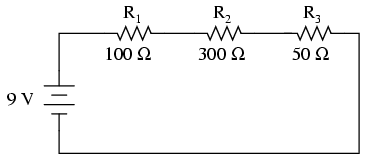

What is D?
Wires
Bulb
Switch
Energy Source
The rate of electron flow in a circuit
Voltage
Resistance
Current
Opposition to the flow of electrons
Current
Voltage
Resistance
Unit is Ohms Ω
Current
Resistance
Voltage
Unit is Amps (A)
Current
Voltage
Resistance
Unit is Volts (V)
Current
Voltage
Resistance
Resistance is measured in a unit called the
Ampere
Coulomb
Ohm
Volt
The statement that current is equal to the voltage divided by the resistance is known as
Einsteins law
Faradays law
Newtons law
Ohms law
A path that allows only one route for an electric current is called a
Parallel circuit
Current circuit
Current electricity
Static electricity
What is the charge of a proton?
Neutral
Positive
Negative
Current that does NOT reverse direction is called
Direct current
Alternating current
Circuit current
Magnetic current
The location of the strongest magnetic force is the
Electromagnets
Magnetic domains
Magnetic fields
Magnetic poles
Current that’s reversed direction in a regular pattern is called
Alternating current
Circuit current
Direct current
Magnetic current
Current is measured in units called
Ohms
Coluombs
Volts
Amperes
The region around a magnet where the magnetic forces act is the
Electromagnetic pole
Magnetic domain
Magnetic field
Magnetic pole
Objects that keep their magnetic properties for a long time are called
Electromagnets
Magnetic domains
Permanent magnets
Temporary magnets
True of false: The function of an electric motor is to change electric energy to mechanical energy
True
False
True or false: The function of a generator is to change mechanical energy to electrical energy
False
True
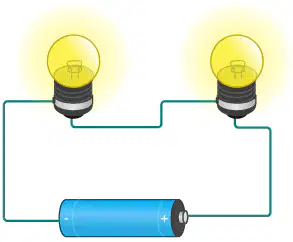
What type of circuit is pictured here?
series
Parallel
A battery produces
An alternating current
A direct current
The same current that a generator produces
Both direct and alternating
The magnetic force of a magnet is
The same at all parts of the magnet
Strongest at the center
Strongest at the poles
Weakest at the poles
Voltage is measured in
Amperes
Volts
Coulombs
Ohms

What type of circuit is pictured here?
Series
Parallel
What is the charge of an electron?
Negative
Positive
Neutral
A material through which electrons do NOT flow easily is a
Conductor
Fuse
Insulator
Transformer
Lightning is
A buildup of electons
Harmless
A high voltage electric current
A large discharge of static electricity
Monica has a string of lights on a parallel circuit. What will occur if one of the light bulbs on the circuit burns out?
The burnt out bulb will begin to blink
Nothing will happen to the rest of the bulbs
All the bulbs with go out
The light bulbs after the burnt out bulb will go out
If a bulb is added to the circuit below, the other bulbs will…
Maintain the same brightness
Glow with greater intensity
Glow with less intensity
Stop glowing
It’s a cold winter day. When you remove your wool snow hat, your hair stands up. Why does it do this?
Each hair gains electrons, becomes negatively charged and attracts the other hairs on your head
Each hair loses electrons, becomes positively charged and repels the other hairs on your head
Each hair gains electrons, becomes positively charged and repels the other hairs on your head
Find the resistances of a circuit that draws .25 A with 12 V applied
(a)
A 27 volt relay has a resistance of 125 ohms. How much current does it draw?
(a)
Find the applied voltage of a circuit that draws 3.5 A through a 1500 ohm resistance
(a)
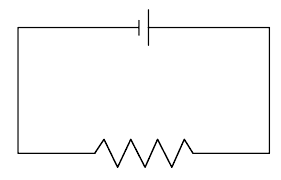
What direction do the electrons flow in a closed circuit? What direction does the current flow?
Electrons: positive to negative battery terminals. Current: negative to positive terminals.
Electrons: positive to negative battery terminals. Current: positive to negative terminals.
Electrons: negative to positive battery terminals. Current: negative to positive terminals.
Electrons: negative to positive battery terminals. Current: positive to negative terminals.

