
NEW
Font size
 Worksheets
PT38
Total questions: 79
Worksheet time: 1hrs 19mins

A 37 year old female presents with 1 day of severe, central abdominal pain. Clinical examination of the abdomen reveals this finding. What is the most likely diagnosis?
Pancreatitis
Bowel obstruction
Appedicitis
UTI
Cholecystitis
He has a normal bone scan. First line treatment is calcium and vitamin D supplementation.
James Wong is a 72-year-old NZ European man who presents to the neurology clinic with his wife. He was diagnosed with Parkinson’s disease 5 years ago and has been managed with levodopa/carbidopa with good control of his motor symptoms. Over the past year, however, his wife reports increasing forgetfulness, difficulty following conversations, and episodes of visual hallucinations involving “a guardian angel in the living room.” He sometimes acts out his dreams and appears confused in the mornings. He remains independent in most activities of daily living, but his wife is concerned about his safety at home and his recent behavioral changes. What is the most appropriate medication change that might be considered in this scenario?
Start Ropinirole
Start Haloperidol
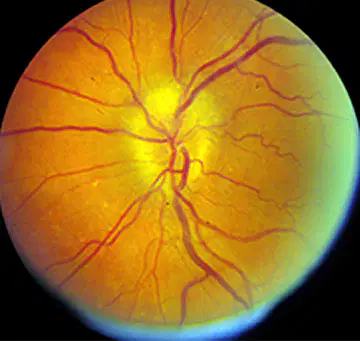
A 35-year-old woman presents with progressive vision loss in her right eye over the past few days. She reports eye pain initially, which has resolved now, but her vision has continued to deteriorate. On examination, she has a central scotoma in the right eye. Fundoscopy reveals the following. What is the likely diagnosis?
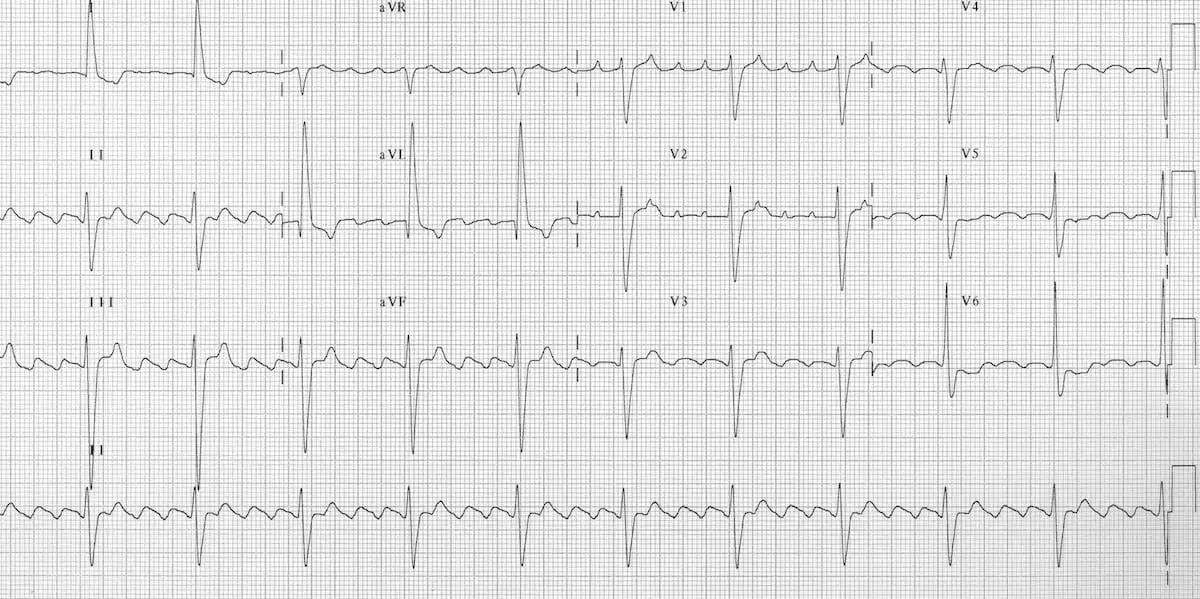
A 45 year old Maori gentleman presents to ED with 2 weeks of worsening exertional dyspnea and new pedal oedema. He notes that his pulse has been very fast over a similar period and has started to develop pre-syncopal episodes. He has a background of hypertension, OSA, T2DM and obesity.
Vitals on presentation demonstrate BP 150/90, rr24, SpO2 94%, Hr 150. Afebrile. To examine the JVP is raised at 5cm, there are bibasal crepitation and pedal oedema to the hips.
ECG taken after initial therapy is demonstrated. What rhythm is noted on the ECG
AVNRT
Paroxysmal AF
Atrial Flutter
Persistent AF
Sinus tachycardia
A 78 year old female presents to Taranaki Base ED 3 hours after acute onset of Left sided upper and lower limb weakness, dysarthria, L) sided facial droop and a Left homonymous hemianopia. She has a background of Hypertension, Permanent AF, Hyperlipidaemia, and prior Breast cancer. She takes lisonpril 5mg OD, and 110mg Dabigatran BD.
Her NIHSS score is 12. What is the next most important step of management?
Non-contrast CT brain
Thrombolysis with weight adjusted dose of Alteplase
Load Aspirin 300mg and Clopidogrel 600mg
Reverse Dabigatran with Idarucizumab
Refer to the appropriate clot retrieval centre
A 47-year-old female presents to her GP with a lump in her lower left abdomen. It has been present for 3 weeks but is not causing her any symptoms. On exam, a palpable lump is felt inferolateral to the pubic tubercle on the left side. What clinical feature should prompt the GP to admit the patient into hospital for urgent surgical review?
Mass is irreducible on examination
Patient reports 7/10 pain severity
Lactate 3.1 on Venous Blood Gas Investigation
Prior abdominal surgery
Nausea and Vomiting
A 64-year-old NZ European man presents to the ED with worsening shortness of breath and pitting oedema to knees over the past 3 months. He has a past medical history of a NSTEMI 5 months ago and subsequently received a transthoracic echocardiogram demonstrating LV Function of 30%. Which medication is NOT shown to improve his long-term mortality?
Beta Blockers
Angiotensin Receptor-Neprilysin Inhibitor
Mineralocorticoid Receptor Antagonist
Sodium-Glucose Transport Protein 2 Inhibitors
Calcium Channel Blockers
A 42-year-old NZ European woman presents to the ED with a 1-day history of intermittent right upper quadrant abdominal pain. The pain suddenly got worse around midday when she had a pie and potato chips for lunch. She does not take any significant past medical history and does not take any regular medications. On exam: normal BMI, afebrile, BP 160/90, and HR 100bpm. On abdominal examination, Rovsing's sign is negative, and Murphy's sign is positive. Apart from blood tests, what is the next best investigation for this patient?
CT Abdomen/Pelvis with contrast
CT Abdomen/Pelvis without contrast
Endoscopic Retrograde Cholangio-Pancreatography (ERCP)
Abdominal Ultrasound
Magnetic Resonance Cholangiopancreatography (MRCP)
Refer to Paediatrics for an outpatient clinic review
Request an MRI brain to rule out cerebral palsy
Order routine bloods and metabolic screening
Recommend weekly physiotherapy
A 24-year-old man presents to your GP clinic with a 4-day history of sore throat, nasal congestion, dry cough and fatigue. He also reports subjective fevers and myalgias. He has no significant past medical history and is fully vaccinated. On examination, his temperature is 37.9°C, pulse 84 bpm, RR 14, and oxygen saturation 99% on room air. There is erythema of the oropharynx and clear lungs on auscultation. Which of the following is the most likely diagnosis?
B. Viral lower respiratory tract infection
D. Pneumonia
A 25-year-old woman presents to the GP accompanied by her mother. Over the past three weeks, she has had severely reduced sleep due to spending most nights composing music, claiming she is the “greatest artist of all time.” Over the last week, she has barely eaten and has been unable to work. She reported she spent over $1000 on new music equipment. She has a known history of low mood but is otherwise well. Her only regular medication is Sertraline 50 mg daily which was started last year. Her vital signs are normal. During the consultation she displayed pressured speech and was difficult to interrupt. What is the most likely diagnosis?
Cyclothymic disorder
Serotonin syndrome
A 24-year-old woman presents to the ED with lower abdominal pain for two weeks. She has also noticed some unusual vaginal discharge and pain during sexual activity. On exam she is afebrile and has normal vital signs. She has a mildly tender lower abdomen on abdominal examination. On pelvic examination there is cervical motion tenderness and yellow discharge. There is no significant past medical history. She is allergic to penicillin. Urine pregnancy test is negative. Considering the likely diagnosis, what is the most appropriate management?
Refer acutely to Gynaecology for admission and intravenous antibiotics
Ceftriaxone + Doxycycline + Metronidazole
Doxycyline + Azithromycin
No antibiotics required given patient is systemically well. Take vaginal/STI swabs. Treat if swabs return positive
Ceftriaxone + Azithromycin + Metronidazole
A 32-year-old woman presents to the Emergency Department with a 2-day history of severe dizziness, nausea, and vomiting. She had a mild upper respiratory tract infection last week. She describes the room as 'spinning around' and has difficulty walking due to loss of balance. She denies any hearing loss, tinnitus, or ear fullness. On examination, she has horizontal nystagmus to the left and a positive head impulse test to the right. Her otoscopic examination is normal, and a Rinne's test shows air conduction greater than bone conduction bilaterally. Weber's test does not lateralise. What is the most likely diagnosis?
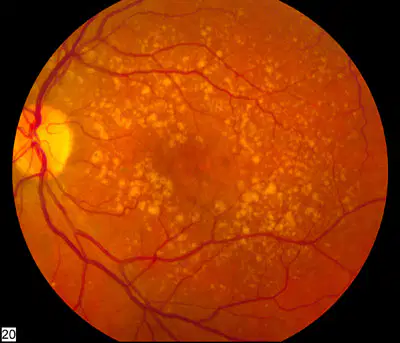
A 74-year-old man presents with several months of progressive deterioration in vision in both eyes. He is having increasing difficulty adapting to the dark and also with reading the newspaper. He has no significant past medical history but is a lifelong cigarette smoker. Fundoscopy is performed, which reveals yellow areas of pigment deposition at the centre of the retina. What test is most likely to be used in the monitoring of this condition?
Visual field testing
A 68-year-old man presents to the emergency department with a 2-day history of colicky abdominal pain, nausea, and vomiting. He has not passed flatus or opened his bowels in the last 24 hours. PMHx: Right Hemicolectomy in 2018 for Colorectal cancer. Surveillance colonoscopy 3 months ago was normal.
On examination, his abdomen is distended with high-pitched bowel sounds. He has a midline surgical scar. An abdominal X-ray shows multiple dilated loops of small bowel with air-fluid levels. Which of the following is the most likely cause of his condition?
A 28 year old man presents to the GP with a painless ulcer on his penis that he noticed about 10 days ago. He denies any pain or discharge, with no systemic symptoms. On examination, a single, non-tender ulcer is noted on the glans penis with bilateral, non-tender inguinal lymphadenopathy. The man is otherwise healthy with no significant past medical history. During history taking, he notes having multiple male sexual partners in the past year and reports inconsistent condom use. Based on the symptoms and history, which microbial infection is suspected.
Herpes Simplex virus-2
Chlamydia trachomatis
Human immunodeficiency virus-1
A 25-year-old man reports that he experienced a sharp pain in the back of his calf while he was playing football and had to go offside following this as he was struggling to walk. He is seen by his team doctor who examines him and remarks that he has a positive Simmond-Thompson (Calf-squeeze) test sign. He was recently treated with ciprofloxacin for a urinary tract infection. Which one of the following injuries is he likely to have sustained?
A 25-year-old Pakeha woman presents to her GP with acutely worsening fatigue. She reports feeling weak and noticed that she has become pale. She has been a vegetarian her whole life. She describes her menstrual periods as heavy but regular, lasting 5 days and denies symptoms of significant menorrhagia. She is currently menstruating and is “heavier than normal”. She has a history of ulcerative colitis diagnosed 6 years prior however she thinks she is managing this well. Investigation results are as follows: Haemoglobin: 102 g/L (~120-160) MCV: 76 fL (80-100) CRP: 7mg/L (<10) Serum Iron: 5µmol/L (low) Transferrin: 96µmol/L (High) Transferrin saturation: 14% (low) Ferritin: 19µg/L (low)
What is the likely cause of her anaemia?
Vitamin B12 deficiency
A 28-day-old male neonate is noted to have episodes of cyanosis, especially when crying or feeding. On examination, he is tachypnoeic with a systolic murmur best heard at the left upper sternal border. Pulse oximetry shows an SpO₂ of 88% in room air. chest X-ray below. Which of the following is the most likely diagnosis?
Tetralogy of Fallot
A 38 year old male presents to ED with severe upper abdominal pain, alongside vomiting and a fever. When asked about his pain, he describes that it feels like he has been stabbed, with the pain moving to his back. On examination he is tender in the epigastric region with guarding. Which blood test would be the most reliable marker to confirm his diagnosis?
bHCG
A 74-year-old man presents with gradually worsening exertional dyspnea, chest tightness, and occasional dizziness when walking uphill. On examination, you hear a systolic murmur, loudest at the right upper sternal border with radiation to the carotids. Which of the following is the most likely underlying pathology?
A 29 year old Korean woman, G1P0, 32+5 has presented to your antenatal clinic for a routine check. Aside from fatigue and mild foot swelling, she has had a relatively asymptomatic pregnancy. Her intent is to deliver vaginally. On examination, her fundal height measurement is 4cm above expectation for gestational age, and a growth scan reveals polyhydramnios with normal fetal growth. Umbilical artery doppler showed no obvious abnormalities and she has not had contractions, cramping or PV loss of fluid/bleeding. Given your likely diagnosis, which of the following complications is least likely to occur as a result of this condition?
Preterm Labour
Fetal Pulmonary Hypoplasia
Fetal Malpresentation
Cord Prolapse
A 68-year-old man presents to the emergency department with sudden onset severe chest pain radiating to his back. He is diaphoretic and appears anxious. There is no improvement in the pain with change in position. He is a non-smoker, and is not on any regular medications, although he hasn't visited the GP in years. His blood pressure is 182/90 mmHg in the right arm and 160/85 mmHg in the left arm. He is afebrile with saturations of 96% on room air. ECG shows sinus rhythm with non-specific ST changes. Chest X-ray reveals a widened mediastinum. What is the most likely diagnosis?
A 48-year-old Pakeha man presents to his GP with a 6-month history of heartburn and increased bloating/belching after meals. He recalls having a bout of similar symptoms in his 20's. He intermittently uses antacids purchased from the pharmacy which temporarily relieve his symptoms. He denies any weight loss, dysphagia or vomiting. He has a 20-pack year smoking history and reports drinking around 8 beers on the weekend. There is no relevant family history. Abdominal examination is unremarkable. What is the most appropriate next step in his management?
Provide reassurance that reflux symptoms are common and he should continue to use antacids as required
Start PPI therapy. Review in 1 month
Advise him to keep a symptom diary and eliminate alcohol. Review in 3 months
Refer for urgent outpatient gastroscopy
Order an H. Pylori stool test
A 37 yo Māori woman presents to your GP clinic with involuntary urine leakage when couching or exercising. She has three children and finds it difficult to manage. She denies any dysuria, frequency, or urgency. There is no evidence of prolapse on speculum exam. MSU and STI tests are negative. She has a BMI of 31 and an HbA1c of 40. She is otherwise well.
Which of the following is the most appropriate initial management strategy?
Recommend scheduled voiding every 2 hours during the day, a bladder diary, and encourage weight loss.
Start oxybutynin 5mg BD in combination with bladder retraining
Refer for urogynae assessment for consideration of a mid-urethral sling
Recommend pelvic floor exercises, weight loss, and limiting excessive caffeine intake
Start solifenacin 5mg daily in combination with bladder retraining
A 76yo NZE woman presents to the GP clinic reporting progressive difficulty seeing in dim light and frequent bumping into furniture. She also reports misty or blurry patches in her peripheral vision, and seeing halos around lights. She has no history of eye pain, photophobia, or central vision distortion.
She has a 20 pack year history, and drinks a bottle of wine/day. She has a history of Polymyalgia Rheumatica, and has recently finished a long tapering course of steroids.
On examination, her visual acuity is 6/9 bilaterally. Visual field testing shows arcuate scotomas in the peripheral nasal fields. Red reflex is preserved. Fundoscopy reveals bilateral optic disc cupping.
What is the most likely diagnosis?
Chronic open-angle glaucoma
Acute angle-closure glaucoma
Cateracts
Dry age-related macular degneration
Wet age-related macular degeneration
A 43-year-old Pacific woman presents to the ED with a 2 week history of intermittent RUQ pain occurring after meals, particularly fatty. The pain is sharp and colicky, and episodes last around 45 minutes and resolve spontaneously. She has been otherwise well, no fever, vomiting, jaundice.
On examination, her vitals are stable. Abdominal exam reveals mild tenderness in the RUQ, but no guarding or rebound tenderness. Murphy's sign is negative.
LFTs and Lipase are within range.
What is the most appropriate next investigation?
Abdominal CT Scan
Upper Abdominal Ultrasound
Magnetic Resonance Cholangiopancreatography (MRCP)
Endoscopic Retrograde Cholangiopancreatography (ERCP)
Blood Cultures
A 28yo Māori woman, G1P0, presents to hospital at 34/40 gestation after referral from her midwife with new high blood pressure on 2 tests 4 hours apart. Her BP is 152/94mmHg.
She reports feeling well, and has had no headaches, visual changes, epigastric pain, peripheral oedema or reduced fetal movements. There is no proteinuria on urine dipstick, nor raised urine protein:creatinine ratio. Neuro exam is normal. Bloods including FBC, U&Es and LFTs are unremarkable.
What is the most appropriate immediate management?
Admit to hospital for close monitoring of BP and fetal wellbeing
Schedule induction of labour at 37 weeks
Start antihypertensive treatment with Nifedipine
Administer a loading dose of Magnesium sulphate
Start aspirin 100mg nocte
A 72 year old NZE man presents to ED with acute onset Left arm and leg weakness. On exam, his Right eye is deviated downward and outward, his R) pupil is dilated and he has R) sided ptosis. He is alert and oriented.
Which artery is most likely to have been affected?
A 23 year old NZ European male has presented to the ED with a painful R shoulder after playing a game of tennis and sustaining a fall. His R arm is held abducted and externally rotated. Where on his arm is sensation most likely to be impaired?
Four-month-old twins are brought in for a well-child examination. They were born at term after an uncomplicated pregnancy and have been healthy since. The birth weight of the first infant was 2606 g (6 lb 3 oz); his current weight is 6600 g (14 lb 9 oz) and he is at the 30th percentile. The birth weight of the second infant was 2580 g (5 lb 11oz); her current weight is 6500 g (14 lb 5 oz) and she is at the 25th percentile. Both of the twins can raise their head and chest in the prone position, reach for objects with one hand, localize sounds, and laughs, smiles at sounds and sights. Two weeks ago, the female twin started propping herself up on her hands when prone. The mother expresses concern because the other twin is still unable to do so. Which of the following is the most appropriate response by the physician?
A 72-year-old woman presents with increasing fatigue, mild confusion, and a recent history of falls. Her past medical history includes hypertension, type 2 diabetes, and small cell lung carcinoma diagnosed two months ago. She is taking metformin, enalapril, and codeine for pain. On examination, her mucous membranes are moist, there is no peripheral oedema, and her blood pressure is stable. JVP is not elevated. She has not had any episodes of vomiting, diarrhoea, or diuretic use. Morning cortisol is normal, a CT brain is unremarkable. Which of the following is the most likely cause of her current symptoms?
A 62-year-old female presents to the emergency department with a week-long history of dyspnea and peripheral oedema. She has a past medical history of stage 5 CKD on the waitlist for haemodialysis, Type 2 Diabetes, previous myocardial infarction and recurrent recent admissions with fluid overload. Her CXR demonstrates perihilar haziness, upper lobe diversion and cardiomegaly. She fails to respond to IV diuresis therapy on this admission with increasing oxygen requirements. What is the next best step in management of this patient?
Invasive ventilation
Arrange AV fistula formation with vascular surgery
Arrange temporary central line access for urgent hemodialysis
A 80-year-old European woman was brought into the emergency department by her neighbour. The patient is drowsy and disoriented. The neighbour reports that the patient complained of a fall few days ago. There is an evident laceration on her scalp. Her INR is 3.4. CT Head demonstrates a crescent-shaped hyper-density encompassing the left hemisphere without midline shift. What are the next best steps in management?
Discuss with neurology to organise urgent thrombolysis
Correct INR and discuss with neurosurgery
Palliation given high mortality and morbidity associated
Discuss with infectious disease team regarding empiric antibiotic coverage
Start antibiotics, give tetanus injection, correct INR
A 45-year-old man, returned traveller from India, presents with a 3-day history of cough, haemoptysis, chest pain and weight loss. CXR showed multiple cavities. Which of the following is MOST UNLIKELY to benefit the patient currently?
A 73-year-old man presents to emergency department with sudden onset and severe abdominal pain lasting for the last hour. She has a past medical history of atrial fibrillation. Her regular medications include bisoprolol and rivaroxaban, although she has recently run out of her regular medications. Her FBC shows a mild rise in WCC and CRP 6, and a venous blood gas reveals metabolic acidosis. What is the most appropriate investigation for this patient?
A 60-year-old man presents with aching pain in lower back, buttocks and legs. Which of these features is most consistent with neurogenic claudication?
Rapid relief with rest
Presence of pallor
Walking uphill alleviates pain
Reduced peripheral pulses
Intact motor strength
Researchers are interested in studying the relationship between exposure to potential environmental contamination and the development of lymphoma. They have historical records of residence around a chemical factory for the past 65 years and medical records. They plan to group workers based on their degree of exposure and assess the incidence of lymphoma.
Which of the following study designs would be the most appropriate for this research question?
Case-control study
Prospective cohort study
cross-sectional study
Randomised controlled trial
Retrospective cohort study.
A new diagnostic test for ischaemic heart disease (IHD) was evaluated in a population of 100 individuals. The results are as follows:
40 individuals truly have IHD (confirmed by a gold standard test).
Of these, 32 tested positive using the new test.
Of those without IHD, 50 tested negative.
What is the Positive predictive value of this diagnostic test?
80%
83%
89%
50%
76%
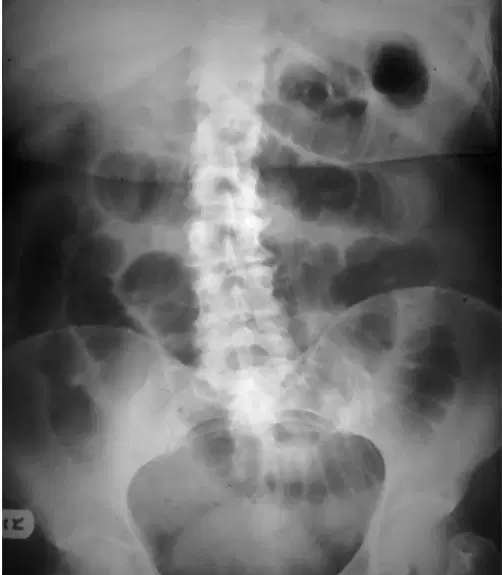
A 32-year-old woman is admitted as an emergency with colicky abdominal pain, constipation and vomiting. Her only previous medical history is of laparotomy for perforated appendix aged 24 years.
On examination her abdomen was distended but minimally tender. No masses were palpable. Bowel sounds were tinkling in nature. An abdominal x ray was performed.
Caecal volvulus
Colonic obstruction
Perforated peptic ulcer
Sigmoid volvulus
Small bowel obstruction
A 25-year-old NZE woman presents to GP with recurrent headaches. These headaches occur around once a month. The headaches are unilateral around the eye, throbbing in nature, preceded by colourful patches in her vision. They usually last 4-6 hours and are worsened by loud noise. Given the likely diagnosis, what medication should be given to prevent her symptoms?
Propranolol
Gabapentin
A 7-year-old NZE male is brought to his GP with a 2-week history of limping. His parents report that he has no history of trauma but has been complaining of right-sided groin and knee pain. The limp is worse after activity and he has started to avoid playing at school. On examination, there is a painless limp, and reduced internal rotation and abduction of the right hip. His temperature is 36.8°C and blood tests show normal inflammatory markers. Ultrasound of the hips show no effusion. Which of the following is the most likely diagnosis?
A 24-year-old man with moderate severity major depressive disorder has been started on sertraline 50mg PO OD. He returns to your GP clinic one month later informing you his symptoms have not really improved. There are no significant medication side effects. He has passive suicidal thoughts but there are no acute safety concerns. What is the next best step in management?
Increase sertraline dose
Refer to Mental Health for assessment
Discontinue sertraline, start venlaflaxine
Discontinue sertraline, then wait 2 weeks before starting citalopram
A 67 year old man presents to the GP clinic with a two year history of progressive slowness and stiffness of his movements. More recently, he has developed some difficulty swallowing, urinary urgency and frequent light-headedness upon standing up. A neurological exam conducted shows reduced arm swing, bradykinesia, rigidity, and a resting tremor in the right hand. There is no tremor on the left side. He was started on levodopa 3 months ago with minimal improvement. Which of the following features most strongly suggests that this patient may have an atypical Parkinson's syndrome rather than Idiopathic Parkinson’s Disease?
Age of onset of symptoms
Presence of resting tremor
Poor response to levodopa
A 23-year-old fit and well chiropractor student presents with recent episodes of wheeze and shortness of breath. He has a history of childhood asthma, although he stopped using inhalers at high school as he felt he "grew out" of it. However, for the past month, he used his salbutamol inhaler at least twice a day, mostly during exercises and right before bed. He found his salbutamol inhaler helpful. He has otherwise been well, no fevers. What is the best pharmacological management for his asthma?
ICS/LABA as required
Daily ICS/LABA AND as required
SABA as required
Daily ICS
A 68-year-old man with a history of hypertension, hyperlipidaemia presents with a 3-month history of right calf pain on walking, which resolves with rest. He is a current smoker. On examination, his right dorsalis pedis pulse is reduced compared to the left. To help confirm the likely diagnosis, which of the following is the most appropriate initial investigation?
CT angiography
FBC, fasting lipids, HbA1c, renal function
Jason, a 24 year old male with treatment resistant schizophrenia, was started on clozapine 2 weeks ago. Prior to this he was prescribed olanzapine, which was reduced down prior to commencement of clozapine. He also takes sertraline for depression. His psychiatric symptoms have improved since starting clozapine, however he is now feeling under the weather, describing a sore throat, and on examination is found to have a fever of 38 degrees. Which of the following blood tests would be the most important in this case?
BNP
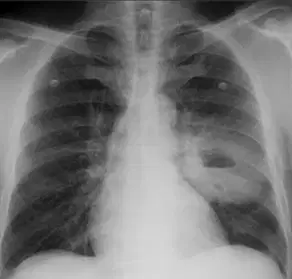
A 58-year-old man with a history of COPD presents with a 3-day history of worsening shortness of breath, productive foul-smelling sputum, fever, and pleuritic chest pain. On examination, his vitals are 38.2C, HR 110, BP 140/80, SPO2 92% on 2L oxygen. CXR is attached. What is the most likely diagnosis?
Pulmonary embolism
Congestive heart failure
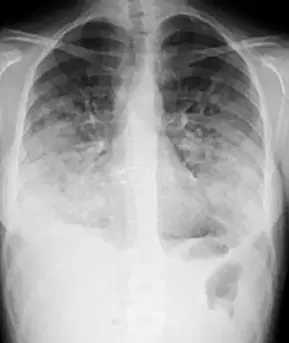
A 56-year-old woman attended the emergency department 1 day ago with signs of uro-sepsis. She has a past medical history of asthma. A urine culture was positive for bacteria. She was admitted to the ward and was treated with intravenous antibiotics. A day later, she complains of feeling breathless. On examination, her oxygen saturations are 85% on 40% inspired oxygen, she has a respiratory rate of 29 breaths/minute and a temperature of 36.7ºC. Auscultation of the chest reveals bilateral crackles. CXR is attached. What is the most likely diagnosis?
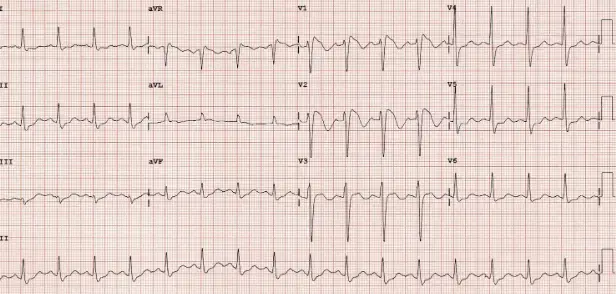
A 30-year-old Malaysian man is taken to the ED by his wife as he lost consciousness while running together with his wife. He did not experience any preceding symptoms and lost consciousness for 10 seconds. The couple are worried, as the patient's father died a sudden death, of unknown cause, in his late 40s. ECG is attached. What is the likely diagnosis for this patient?

A 70-year-old woman presents with gradual, painless blurring of central vision in both eyes over the past few years. Fundoscopy is attached. What is the likely diagnosis?

