
 Worksheets
Final Test Review
Total questions: 38
Worksheet time: 21mins
Which of the following is NOT necessary for photosynthesis to occur in plants?
Light energy
Water
Soil
CO2
A green plant is kept in a brightly lighted area for 48 hours. What will most likely occur if the light intensity is then decreased during the next 48 hours?
Photosynthesis will stop completely.
The rate at which nitrogen is used by the plant will increase.
The rate at which oxygen is released from the plant will decrease.
Glucose production inside each plant cell will increase.
Which factor can limit the rate of photosynthesis in plants?
Temperature
Oxygen concentration
Glucose production
Soil pH

What conclusion can you make about photosynthesis based on the following graph?
More oxygen is required for photosynthesis when the color of light is closer to blue and red.
More oxygen is produced during photosynthesis when the color of light is closer to blue and red.
More oxygen is required for photosynthesis when the color of light is closer to green.
More oxygen is produced during photosynthesis when the color of light is closer to green.
Which of the following is false regarding forests?
Forests act as carbon sinks, meaning more carbon is taken in by photosynthesis than given off by respiration and decomposition.
Deforestation (the cutting down of trees) would decrease the amount of atmospheric carbon because forests release carbon dioxide through respiration.
Forests should be protected, as we rely on them to reduce the effects of climate change.
Deforestation (the cutting down of trees) would increase the amount of atmospheric carbon because forests take in carbon dioxide through photosynthesis.
Which of the following is necessary for fermentation to occur in organisms?
Glucose
Oxygen
Soil
CO2
Which best explains why biofuels are considered more "climate-friendly" than fossil fuels?
Biofuels do not release any carbon dioxide.
Biofuels store carbon dioxide permanently.
Biofuels recycle recently captured carbon dioxide.
Biofuels produce more energy than fossil fuels.
What can we do to reduce the amount of carbon dioxide in the atmosphere?
Take the stairs when possible.
Unplug electronics when not in use.
Switch to LED light bulbs.
Take shorter showers.
All of the above.
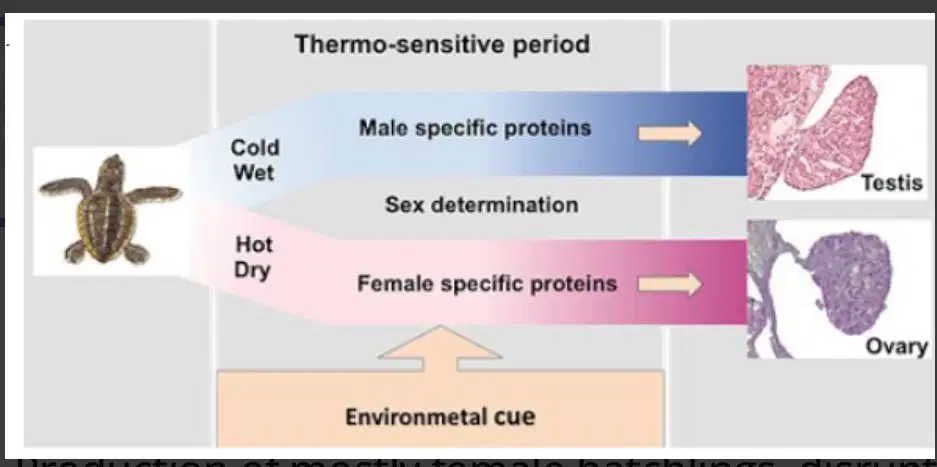
Which of the following is a likely consequence of warmer sand temperatures at sea turtle nesting sites?
Increased hatching success due to faster incubation times.
Production of mostly female hatchlings, disrupting population balance.
Greater protection from predators during nesting season.
Altering the sex ratio of hatchlings, producing more male turtles.
Which of the following best describes the environmental impact of fast fashion on climate change?
Fast fashion decreases carbon emissions due to efficient manufacturing processes.
Fast fashion has a neutral effect on climate change since it promotes recycling of clothing.
Fast fashion accelerates climate change by increasing greenhouse gas emissions throughout its lifecycle.
Fast fashion contributes to climate change mitigation through its use of sustainable fabrics and ethical labor practices.
How do cultural burns and prescribed burns work together in fire management?
They both focus on putting out fires quickly.
They both use controlled fire to reduce fuel and prevent large wildfires.
They both depend only on technology like satellites.
They both aim to stop all fires from happening.
How does climate change make wildfires worse?
It makes forests wetter and harder to burn.
It causes cooler temperatures, reducing fire risk.
It leads to hotter and drier conditions that make fires start and spread more easily.
It creates more firefighting jobs.
Imagine a future where Earth has become so polluted that people have to leave the planet and live in space. A robot is left behind to clean up the mess humans made. Based on this idea, what lesson does this scenario most likely teach?
Humans should escape to space instead of solving environmental problems.
Robots should be in charge of replanting forests and fixing pollution.
We can prevent a polluted future by recycling and taking better care of Earth.
Pollution will go away on its own with enough time and teamwork.
What is one reason why using renewable energy at home helps fight climate change?
It makes electricity more expensive, so people use less.
It creates more jobs in the fossil fuel industry.
It produces little or no carbon dioxide compared to fossil fuels.
It only works during the daytime, so energy use goes down.
What is selective empathy, and how is it shown in the #savetheTurtles movement?
Selective empathy means caring about one part of a problem while ignoring the bigger picture; in #savetheTurtles, people focus on straws harming turtles but often overlook larger sources of plastic pollution and the other marine animals affected by it.
Selective empathy is when everyone's needs are equally considered; #savetheTurtles is an example of balanced activism.
Selective empathy is only feeling bad after seeing viral videos; the #savetheTurtles movement led to helpful laws for all people.
Selective empathy is when people ignore environmental problems; #savetheTurtles is unrelated because it's about protecting wildlife.
What are the benefits of combining Indigenous fire practices with modern fire
management?
they cannot combine
It helps tribes manage their lands in ways that prevent wildfires but also promote ecological health
It requires tribes to have alot of
• knowledge in ways that can prevent
fires.
None of the above
What are the risks of Al/Wildfire technology for wildfire
management? (3)
money problems
our technology is not going to work
Time wasted
Deployment
privary/security concerns
What are the benefits of
Al/Wildfire technology for wildfire management? (3)
advances technology/uses it to its purpose
improved resources
accurate detection
less money management
How does climate change make wildfires worse?
Climate change causes more snow to
fall, which helps put out the fires. naturally before they start.
Climate change creates conditions where forests are able to stay protected because there is still rain.
Climate change shortens the fire season, reducing the amount of time fires can burn.
Climate change creates conditions that may lead to fire spread and dryness.
What are some of the
environmental impacts of fast fashion on climate change? (3)
clothes are easy to recycle or polyester that is used is good for the environment
overused resources
pollution
uses very little energy
carbon emissions
How does an increase in global temperatures affect sea turtles?
(3)
less food/resources
they evolve
more males
change in sex ratios
less males
What are the stances for straw
bans? (3)
raises awareness
protects marine life
they are the biggest amount of plastic
reduces plastic pollution
paper straws are better for the environment
What are the stances against
straw bans? 3
good to collect for the environment (biggest problem)
doesn't cover the big problem
other straws are better
impacts people with disabilities
no freedom of choice
What substances do plants need
to do photosynthesis?
water, carbon dioxide, sunlight (wcds)
Idk
water, oxygen, sunlight, glucose (Wosg)
water, carbon dioxide, temperature, glucose (Wctg)
How do forests help fight climate
change?
absorb carbon dioxide
soak up the sun and make the ground hotter
release greenhouse gas
disrupt the water cycle
What is needed for fermentation *0/5
to take place?
oxygen
temperature
activation
yeast
All of the above
What are the products of fermentation? (3)
Alcohol
Chemicals
Food
Carbon dioxide
How can fermentation be used to
create a renewable fuel source?
Nothing breaks down
CO2 breaks it down into glucose
Make beer.
Yeast/bacteria break down the products converting it into fuels
What does it mean to mitigate?
to make something less severe, harmful, or serious
to make something more severe, harmful, or serious
What is fast fashion?
the slow turnover of fashion trends and the move towards expensive, mass-produced clothing that is with old lines constantly released.
the quick turnover of fashion trends and the move towards cheap, mass-produced clothing that is with new lines constantly released.
What is the act of attempting to understand another person's
perspective.
Sympathy
Empathy
Photosynthesis is where plants USE the ENERGY of light to PRODUCE GLUCOSE
(C6H1206) from carbon dioxide (CO2), and water (H2O)
True
False
the overall balance of carbon dioxide between terrestrial ecosystems and the atmosphere
Net Ecosystem Exchange
Fast Ecosystems
Photosynthesis
What is carbon sink?
Less carbon taken in by photosynthesis than is given off by respiration and decomposition.
More carbon taken in by photosynthesis than is given off by respiration and decomposition.
Idk
chemical process by which molecules such as glucose are
broken down
Fermentation
Photosynthesis
Biofuels
Biofuel are Fuels made from what type of plants?
recently planted plants
recently deceased plants
recently living plants
How does color affect the rate of photosynthesis? How does light affect the rate of
photosynthesis?
color affects it because plants absorb it, light affects it because it acts as energy.
color affects it because plants reflect it,
light affects it because it acts as
glucose.
color affects it in no way, light
affects it because it acts as
"sunlight".
the rate of photosythesis is not affected by light or by color.
How did the COVID19 pandemic temporarily influence carbon emissions?
carbon emissions increased due to more
activity
carbon emissions decreased due to
more activity
carbon emissions decreased due to less
activity
carbon emissions increased due to less
activity

