wayground logo

Free Printable Worksheets

Font size

S
M
L
XL
Worksheets

Year 8 Chemistry Revision Quiz

Total questions: 77

Worksheet time: 1hrs 8mins

Name
Class
Date
1.

What is a Solid?

a)

Matter that has a fixed shape and size.

b)

Matter that has a fixed size and no fixed shape

c)

Matter that has no fixed shape or size

d)

Matter that has no fixed shape and size

2.

The state of matter that keeps its shape and volume when it is placed in a different container is called ______.

a)

gas

b)

liquid

c)

solid

3.

The state of matter that expands to fill its container is called ______.

a)

gas

b)

liquid

c)

solid

4.

The diagram shows arrangement of particles in a

a)

Solid

b)

Liquid

c)

Gas

5.
An ice cube is placed in a pan. The pan is placed over an open flame. Which change will MOST likely happen over time?
a)
The ice changes to a gas then a liquid
b)
The ice changes to a gas and then back to a solid
c)
The ice changes to a liquid then to a gas.
d)
The ice changes to a liquid and back to a solid. 
6.
Dry ice is an example of what phase change.
a)
freezing
b)
melting
c)
vaporization/boiling
d)
sublimation
7.
A change in matter that forms one or more new substances with new chemical properties is a/an...
a)
Physical Change
b)
Chemical Change
8.
Any change in the state of matter of a substance is a...
a)
Physical Change
b)
Chemical Change
9.
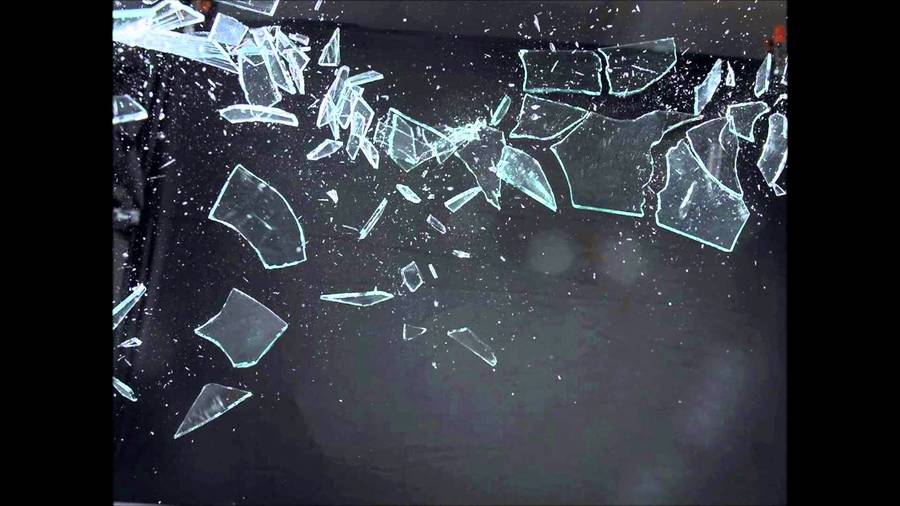
Chemical or Physical?  Glass breaking into tiny shards
a)
Chemical Change
b)
Physical Change
10.
Physical or Chemical Change?  Iron rusts
a)
Physical Change
b)
Chemical Change
11.
Physical or Chemical Change?  Cutting an orange into wedges.
a)
Physical Change
b)
Chemical Change
12.
Physical or Chemical Change?  Sodium metal burning in water.
a)
Physical Change
b)
Chemical Change
13.
melting ice cream
a)
physical change
b)
chemical change
14.
a)
physical change
b)
chemical change
15.
The substances listed on the left side of a chemical equation are the
a)
Products
b)
Coefficients
c)
Precipitates
d)
Reactants
16.
Identify the reactant(s) and product(s) of the reaction.
a)
All three are reactants and none are products.
b)
Hydrogen and water are the reactants, and oxygen is the product.
c)
Water and oxygen are the reactants, and hydrogen is the product.
d)
Hydrogen and oxygen are the reactants, and water is the product.
17.

True or false: The total number of atoms differs between the reactants and products in this chemical reaction. CH4+2O2CO2+2H2OCH_4+2O_2→CO_2+2H_2O  

a)

True

b)

False

18.

True or false: There is one carbon atom present in this reaction. CH4+2O2CO2+2H2OCH_4+2O_2→CO_2+2H_2O  

a)

True

b)

False

19.

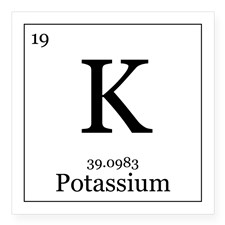
What is the number of protons that the element in this image contain?

a)

14

b)

7

c)

15

d)

18

20.

How many neutron are in the atom "K"?

a)

7

b)

2

c)

39

d)

12

21.
Most of the mass in an atom is concentrated in the...
a)
electrons
b)
nucleus
c)
protons
d)
empty space
22.
"C" is the element symbol for which element?
a)
calcium
b)
carbon
c)
chlorine
d)
cadmium
23.

True or False? Neutrons have a negative charge

a)

True

b)

False

24.

Atomic Mass

a)

protons + neutrons + electrons

b)

neutrons + electrons

c)

protons + neutrons

25.

Reactant

a)

A substance on the right-hand side of an arrow in a chemical equation that is produced

b)

A substance on the left-hand side of an arrow in a chemical equation that undergoes a chemical change

c)

Any substance undergoing a physical change

26.

Group

a)

a horizontal left-to-right period on the periodic table - elements in a group share many properties

b)

the 3 types of elements found on the periodic table

c)

a vertical up and down column on the periodic table - elements in a group share many properties

27.

Halogens

a)

Group 16, have 6 valence electrons

b)

Group 17, have 7 valence electrons

c)

Period 3, have 7 valence electrons

28.

Product

a)

A substance produced in a chemical reaction, shown as a substance to the left of an arrow in a chemical equation

b)

A substance produced in a chemical reaction, shown as a substance to the right of an arrow in a chemical equation

c)

A substance that disappears during a chemical equation, shown as a coefficient in a chemical reaction

29.

Atomic Number

a)

Number of protons in an atom

b)

Number of neutrons in an atom

c)

The charge of an atom

30.

Identify the following substance as either a compound, element, or mixture.


muddy water

a)

compound

b)

element

c)

mixture

31.

Identify the following substance as either a compound, element, or mixture.


CuSO₄

a)

compound

b)

element

c)

mixture

32.

Identify the following substance as either a compound, element, or mixture.


C₆H₁₂O₆

a)

compound

b)

element

c)

mixture

33.

Identify the following substance as either a compound, element, or mixture.


C

a)

compound

b)

element

c)

mixture

34.

How many atoms of oxygen are in a molecule of glucose, C6H12O6?

a)

1

b)

6

c)

12

d)

24

35.

According to the law of conservation of mass, matter cannot be created or (a)  

36.
What is condensation?
a)
gas to solid
b)
gas to liquid
c)
liquid to solid 
d)
solid to liquid 
37.
According to the law of conservation of mass...
a)
sometimes atoms are lost
b)
sometimes atoms are gained
c)
atoms are never lost nor gained
d)
atoms are lost and gained
38.
What is the chemical symbol for the element Sodium
a)
Na
b)
So
c)
S
d)
Sd
39.
What element is represented by the Chemical symbol Mg
a)
Manganese
b)
Magnesium
c)
Molybdenum
d)
Mitrium
40.
What is the chemical symbol for the element Zinc
a)
Z
b)
Zn
c)
Zr
d)
zn
41.
What is the chemical symbol for the element Chlorine
a)
C
b)
Cl
c)
cl
d)
Ch
42.
Which part of an atom is POSITIVELY charged?
a)
protons
b)
neutrons
c)
electrons
d)
atoms
43.
What part of an atom is NEGATIVELY charged?
a)
protons
b)
neutrons
c)
electrons
d)
atoms
44.

Water is a ________

a)

atom

b)

element

c)

compound

45.

At room temperature, metals are usually

a)

solid

b)

liquid or gas

46.

All atoms contain an equal amount of _______

a)

protons and neutrons

b)

protons and electrons

c)

electrons and neutrons

47.

The image is an electron configuration of which element?

a)

Boron

b)

Sulfur

c)

Hydrogen

d)

Carbon

48.

How many electrons should be drawn on the blank electron configuration for the element Titanium?

a)

20

b)

21

c)

22

d)

23

49.

For the compound NaHCO3, how many atoms of oxygen are present?

a)

1

b)

2

c)

3

d)

4

50.

Which of the following is NOT always a good indication that a chemical reaction has taken place?

a)

change in temperature

b)

change in state

c)

change in colour

d)

release of energy (heat, sound)

51.

Chemical reactions are often ______ to reverse

a)

easy

b)

difficult

52.

The new substances formed in a chemical reactions are called ________

a)

reactants

b)

products

53.

The PRODUCT of the reaction in the image is:

a)

magnesium

b)

chlorine

c)

magnesium chloride

54.

AgNO3 is called ________

a)

copper nitrate

b)

sulfur dioxide

c)

hydrogen peroxide

d)

silver nitrate

55.

Which of the following is NOT a gas produced during the Hofmann Voltameter test?

a)

carbon dioxide

b)

hydrogen

c)

oxygen

56.

What is the missing gas produced in this chemical reaction?

a)

oxygen

b)

carbon dioxide

c)

hydrogen

d)

hydroxide

57.

Challenge Q: KNO3 is called

a)

potassium hydroxide

b)

nitric acid

c)

potassium nitrate

d)

water

58.
A charged particle that has gained or lost electrons is called a _____.
a)
molecule
b)
ion
c)
isotope
d)
element
59.
A cation is a ____ ion.
a)
negative
b)
positive
c)
neutral
d)
ficticious
60.

Nitrogen, N, will form which of the following ions?

a)

N

b)

N-3

c)

N-5

d)

N+5

61.

Beryllium, Be, will ____ valence electrons when forming an ionic bond.

a)

lose 4

b)

gain 4

c)

lose 2

d)

gain 2

62.

Ionic bonds happen because of the ____ of valence electrons.

a)

sharing

b)

transfer

c)

keeping

d)

covering

63.
What can be generalized about covalent bonds?
a)
Electrons will be exchanged.
b)
Electrons will be transferred.
c)
Electrons will be given and taken.
d)
Electrons will be shared.
64.
What two types of atoms make a covalent bond?
a)
2 Nonmetals
b)
1 Nonmetal & 1 Metal
c)
2 Metals
d)
2 Noble Gases
65.
What is a diatomic element?
a)
a metal bonded with a nonmetal
b)
2 or more nonmetals bonded together
c)
2 or more metals bonded together
d)
2 atoms of the same element bonded together
66.
What is the correct name for NO?
a)
Mononitrogen Monoxide
b)
Nitrogen Monoxide
c)
Mononitrogen Dioxide
d)
Nitrogen Oxide
67.
How many hydrogens are in 4H2O?
a)
6
b)
8
c)
2
d)
4
68.
What are the coefficient used to balance the equation below?
__Ag2O →__ Ag +___O2
a)
2,4,1
b)
1,1,1
c)
2,1,2
d)
2,2,2
69.

Balance the following equation:

___ H2+ ___ O2→___ H2O

a)

1, 1, 3

b)

2, 2, 2

c)

1, 2, 1

d)

2,1, 2

70.

What are the reactants in this word equation?

a)

Carbon dioxide and oxygen

b)

Carbon dioxide and water

c)

Oxygen and glucose

d)

Oxygen and water

71.

Magneisum reacts with oxygen to form magnesium oxide. The correct word equation is...

a)

A

b)

B

c)

C

d)

D

72.

What is the number of protons that the element in this image contain?

a)

14

b)

7

c)

15

d)

18

73.
If I gain electrons I become
a)
Positive because I've added to my atom
b)
negative because I've added electrons
c)
same because i'm balanced
d)
equal because now I have electrons
74.
An isotope of an element has the same number of _________, but a different number of _________.
a)
Protons, electrons
b)
Protons, neutrons
c)
Electrons, neutrons
75.
A mixture can be separated by ________ means. 
a)
physical
b)
chemical
76.
A row across the Periodic Table where each element has the same number of energy shells
a)
column
b)
family
c)
period
77.

Which of the following elements is an alkali metal?

a)

calcium

b)

magnesium

c)

mercury

d)

sodium