
 Worksheets
U.S. History II (R) Final Exam
Total questions: 100
Worksheet time: 50mins
Name
Class
Date
1.
1. Which of the following statements best describes Progressivism?
a)
a. an attempt to replace private businesses by government ownership of business.
b)
b. a political movement in reaction to the bombing of the USS Maddox.
c)
c. an effort to promote greater economic opportunities and political democracy.
d)
d. a rebellion of workers against Andrew Carnegie.
2.
2. The term “muckrakers” refers to Progressive Era journalists who
a)
a. seldom criticized corporate and political wrongdoing.
b)
b. refused to expose social injustice.
c)
c. filled papers and periodicals with stories of corporate and political wrongdoing.
d)
d. did little to promote legislative reforms.
3.
3. Type of sensational reporting where writers exaggerated stories.
a)
a. Yellow Journalism
b)
b. Orange Journalism
c)
c. Sphere of Influence
d)
d. Red Jargon
4.
4. What social problem did Upton Sinclair’s novel The Jungle describe?
a)
a. the struggles of black Americans
b)
b. the ruthless business methods of John D. Rockefeller and Standard Oil
c)
c. the appalling working conditions in the meat-packing industry
d)
d. the conflict between California farmers and the Southern Pacific Railroad
5.
5. Which reform resulted from the fire at the Triangle Shirtwaist Factory?
a)
a. a ban on child labor
b)
b. antitrust legislation
c)
c. workers’ compensation laws
d)
d. the spread of settlement houses
6.
6. Which reform did the Nineteenth Amendment enact?
a)
a. temperance laws
b)
b. a ban on child labor
c)
c. women’s suffrage
d)
d. African American men’s suffrage
7.
7. The efforts of the Women’s Christian Temperance Union eventually led to which change?
a)
a. suffrage
b)
b. workplace reform
c)
c. prohibition
d)
d. minimum wage
8.
8. What type of powerful corporations did Theodore Roosevelt fully support?
a)
a. Corporations that were efficient at the expense of worker safety.
b)
b. Corporations who were monopolies that controlled the railroads.
c)
c. Corporations that did business fairly.
d)
d. Corporations who bullied smaller companies.
9.
9. What did President Roosevelt do during the 1902 coal miners’ strike in Pennsylvania?
a)
a. remained neutral.
b)
b. prohibited the miners from forming a union.
c)
c. ordered the National Guard to stop the strike.
d)
d. threatened to send federal troops to take control of the mines.
10.
10. What new relationship with Hawaii did Congress approve in 1898?
a)
a. independence
b)
b. statehood
c)
c. secession
d)
d. annexation
11.
11. The policy when a stronger country takes over a weaker country or territory
a)
a. Referendum
b)
b. Imperialism
c)
c. Reclamation Act
d)
d. Militarism
12.
12. What is the theory of Social Darwinism?
a)
a. only countries with colonies can compete in the world market.
b)
b. life consists of competitive struggles in which only the strong survive.
c)
c. the American frontier stopped people from rebelling in the United States.
d)
d. the United States should expand its territory from the Atlantic and the Pacific oceans.
13.
13. What was the main theory behind Roosevelt’s “big stick” diplomacy?
a)
a. depended on a strong military to achieve America’s goals.
b)
b. aimed to increase American investment in business and banks throughout Central America and the Caribbean.
c)
c. sought to conserve forests for lumber supplies for the military.
d)
d. worked to promote human rights, national integrity, and opportunity around the world.
14.
14. Which nations were part of the Triple Alliance in 1914?
a)
a. France, Russia, and Great Britain.
b)
b. Great Britain, France, and the United States.
c)
c. Germany, Austria-Hungary, and Italy.
d)
d. Russia, Germany, and Austria-Hungary.
15.
15. Trench warfare consisted of
a)
a. Staging tank battles
b)
b. Having troops rush across no man’s land into enemy fire
c)
c. Airplanes dropping bombs
d)
d. submarines launching torpedoes
16.
16. One reason for the German surrender in the first world war in 1918 was that
a)
a. many German soldiers were no longer willing to fight.
b)
b. the German tactic of trench warfare was a failure.
c)
c. the German submarine fleet had been destroyed.
d)
d. the German blockade of France had failed.
17.
17. During the first world war, what major event shocked the American people and led Wilson to no longer call for peace?
a)
a. neutral Belgium invaded by Germany
b)
b. Zimmerman Note exposed
c)
c. German U-boats sank the Lusitania
d)
d. Germany sank the Sussex
18.
18. Which of the following best describes the League of Nations?
a)
a. peace treaty.
b)
b. division of territory.
c)
c. secret alliance.
d)
d. mutual defense agreement.
19.
19. What did Wilson hope to accomplish with the League of Nations?
a)
a. He hoped to create a world organization where countries could gather and resolve their quarrels peacefully.
b)
b. He wanted the League of Nations to afford people the right to choose their own form of government.
c)
c. He proposed the League of Nations could insist that Germany pay reparations to the countries it damaged during the war.
d)
d. He believed the League of Nations could prevent freedom of the seas and free trade.
20.
20. What international event led to the Red Scare?
a)
a. A murder in Italy
b)
b. A revolution in Russia
c)
c. An epidemic in Germany
d)
d. A war between China and Japan
21.
21. Which nation was the world’s economic leader after World War I?
a)
a. Britain
b)
b. the Soviet Union
c)
c. Germany
d)
d. the United States
22.
22. As the 1920s progressed, what happened to farm incomes?
a)
a. declined.
b)
b. increased more rapidly than did incomes in urban areas.
c)
c. increased, but did so less rapidly than did urban incomes.
d)
d. remained steady.
23.
23. Where and why did African Americans in the 1920s face discrimination?
a)
a. the North, because they were not allowed to work.
b)
b. the North, because the Jim Crow laws were in effect.
c)
c. the South, because they were not allowed to work.
d)
d. the South, because the Jim Crow laws were in effect.
24.
24. How did Prohibition contribute to the growth of organized crime?
a)
a. by forcing police to enforce anti-liquor laws
b)
b. by making it easier for bootleggers to branch into other types of illegal activity
c)
c. by forcing farmers to grow grain for the production of alcohol
d)
d. by strengthening respect for the law
25.
25. In 1933, what amendment did Congress pass to repeal Prohibition?
a)
a. Eighteenth Amendment.
b)
b. Twentieth Amendment.
c)
c. Nineteenth Amendment.
d)
d. Twenty-first Amendment.
26.
26. How was Henry Ford able to reduce the sale price of the Model T?
a)
a. The location of Ford’s plant gave him easy access to resources and allowed him to reduce the price.
b)
b. He studied the techniques of Chicago meatpacking houses and used their same processes.
c)
c. Ford kept his workers happy by paying them well and giving them a 40-hour work week.
d)
d. Ford put his cars on moving assembly lines and reduced the time it took to make a car.
27.
27. What was a major result of Henry Ford’s innovative manufacturing techniques?
a)
a. There was less cars available and the sale price of the average car increased.
b)
b. There was more cars available and the sale price of cars went down.
c)
c. More Americans bought cars from overseas.
d)
d. Fewer Americans had jobs.
28.
28. What was the Scopes Trial a clash between?
a)
a. biology and science.
b)
b. evolution and science.
c)
c. education and science.
d)
d. religion and science.
29.
29. Which of the following statements best describes the literature of the Harlem Renaissance?
a)
a. explored the origins of jazz.
b)
b. explored the pains and joys of being black in America.
c)
c. is largely forgotten today.
d)
d. argued for the separation of races.
30.
30. Why is Louis Armstrong considered a jazz legend?
a)
a. for becoming the first white musician to contribute to jazz
b)
b. for his ability to play the trumpet and his subtle sense of improvisation
c)
c. for being the highest-paid African American entertainer
d)
d. for predicting that America will be best remembered for the Constitution, baseball, and jazz
31.
31. Mass movement of African Americans from the South to the North seeking economic opportunities.
a)
a. Scientific management
b)
b. Mass Migration
c)
c. Volstead Act
d)
d. Urban Migration
32.
32. In 1929, why did the stock market crash?
a)
a. the Federal Reserve increased the money supply.
b)
b. Germany ceased reparation payments to the United States.
c)
c. investors lost confidence in the market and rushed to sell their shares.
d)
d. depositors lost their investments and tried to withdraw all of the savings from banks.
33.
33. Severe storms around the Great Plains in the 1930’s caused by drought and high winds
a)
a. Dust Bowl
b)
b. Wind Bowl
c)
c. Tennessee Valley storms
d)
d. Tornado Alley
34.
34. What did Roosevelt and Congress pass the day after FDR’s inauguration?
a)
a. Federal Deposit Insurance Corporation
b)
b. Federal Emergency Relief Act
c)
c. Emergency Banking Bill
d)
d. Agricultural Adjustment Act
35.
35. Why did Roosevelt create the Securities Exchange Commission (SEC) ?
a)
a. regulate the stock market.
b)
b. give banks a chance to organize.
c)
c. ensure bank deposits.
d)
d. pay farmers to destroy their livestock.
36.
36. What were the goals of the New Deal?
a)
a. reform the government and decrease spending
b)
b. create schools and protect farmers
c)
c. increase spending on defense and trade
d)
d. provide relief, recovery, and reform
37.
37. What did President Roosevelt introduce to help retirees?
a)
a. Fair Labor Standards Act
b)
b. Second New Deal
c)
c. Works Progress Administration
d)
d. Social Security Act
38.
38. What program insures banks deposits?
a)
a. FDIC (Federal Deposit Insurance Corporation)
b)
b. TVA (Tennessee Valley Authority)
c)
c. SSA (Social Security Act)
d)
d. SEC ( Securities and Exchange Commission )
39.
39. How many terms did Theodore Roosevelt serve as president?
a)
a. 1 term
b)
b. 2 terms
c)
c. 3 terms
d)
d. 4 terms
40.
40. How did New Deal programs strengthen capitalism?
a)
a. The FDIC and SEC restored trust in banks and the stock market.
b)
b. Price supports were set firmly in place for farmers.
c)
c. A federal pension system gave retirees a way out of poverty.
d)
d. Unemployment insurance gave workers who lost jobs money to put into the system.
41.
41. How did the Great Depression eventually change Germany politically?
a)
a. Germans eventually believed that democracy would solve their economic problems.
b)
b. Germans eventually believed that Hitler would solve their economic problems.
c)
c. Thousands of Germans eventually emigrated to communist nations in search of jobs.
d)
d. The German parliament eventually became more powerful.
42.
42. Whose assassination in 1914 triggered the start of WWI?
a)
a. Woodrow Wilson
b)
b. John Pershing
c)
c. Archduke Franz Ferdinand
d)
d. John F. Kennedy
43.
43. How did the Neutrality Act of 1939 allow the U.S. to stay out of the second world war?
a)
a. The nations agreed to keep the United States out of the conflict.
b)
b. The nations promised not to use the materials against the United States.
c)
c. The nations paid cash and transported the materials themselves.
d)
d. The nations had the US take responsibility of transporting the goods in order to support the fight against fascism without boots on the ground
44.
44. What goal did President Roosevelt hope to achieve when he enacted the embargo on naval and aviation supplies in 1940?
a)
a. to provoke Japan into war
b)
b. to avoid war with Japan
c)
c. to stop Japanese expansion
d)
d. to appease Japan
45.
45. Why were both Italy and Japan dissatisfied with the peace settlements provided in the Treaty of Versailles?
a)
a. They expected financial assistance from the United States and Britain.
b)
b. They expected guidance in establishing their own democratic governments.
c)
c. They expected territory in exchange for their sacrifices during World War I.
d)
d. They expected representation in the League of Nations.
46.
46. Which of the following was the Italian dictator and founder of the Fascist Party in 1921?
a)
A. Benito Mussolini
b)
B. Joseph Stalin
c)
C. Adolf Hitler
d)
D. Francisco Franco
47.
47. Which political party rose to power in Germany during the 1930s?
a)
a. the Communist Party
b)
b. the Fascist Party
c)
c. the Nazi Party
d)
d. the Socialist Party
48.
48. Who appeared to be winning the second world war in Europe at the end of 1940?
a)
a. Germany and Italy
b)
b. Britain and France
c)
c. the Soviet Union
d)
d. the United States
49.
49. On December 7, 1941, why did the Japanese attack Pearl Harbor?
a)
a. gain control of the Hawaiian Islands.
b)
b. destroy ships and planes that threatened their expansion efforts.
c)
c. provoke the United States into declaring war.
d)
d. demonstrate their support for Germany and Italy.
50.
50. What did the United States government do after declaring war in second world war?
a)
a. The U.S. repealed the Neutrality Act of 1939.
b)
b. The U.S. enacted a draft because few Americans wanted to fight in the war.
c)
c. The U.S. transformed peacetime industries into war industries.
d)
d. The U.S. withdrew economic support from Britain because it was no longer needed.
51.
51. What happened to the United States economic situation after they declared war in 1941?
a)
a. The economic situation improved.
b)
b. The economic situation stalled.
c)
c. The economic situation worsened.
d)
d. The economic situation remained unchanged.
52.
52. How did Adolf Hitler explain the problems facing Germany in his book Mein Kompf?
a)
a. He stated that the problems were caused by a state-controlled press and state-controlled education system.
b)
b. He blamed the problems on the Jewish people and the great threat they caused Germany.
c)
c. He said the existing government caused the problems by forbidding citizens to read books that were “un-German.”
d)
d. He claimed the problems were caused by the country’s implementation of a secret police.
53.
53. Why did Stalin want Britain and the United States to open a second front in France?
a)
a. He wanted Germany to divide its troops between two fronts.
b)
b. Soviet forces were losing ground in Eastern Europe and in the South.
c)
c. He recalled the slaughter of troops along the Western Front in World War I.
d)
d. His advisers told him the German U-boat presence in the English Channel was dangerous.
54.
54. What was President Truman’s chief reasoning in using the atomic bomb against Japan?
a)
a. To display the United States as a superpower.
b)
b. To prepare for a U.S. invasion of Japan.
c)
c. To save American lives.
d)
d. To protect the lives of Japanese civilians.
55.
55. What was one effect of the D-Day invasion on June 6, 1944?
a)
a. Japan knew that Germany was out of the war.
b)
b. Germany could never again attack the Allies.
c)
c. The Allies took an important step toward reaching Berlin.
d)
d. Soviet troops stopped pushing toward Germany from the West.
56.
56. Who made the decision to use the atomic bomb against Japan?
a)
a. Franklin D. Roosevelt
b)
b. Leslie Groves
c)
c. Harry S. Truman
d)
d. Enrico Fermi
57.
57. What was Hitler’s “final solution”?
a)
a. A plan to exterminate all Jews living in German-controlled regions
b)
b. A series of fake experiments conducted on topics such as oxygen deprivation
c)
c. The construction of walled ghettos in Polish cities to hold “undesirable” groups
d)
d. A plan to force all “undesirable” groups to become “useful members” of the Third Reich
58.
58. How did Nazis brainwash the German nation to accept complete annihilation of Jews?
a)
a. Nazis blamed the Jewish people for the rise of communism.
b)
b. Hitler barred Jews from holding jobs in the civil service and journalism.
c)
c. State institutions such as schools, youth groups, and newspapers dehumanized Jews.
d)
d. Marriages between Jews and non-Jews were forbidden.
59.
59. Who first spoke of the “iron curtain”?
a)
a. George Kennan
b)
b. Joseph Stalin
c)
c. Winston Churchill
d)
d. Harry Truman
60.
60. NATO and the Warsaw Pact were examples of
a)
a. military aggression during the Cold War.
b)
b. failed attempts to make peace.
c)
c. efforts to fight communism without bloodshed.
d)
d. military alliances made for “collective security.”
61.

61. In response to NATO, with whom did the Soviet Union form the Warsaw Pact?
a)
a. Western European nations
b)
b. North American nations
c)
c. Eastern European nations
d)
d. East Asian nations
62.
62. After the second world war, the United States economy
a)
a. entered a severe depression.
b)
b. stagnated as wartime production fell.
c)
c. shifted to producing consumer goods.
d)
d. fluctuated as it withdrew from world markets.
63.
63. The Bay of Pigs invasion was an attempt to overthrow
a)
a. Fidel Castro.
b)
b. the Batista regime.
c)
c. Nikita Khrushchev
d)
d. the Kennedy administration.
64.
64. What did Kennedy approve to try and prevent completion of missile bases in Cuba?
a)
a. military invasion.
b)
b. diplomatic treaty.
c)
c. trade boycott.
d)
d. naval blockade.
65.
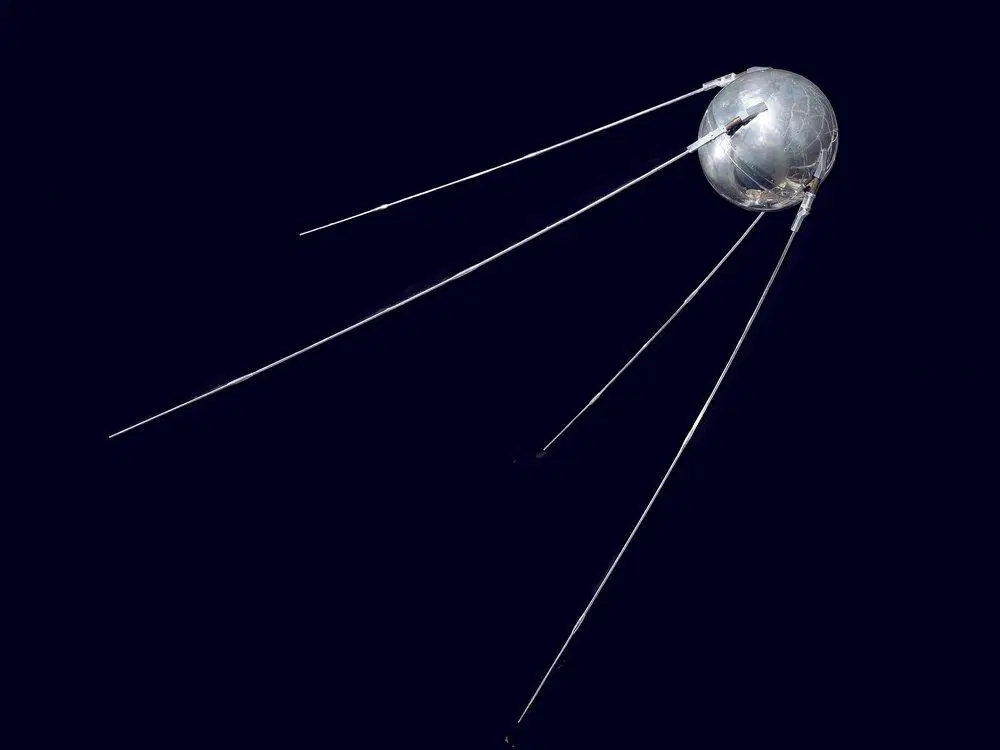
65. Which country launched Sputnik into space in 1957?
a)
a. Soviet Union
b)
b. U.S.
c)
c. Great Britain
d)
d. Germany
66.
66. What effect did the Cold War have on the American space program?
a)
a. High levels of military spending deterred scientific research.
b)
b. The need for nuclear weapons led to less sophisticated rocket technology.
c)
c. American and Soviet scientific cooperation lessened political tension.
d)
d. Competition with the Soviet Union spurred American space missions.
67.
67. Why did President Johnson enter the Vietnam War?
a)
a. believed in the domino theory.
b)
b. underestimated the communist threat.
c)
c. ran for office as a war dove.
d)
d. wanted to institute a realpolitik policy.
68.
68. Ultimately, what did the end of the Vietnam War result in?
a)
a. greater U.S. involvement in Southeast Asia.
b)
b. expanded war-making powers for the U.S. President.
c)
c. communist control of Cambodia, Laos, and Vietnam.
d)
d. a communist North Vietnam and a democratic South Vietnam.
69.
69. Who was the civil rights activist that delivered the “I Have A Dream" speech?
a)
a. Dr. Martin Luther King, Jr.
b)
b. Malcolm X
c)
c. Thurgood Marshall
d)
d. Al Sharpton
70.
70. Which of the following prohibited discrimination in voting, education, and public accommodations?
a)
a. Civil rights Act of 1964
b)
b. Voting Rights Act of 1965
c)
c. Executive order 11246
d)
d. Civil Rights Act of 1968
71.
71. Which of the following led to desegregation of schools?
a)
a. Bakke vs. California
b)
b. Daniel vs. Illinois
c)
c. Brown vs. Board of Education
d)
d. Plessy vs. Ferguson
72.
72. Who is known for her role in the civil rights movement for refusing to give up her seat on a Montgomery bus?
a)
a. Sarah Jones
b)
b. Jennifer Franks
c)
c. Rosa Parks
d)
d. Dr. Martin Luther King, Jr.
73.
73. Civil rights activists that rode interstate buses in the segregated south to bring attention to civil rights
a)
a. Freedom Riders
b)
b. March on Washington
c)
c. Montgomery Bus Boycotters
74.
74. Civil rights organization dedicated to ending racial discrimination
a)
a. New Deal Agency
b)
b. TVA (Tennessee Valley Authority)
c)
c. NAACP (National Association for the Advancement of Colored People)
d)
d. Black Panthers
75.
75. Which of the following is the promise made by U.S. to provide support to countries against Communism?
a)
a. Anti-Communism Act
b)
b. Great Compromise
c)
c. Truman Doctrine
d)
d. The New Deal Trust
76.
76. What was the purpose of the U.S. policy of "Containment" during the Cold War?
a)
a. Prevent the spread of communism
b)
b. Spread democracy worldwide
c)
c. Strengthen U.S. economic power
d)
d. End European colonization
77.
77. The term "Vietcong" refers to:
a)
a. North Vietnamese soldiers
b)
b. South Vietnamese soldiers
c)
c. Communist rebels in South Vietnam
d)
d. U.S. troops in Vietnam
78.
78. The U.S. military strategy in Vietnam was often criticized for:
a)
a. Its heavy reliance on nuclear weapons
b)
b. Lack of focus on military tactics
c)
c. Overuse of chemical warfare and airstrikes
d)
d. Its failure to secure alliances with other nations
79.
79. Which of the following was NOT a direct consequence of the Vietnam War on American society?
a)
a. A decline in U.S. public trust in the government
b)
b. A sharp increase in anti-war protests
c)
c. A rise in support for the military-industrial complex
d)
d. The rise of the "Counterculture" movement. A rejection of American society and mainstream culture.
80.
80. What was the primary purpose of the U.S. “draft” during the Vietnam War?
a)
a. To reduce the number of soldiers fighting in Vietnam
b)
b. To recruit soldiers to serve in the conflict
c)
c. To end the war quickly
d)
d. To force young men into military service to support the government
81.
81. Which event marked the official end of the Vietnam War for the United States?
a)
a. The signing of the Paris Peace Accords
b)
b. The Fall of Saigon
c)
c. The bombing of the Ia Drang Valley
d)
d. The Tet Offensive
82.
82. The "Domino Theory" stated that if one country in Southeast Asia fell to communism:
a)
a. All other nations would become democratic
b)
b. Other countries in the region could fall to communism
c)
c. The Soviet Union would collapse
d)
d. The U.S. would gain more allies in the region
83.
83. The Cold War was a period of tension between the United States and which country?
a)
a. Germany
b)
b. Japan
c)
c. Soviet Union
d)
d. China
84.
84. What was the purpose of the Marshall Plan?
a)
a. To establish military alliances with Western Europe
b)
b. To provide economic aid to rebuild European economies after World War II and to stop the spread of communism
c)
c. To support the spread of communism in Eastern Europe
d)
d. To promote space exploration in the U.S.
85.
85. The Cuban Missile Crisis (1962) was a confrontation between the U.S. and:
a)
a. China
b)
b. The Soviet Union
c)
c. Germany
d)
d. North Korea
86.
86. The Sherman Antitrust Act (1890) was designed to:
a)
a. Regulate labor unions and strike actions
b)
b. Break up monopolies and prevent anti-competitive practices
c)
c. Protect workers' rights to form unions
d)
d. Provide financial support to farmers affected by overproduction
87.
87. The Peace Corps, established during Kennedy's presidency, was created to:
a)
a. Provide military support to allies in the Cold War
b)
b. Help develop U.S. territories in the Pacific
c)
c. Send volunteers to developing countries to assist with social and economic projects
d)
d. Address issues of racial segregation in the U.S.
88.
88. The Space Race, in which Kennedy was deeply involved, was a competition between the U.S. and the Soviet Union to:
a)
a. Establish permanent colonies on the Moon
b)
b. Send the first human into space and land on the Moon
c)
c. Develop the most advanced military technology
d)
d. Build the largest nuclear arsenal
89.
89. The New Deal's "Fireside Chats" were:
a)
a. Informal radio addresses by President Franklin D. Roosevelt to reassure the public during the Great Depression
b)
b. Talks between Roosevelt and business leaders to discuss economic recovery
c)
c. A series of speeches advocating for the spread of democracy in Europe
d)
d. Radio programs aimed at criticizing government policies
90.
90. The Voting Rights Act of 1965 was designed to:
a)
a. End literacy tests and other discriminatory practices that prevented African Americans from voting
b)
b. Provide federal funding to African American civil rights organizations
c)
c. Grant automatic citizenship to African Americans
d)
d. Increase voter participation among young Americans
91.
91. The Harlem Renaissance was a cultural movement in the 1920s that celebrated African American art, literature, and music.
a)
True
b)
False
92.
92. The Stock Market Crash of 1929 led to an immediate recovery of the American economy.
a)
True
b)
False
93.
93. The New Deal was a series of programs introduced by President Herbert Hoover to combat the Great Depression.
a)
True
b)
False
94.
94. The Soviet Union’s launch of Sputnik in 1957 marked the beginning of the U.S.-Soviet space race during the Cold War.
a)
True
b)
False
95.
95. The United States entered World War II following the Japanese attack on Pearl Harbor in December 1941.
a)
True
b)
False
96.
96. The Social Security Act of 1935 was part of President Franklin D. Roosevelt’s New Deal and provided unemployment insurance, retirement pensions, and aid to the disabled.
a)
True
b)
False
97.
97. The Supreme Court’s decision in Brown v. Board of Education (1954) declared that racial segregation in public schools was unconstitutional.
a)
True
b)
False
98.
98. The Progressive Era, which lasted from the 1890s to the 1920s, focused primarily on expanding U.S. imperialism abroad.
a)
True
b)
False
99.
99. The Tet Offensive of 1968 was a major victory for the U.S. in the Vietnam War.
a)
True
b)
False
100.
100. The U.S. supported North Vietnam during the Vietnam War to prevent the spread of communism.
a)
True
b)
False
100 %

