
 Worksheets
G11 Q4 FINAL REVISION EXAM &A.K
Total questions: 120
Worksheet time: 3hrs 4mins
Compounds that are composed of the same number and type of atoms but have them arranged in different ways are ___________.
isomers
isotopes
polymers
alkanes

A structural isomer of pentane is?
2,2-dimethyl butane
2-methyl butane
1-methyl propane
1-methyl pentane
There are two main forms of isomerism, which are?
Structural isomerism and Stereoisomerism
Stereoisomerism and Physical isomerism
Chemical isomerism and Stereoisomerism
Structural isomers and Geometric Isomers
In a stereoisomer, ________ means "on the same side" and ______ means "across from."
cis; trans
cis; L
D; L
trans; cis
Chiral carbons will produce _____________.
structural isomers
optical isomers
polymers
monomers

What property can be assigned to a carbon atom that has four different atoms or structural groups attached to it?
isomerity
chirality
chivalry
geometry

Given the formula representing a compound:
Which formula represents an isomer of this compound?


Isomerism that arises out of the difference in spatial arrangement of atoms or groups about the doubly bonded carbon atoms are called?
Structural Isomerism
Stereoisomerism
Geometrical Isomerism
Optical Isomerism
A compound capable of forming optical isomers:
has a carbon with 4 different groups
is at least 4 carbons long
has a mirror image
reflects plane polarised light
A group of compounds forms.............. if there is a constant increment of change in molecular structure from one compound in the series to the next.
a heterologous series
a decrement series
a homologous series
C10H22 is called:
Decene.
Decyne.
Decane.
Nonane.
An atom or group of atoms that take place of hydrogen on a parent hydrocarbon molecule:
subsequent
replacing agent
group
substituent
Aliphatic hydrocarbons consist only single bonds, and so are called ____________ hydrocarbons.
unsaturated
saturated
aromatic
chain
How many carbon atoms are in propane?
1
2
3
4
In organic chemistry, molecular and ____________ formulas were used to express what a particular molecule consists of.
structural
organic
chemical
physical
__________ structural formula are written without showing all the individual bonds. In a condensed structure, each central atom is shown together with the atoms that are bonded to it
Molecular
Condensed
Expanded
Skeletal
Define chiral centre
also known as chiral carbon
a type of enantiomer
a carbon with four different groups or atoms attached to it
optically active compounds
This prefix means 7
but
hept
hex
non
propyl is a....
three carbon chain
three carbon side chain
triple bond

How many carbons are in the longest chain?
7
8
9
10
What is wrong with the name 2,4-methylhexane
inappropriate use of commas
inappropriate use of dashes
a prefix is missing
a space is missing
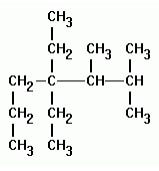
What is the general formula of the alkanes?
CnH2n+1
CnH2n+2
CnH2n
CnH2n+1OH
What is the general formula of the alkynes?
CnH2n+1
CnH2n-2
CnH2n
CnH2n+1OH
What is the general formula of the alkenes?
CnH2n+1
CnH2n+2
CnH2n
CnH2n+1OH
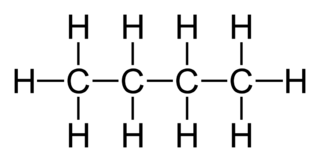
What is the suffix for double bond hydrocarbons ?
-ol
-ene
-ane
-one
What is the general formula for unsaturated hydrocarbons?
CnH2n-2
How many chemical bonds can each carbon atom form?
1
2
3
4

All living systems are made from carbon-based molecules.
True
False
Nonane contains the following number of carbons:
3
4
9
7
Propane contains the following number of carbons:
3
4
9
7
In hydrocarbon nomenclature, a number next to a word should be separated with a :
blank space
comma
hyphen
In hydrocarbon nomenclature, a number next to a number should be separated with a :
blank space
comma
hyphen
Which physical property of alkynes is incorrect?
First two are gases at room temperature, the next eight are liquids.
They are less dense than water.
Insoluble in water
Boiling points are higher than the corresponding alkanes & alkenes


How do you name a cyclic alkane?
Name it based on the longest carbon chain only.
Add 'cyclic-' before the alkane name.
Use 'cyclo-' prefix followed by the alkane name based on carbon count.
Use 'alkane-' prefix followed by the cyclo name.
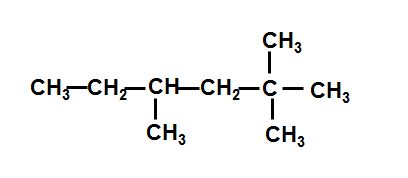
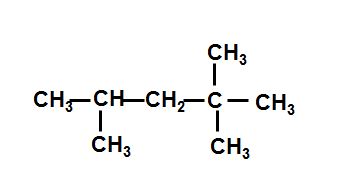
Which is the structures with IUPAC nomenclature
2,2,4-trimethylpentane
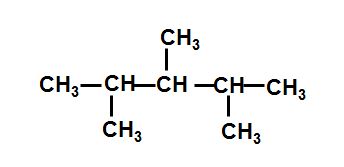
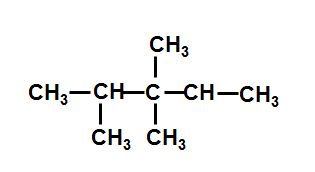
Every homologoue member differ by (a) group
Organic Compound having 3 carbon atoms in a chain has root word as (a)
Is the simplest of the alkanes.
Methane
Ethane
Propane
Buthane
Is the simplest of alkenes.
Ethene
Propene
Buthene
Pentene
Is the simplest of alkynes.
Ethyne
Propyn
Butyn
Pentyne
Is the name of the nomenclature seen in class.
IUPAC nomenclature
TUPAC nomenclature
ICE-T nomenclature
ZUPAC nomenclature

Name the following hydrocarbon:
1-ethane
1-ethyne
1-ethene
2-ethyne

Name the following hydrocarbon:
1-propyne
1-butyne
1-methyne
What is the alkyl name for CH3
methyl
ethyl
propyl
butyl
-CH2 - CH2 - CH3 is named as ________.
alkyl
ethyl
propyl
methyl

This compound is 2-ethyl-3-methylbutane
True
False

The name for this compound is ....
2-ethylpropane
1,1-dimethylpropane
2-methylbutane
3-methylbutane

The name for the compound is ....
2,3-dimethylpropane
3,4-dimethylpropane
2,3-dimethylpentane
3,4-dimethylpentane


What prefix do we use for alkanes that are arranged in a loop?
ring-
cyclic-
cyclo-

What is the IUPAC nomenclature of this structure?
1,2,3-trimethylcyclopropane
1-methyl-2-methyl-3-methylcyclopropane
1,2,3-trimethylcyclopropyl
1,2,3-trimethylpropane

What is the name of the compound? And how many carbon atom of the compound?
Cyclononane, 9 carbon atom
Cyclohexane, 6 carbon atom
Cyclodecane, 10 carbon atom
Cyclobutane, 4 carbon atom
Cycloalkanes are saturated hydrocarbon, also known as alicyclic (aliphatic cyclic).
True
False
Which is the general formula of cycloalkane?
CnH2n
CnH2n+2
CnH2n+1OH
CnH2n
What is the molecular formula for cyclopropane?


What is the molecular formula of cyclopentane?


This isomer means that two particular atoms (or group of atoms) are adjacent to each other.
cis-
trans-
meta-
ortho-

This isomer means that two particular atoms (or group of atoms) are across from each other.
cis-
trans-
meta-
ortho-
Select the formula for the following name: Octane
C8H18
C8H14
C8H16
C8H15OH
The first four alkanes are listed below. In which list are they placed in the correct order, i.e. increasing number of carbon atoms?
methane, ethane, propane, butane
ethane, methane, propane, butane
methane, ethane, butane, propane
methane, propane, ethane, butane

C4H10 is an example of a _________________.
molecular formula
full structural formula
shortened structural formula
ball-and-stick model
The simplest, and one of the most common, aromatic hydrocarbons is ___
toluene, C7H8
benzyne, C6H4
naphthalene, C10H8
benzene, C6H6

Using the structural diagram, name this compound.
1,2-diethylbenzene
1,2-dimethylbenzene
1,2-diethylcyclohexane
1,2-dimethylcyclohexane

Naphthalene, which is basically two benzene rings stuck together, is the main ingredient in ___
mothballs
aspirin
blue dye
cinnamon

Anthracene, composed of three benzene rings, is a common ___
perfume
mosquito repellent
fungicide
dye
If a molecule contains a 'benzene ring' is must be what?
flammable
aliphatic
alicyclic
aromatic
Is the chemistry of carbon.
Inorganic Chemistry
Organic Chemistry
Analytical Chemistry
Biochemistry

Name the compound
Methane benzene
Toluene
Benzene methane
methane phenyl

name this compound
o-propylbenzene
1,2-dipropylbenzene
1,2-isopropylbenzene
Aliphatic hydrocarbons are nonpolar compounds
true
false
C4H6
Ethyne
Propyne
Butyne
Pentyne

Type the IUPAC name of the given organic compound.
(a)

Type the IUPAC name of the given organic compound.
(a)

Type the IUPAC name of the given organic compound.
(a)
In naming a compound, the longest continuous chain of carbon atoms is called (a) .(TYPE YOUR ANSWER in ALL CAPS)

is __________.
aliphatic
aromatic
alicyclic
None of these

is __________.
aliphatic
aromatic
alicyclic
None of these
is __________.
aliphatic
aromatic
alicyclic
None of these

Name the organic compound above
(a)

Name the organic compound above
(a)
Aliphatic organic compounds are (a) chain compounds

Name this compound
(a)

What is the name of this hydrocarbon?
4 ethyl 5,6 dimethyl heptane
2,3 dimethyl 4 ethyl heptane
4 ethyl 2,3 dimethyl heptane
5 propyl hexane

Using table P, what is the prefix for a hydrocarbon with 4 carbons?
Eth-
Meth-
Hex-
But-

Name the organic compound above.
3-methylhexane
heptane
2,2-dimethylpentane
pentane
2-ethylpentane

Pentane
3-methylpentane
2-ethylbutane
hexane

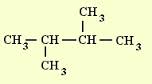

Name this organic molecule.
Is the last step in naming alkenes and alkyne.
Writing the name of the main chain.
Writing the location of the double/triple bond and the name of the main chain.
Writing the location of the branches and the name of the main chain.
If a hydrocarbon had 3 triple bonds, what would the suffix be?
"-yne"
"-diyne"
"-triyne"
"-triene"
The root name "meth-" represents a chain of how many C atoms?
1
2
3
4
Alkanes, alkenes, alkynes are all what type of hydrocarbon?
Cyclic
Aromatic
Aliphatic
Saturated
Which is the structures with IUPAC nomenclature
2,2,4-trimethylpentane



