
 Worksheets
U2 Quiz Review
Total questions: 120
Worksheet time: 1hrs 18mins
Mass changes when gravitational force changes
True
False
Mass, Volume and density are all properties of what?
Gravity
Formulas
Matter
Weight

The diagram shows the way the particles of a solid occupy space. Select the property of a solid that is consistent with this micro-view.
No define shape
Cannot be compressed
No definite volume

Which of the following is a property of gases?
They have a definite volume.
They are not compressible.
They have no definite shape.
They have no ability to flow.

State of matter in which materials have a definite shape and volume.
Solid state
Liquid state
Gas state
Plasma state

State of matter that takes the shape of it's container and has a definite volume.
Solid state
Liquid state
Gas state
Plasma state

State of matter that can fill containers with no fixed shape or volume.
Solid state
Liquid state
Gas state
Plasma state


Choose the best description below for the image
physical change
chemical change
A chemical change
changes matter from one form to another.
destroys matter.
creates matter
does not change matter in any way.
Which of the following is a physical change?
Iron is oxidized to iron oxide
Aluminum metal is pounded into thin sheets
Copper reacts with a strong acid
Sodium metal explodes on contact with water
Which of the following is an example of a chemical change?
melting solid gold
burning hydrogen gas
dissolving sugar in water
breaking a sheet of glass
Which of the following is a common sign that a chemical change has occurred?
A chemical has changed size.
A chemical has changed to a different state (solid, liquid or gas)
A chemical has become a different shape.
A chemical has turned a different color.
When silver metal comes in contact with sulfur, silver sulfide forms and the silver appears darker. This is a...
change of form
chemical change
change of state
physical change
Two solutions are added together and the new solution becomes hot. This tells you that
a gas is being produced.
the solutions are not soluble.
the physical properties are the same.
a chemical change is taking place.


Solubility (ability to dissolve): Chemical or Physical Property


Brittleness (how easily is breaks): Chemical or Physical Property


Luster (how shiny): Chemical or Physical Property

A physical property can be observed __________ a chemical reaction
during
without
A chemical property can be observed __________ a chemical reaction
during
without
Combustion or exploding, is a --- property.
Chemical
Physical
Malleability, the ability to be flattened into thin sheets, is a ---property.
Physical
Chemical


What key words, when present in a question about chemical reactions, might indicate a chemical change is occuring? Check all that apply.
Bubbling
Fizzing
Dissolving
Evaporating
Oil and Water
Element
Compound
Homogeneous Mixture
Heterogeneous Mixture
Copper - Cu
Element
Compound
Homogeneous Mixture
Heterogeneous Mixture
Chalk - CaCO3
Element
Compound
Homogeneous Mixture
Heterogeneous Mixture
Rocks and Sand
Element
Compound
Homogeneous Mixture
Heterogeneous Mixture
Water - H2O
Element
Compound
Homogeneous Mixture
Heterogeneous Mixture
Aluminum - Al
Element
Compound
Homogeneous Mixture
Heterogeneous Mixture
Air
Element
Compound
Homogeneous Mixture
Heterogeneous Mixture
Soap
Element
Compound
Homogeneous Mixture
Heterogeneous Mixture
A __ mixture is a mixture in which the composition is not uniform throughout the mixture.
element
homogenous
heterogenous
compound
Which of the following is a homogeneous mixture?
sand in a bottle
lemonade
Mercury
salad
An element is a ___ that cannot be separated into simpler substances by physical or chemical means.
pure substance
mixture
solution
compound
__ is a pure substance containing two or more kinds of atoms.
Element
compound
mixture
solution
Water is made up of hydrogen and oxygen, two elements that were chemically combined. This makes water a(n)
atom
compound
element
mixture
What is table salt (NaCl)?
Element
Compound
Mixture

What is an element?
A substance that is made up of one type of atom and can't be reduced to simpler substances.
A substance made of two or more different atoms chemically bonded to one another. They can only be destroyed by chemical processes.
A material containing two or more elements or compounds that are in close contact and are mixed in any proportion. They can be separated by physical means.
Which of the following is an example of an element?
Cu (copper)
H20 (water)
cereal
CO2 (carbon dioxide)

Which letter represents a mixture?
D
G
E
A
The Law of Conservation of Mass says that matter can neither be __________ or __________.
created; destroyed
recycled; renewed
subtracted; added
joined; separated
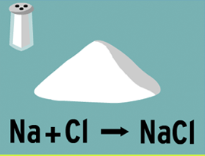
When sodium and chlorine combine to form sodium chloride, sodium chloride is the:
Originator
Reactant
Product
Produce
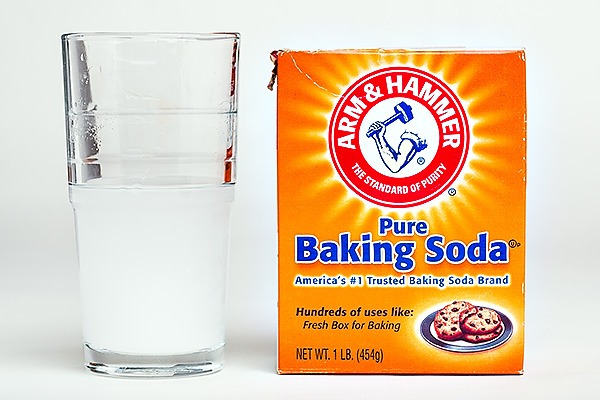

The Law of Conservation of Mass says that matter cannot be ________ or __________.
Divided or Multiplied
Balanced or Unbalanced
Increased or Decreased
Created or Destroyed

Which of the following can by possible physical indicators of a chemical reaction?
Formation of Gas
Change in Color
Emission of Light
Sublimation of Solids
Deposition of Gases
Which of the following is evidence of a chemical reaction?
Tearing paper.
Change in color.
Production of a gas.
Change in temperature.
Production of a precipitate.

Identify the following process: We light a matchstick.
Physical change
Chemical change
What is the left part of a chemical equation called?
2H2 + O2 ---> 2H2O
Reactants
Yields
Products
Chemical equation
What is the right part of a chemical equation called?
2H2 + O2 ---> 2H2O
Reactants
Yields
Products
Chemical Equation
What is the Law of Conservation of Mass?
It states that matter cannot be created or destroyed.
It states that energy cannot be created or destroyed.
It states that matter can be created or destroyed.
It states that sound can be created or destroyed.

Which of the following is a chemical reaction?
Sodium and chlorine atoms bond to form salt molecules.
Ice melts to form water.
Carbon dioxide freezes to form dry ice.
Salt and water mix to form salt water.
When writing a chemical equation, reactants are on the _____________ while products are on the _________________.
top, bottom
right, left
left, right
bottom, top
The law of conservation of mass states
chemical reactions create new atoms
atoms cannot be created or destroyed
reactants vanish once a reaction takes place
products appear when a reaction takes place
2H2 + O2 --> 2H2O
2H2 + O2 --> 2H2O

Identify the Reactants in this equation.
A
B


H2 + O → H2O
H2 + O → H2O
______ is explained as a push or pull motion
Force
Friction
Gravity
Weight
______ is the attractive force between any two objects that depends on the objects mass and distance to each other.
Weight
Gravity
Net Force
Rolling Friction
______ is the gravitational force exerted on an object
Mass
Gravity
Force
Weight
What statement is true?
Mass never changes. Weight does.
Weight never changes. Mass does.
Both mass and weight change because they are affected by gravity.
Neither mass nor weight change. They are always the same.
Mass is the measure of how much ______ is in an object.
Density
Weight
Matter
Gravity
Force
Weight is the measure of the force of ______ on an object.
Density
Mass
Matter
Gravity
Velocity
6) Which measurement would be different if you were on the Moon versus on Earth?
Mass
Weight

Lucky Charms Cereal
Compound
Element
Mixture

Chocolate Chip Muffin
Compound
Element
Mixture

Koolaid
Compound
Element
Mixture

Salt (NaCl)
Compound
Element
Mixture
A mixture that does NOT appear to be evenly mixed throughout is ______.
an atom
a compound
a homogeneous mixture
a heterogeneous mixture

Two characteristics of Matter are:
Has volume and is energy
Has mass and is energy
Has mass and volume
Doesn't take up space and is not energy

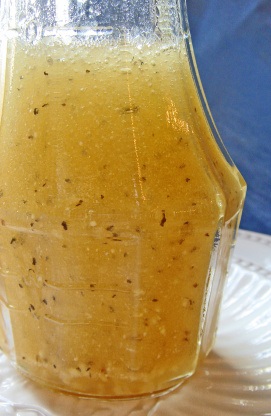
Ba
Compound
Element
Mixture

