
 Worksheets
HS20 - Final Review - Unit 3 -Integumentary System
Total questions: 56
Worksheet time: 2hrs 11mins
How does the integumentary system help maintain the body?
By producing hormones
By maintaining internal temperature
By digesting food
By pumping blood
What are the three main layers of the skin in the integumentary system?
Epidermis, Dermis, Hypodermis
Epidermis, Cortex, Medulla
Dermis, Cortex, Medulla
Epidermis, Medulla, Subcutis
Which of the following is a layer of the skin?
Epidermis
Cortex
Medulla
Subcutis
What is the correct order of the epidermal layers from superficial to deep?
Stratum corneum, Stratum lucidum, Stratum granulosum, Stratum spinosum, Stratum basale
Stratum basale, Stratum spinosum, Stratum granulosum, Stratum lucidum, Stratum corneum
Stratum spinosum, Stratum corneum, Stratum granulosum, Stratum lucidum, Stratum basale
Stratum granulosum, Stratum lucidum, Stratum spinosum, Stratum corneum, Stratum basale
Which layer of the epidermis is associated with the phrase "Burnt" in the mnemonic Can't Like Getting Sun Burnt?
Stratum corneum
Stratum lucidum
Stratum spinosum
Stratum basale
What type of skin cell makes up about 95% of human skin cells?
Melanocytes
Keratinocytes
Fibroblasts
Adipocytes
What is the main function of melanin in the skin?
To produce sweat
To protect against UV rays from the sun
To store fat
To regulate temperature
What is the main function of sebaceous glands?
Secrete sweat to cool the body
Secrete an oil called sebum next to the hair follicle
Produce earwax
Remove waste from the skin
Where are apocrine glands primarily connected?
To the skin surface
To the hair follicles in armpits and groin
To the sebaceous glands
To the sweat pores on the palms
Which gland is responsible for secreting earwax?
Eccrine
Apocrine
Ceruminous
Sebaceous
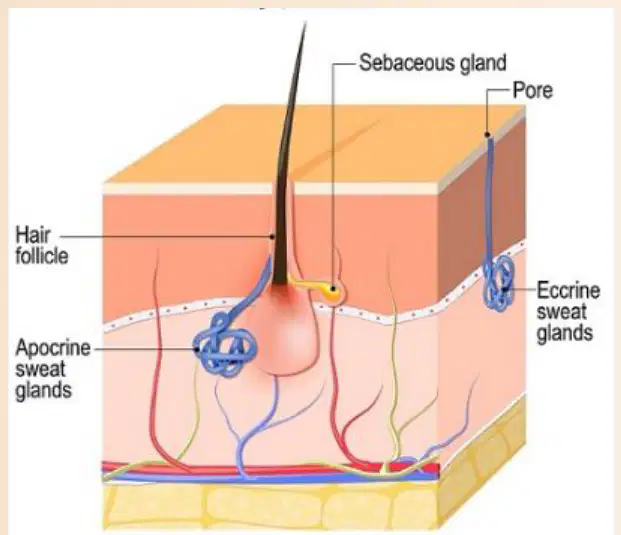
Which gland in the skin is responsible for producing oil?
Sebaceous gland
Eccrine sweat gland
Apocrine sweat gland
Hair follicle
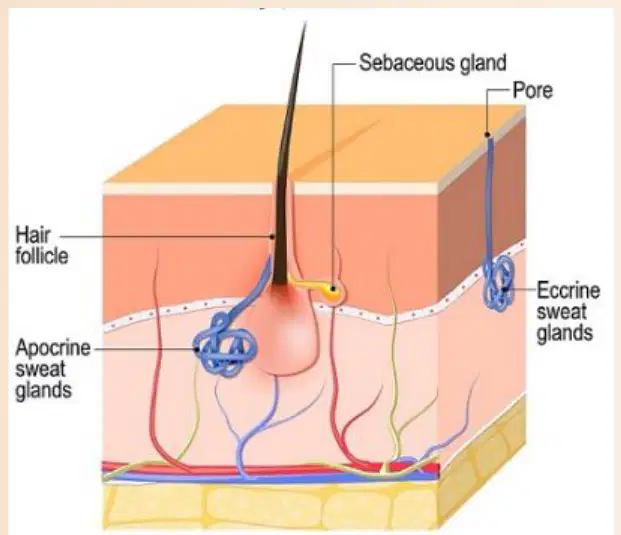
What is the function of eccrine sweat glands in the skin?
Produce oil
Produce sweat for temperature regulation
Produce hair
Produce hormones
What determines the pigment of hair?
The amount of melanin
The amount of keratin
The length of the root
The size of the follicle
What is the function of nails?
To help in digestion
To act as a protective covering for the dorsal side of the distal finger and toe bones
To produce sweat
To regulate body temperature
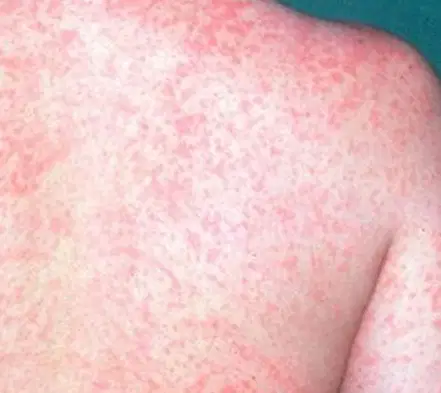
What disease is described as highly contagious, causes a severe rash across the entire body, fever, and loss of bodily fluids, and can be fatal especially to children?
Measles
Chickenpox
Influenza
Tuberculosis
Why is measles making a comeback after being nearly eradicated?
Some people avoid vaccines
The virus has mutated
There is no treatment available
It spreads only through animals
Which of the following is NOT a symptom of measles?
Severe rash
Fever
Loss of bodily fluids
Joint pain
Which type of skin cancer is responsible for more than 75% of deaths from skin cancer?
Basal cell cancer
Squamous cell cancer
Melanocyte cancer
Cartilage cell cancer
What is the second leading cause of accidental death in North America?
Burns
Drowning
Car accidents
Falls
Which of the following can cause a burn?
Heat, electricity, chemical, friction, or radiation
Cold, wind, and snow
Sunlight, water, and air
Pressure, sound, and light
How does the skin typically appear when affected by a third degree burn?
Red and swollen
Stiff, waxy white, leathery or tan
Blistered and moist
Peeling and dry
What is a common effect of third degree burns on nerves?
Increased sensitivity
No effect
Damage and numbness
Itching
How are infections that affect the skin usually diagnosed?
By observation since the skin is external to the body.
By urine test.
By CT scan.
By measuring blood pressure.
What should a first degree burn be bandaged with after cooling?
Tight plastic wrap
Clean loose gauze
Cotton balls
Wet towel
What should you NOT do to blisters from a second degree burn?
Bandage them
Pop them
Cool them with water
Cover with gauze
What is the process of removing any damaged tissue and preparing a bleeding surface at a burn site called?
Debriding
Grafting
Meshing
Suturing
What type of cells do many artificial skins use to trick the body into producing new skin cells?
Animal cells
Plant cells
Bacterial cells
Fungal cells
Which three professions focus on the integumentary system more than any other?
Allergists, dermatologists, and plastic surgeons
Cardiologists, neurologists, and surgeons
Dentists, pediatricians, and radiologists
Oncologists, endocrinologists, and psychiatrists

Which are part of the integumentary system?
Muscles, skeleton, bone marrow
Hair, skin, bones
Hair, skin, nails
Brain, spinal cord, nerves

What is the largest organ of your body?
Liver
Kidneys
Skin
None of the above
The stratum _________ layer of the epidermis is clear only found in ______________
basale; palms and soles
lucidum; palms and soles
lucidum; lips, ears, eyes
lucidum; fingernails, hair
Which structure in the skin is responsible for detecting touch and pressure?
Melanocyte
Merkel cell
Keratinocyte
Adipocyte
What is the primary role of sebaceous glands in the integumentary system?
Producing sweat for cooling
Secreting oil to lubricate the skin and hair
Generating new skin cells
Protecting against UV radiation
Which of the following is NOT a function of the integumentary system?
Protection against pathogens
Regulation of body temperature
Production of digestive enzymes
Sensation of touch
Which layer of the epidermis is responsible for the production of new skin cells?
Stratum basale
Stratum corneum
Stratum lucidum
Stratum granulosum
What is the primary function of keratin in the skin?
To provide pigmentation
To protect against water loss and physical damage
To regulate body temperature
To produce sweat
Which of the following is a common symptom of a second degree burn?
Peeling of nails
No sensation in the affected area
Loss of hair
Blisters and severe pain
Which structure in the skin is responsible for detecting touch and pressure?
Sebaceous gland
Meissner's corpuscle
Hair follicle
Melanocyte
What pigment is primarily responsible for giving skin its color?
Elastin
Melanin
Keratin
Collagen
Which layer of the skin contains blood vessels, nerves, and hair follicles?
Epidermis
Stratum corneum
Dermis
Hypodermis
Which layer of the skin contains blood vessels and nerve endings?
Subcutaneous fat
Epidermis
Dermis
Stratum corneum
What is the main function of hair on the human body?
To produce melanin
To provide insulation and protection
To secrete oil
To regulate blood pressure
Which of the following is a sign of a first degree burn?
Redness and mild swelling
Blisters and severe pain
Loss of sensation
Charred or white skin
Which protein found in the dermis provides strength and elasticity to the skin?
Collagen
Keratin
Melanin
Elastin
Which type of burn affects both the epidermis and the entire dermis, often resulting in no pain due to nerve damage?
Third degree burn
Superficial burn
First degree burn
Second degree burn
What is the main function of sweat glands in the integumentary system?
To secrete oil for lubrication
To regulate body temperature through perspiration
To detect touch and pressure
To produce melanin
Which pigment is primarily responsible for determining skin color in humans?
Elastin
Collagen
Melanin
Keratin
What is the main function of sweat glands in the integumentary system?
To detect touch and pressure
To provide pigmentation
To produce oil for the skin
To regulate body temperature through perspiration
Which layer of the skin contains blood vessels and nerve endings?
Epidermis
Dermis
Stratum corneum
Subcutaneous layer

Hair Root
1
3
9
14
Sebaceous Gland
7
10
12
13
Hair Shaft
1
3
9
14
Hypodermis
2
1
3
9
Epidermis
2
1
3
9
Stratum Corneum
7
10
12
13
Stratum Basale
10
12
14
13

