
 Worksheets
Endocrine System
Total questions: 53
Worksheet time: 27mins
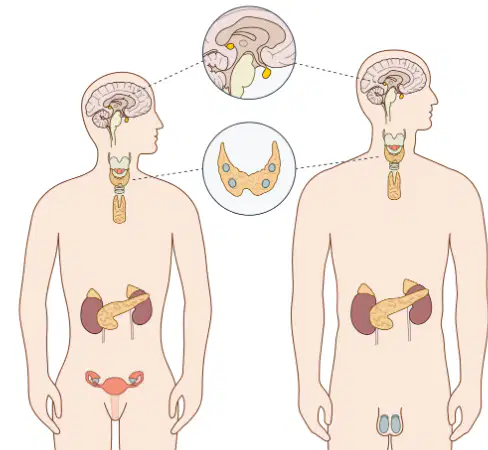
What is the main function of the endocrine system?
To regulate the body's other systems
To digest food
To transport oxygen in the blood
To provide structural support to the body
What is the primary function of hormones in the body?
They act as chemical messengers that change how a part of the body responds to certain stimuli.
They provide energy for muscle contraction.
They transport oxygen in the blood.
They break down food in the digestive system.
What is the difference between broad spectrum and targeted hormones?
Broad spectrum hormones affect many things, while targeted hormones only affect specific body parts.
Broad spectrum hormones are not chemical messengers, while targeted hormones are.
Broad spectrum hormones are only found in plants, while targeted hormones are found in animals.
Broad spectrum hormones are always harmful, while targeted hormones are always beneficial.
Which gland is located in the brain?
Pituitary gland
Adrenal gland
Pancreas
Ovaries
What is the main function of the hypothalamus?
It releases hormones that affect the pituitary gland
It controls voluntary muscle movement
It stores memories
It produces red blood cells
Which gland is directly affected by the hormones released from the hypothalamus?
Pituitary gland
Thyroid gland
Adrenal gland
Pineal gland
Explain why the hypothalamus is considered an important part of the endocrine system.
Because it releases hormones that regulate the pituitary gland, which in turn controls many other endocrine glands in the body.
Because it stores all the hormones in the body.
Because it is responsible for digestion.
Because it produces electrical impulses for muscle movement.
Why is the pituitary gland often referred to as the "master" gland?
It is the largest gland in the body
It regulates the secretion of hormones
It produces digestive enzymes
It controls blood sugar levels
Explain how the anterior and posterior pituitary glands differ in their roles regarding hormone management.
Both produce and release hormones
Anterior produces and releases hormones; posterior stores and releases hormones from the hypothalamus
Both only store hormones
Anterior stores hormones; posterior produces and releases hormones
A patient has a disorder affecting the storage and release of hormones produced by the hypothalamus. Which part of the pituitary gland is most likely affected?
Anterior pituitary
Posterior pituitary
Pineal gland
Adrenal gland
What hormone does the pineal gland release?
Melatonin
Insulin
Adrenaline
Thyroxine
A student is experiencing trouble sleeping. Based on your knowledge of the endocrine system, which gland and hormone might be involved in this issue?
Pineal gland and melatonin
Pituitary gland and insulin
Thyroid gland and adrenaline
Adrenal gland and thyroxine
Where is the thyroid gland located in the human body?
In the throat
In the chest
In the abdomen
In the brain
Which of the following is necessary for proper thyroid functioning?
Iodine
Iron
Vitamin C
Calcium
What are two main functions of the thyroid gland?
Controls metabolism and blood calcium
Produces insulin and controls blood sugar
Regulates heart rate and blood pressure
Filters toxins and produces bile
How does the parathyroid gland contribute to homeostasis?
By regulating calcium and phosphate levels
By producing digestive enzymes
By controlling heart rate
By filtering blood
What is the main function of the thymus gland?
Regulates the production of immune cells
Produces digestive enzymes
Controls blood sugar levels
Filters waste from the blood
Where is the adrenal gland located in the human body?
Atop the kidneys
Inside the lungs
Below the liver
Next to the heart
Which of the following is NOT regulated by the adrenal gland?
Electrolytes
Mineral salts
Adrenaline
Insulin
Explain how the adrenal gland contributes to the body's response to stress.
By producing adrenaline, which prepares the body for 'fight or flight'
By increasing blood sugar through insulin production
By filtering waste from the blood
By producing digestive enzymes
What is the main function of the pancreas in the body?
It regulates the absorption of sugar
It produces red blood cells
It filters waste from the blood
It stores vitamins
Where are the ovaries located in the female body?
Above the uterus and to either side of it
Below the cervix
Inside the fallopian tubes
Next to the bladder
Which hormones are regulated by the ovaries?
Estrogen and progesterone
Testosterone and insulin
Adrenaline and cortisol
Thyroxine and melatonin
Explain how estrogen contributes to the development of secondary sex characteristics in females.
By promoting the development of breasts, widening of the pelvis, and growth of pubic hair
By increasing muscle mass and deepening the voice
By regulating the menstrual cycle only
By controlling the production of digestive enzymes

Where are the testes located in the male body?
Posterior to the penis
Above the kidneys
Inside the stomach
Next to the heart
Which hormone do the testes regulate?
Testosterone
Estrogen
Insulin
Progesterone
Explain how testosterone affects the physical development of males during puberty.
It increases muscle mass, deepens the voice, and promotes facial and body hair growth.
It decreases muscle mass and lightens the voice.
It causes hair loss and reduces strength.
It only affects the growth of fingernails.
What are hormones?
Chemicals that are released by one part of the body and travel through the circulatory system
Cells that fight infections in the body
Organs that filter blood in the body
Nutrients that provide energy to the body
Why is it important for hormones to travel through the circulatory system?
To ensure that only the heart receives hormones
To allow hormones to reach all parts of the body
To help the body digest food
To provide oxygen to the body
Explain how hormones can have different effects in humans and animals, using melatonin as an example.
In humans, melatonin causes hair to change color, while in animals it makes them sleep.
In humans, melatonin signals nighttime to organs, while in some animals it affects hair follicles to change coat thickness or color.
In both humans and animals, melatonin only affects sleep patterns.
In animals, melatonin causes organs to switch to daytime mode, while in humans it affects hair follicles.
What does a negative feedback system in hormone production mean?
Hormones are produced only once
Hormones are produced until something signals them to stop
Hormones are never produced
Hormones are produced randomly
Why is a negative feedback system important in hormone regulation?
It ensures hormones are always produced in excess
It prevents the overproduction of hormones by stopping production when not needed
It increases the speed of hormone production
It allows hormones to be produced only at night
Which organ is responsible for producing insulin and glucagon in the body?
Liver
Pancreas
Kidney
Stomach
What is the main function of insulin in the regulation of blood glucose levels?
To break down glucose in the blood
To cause liver cells to store glucose
To release sugar into the blood
To convert glucose to protein
What happens when the blood glucose level gets too low?
The pancreas increases insulin production
The pancreas switches off insulin production and releases glucagon
The liver stores more glucose
The pancreas releases more insulin
What is the sequence of events when blood glucose level rises?
Blood glucose level rises → Pancreas releases glucagon → Liver releases glucose
Blood glucose level rises → Pancreas releases insulin → Target cells take up glucose → Blood glucose level falls
Blood glucose level rises → Liver stores glucose → Pancreas releases insulin
Blood glucose level rises → Pancreas releases insulin → Blood glucose level rises further
What is acromegaly (gigantism) caused by?
Too little growth hormone
Too much growth hormone
Lack of thyroid hormone
Excess insulin
Which disorder is associated with stunted growth and can be inherited or caused by too little growth hormone?
Acromegaly
Dwarfism
Diabetes
Hyperthyroidism
What is a common cause of acromegaly (gigantism)?
Viral infection of the pituitary gland
Benign tumor of the pituitary gland
Lack of calcium in the diet
Overactive thyroid gland
A student is presented with a case where a person has grown to an abnormally tall height due to a hormonal imbalance. Using your knowledge of pituitary gland disorders, explain which hormone is likely involved and whether it is being overproduced or underproduced.
Growth hormone, overproduced
Growth hormone, underproduced
Thyroid hormone, overproduced
Thyroid hormone, underproduced

What does the image illustrate about the effects of growth hormone secretion?
Both individuals have normal growth hormone levels
Hypersecretion leads to gigantism, hyposecretion leads to dwarfism
Both conditions are caused by excess insulin
Both conditions are unrelated to the pituitary gland
What is a prolactinoma?
A benign tumor on the pituitary gland that produces prolactin.
A malignant tumor on the thyroid gland that produces insulin.
A benign tumor on the adrenal gland that produces adrenaline.
A malignant tumor on the pituitary gland that produces cortisol.
A student is presented with a patient who has a benign tumor in the pituitary gland that secretes excess prolactin. What is the most likely diagnosis?
Prolactinoma
Diabetes mellitus
Addison's disease
Hyperthyroidism
What is the main cause of hyperthyroidism (Graves Disease)?
An enlarged thyroid producing too much thyroxine.
A deficiency of insulin in the pancreas.
A lack of iodine in the diet.
A tumor in the adrenal gland.
Which of the following best describes the thyroid gland in a person with hyperthyroidism?
Enlarged and overactive
Shrunken and underactive
Normal size and inactive
Absent
A student is experiencing nervousness, anxiety, and irritability along with an enlarged thyroid gland. Based on these symptoms, what endocrine disorder might they have?
Hyperthyroidism
Diabetes mellitus
Addison's disease
Cushing's syndrome
Which gland is affected in hypothyroidism?
Thyroid gland
Pituitary gland
Adrenal gland
Pineal gland
What is a common cause of hypothyroidism?
Lack of iodine
Excess calcium
Too much vitamin D
Lack of iron
Which of the following is NOT a symptom of hypothyroidism?
High blood pressure
Fatigue
Slow heartbeat
Weight gain
A patient is experiencing fatigue, slow pulse, and weight gain. What endocrine disorder might they have, and what could be a dietary solution?
Hypothyroidism; increase iodine intake
Diabetes; reduce sugar intake
Hyperthyroidism; reduce iodine intake
Cushing's syndrome; increase salt intake
What can an underactive parathyroid gland cause?
Bone loss and paralysis
Bone loss and kidney failure
Increased metabolism and weight loss
High blood pressure and headaches
Explain how disorders of the parathyroid gland can affect the body differently depending on whether the gland is overactive or underactive.
Overactivity causes bone loss and kidney failure, while underactivity causes bone loss and paralysis.
Overactivity causes high blood pressure, while underactivity causes low blood pressure.
Overactivity causes increased metabolism, while underactivity causes decreased metabolism.
Overactivity causes dehydration, while underactivity causes excessive sweating.
What is precocious puberty?
When children's bodies begin to change into adult bodies too soon
When puberty occurs at the normal age
When adults revert to childhood characteristics
When puberty never occurs

