
 Worksheets
Intro Unit 4: Respiratory and Immune Systems TEST
Total questions: 53
Worksheet time: 46mins
Alveoli
Bronchi
Bronchoiles
Pharynx
Extends from pharynx to bronchi
Located anterior of esophagus
Does not contain the vocal cords
Supported by horseshoe shape cartilage rings
Bronchioles
Trachea
Larynx
Bronchi
Gas exchange
Warm air
Moisten air
Filter air
Olfaction (smelling)
Larnyx
Trachea
Epiglottis
Alveoli
Pharynx
Voice box
Nasal Cavity
Epiglottis
Bonchoiles
Bronchi
Trachea
Pharynx
Epiglottis
Uvula
Soft palate
Alveoli
Alveoli
Bronchoiles
Bronchi
Trachea
The correct structure sequence of the respiratory system an oxygen molecule would have to pass
in order to make it to the bloodstream:
Filtering and trapping foreign particles
Gas exchange at the cellular level
Hormone production
Thermoregulation
Because they help defend the body from pathogens that enter though the mouth
Because they produce white blood cells for the mouth
Because saliva needs to be produced in the mouth
Because tonsils help you swallow and breathe more effectively

Identify the Bronchi.
Match the following respiratory system parts with the correct description.
Smallest conducting respiratory passageways
Bronchioles
Food passageway posterior to the trachea
Esophagus
Closes off the larynx during swallowing
Epiglottis
Windpipe
Trachea
Actual site of gas exchange
Alveoli
Which TWO structures connect the lungs to the heart?
Pulmonary Valve
Pulmonary Artery
Pulmonary Veins
Aorta
The other name for trachea is ....
food pipe
wind pipe
lung
heart

What letter points to the Alveoli?
C
D
E
F
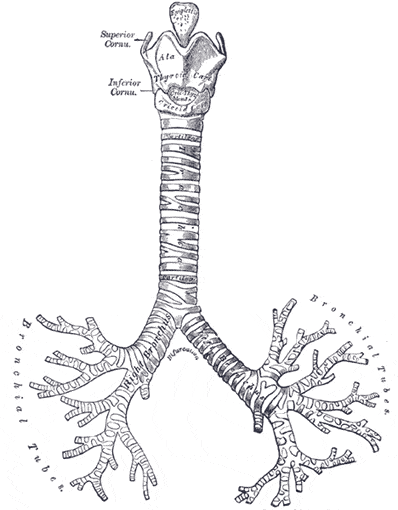

The windpipe is also called________.
trachea
alveoli
esophagus
A small flap of tissue that covers the trachea is called the
bronchi
larynx
pharynx
epiglottis
Which of the following is a common respiratory disorder characterized by inflamed airways and difficulty breathing?
Diabetes
Asthma
Arthritis
Anemia

Name the structure labeled 8
lungs
trachea
diaphragm
alveoli
1. larynx
2. nasal cavity
3. pharynx
4. trachea
Which of the following is the correct order that air would flow during inhalation.


What is #5 pointing to?
trachea
mouth
nose
pharynx

What is #4 pointing to?
mouth
pharynx
nasal cavity
trachea

What is #7 pointing to?
larynx
lung
bronchiole
trachea

What is #1 pointing to?
larynx
pharynx
alveoli
bronchi

What is #6 pointing to?
larynx
pharynx
trachea
bronchus

What is #8 pointing to?
nasal passageway
nose
right lung
left lung

What is #9 pointing to?
left primary bronchus
left bronchiole
right primary bronchus
alveoli

What is #10 pointing to?
right primary bronchus
alveoli
bronchiole
trachea

What is #11 pointing to?
pharynx
alveoli
bronchiole
left primary bronchus
line up the following parts from biggest to smallest
trachea, bronchiole, bronchus, alveoli
trachea, bronchiole, alveoli, bronchi
trachea, bronchus, bronchiole, alveoli
these are thin-walled sacs, covered with capillaries that aid in the diffusion/exchange of CO2 & O2
alveoli
oral cavity
epiglottis
pharynx
every time you swallow, the _________ covers your larynx so that food doesn't travel down your trachea
vocal cords
adam's apple
epiglottis
What are communicable diseases?
Diseases that cannot be passed from person to person
Diseases that are passed from a contaminated person, animal, substance, or surface to another person
Diseases that develop spontaneously
Diseases caused by an unhealthy lifestyle
What does it mean if a person is asymptomatic?
They have symptoms but no signs
They have signs but no symptoms
They have neither signs nor symptoms
They have both signs and symptoms
How are symptoms different from signs?
Symptoms are objective; signs are subjective
Symptoms are subjective; signs are objective
Symptoms are genetic; signs are environmental
Symptoms are visible; signs are invisible
Which of the following is NOT an acute disease?
Flu
Strep throat
Pinkeye
Cancer
Which statement best describes acquired immunity?
It is a temporary form of immunity
It develops without exposure to antigens
It requires a healthy immune system to function
It is the same as innate immunity
Which of the following is an example of a chronic disease?
Diabetes
Appendicitis
Common cold
Chickenpox
Which of the following is NOT a white blood cell?
Leukocyte
B Cell
Erythrocyte
Phagocyte
Which terms would be used to describe the length of a disease?
Communicable, Non-communicable
Symptom, Sign, Asymptomatic
Acute, Chronic, Terminal
Vaccines are an example of
Innate Immunity
Acquired Immunity
Toxins or foreign bodies that enter the body are known as?
Antigens
Pathogens
Vector
Reorder the Immune Response Process
Recognition
Mobilization
Disposal
Immunity
Which muscle plays a major role in helping you breathe by contracting and relaxing?
Diaphragm
Heart
Stomach
Liver
What is the main function of the alveoli in the respiratory system?
To exchange gases between air and blood
To produce mucus
To warm and moisten air
To filter dust from the air
Which structure connects the pharynx to the trachea?
Larynx
Diaphragm
Alveoli
Bronchi

